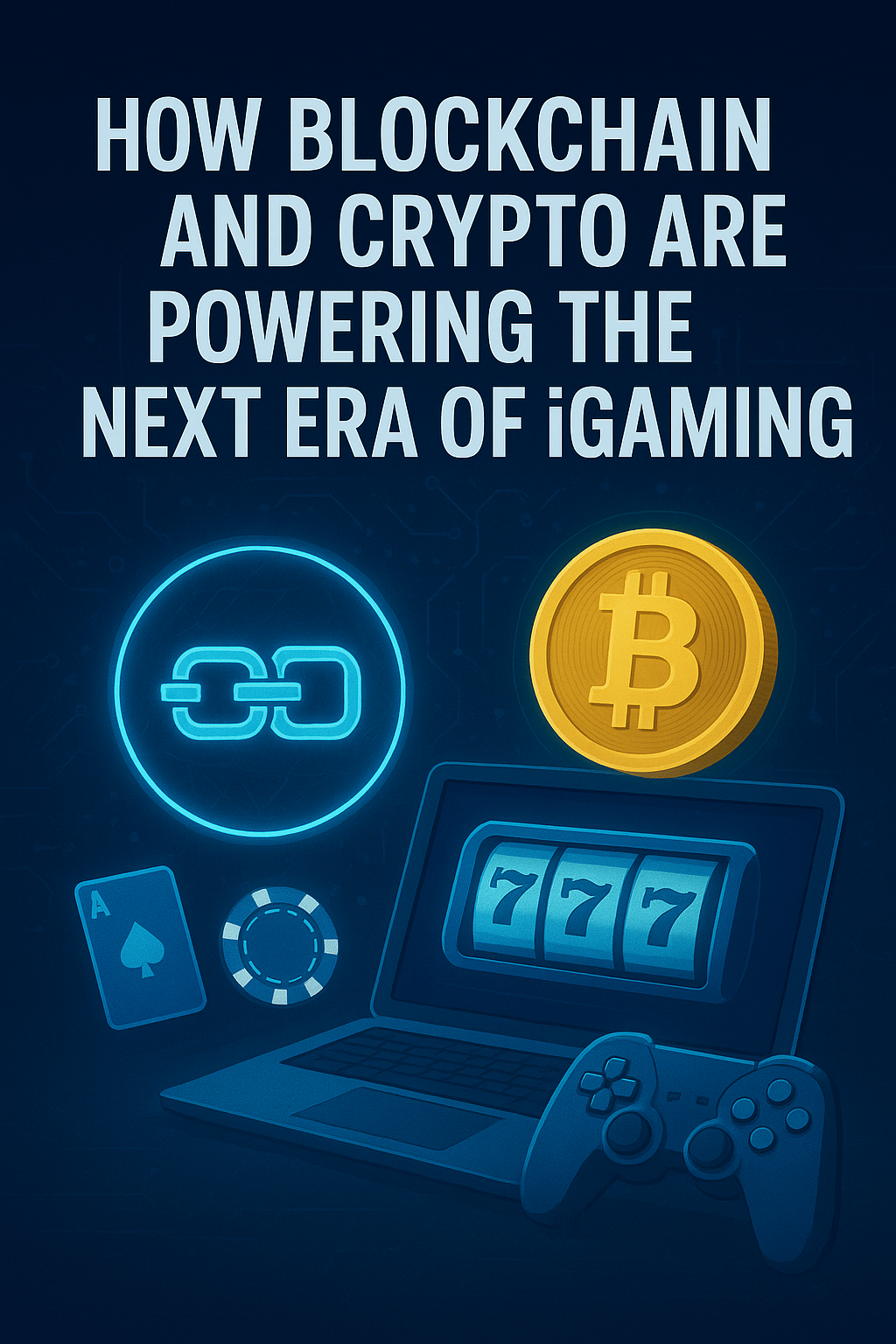
The iGaming industry—encompassing online casinos, sports betting, and poker—is on the cusp of a profound transformation, driven not by new games, but by new technology. At the heart of this revolution are blockchain and cryptocurrencies, fundamentally reshaping player experience, security, and operator efficiency. What was once a niche offering is quickly becoming the default, ushering in the next era of digital gambling.
The Foundation of Trust: Blockchain’s Immutable Ledger
For decades, the core challenge in online gambling has been trust. Players relied entirely on the casino operator for game fairness and timely payouts. Blockchain technology dismantles this centralized reliance, introducing the concept of Provably Fair Gaming.
By leveraging cryptographic hashing, blockchain platforms allow players to verify the randomness and outcome of every bet, spin, or card draw themselves. This level of mathematical assurance eliminates all doubt regarding manipulation, cementing trust between the player and the platform. Every transaction and result is recorded on an immutable, public ledger, turning what was once a "black box" into a transparent operation. This is perhaps the single most significant factor driving the adoption of online crypto gambling.
The Currency of Efficiency: The Crypto Advantage
Beyond structural transparency, cryptocurrencies provide substantial benefits over traditional fiat currencies, directly addressing long-standing pain points for both players and operators.
Firstly, there is the issue of speed and accessibility. Traditional banking methods, especially for international transactions, can involve delays of several days and significant fees. Cryptocurrencies, by nature of their decentralized structure, enable near-instant deposits and withdrawals, often settling in minutes. This is a game-changer for players who demand immediate access to their funds.
Secondly, crypto transactions offer a superior degree of privacy and security. Users can transact without sharing sensitive personal financial data, relying instead on secure wallet addresses. This minimizes the risk of identity theft and financial fraud, an appealing feature for a global audience. For operators, crypto significantly reduces the risk of costly chargebacks, a persistent problem with credit card transactions.
Smart Contracts: The Automation of Integrity
The integration of smart contracts takes the utility of blockchain a step further. These self-executing contracts, with the terms of the agreement directly coded, automate critical iGaming processes without the need for human intervention. Smart contracts can govern everything from automated jackpot payouts to the transparent distribution of winnings, ensuring accuracy and efficiency.
In essence, smart contracts act as a digital escrow, holding funds until the predetermined game conditions are met. This removes human error and guarantees that all financial outcomes are executed instantaneously and exactly as promised, reinforcing the platform's reliability.
The Future: Player-as-Stakeholder
The influence of blockchain extends into the emerging Web3 framework. Decentralized Autonomous Organizations (DAOs) are beginning to appear in iGaming, allowing token holders—the players—to have a voice and vote on governance decisions, new game features, and platform development. This shifts the power dynamic, moving from a strictly B2C model to a collaborative, community-driven ecosystem.
As blockchain technology matures, its role in iGaming will only deepen. It is no longer just a payment option; it is the infrastructure for a more secure, transparent, and user-centric online betting experience, defining what the next era of digital gaming will look like.