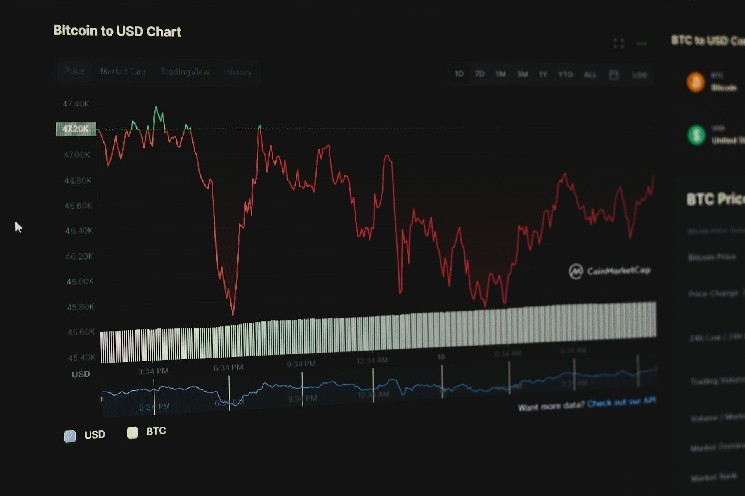
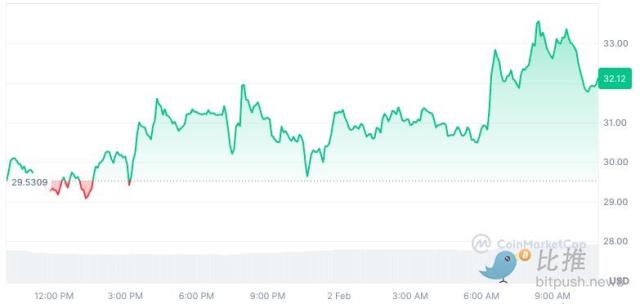
A recent market outlook released by research firm Sentora Research indicates that although Bitcoin (BTC) will still be affected by short-term volatility and its price will hover below $90,000 by the end of 2025, several structural factors are brewing simultaneously, laying the foundation for a sustained upward trend in Bitcoin in 2026.
The agency believes that with the easing of option pressures, large-scale institutional investment through ETFs, and a cooling of geopolitical risks, Bitcoin has the potential to break through $150,000 in 2026.
The largest option in history expires; suppressive factors are about to dissipate.
Sentora Research points out that on December 26, 2025, Bitcoin will face its largest options expiration date in history, with a nominal value of approximately $24 billion, primarily concentrated on derivatives platforms such as Deribit. Due to a large number of open positions concentrated at strike prices above $100,000, the market was affected by hedging activities by market makers before expiration, amplifying price volatility and becoming a significant reason for Bitcoin's recent weakness.
However, Sentora Research emphasizes that historically, the market often experiences a "stress relief period" after large options expire. As traders no longer need to continuously sell spot for hedging purposes, potential buying interest in Bitcoin is expected to re-emerge. The firm believes this will create favorable conditions for Bitcoin to reclaim the $100,000 mark in the first quarter of 2026.
The January effect is taking hold, with institutional fund allocation becoming a key driving force.
The report also points out that the emergence of spot Bitcoin ETFs has completely changed the way institutional investors participate in the crypto market. In 2025, inflows into US-listed ETFs reached a record high, indicating that Bitcoin is gradually being regarded as a part of mainstream asset allocation.
Sentora Research specifically highlighted the "January asset reallocation effect": at the beginning of each year, pension funds, endowments, and large asset management institutions often reallocate their investment portfolios based on annual investment mandates and risk budgets. The institution pointed out that if Bitcoin's share in an investment model increases to 1% to 5%, it will generate considerable buying momentum.
Looking back to early 2025, Bitcoin attracted over $900 million in inflows in a single day. Sentora Research believes that if Bitcoin outperforms the US stock index after the options expire, institutional fund allocation may accelerate further, pushing the price to challenge the $120,000 level by mid-2026.
If the situation in Ukraine de-escalates, risk assets are expected to benefit across the board.
In addition to market structure and funding factors, Sentora Research also points out that geopolitics could be a significant "tailwind" for Bitcoin. The report notes that the Russia-Ukraine conflict has long driven up energy prices and global uncertainty, putting pressure on risk assets, but recent signals from various parties regarding negotiations indicate that the possibility of a breakthrough in early 2026 is increasing.
If the situation eases, it will not only help reduce inflation and oil price pressures, but may also create more room for easing global monetary policy. Sentora Research believes that once the geopolitical risk premium is revised downward, market funds will be more willing to flow to high-risk, high-growth assets, including cryptocurrencies, and Bitcoin prices may therefore gain an additional 20% to 30% upside potential.
The conditions for a bullish market in 2026 are gradually being met, but risks still need to be monitored.
Overall, Sentora Research believes that the market reset after the options expire, the inflow of institutional funds in January, and the improvement in the macro environment will all resonate with each other at the same point in time, forming a "bullish combination" that is quite favorable for Bitcoin.
However, it's worth noting that the agency also cautioned against potential risks such as delays in geopolitical negotiations and tightening liquidity in financial markets. Nevertheless, under the baseline scenario, a Bitcoin price exceeding $150,000 in 2026 is not an overly aggressive prediction. Sentora Research concluded that if the above conditions are met, Bitcoin is poised for a structural rather than short-term speculative rally.