
Behind the 30% Hashrate Drop: A Data-Driven Guide to Verifying Bitcoin Miner Capitulation
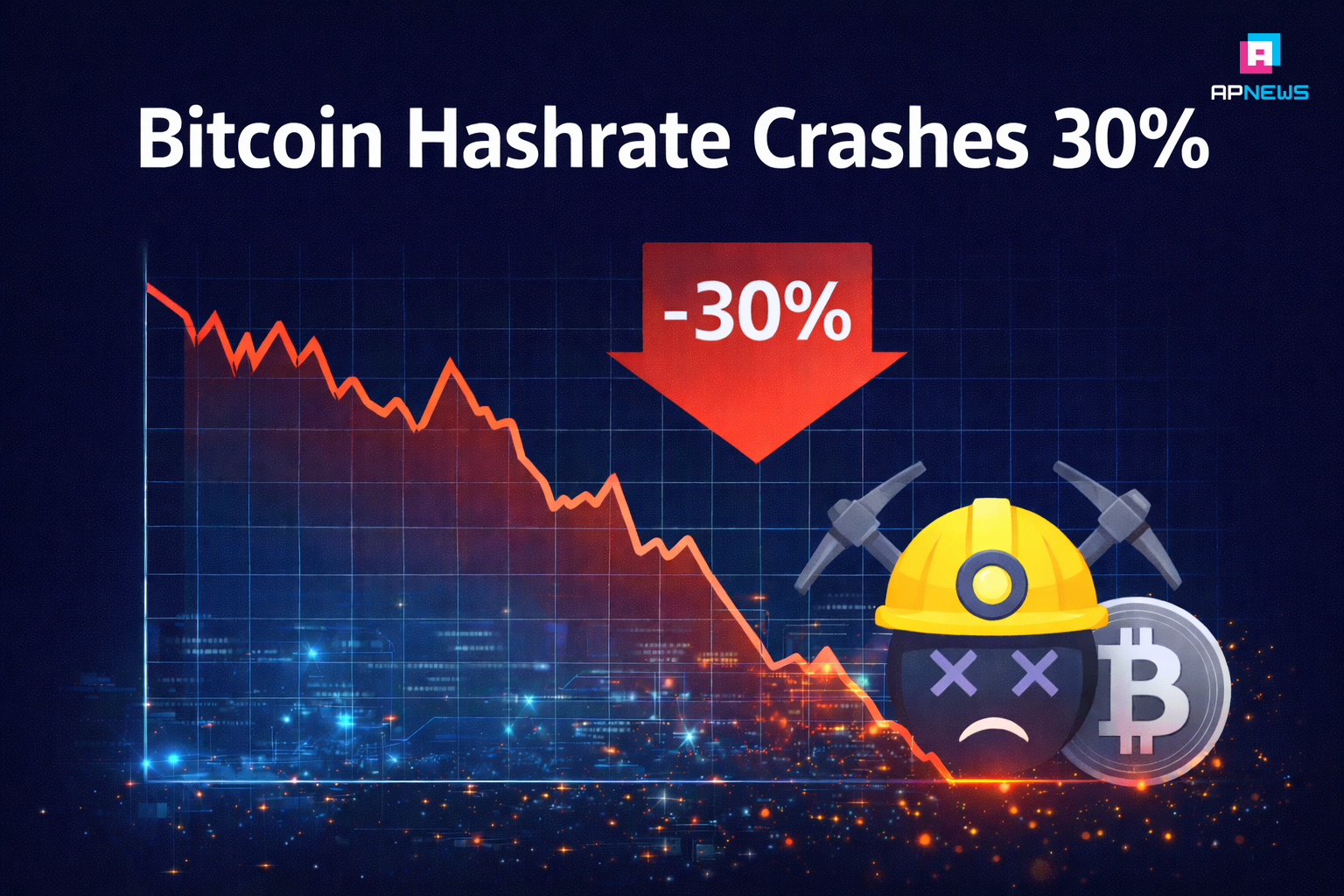
In early 2025, Bitcoin’s network hashrate reversed sharply, falling by nearly 30% in a short period of time. Market interpretations immediately split in two. Media narratives framed the move as a “mining winter” and mass miner capitulation, while institutional research pointed to historical precedents suggesting a potential market bottom.
For technical practitioners, this divergence highlights a key advantage: there is no need to choose between narratives. Instead of relying on secondhand interpretations, we can bypass commentary entirely and interrogate the data itself. On-chain data is Bitcoin’s most transparent ledger—every hashrate fluctuation and every miner revenue decision is permanently recorded in blocks and transactions.
This article does not offer another market opinion. It presents a methodology for building a verification framework using code, transforming vague concepts like “miner stress” into measurable, monitorable indicators that support evidence-based judgment amid market noise.
Data Architecture and Environment Setup
Reliable analysis begins with disciplined data sourcing. Assessing miner health requires three complementary layers: network-level data such as hashrate and difficulty, on-chain transfer data reflecting miner financial behavior, and external inputs like energy prices that define operating costs.
Structured APIs provide cleaned baseline datasets, while direct node access or public blockchain endpoints enable more granular, real-time observation. A practical technical stack centers on Python, with standard libraries for data processing, API interaction, and visualization. Establishing a local data cache is essential to manage scale and rate limits, ensuring repeatable and efficient analysis.
Core Metrics and Economic Modeling
Understanding miner behavior requires moving beyond raw signals. Spot hashrate values are noisy, so smoothed trends—such as moving averages aligned with the difficulty adjustment window—better reflect collective miner decisions.
Estimating miner break-even economics involves integrating machine efficiency, electricity costs, network difficulty, block rewards, and market price into a simplified model. When expected revenue consistently falls below operating costs, shutdown pressure becomes an economic reality rather than a narrative claim. The protocol’s built-in difficulty adjustment mechanism then acts as a stabilizer, gradually rebalancing the system.
Automating these calculations allows continuous monitoring of miner economics as conditions evolve.
Miner Stress Index and Alerting
Single indicators are prone to false signals; composite measures provide context. Trend-based frameworks, such as comparing short- and long-term hashrate averages, help identify structural shifts. Building on this, a custom miner stress index can combine multiple dimensions: price relative to miner cost, hashrate momentum, miner-to-exchange transfer activity, and on-chain profit and loss distribution.
By normalizing inputs and defining thresholds, the system can output a bounded stress score and trigger alerts when pressure reaches critical levels. Modular design ensures each component remains testable, extensible, and adaptable to different analytical assumptions.
Historical Backtesting and Validation
No model is meaningful without historical validation. Stress indicators should be tested against past high-pressure periods to assess both signal accuracy and false positives. Equally important is understanding the conditions under which models fail.
Historical patterns offer guidance, not guarantees. Mining hardware efficiency, energy markets, and institutional participation continue to evolve, altering the transmission between miner behavior and price. Models must therefore remain parameterized and adjustable to avoid overfitting static historical regimes.
From Narrative Consumption to Verification
By following this technical path, abstract market narratives are reduced to reproducible analytical processes. The value of such a system is not prediction, but perspective. In an information-asymmetric environment, independent data analysis is a durable edge.
When hashrate volatility becomes headline news again, you are no longer a passive consumer of interpretations. With your own tools and models, you can interrogate the blockchain directly—and develop a technical intuition grounded in evidence rather than noise.