Author: TechFlow TechFlow
Original Title: 2025 Crypto Industry Workplace Survey: 70% of Adults Earn Less Than $4,000 Per Month, N+1 Layoffs a Dream
While Xiaohongshu is still spreading the "get rich quick" myth and "million-dollar annual salary" of Web3, what is the true nature of the crypto industry?
Through a survey of 506 people, we had an honest conversation with practitioners, and the results were surprising, even somewhat harsh: there is no easy path to wealth here; over 70% of them earn less than $4,000 a month, lower than in developed regions like Europe and America. A quarter of them are even operating at a loss, essentially "paid labor." Furthermore, there are no adequate job security measures; nearly half have experienced layoffs, and most did not receive N+1 compensation.
Even so, over 80% of people chose to stay put. Is it because of the 70% freedom offered by remote working? Or is it because of the shared dream of "retiring with $5 million"?
In this report, we attempt to use cold data to reveal the most authentic anxieties, desires, and survival rules of Web3 workers.
This content is part of the survey results for "Web3 Recruiting and Job Seeking 2025 Year-End Review: Who's Making Money, and Who's Paying to Work?" Please see the full report here:
https://www.techflowpost.com/article/detail_29702.html
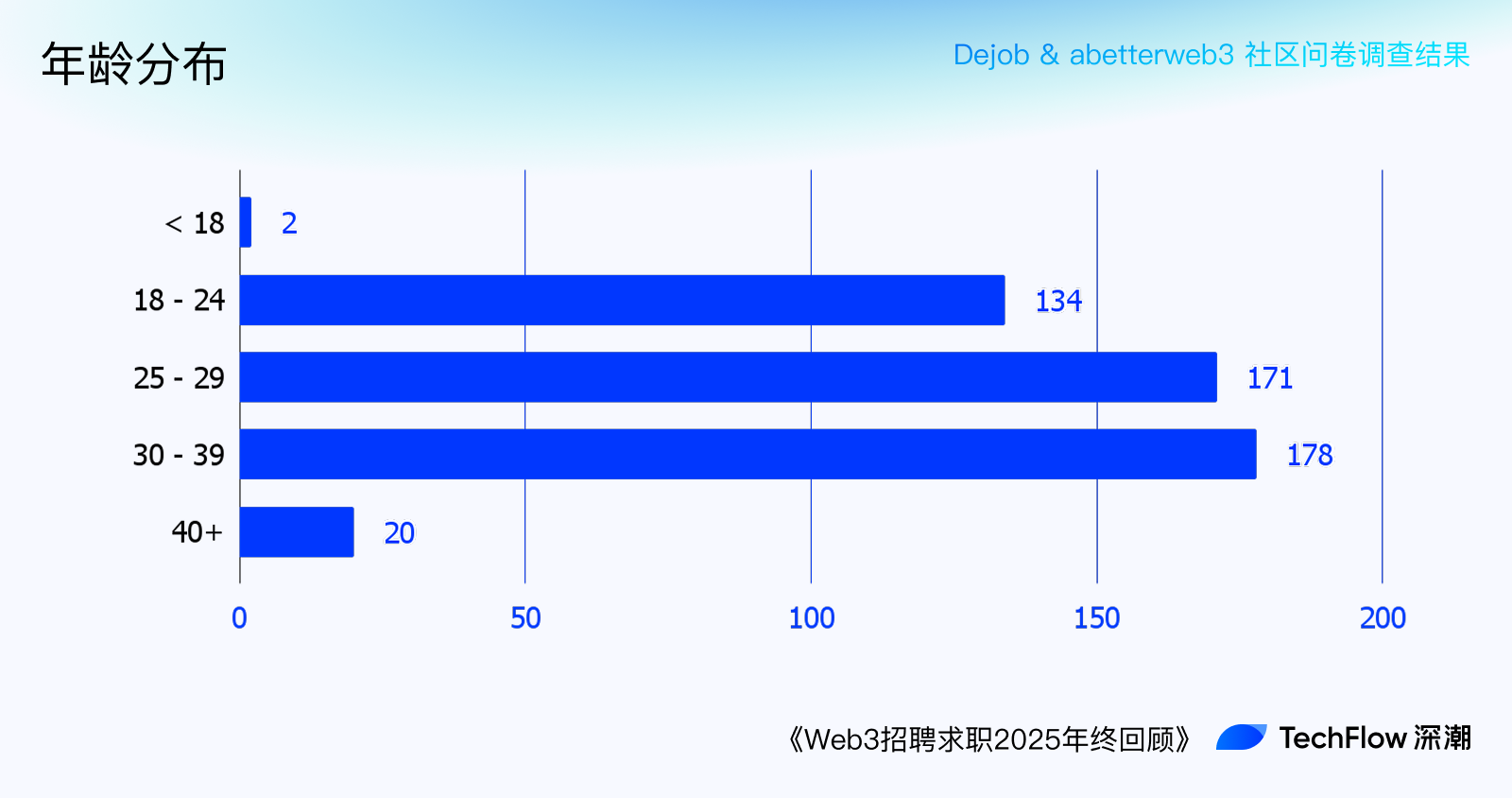
In terms of age distribution, while the majority of professionals are aged 18-29, there are also a significant number of young and middle-aged employees (over 30). This may be related to the fact that the "35-year-old age limit" is not as severe in the Web3 industry. Compared to internet companies, Web3 companies value experience, ability, and efficiency more, and each company prefers experienced professionals who can quickly build products "plug and play".
The distribution of educational backgrounds is basically consistent with the previous talent data statistics, with undergraduates being the majority, but there are also those with less than an undergraduate degree as well as those with master's and doctoral degrees, and the proportion of master's and doctoral degrees is not high.

In terms of professional identities, the most numerous are marketing roles (operations/BD/customer service, etc.), followed by developers (front-end/back-end/smart contracts/blockchain, etc.). Next are product, human resources, investment research, design, and trading. Among the "other" submissions, risk control & security, and KOLs are the most common.

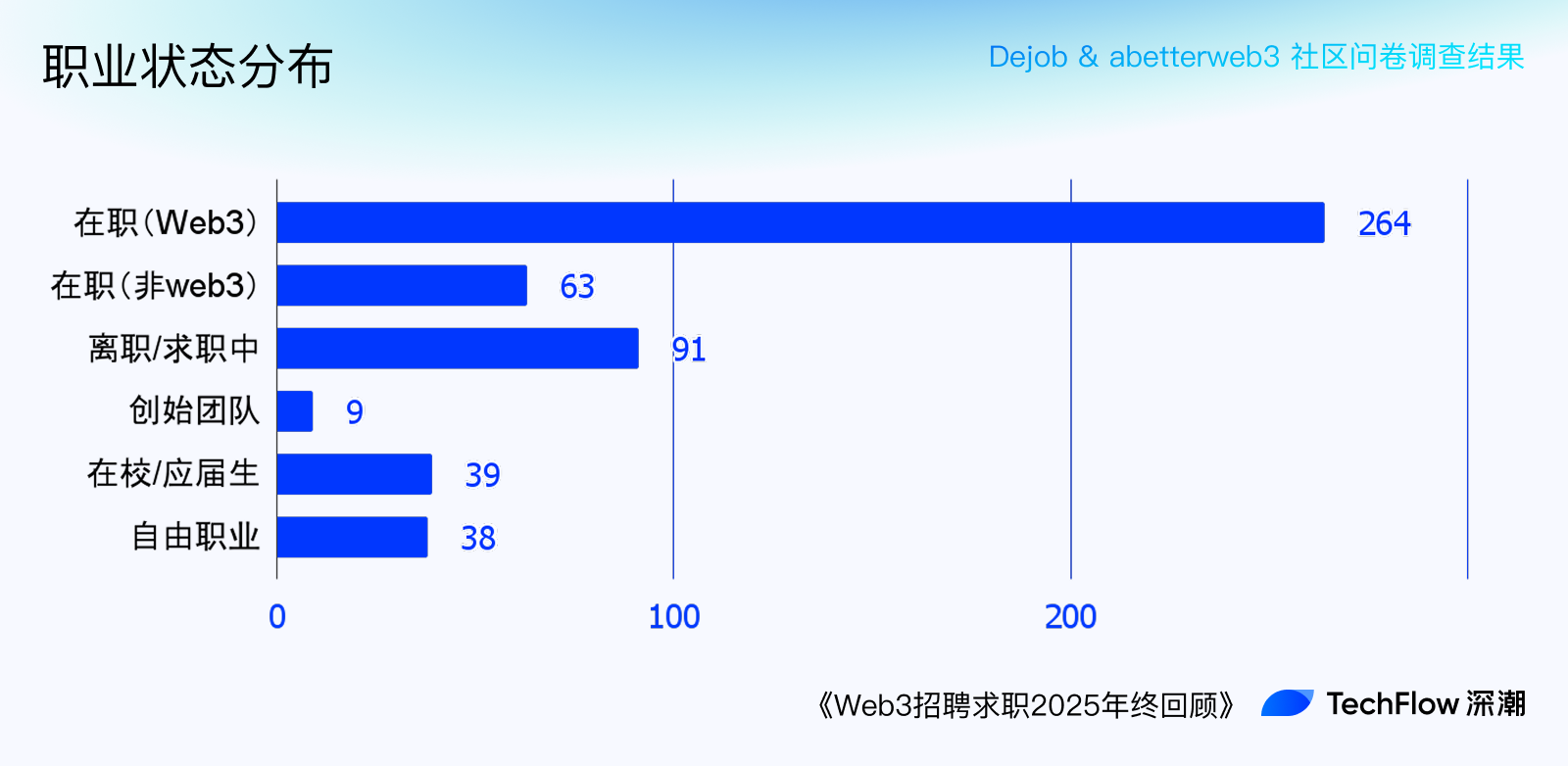
Regarding employment/resignation status, only 52% of respondents are currently employed by Web3. Over 30% are in a relatively flexible employment situation. This indicates that market conditions have impacted corporate headcount across many individuals; it may also be because certain unique business models of Web3 have made it less necessary for some, such as KOLs and traders, to work full-time to generate cash flow.
More than half of the submissions indicated prior experience working at exchanges, followed by common sectors such as studios/communities, DeFi, media, and wallets. Both talent and job seekers are concentrating on exchanges in a clear Matthew effect. This also reflects the current industry predicament: apart from exchanges, the revenue-generating capacity of most other business models gradually decreases from the consumer (C-end) to tools to the underlying infrastructure.

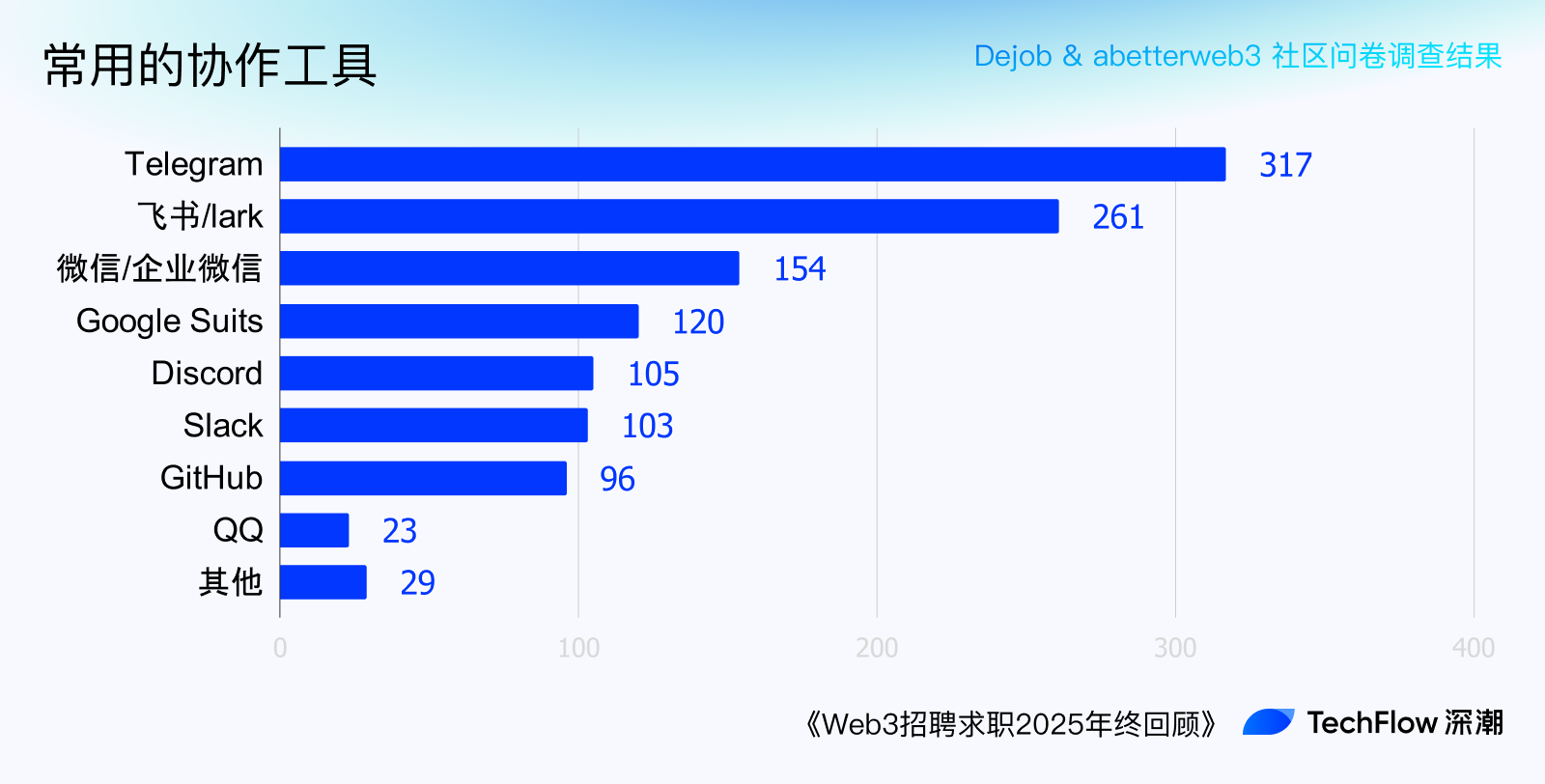
Regarding remote collaboration tools, since this survey took place in a Chinese-language vertical Web3 recruitment community, Telegram was favored by most companies due to its confidentiality and ease of use. This was followed by domestic mainstream tools Lark and WeChat, and finally, Google Suits, Discord, Slack, and other tools commonly used by foreign companies.
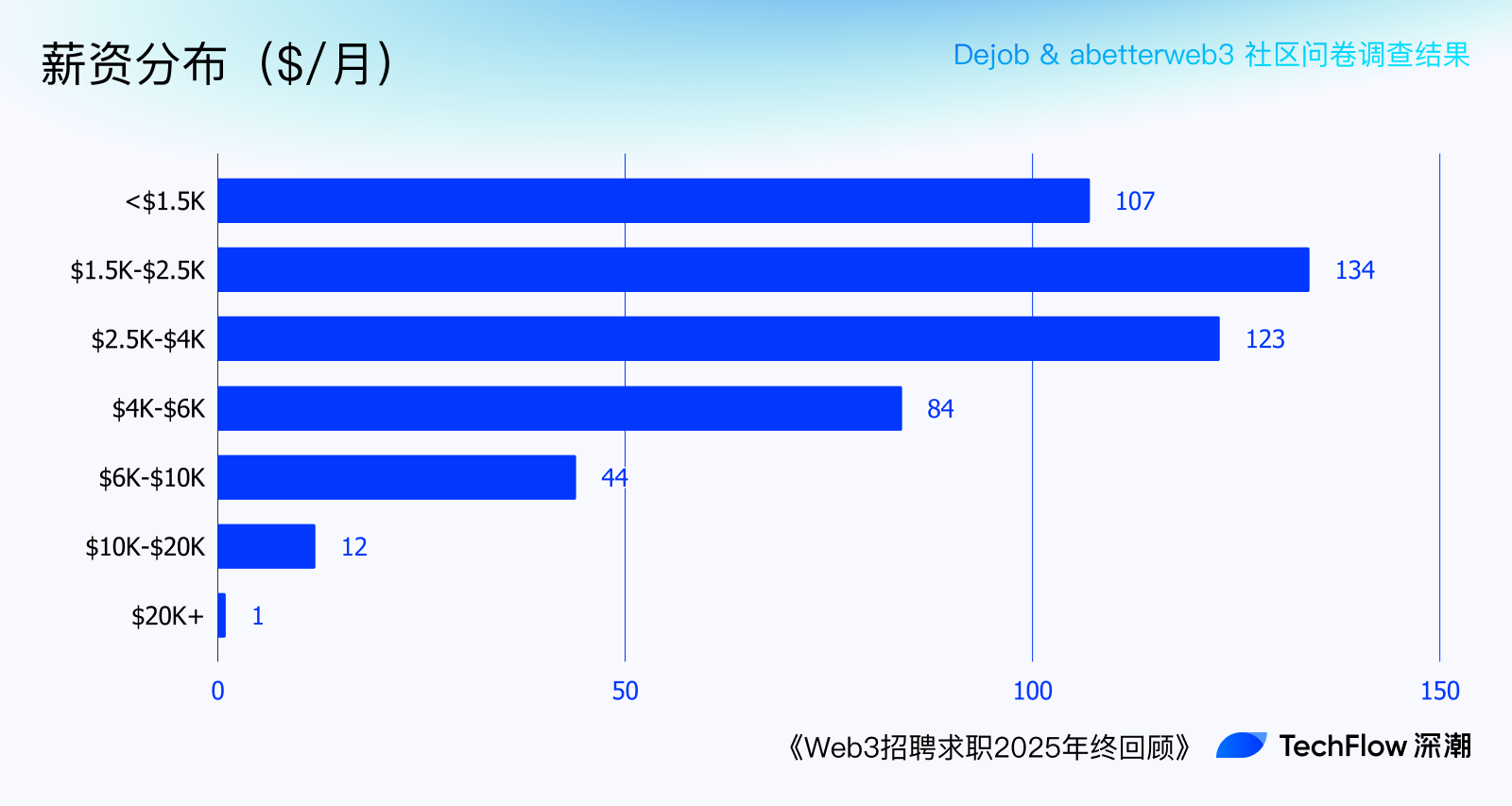
In terms of income, contrary to the myth of getting rich overnight, most Web3 employees earn less than those in most top internet companies, and they also suffer from a serious lack of long-term incentives (currency/currency rights), year-end bonuses, and layoff compensation.
More than 70% of people earn less than $4,000 a month (equivalent to RMB 28,000), and those earning $10,000 a month, which are commonly seen on Xiaohongshu, are even rarer.
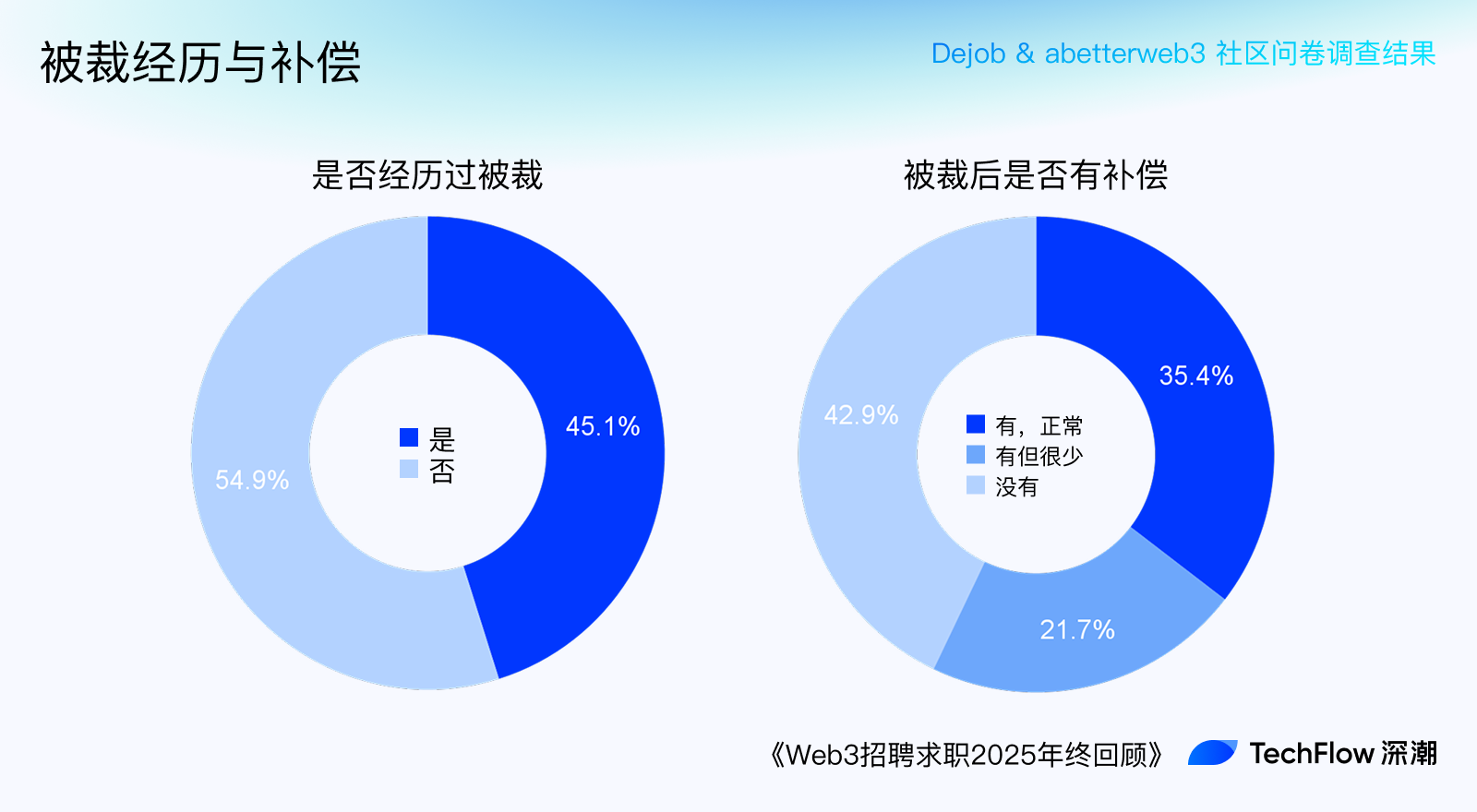
Nearly half of the respondents had experienced layoffs, and 40% of those laid off said they received no compensation, while 21% said that even if they did receive compensation, it would fall far short of the legally mandated standard (such as n+1).
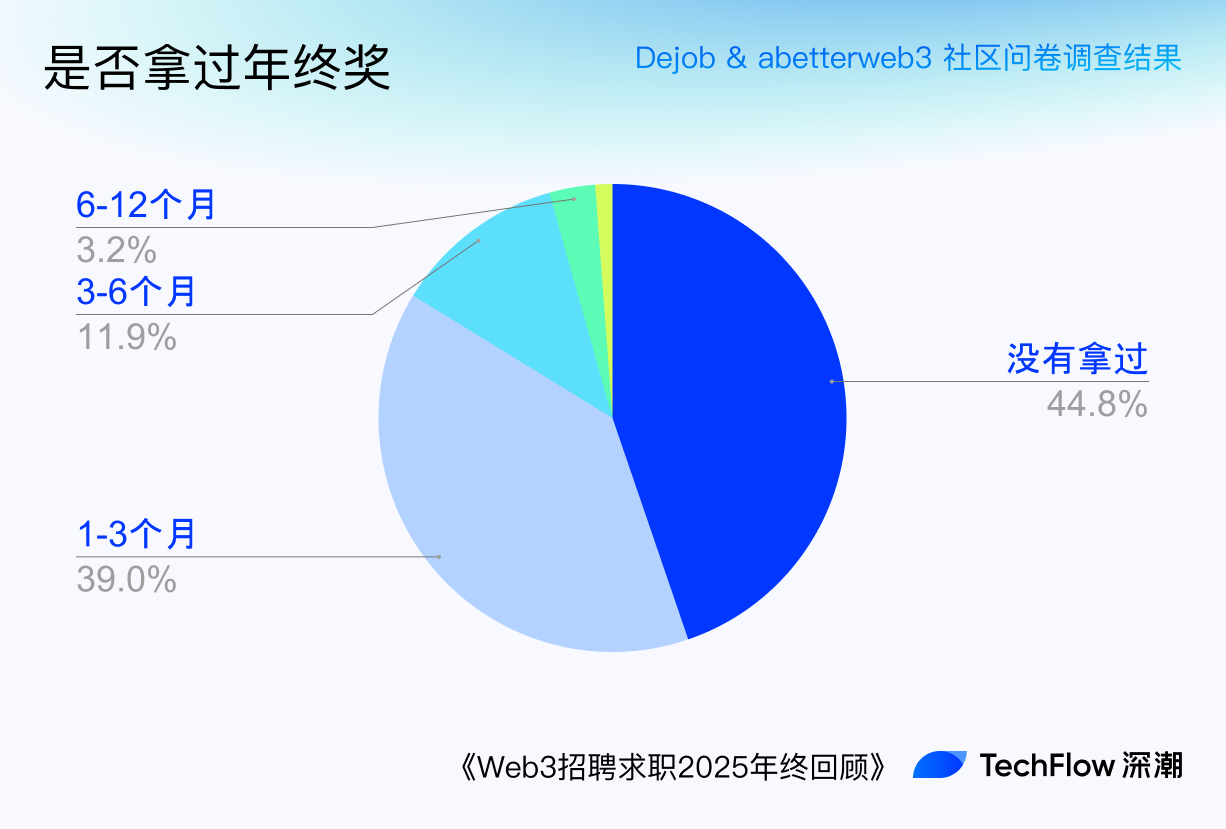
Nearly half of the respondents said they had never received a year-end bonus; even those who did receive a year-end bonus generally received 1-3 months' salary, which is roughly the same as most internet companies outside the Web3 industry.
Regarding the well-known "climbing ladder" incentives, nearly 70% of practitioners said they had never received them. Even if they had, very few received more than 20% of their salary.

A quarter of the respondents even reported an overall loss after entering the crypto, essentially working for free; the rest mostly accumulated only around $100,000 (equivalent to 700,000 RMB).

However, on the other side of the seemingly hopeless income level, Web3's strong remote work culture can provide a much-needed respite for many workers. Nearly 70% of respondents indicated that their companies support remote work, and another 15% indicated support for hybrid work arrangements, meaning that although there is an office, being physically present is not mandatory, or that employees can work from home a few days a week.

Remote work can indeed alleviate the pain of working to some extent. In response to the question of "the biggest source of stress," 31 respondents chose "too long commuting time." Other top sources of stress included product growth, job boundaries, market fluctuations, fear of being laid off, and having an incompetent boss.

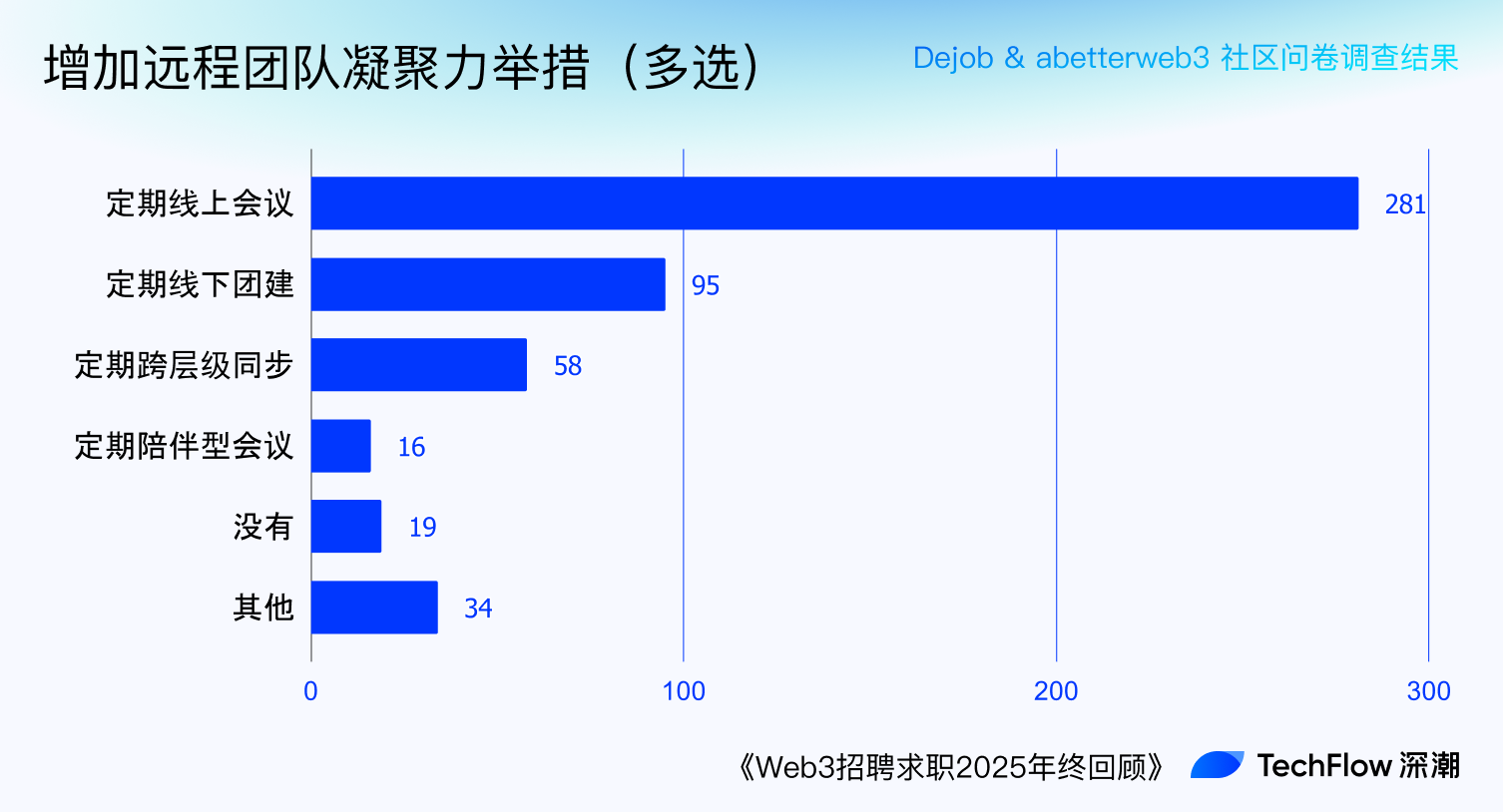
To maintain the mental health of employees as social animals, many companies have taken measures to maintain team cohesion.
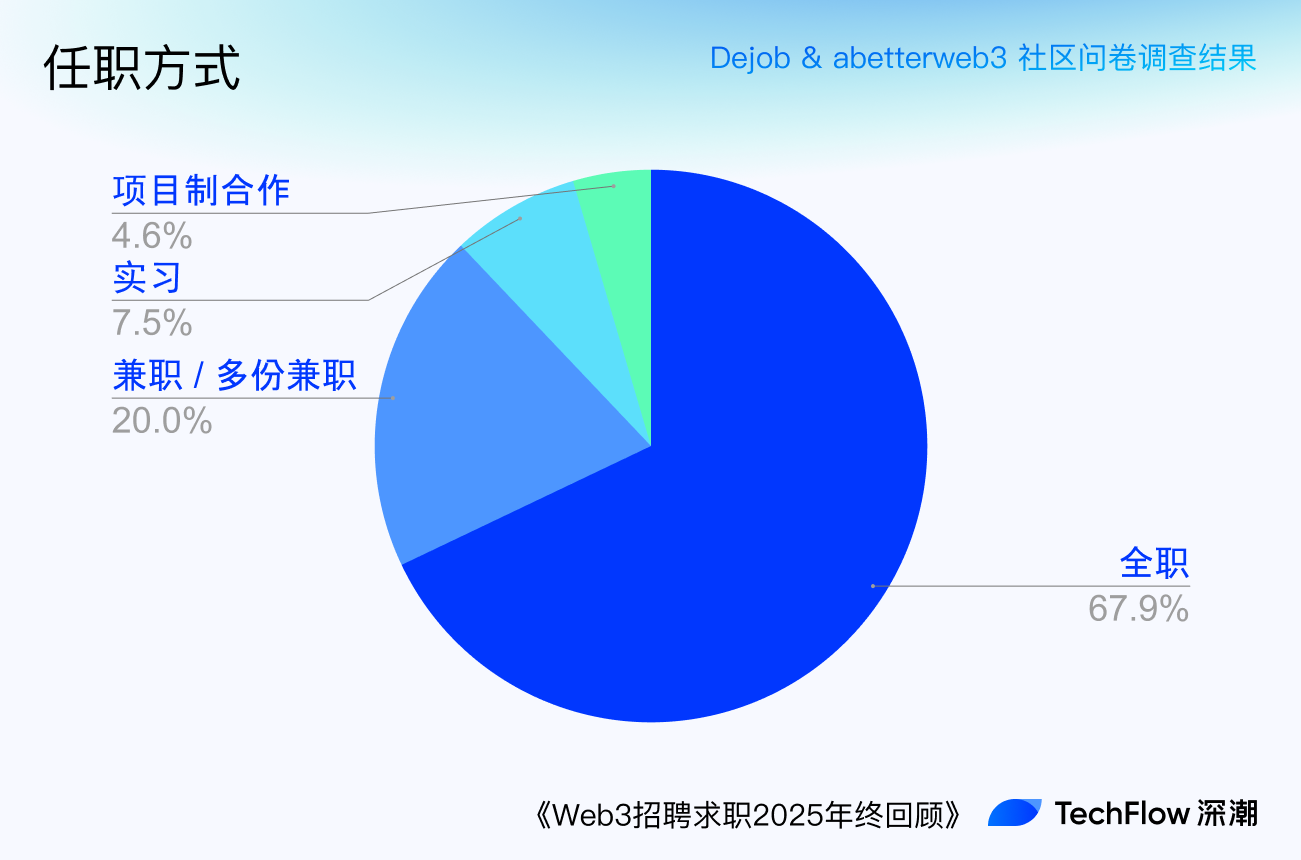
The combined effects of low income and job insecurity have led many to take on multiple jobs. 20% of respondents indicated they had part-time work. This also reflects the technology-driven culture of most Web3 companies; as long as they can solve problems and possess the necessary skills, they don't interfere with employees' lifestyles or income patterns.
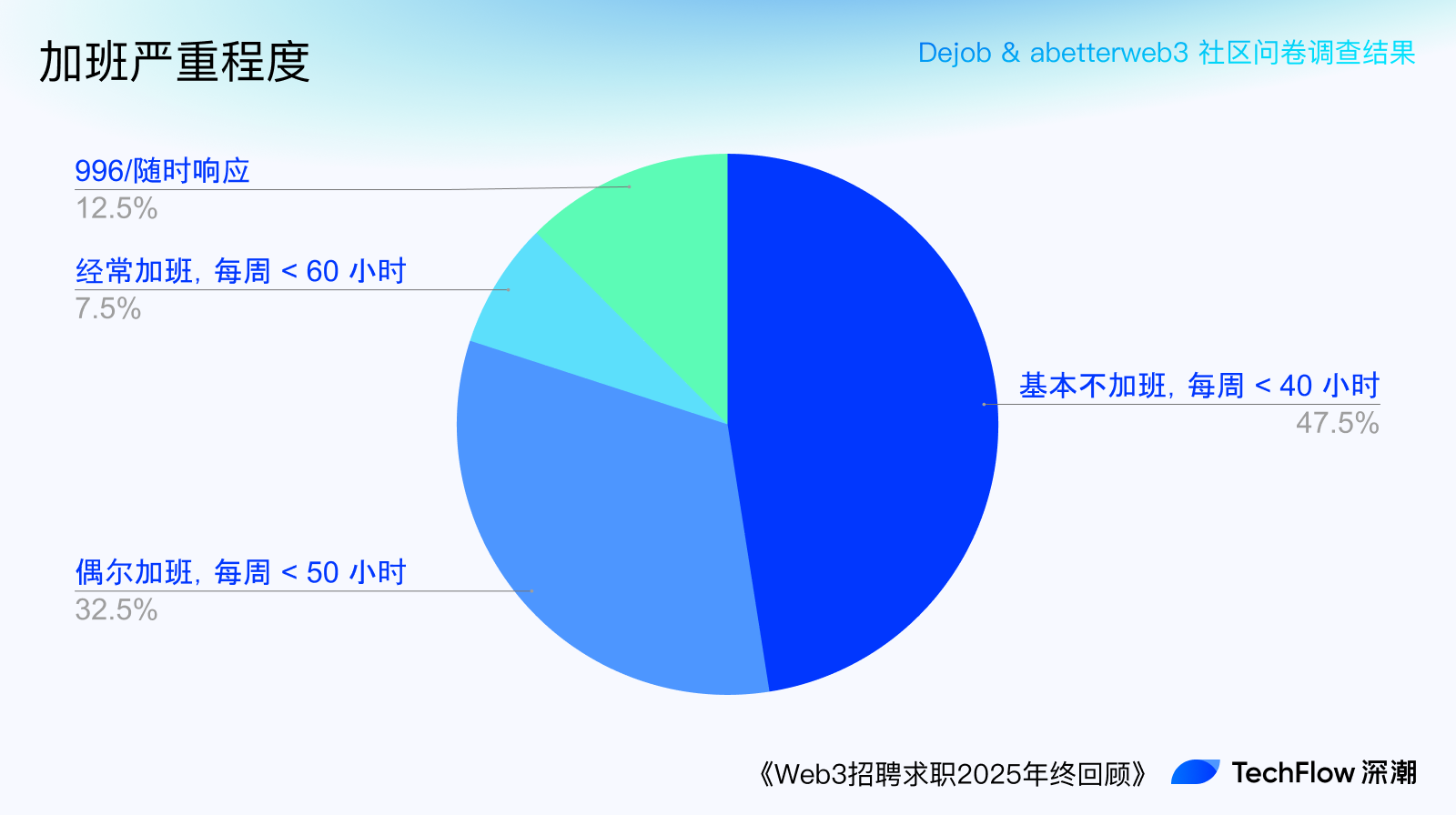
Regarding overtime intensity, 80% of people work approximately 40-50 hours per week. Therefore, it seems that the overtime intensity of Web3 is less than that of many 996/007 sweatshops on Web2.
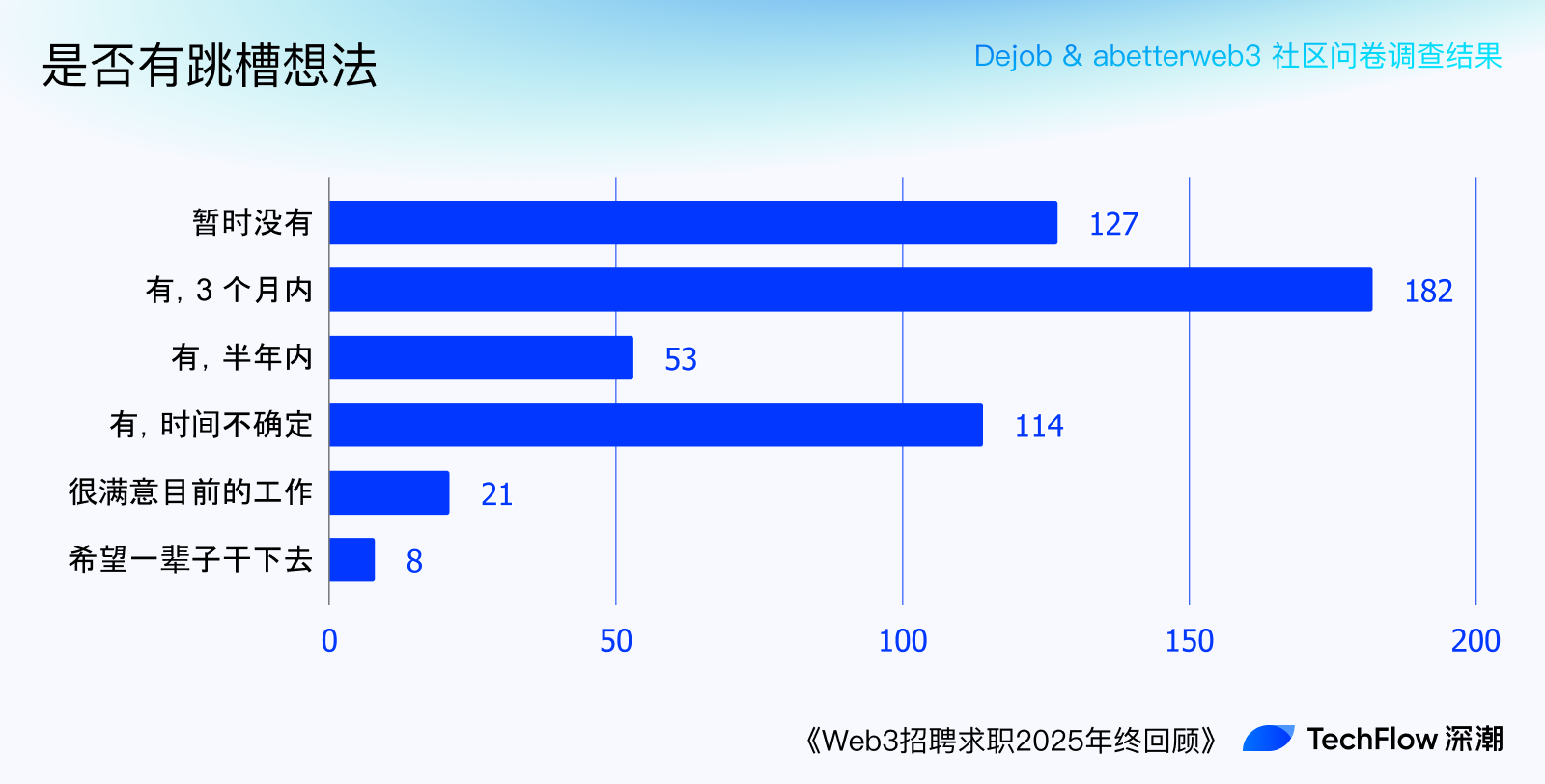
Regarding job hopping, over half of the respondents wanted to change companies, with 30% planning to switch within 3-6 months. However, about a quarter were satisfied with their current situation, and eight even found a dream company they "hoped to work for for life."
Considering factors such as minimal overtime, remote work options, and part-time availability, many people gave their current jobs a positive evaluation. The average score for their current job was 3.51.

When asked whether their next job would also be in the crypto, over 80% of respondents chose to stay, while 7% chose to leave.

The reasons given for leaving reflect the cold indifference within this industry.

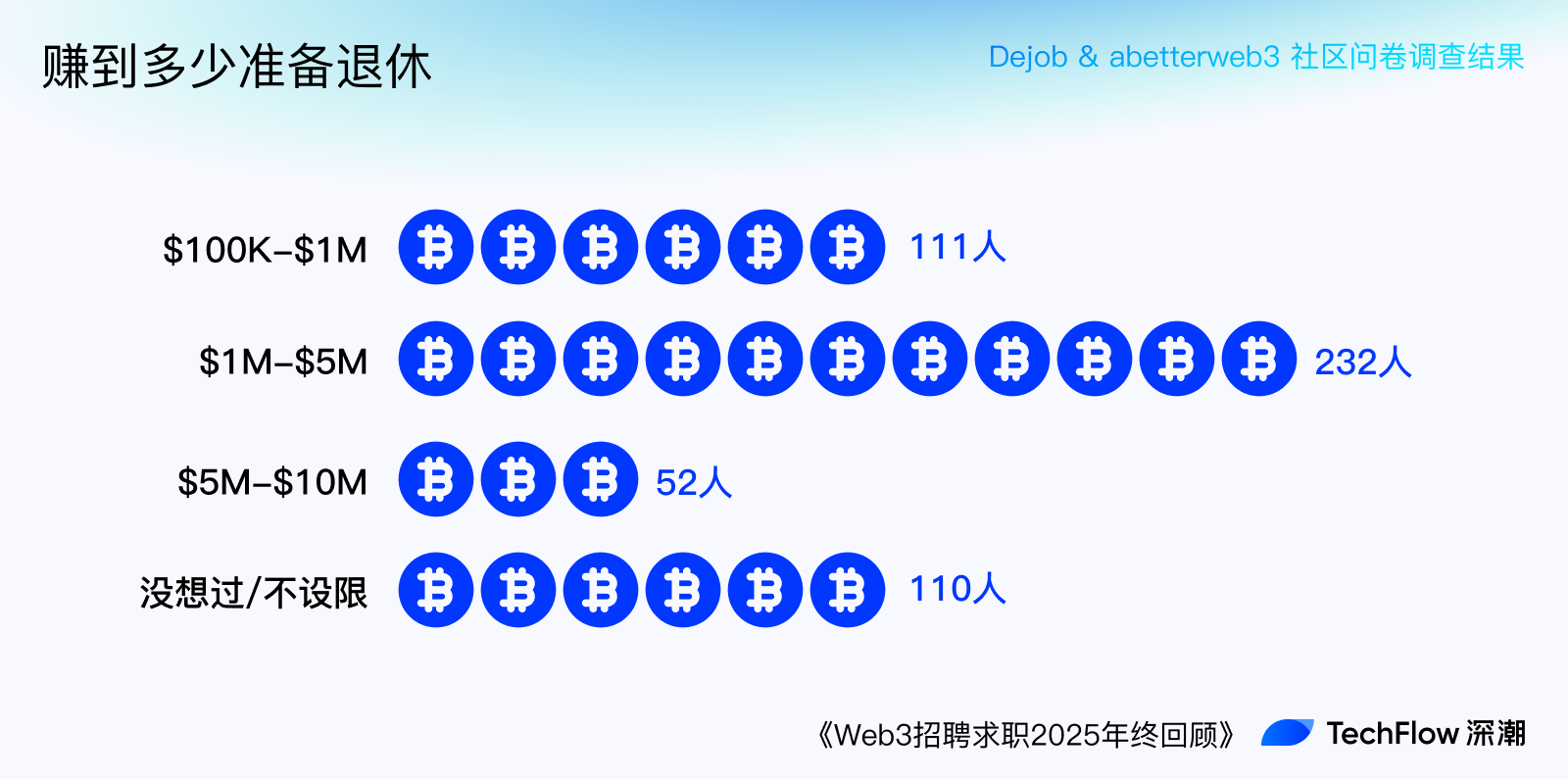
But all this planning is ultimately for early retirement. When asked "At what level of wealth would you consider quitting your job?", the vast majority chose $1M – $5M (equivalent to 7 million to 35 million RMB). This may indeed be the limit of wealth one can achieve through working. However, 20% chose "no limit," reflecting their confidence in their abilities.
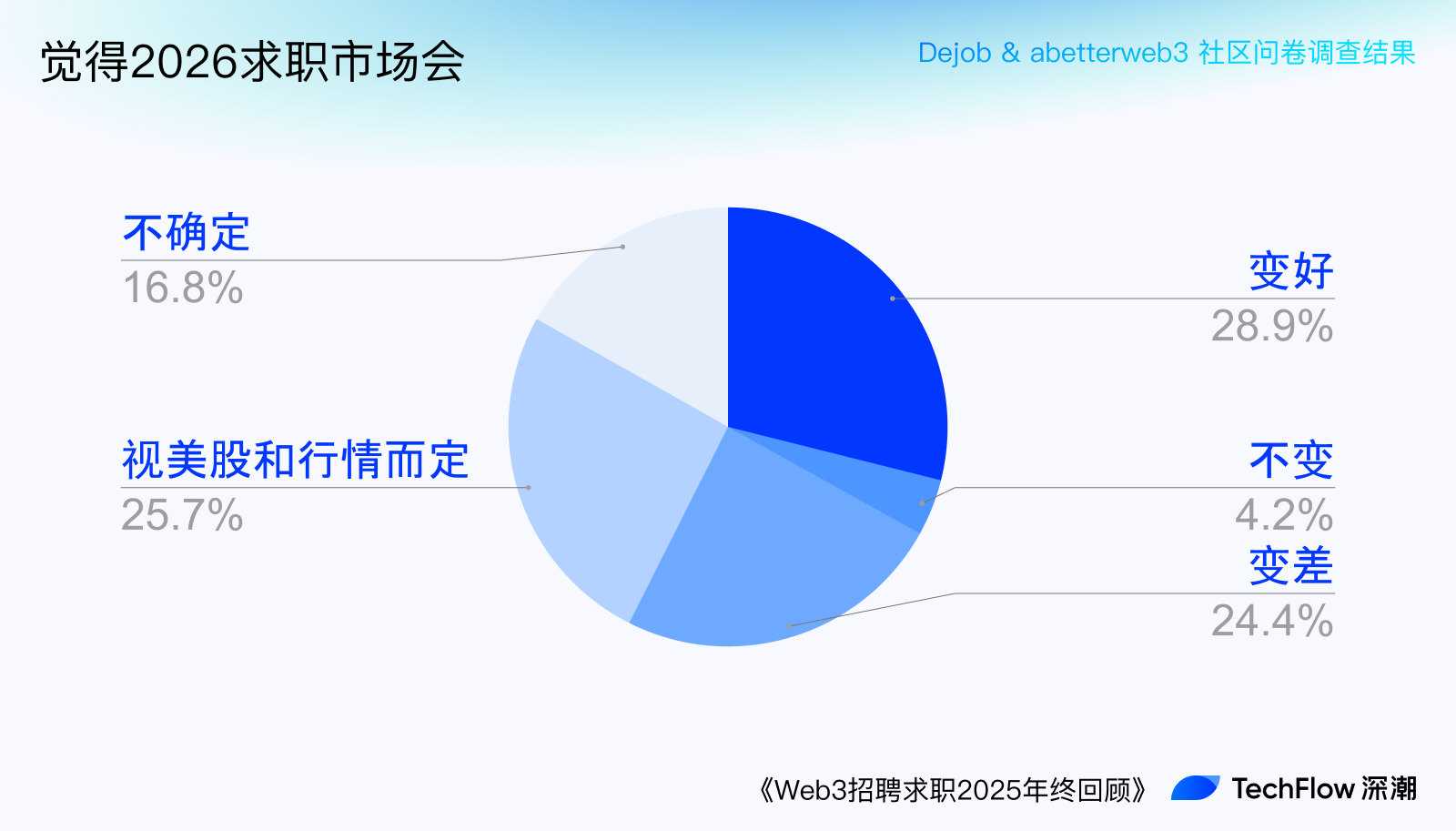
Regarding whether they are optimistic about the job market in 2026, only 28% of people think it will improve, while the majority are pessimistic or taking a wait-and-see attitude.
Truth or Dare segment