Author: antoniayly, Deep Tide TechFlow
In 2025, the crypto industry was experiencing a subtle buzz. Various ETFs were lining up for listing, compliance frameworks were being introduced in various countries, and traditional institutions were engaging in FOMO (Fear of Money in the Market). It seemed that crypto was being embraced by old money as a trendy asset. On social media, some people were showing off their monthly salaries of $10,000 or sharing various tips on how to make money through stable arbitrage, which made many outsiders eager to try it out.
But behind the hype, what is the real experience of working in Web3 like? Who is hiring? What kind of people are they looking for? How much are they paid? Are those who want to enter or have already entered the field thriving? Are they feeling lost? Do they regret their decision?
To answer these questions, we surveyed major industry recruitment portals such as web3.career , cryptojobslist , Dejob , abetterweb3 , official websites of major exchanges, and recruitment information from the Solana and Arbitrum ecosystems. We analyzed over 18,000 job postings and over 2,700 job seekers. Want to see more?
In 2025, this article examines recruitment trends, popular positions, salary structures, and geographical distribution of various Web3 companies, providing a glimpse into what Web3 companies are currently preparing for.
Web3 analyzes the skill sets, salaries, remote work ratios, layoff experiences, favorite/disliked/most desired companies of Chinese job seekers, aiming to create the most authentic talent profile in this industry.
summary:
The Matthew effect is prominent in the job market; there are only a few dozen large Web3 companies with more than 100 headcounts, but their positions account for 40% of the total.
Engineers (developers) accounted for 32% of all hiring; "compliance" related needs ranked 7th in the top 10, reflecting the industry's positive transformation under the wave of compliance.
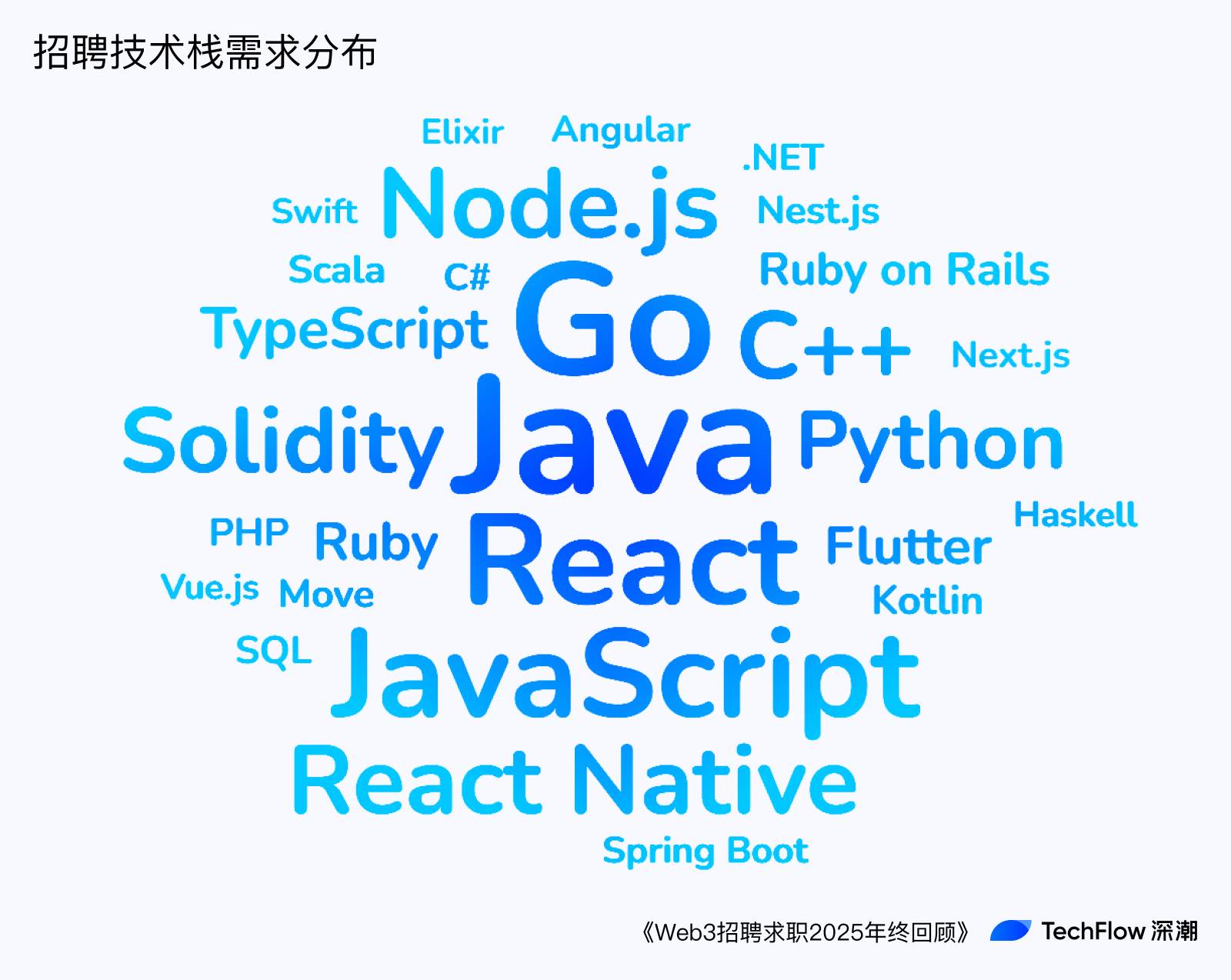
The technology stack requirements are mainly focused on AI, blockchain, and backend, while native on-chain languages such as Solidity and Move remain relatively niche.
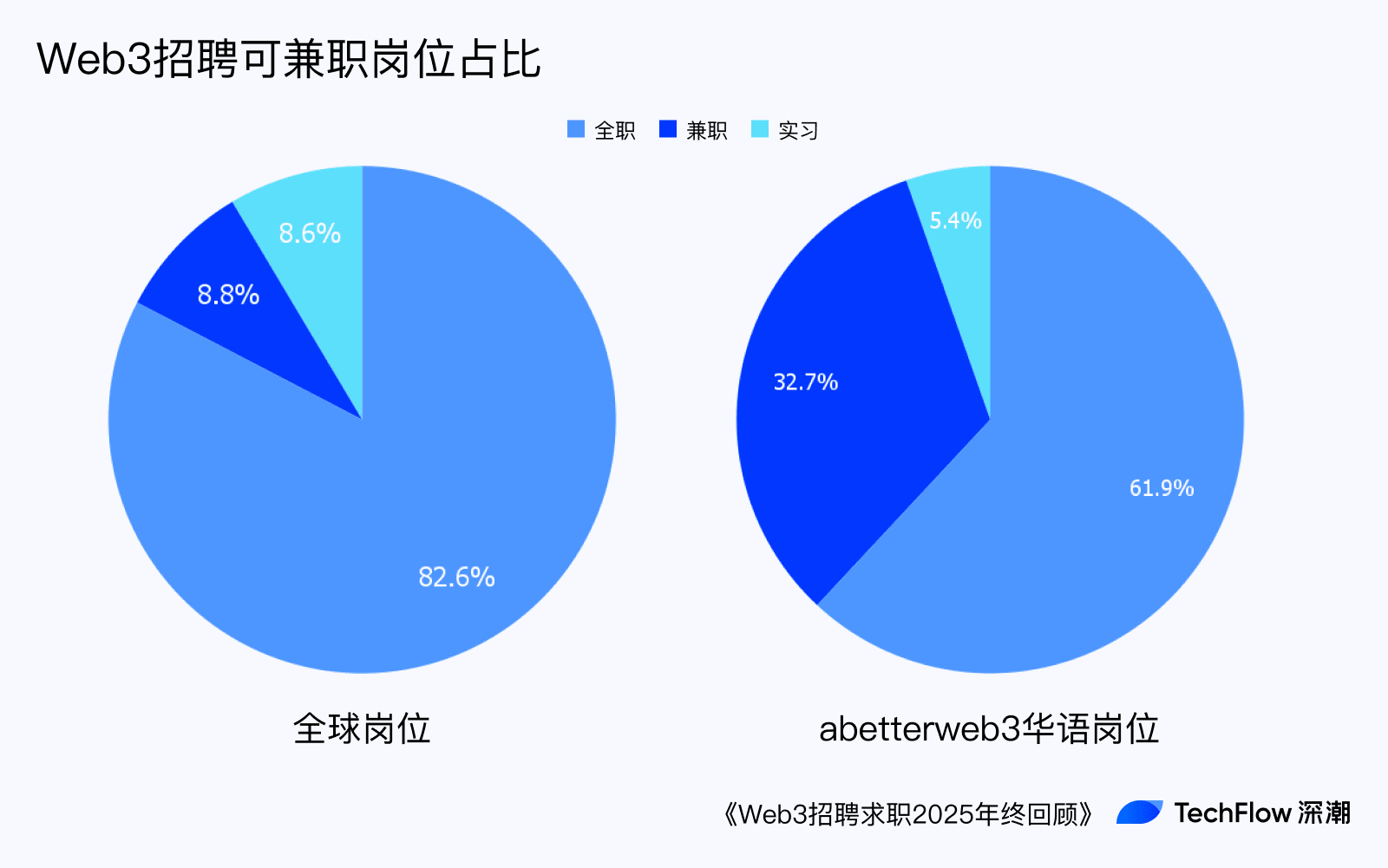
90% of the positions support remote work, and 8.8% of the positions support part-time work (33.7% of the positions for Chinese recruiters support part-time work).
Chinese salaries are 70% to 80% lower than those of global talent, but in RMB terms they are on par with those of small and medium-sized internet companies in China.
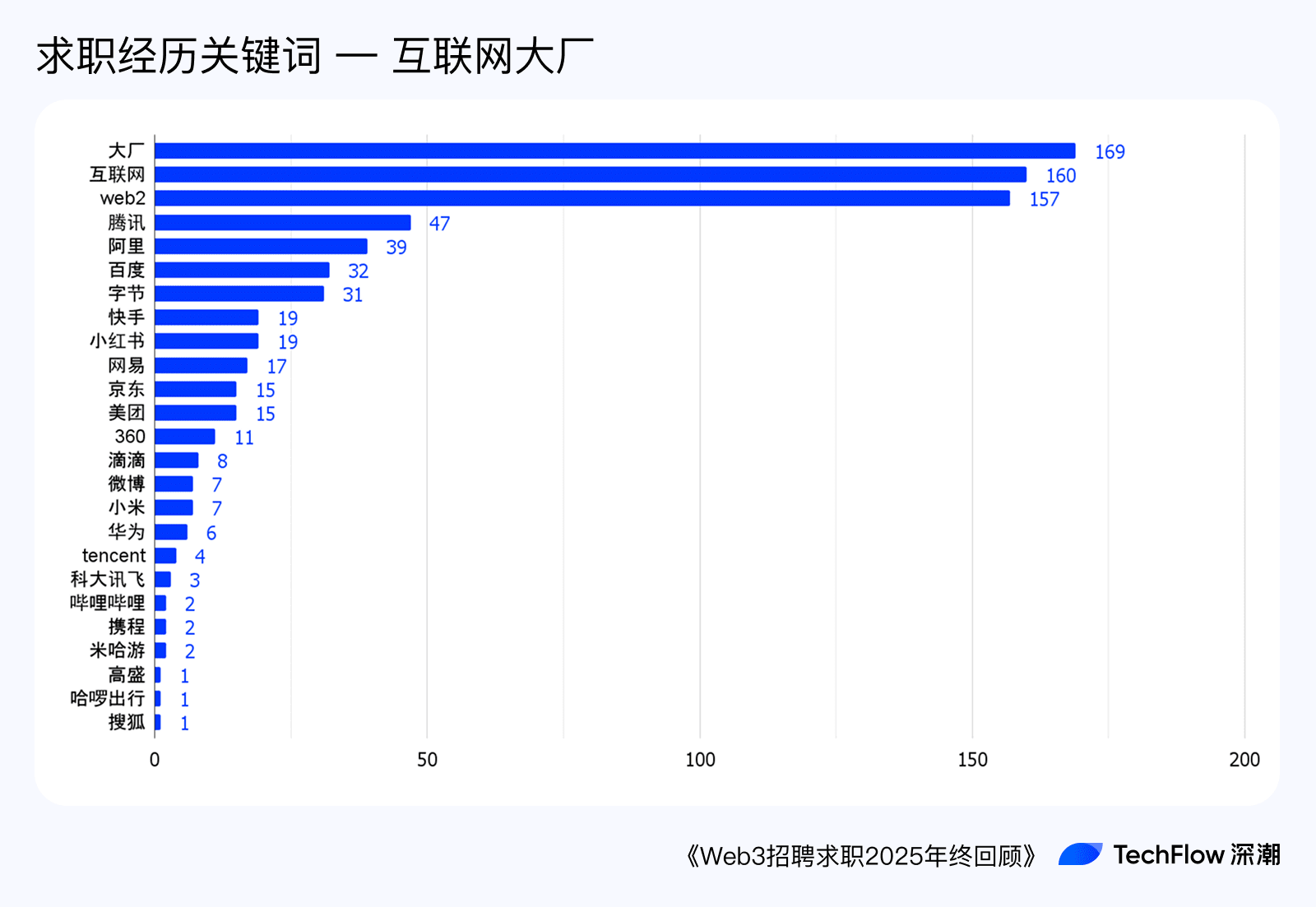
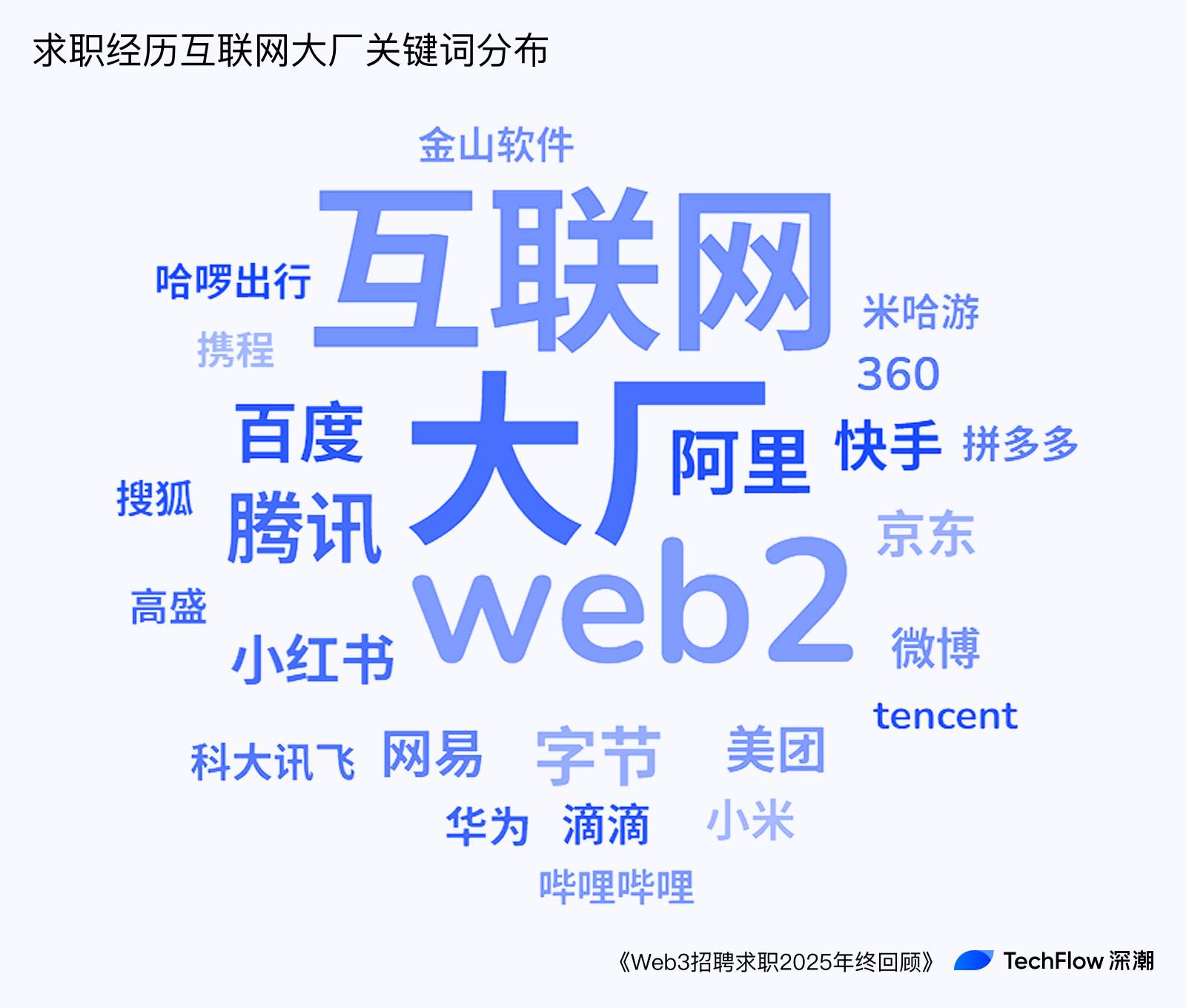
Among Chinese job seekers, a large number of names of major Web2 companies appear in their backgrounds, and those with 10+ years of experience account for 10% of the total.
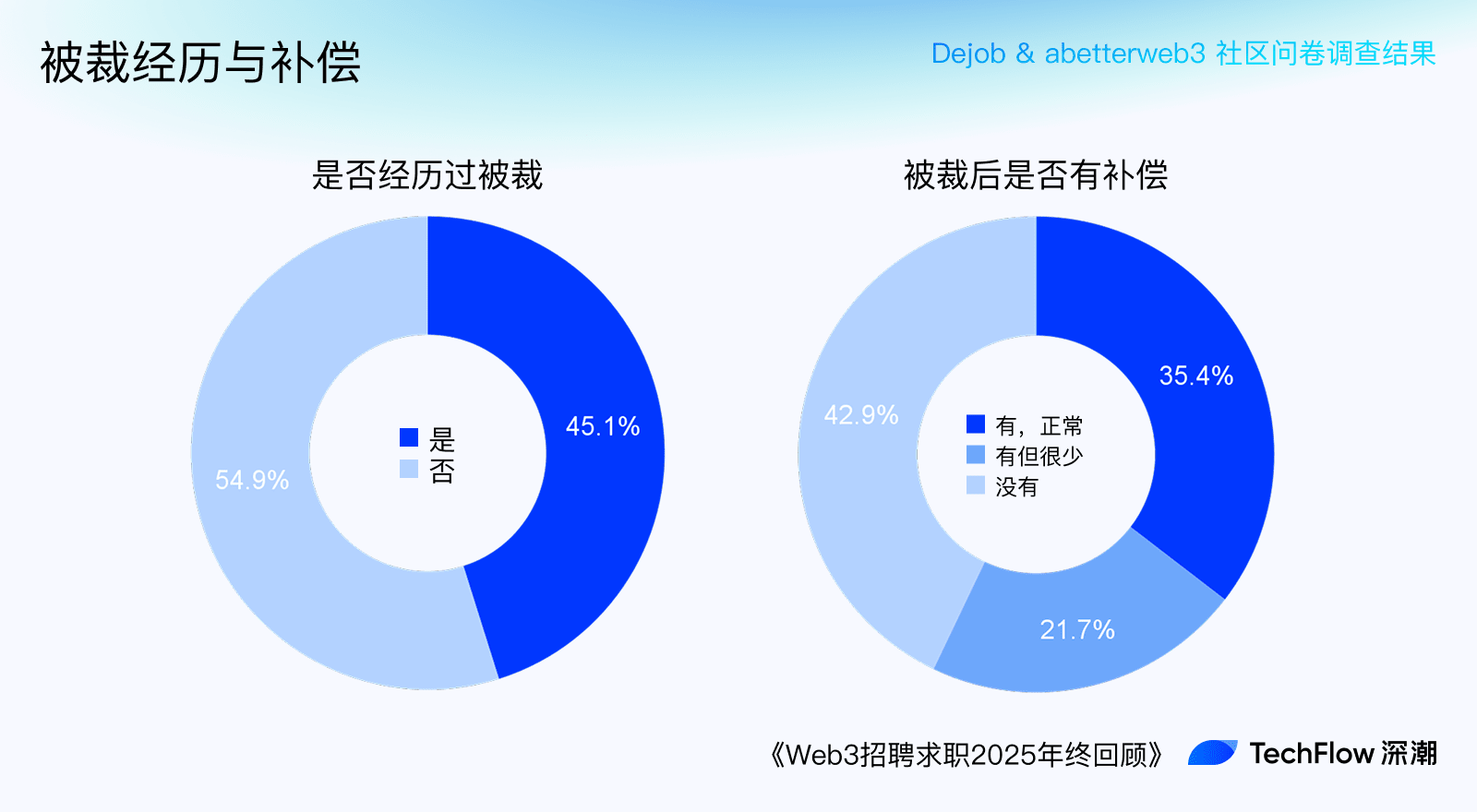
Nearly half of the people had experienced layoffs and received no compensation afterward.
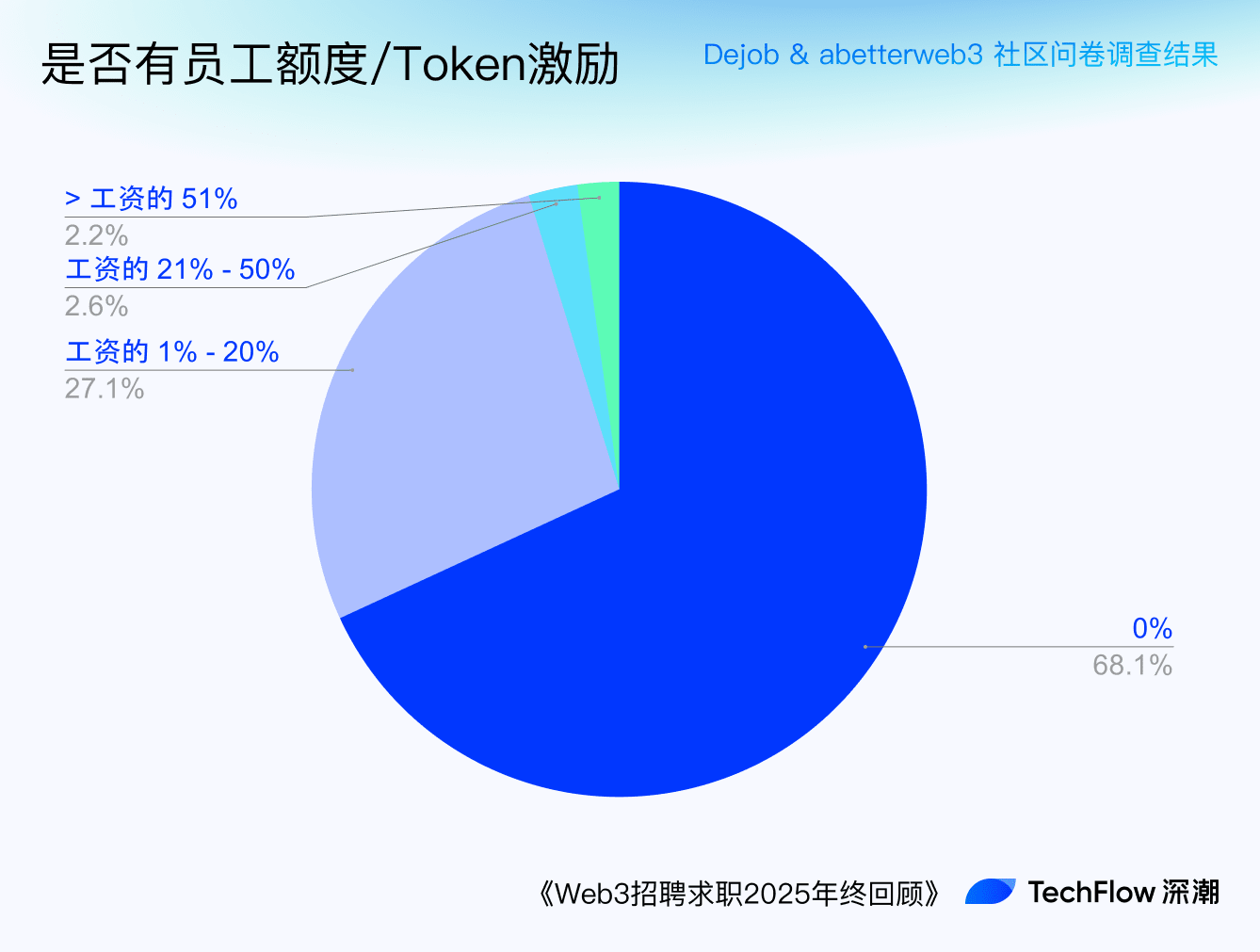
Nearly 70% of people work without any monetary or token incentives.
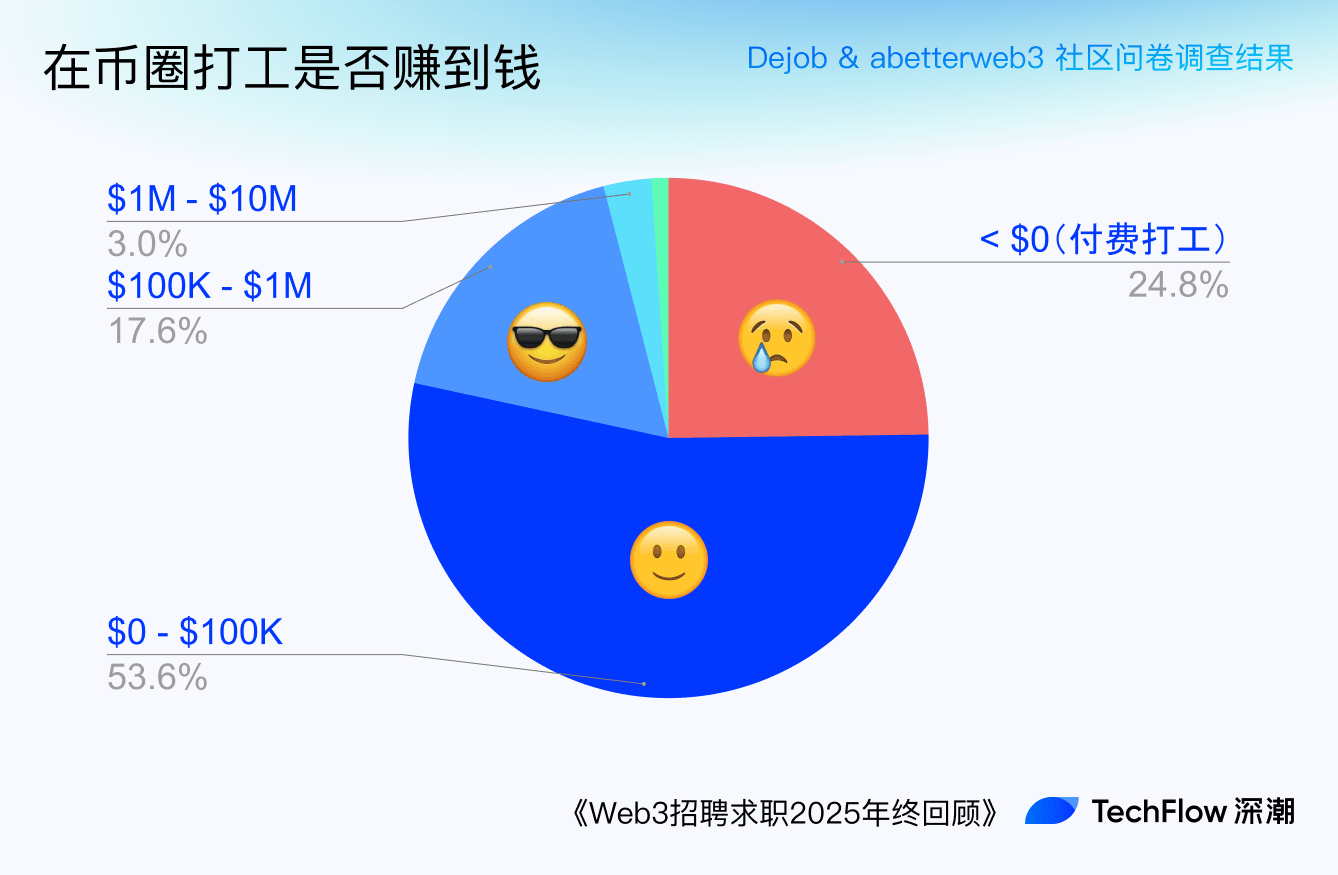
The survey results showed that 25% of the respondents were paid to work (their overall earnings after entering the cryptocurrency market were less than 0).
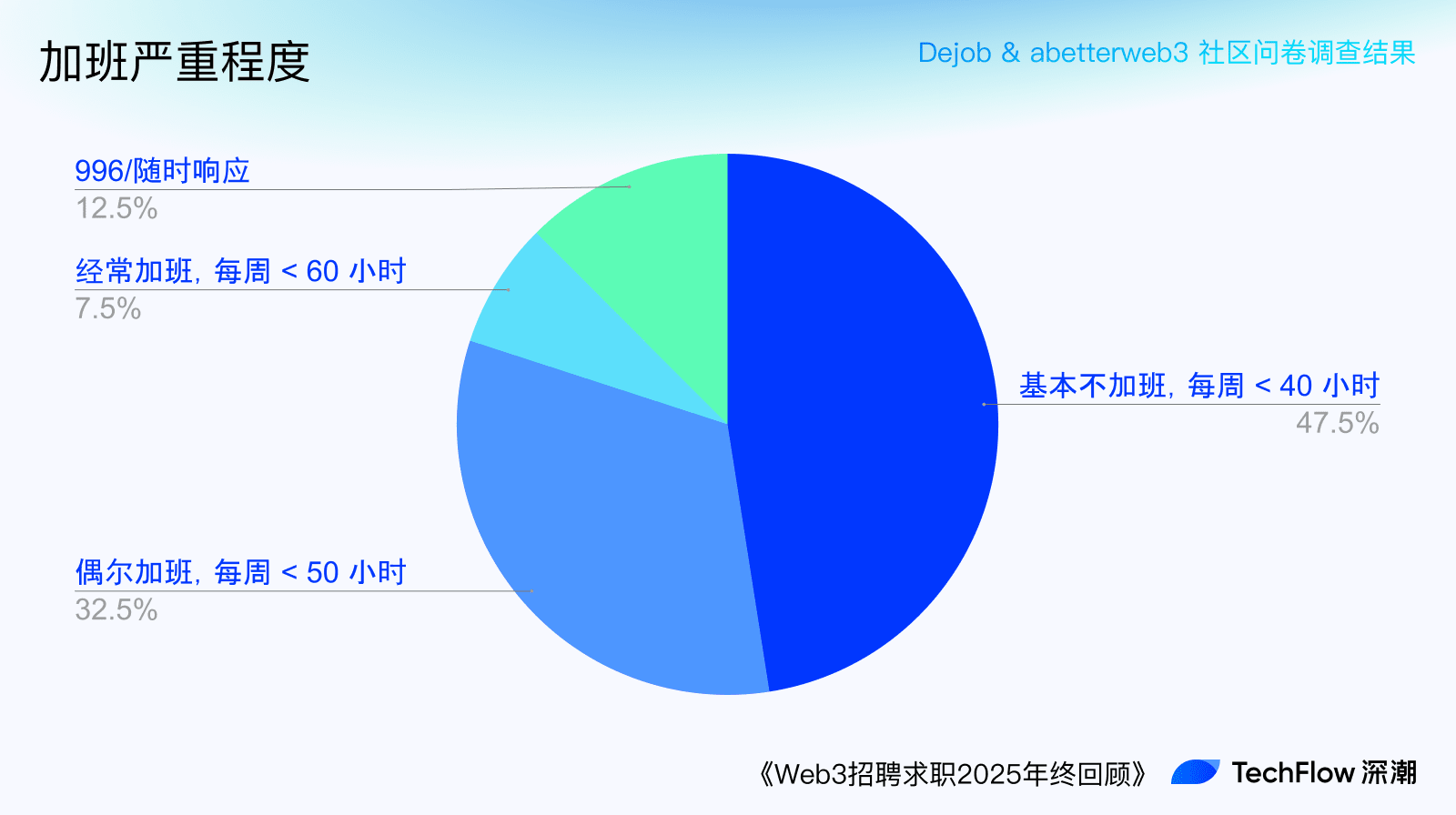
80% of people work 40-50 hours per week, so overtime is not a serious problem.
This article is also available in PDF format for viewing or downloading on other devices. Visit this link below 👇
https://docsend.com/view/sgnw468tnq2gjf2e
I. Web3 Recruiting: Preparing for the Next Era of Compliance
1.1 Who is hiring?
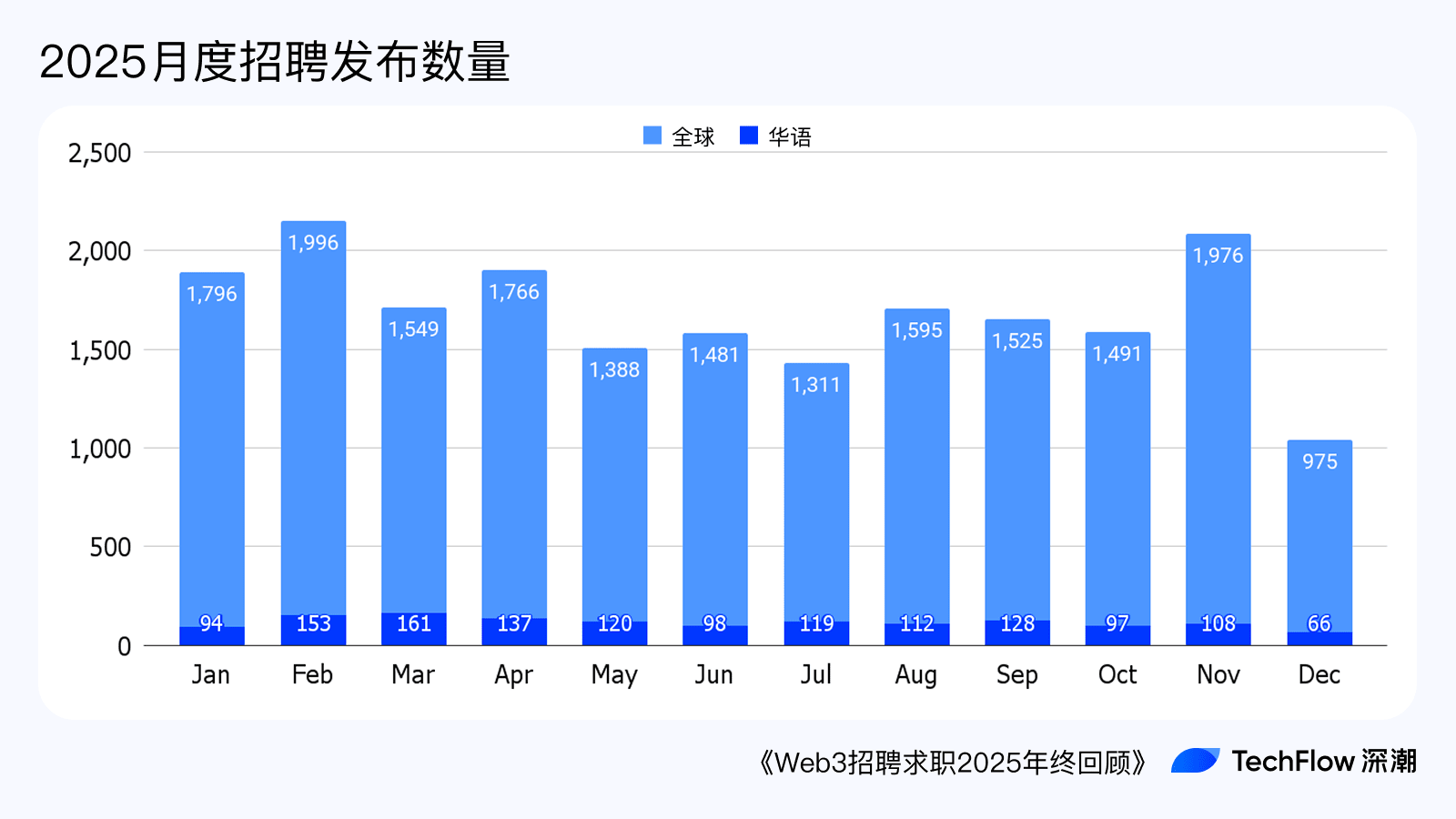
The Web3 job market in 2025 is not expected to fluctuate much throughout the year, but changes in certain months can reflect some common hiring trends.
The surge in job postings in January and February typically reflects companies allocating work to various departments at the beginning of the year based on their plans. A spike in hiring before December may reflect a large number of vacancies resulting from some employees leaving or changing jobs before the Christmas/New Year holidays.
The significant drop in headcount (H&C) in December illustrates the normal working conditions in December as the month ending the year and a holiday season.
In terms of recruitment in the Chinese-speaking region, since January and February are often the Lunar New Year months, many companies will make plans in March and April, so the peak of hiring will be in March and April.
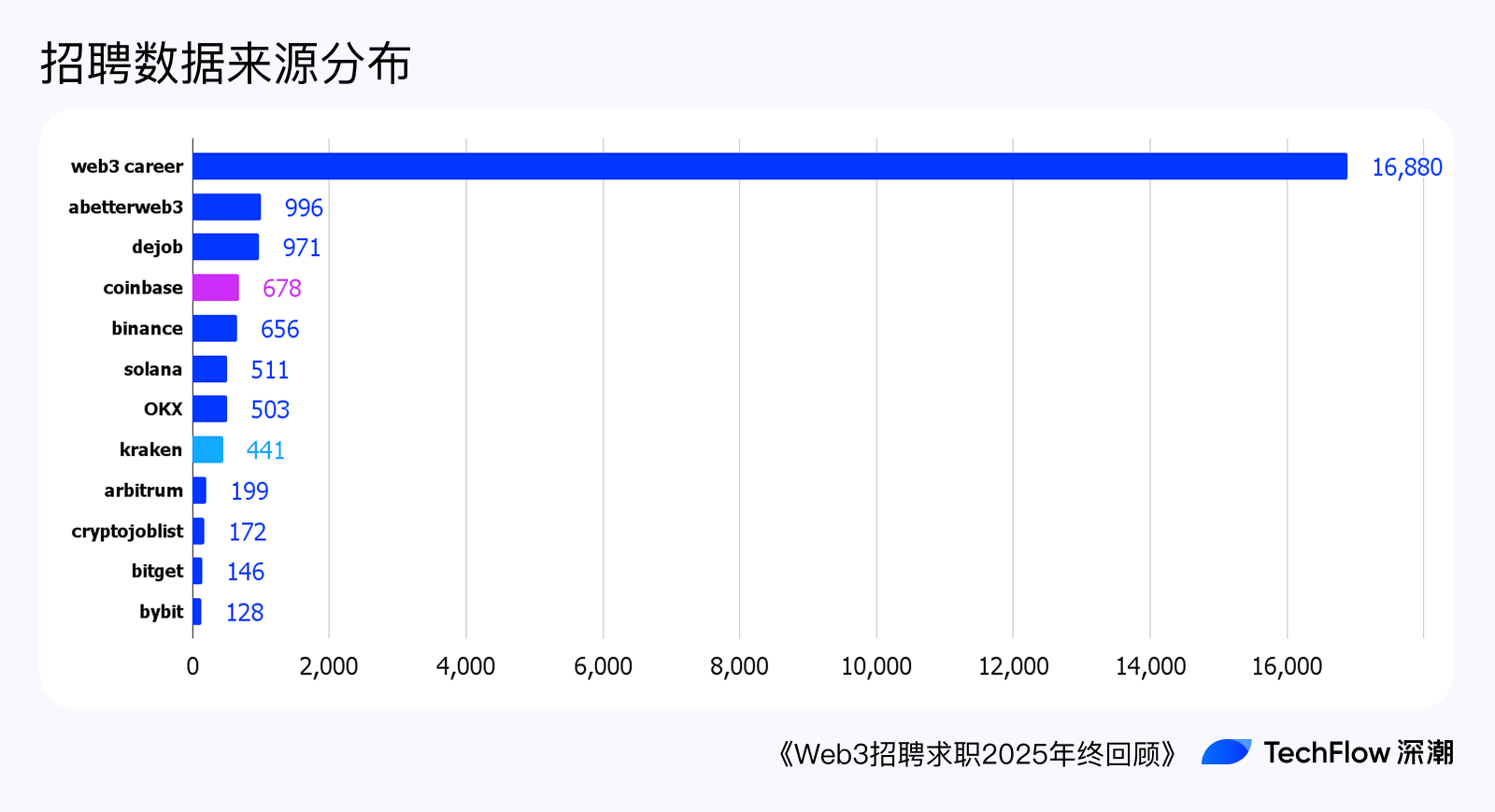
Among various recruitment channels, web3.career has become the first choice for many recruiters and job seekers due to its ability to quickly filter remote positions and its large number of positions and companies, resulting in a significant lead in the number of job postings.
Following that are Chinese-language vertical recruitment platforms Dejob and abetterweb3 , as most Chinese founders are more accustomed to collaborating in their native language and there is a strong need for efficient matching of Chinese-language talent.
Next are the official recruitment pages of major exchanges, such as Binance , OKX , and Coinbase . However, because exchanges often post recruitment information simultaneously on Chinese-language and international platforms, there may be some overlap in the data here.
The Solana ecosystem job postings totaled 515 in 2025 (up to April 2025), while Ethereum ecosystem job postings were primarily collected from the Arbitrum ecosystem job postings , totaling 194 throughout the year. These two job posting pages are the main entry points for on-chain ecosystem jobs outside of exchanges.
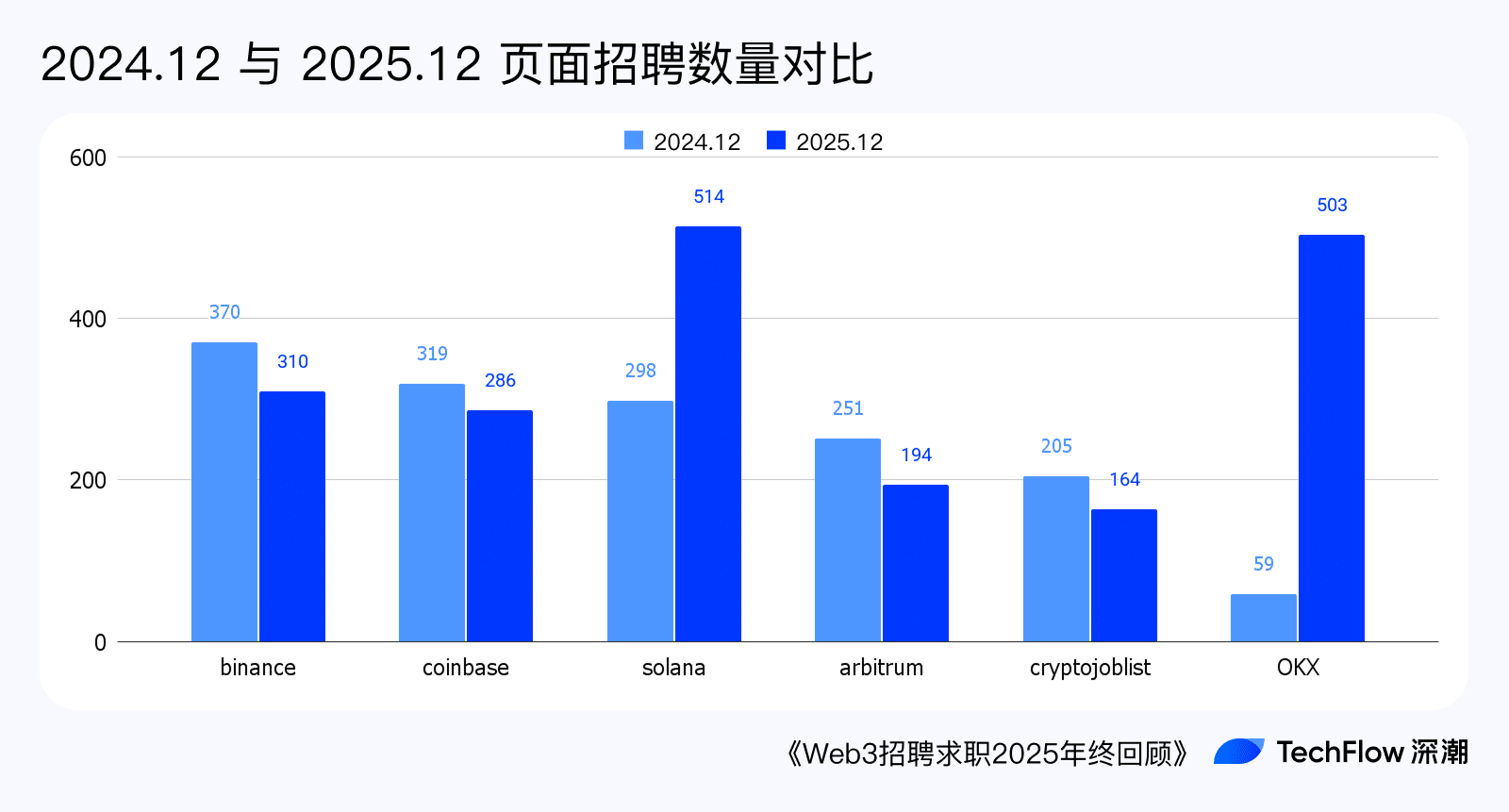
Compared to December 2024, Solana's job postings saw a significant increase (298 → 514, +72.5%), while other platforms, except OKX, experienced varying degrees of decline. However, this could also be because OKX did not reuse its official job postings page last year.
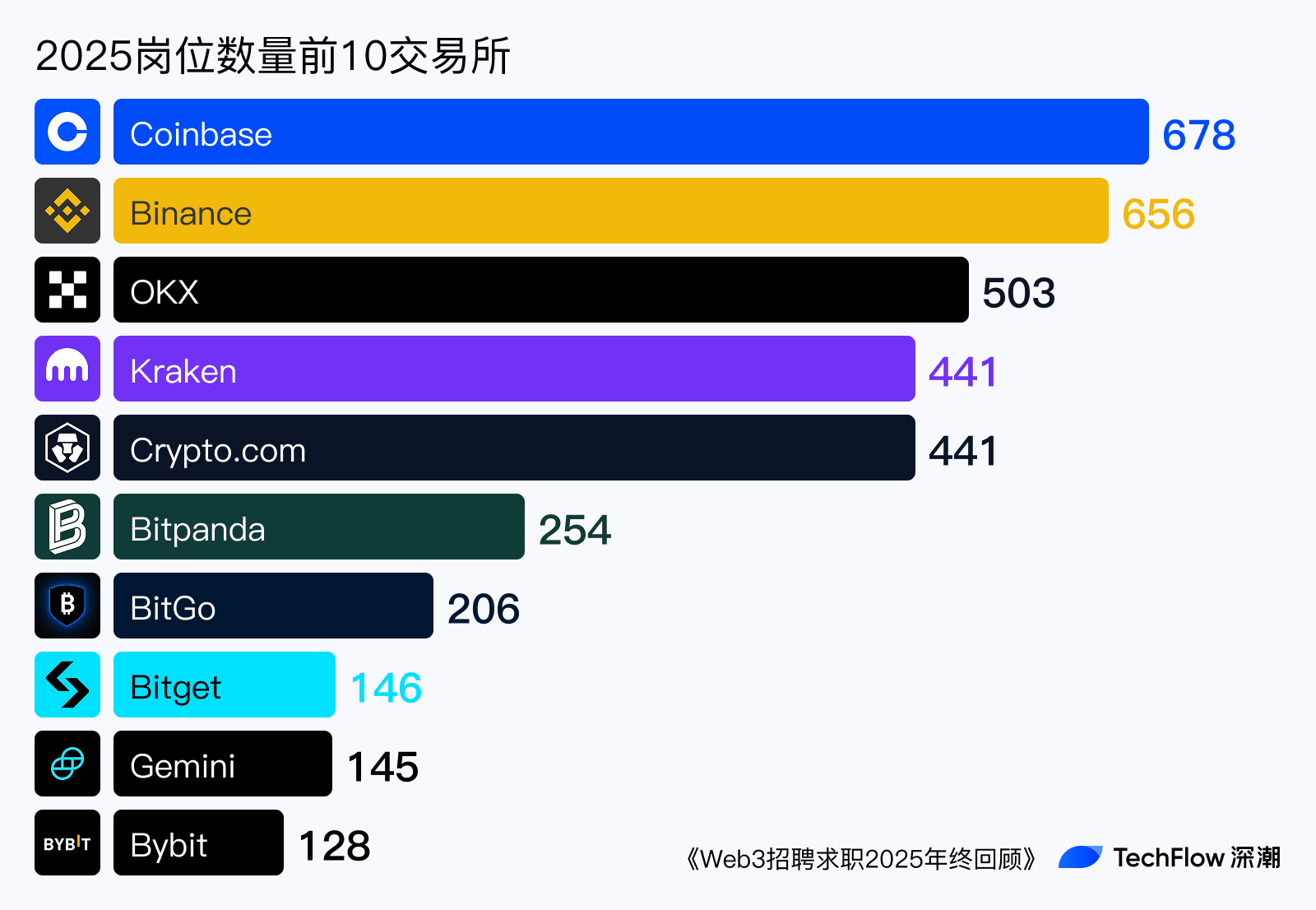
Based on various channels, the top 10 exchanges in terms of job postings in 2025 are:
Coinbase, as a long-established compliant exchange in the US, has made a significant leap forward this year, riding the wave of compliance. Other exchanges, on the other hand, are expanding at a normal pace, neither overly aggressive nor overly conservative, considering the distinct bull and bear market characteristics of the cryptocurrency industry.
However, exchanges may experience frequent business line changes, and there may be instances where job postings are repeatedly canceled and reissued.
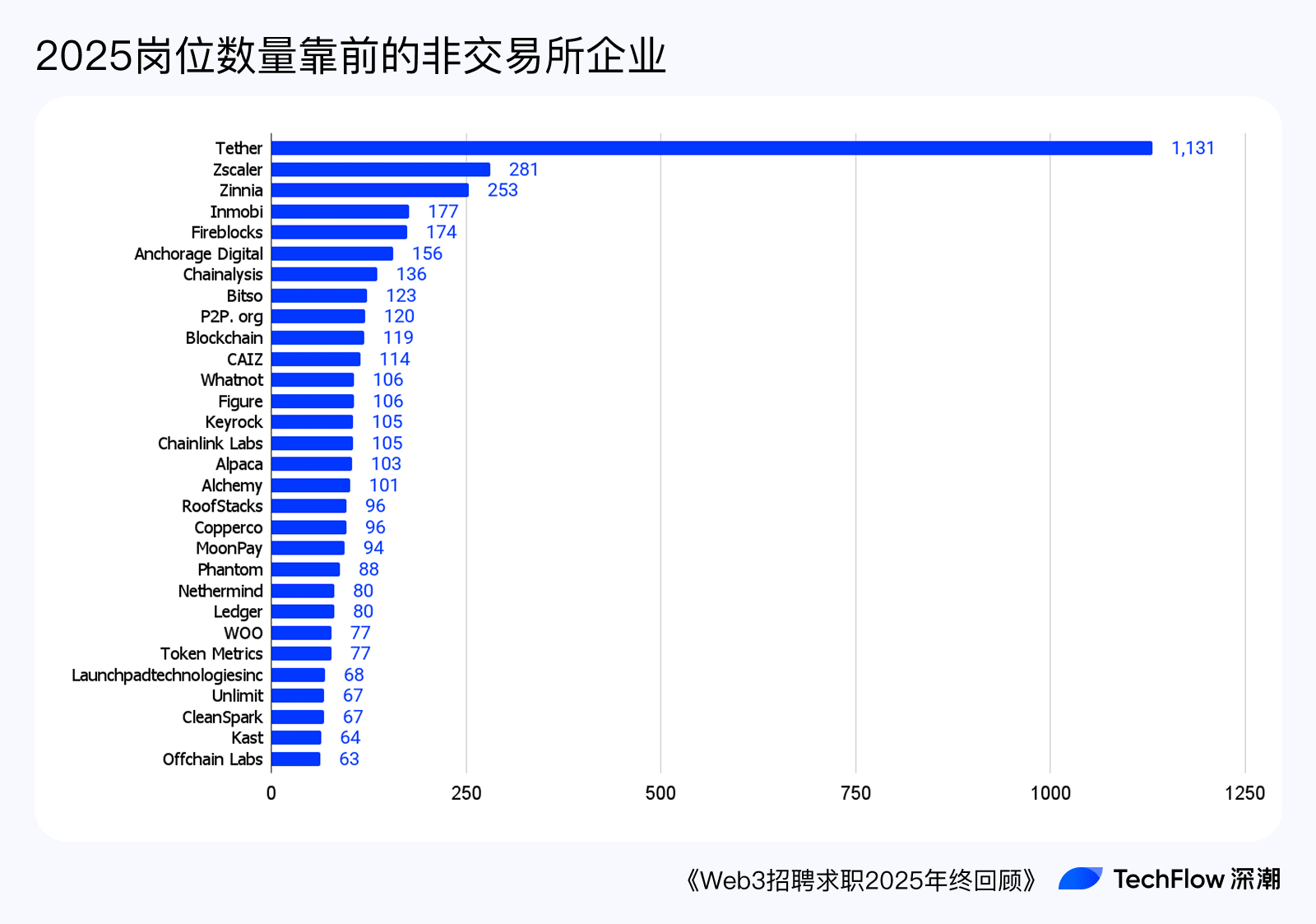
Among non-exchange companies, Tether demonstrated strong profitability and resilience with over 1,000 HCs throughout the year; however, other types of companies were clearly not as successful as exchanges, and companies with high issuance volumes were mainly concentrated in relatively mature business models such as security and fund custody.
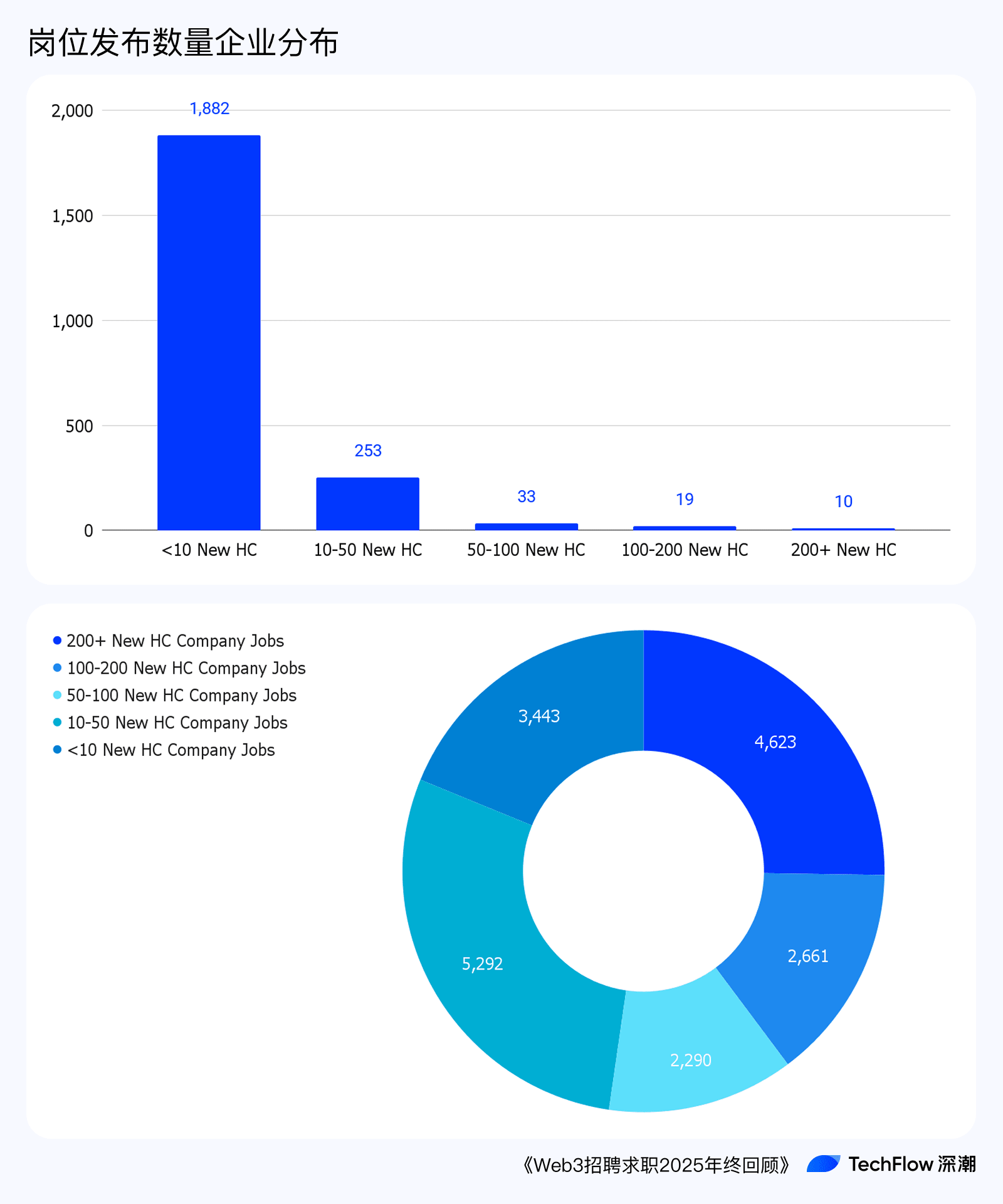
It can be seen that leading companies contribute the vast majority of positions. Only a few dozen companies posted more than 100 positions throughout the year, yet they account for 40% of the total. The hundreds of companies that posted 10-50 positions throughout the year are the backbone of the industry, accounting for nearly 30% of the total. Meanwhile, more than 1,800 companies posted fewer than 10 positions throughout the year, accounting for only 18% of the total.
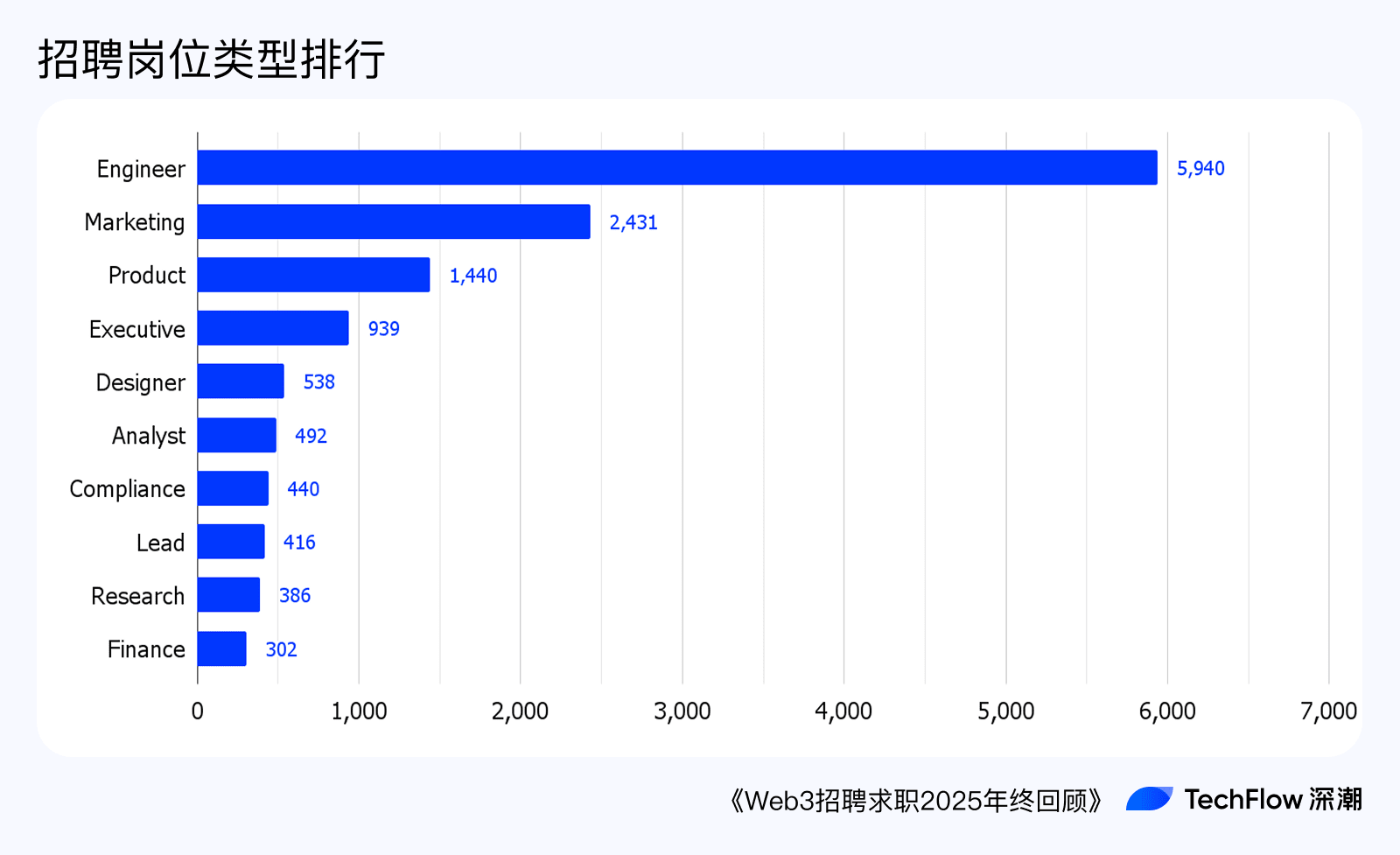
Regarding the distribution of job types, the top 10 types out of 18,508 valid data points are:
Engineers (developers) are naturally the most in demand in this industry, accounting for 32% of all hiring needs. This is closely followed by the demand from marketing departments, demonstrating that customer acquisition/growth is a perennial topic.
It's worth noting that "compliance"-related needs ranked 7th in the top 10. Amidst this wave of compliance efforts, capable and ambitious companies will actively fill this crucial gap in their portfolios.
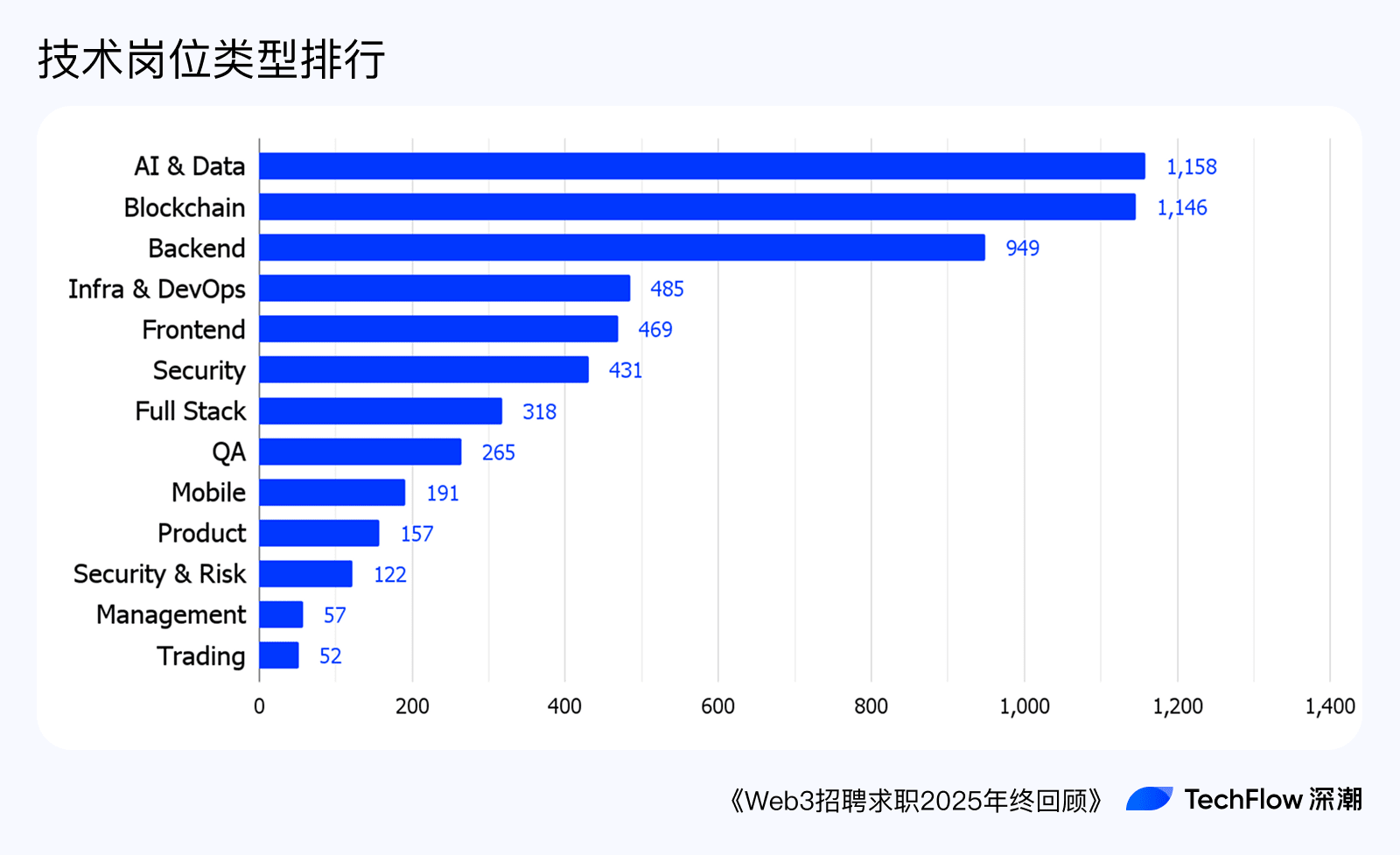
Among technical positions, the most frequently required skills include:
AI & Data - 1,158
Blockchain - 1,146
Backend - 949
Infrastructure & Operations - 485
Front-end - 469
Security - 431
Full stack - 318
QA - 265
Mobile - 191
Product (Technology Products) - 157
The demand for AI data and blockchain development is far ahead, followed by backend, infrastructure development, operations and maintenance, security and other positions closely related to the survival of decentralized networks. Then comes frontend, full-stack, QA, mobile and other positions, gradually transitioning from the underlying layer to the user side.
Among programming languages, the most in demand are mainstream backend languages such as Rust, Java, and Go, with Rust taking the lead due to its security and performance advantages.
JavaScript/TypeScript, React, and other front-end technology stacks followed closely behind, reflecting the industry's significant demand for front-end and full-stack development.
Languages like Node.js, C++, Kotlin, Ruby, and Scala also have certain needs in specific scenarios. On-chain native development languages like Solidity and Move remain relatively niche.
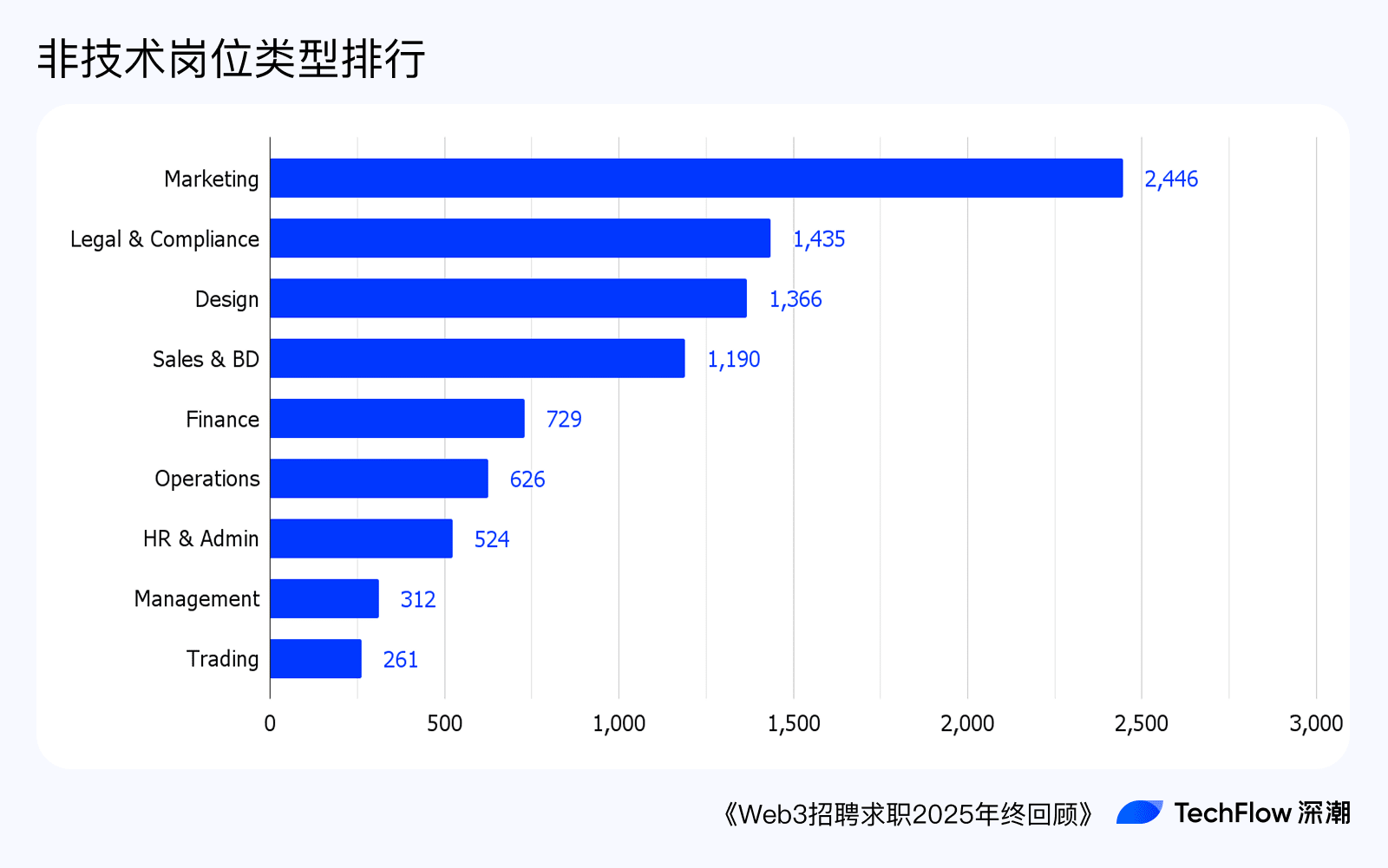
Among non-technical positions, legal/compliance needs constitute a very large portion. As mentioned earlier, legal/compliance has become an indispensable part of the transformation of crypto companies into new chapters.
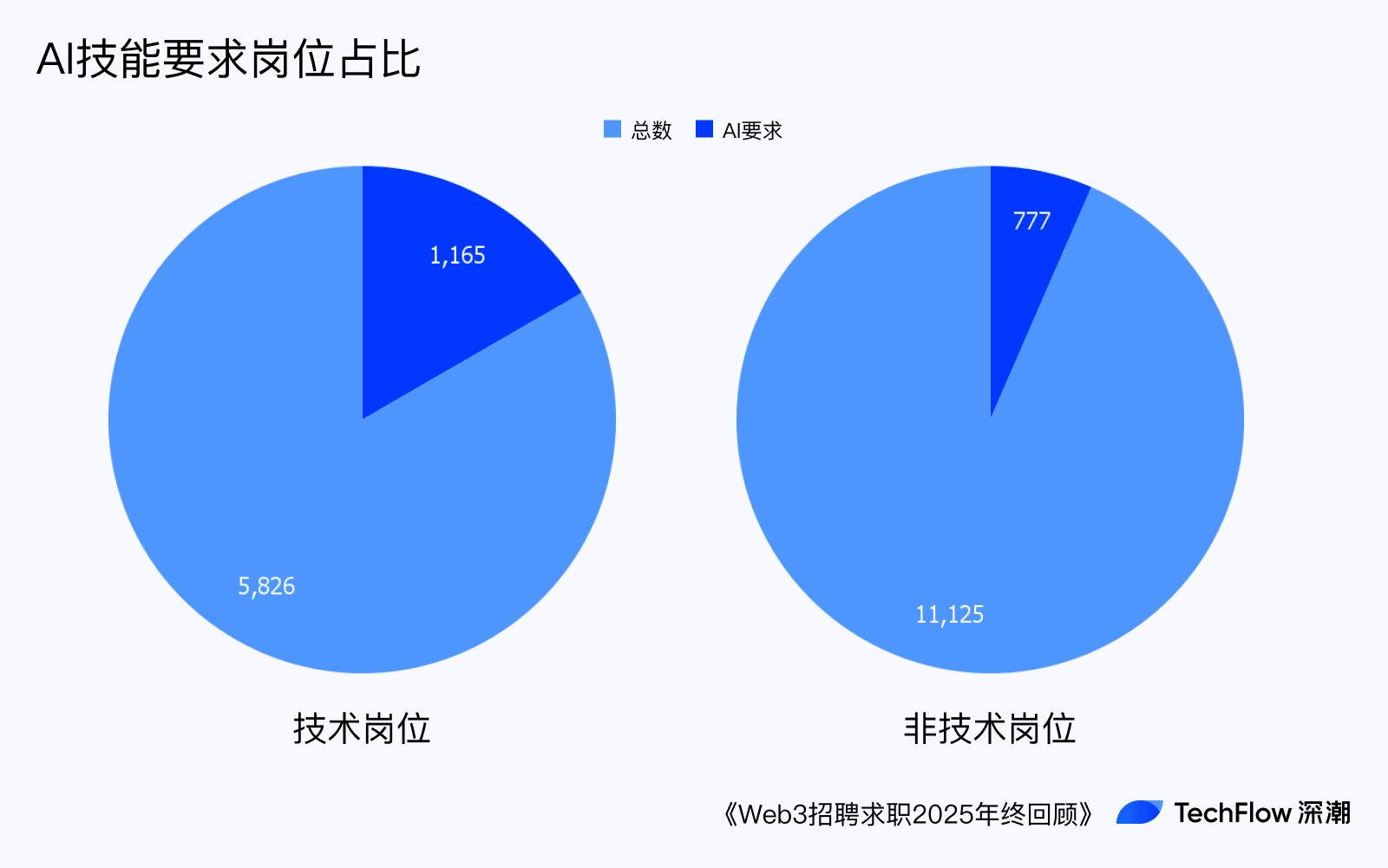
It is worth mentioning that both technical and non-technical positions have seen a simultaneous increase in demand for AI skills.
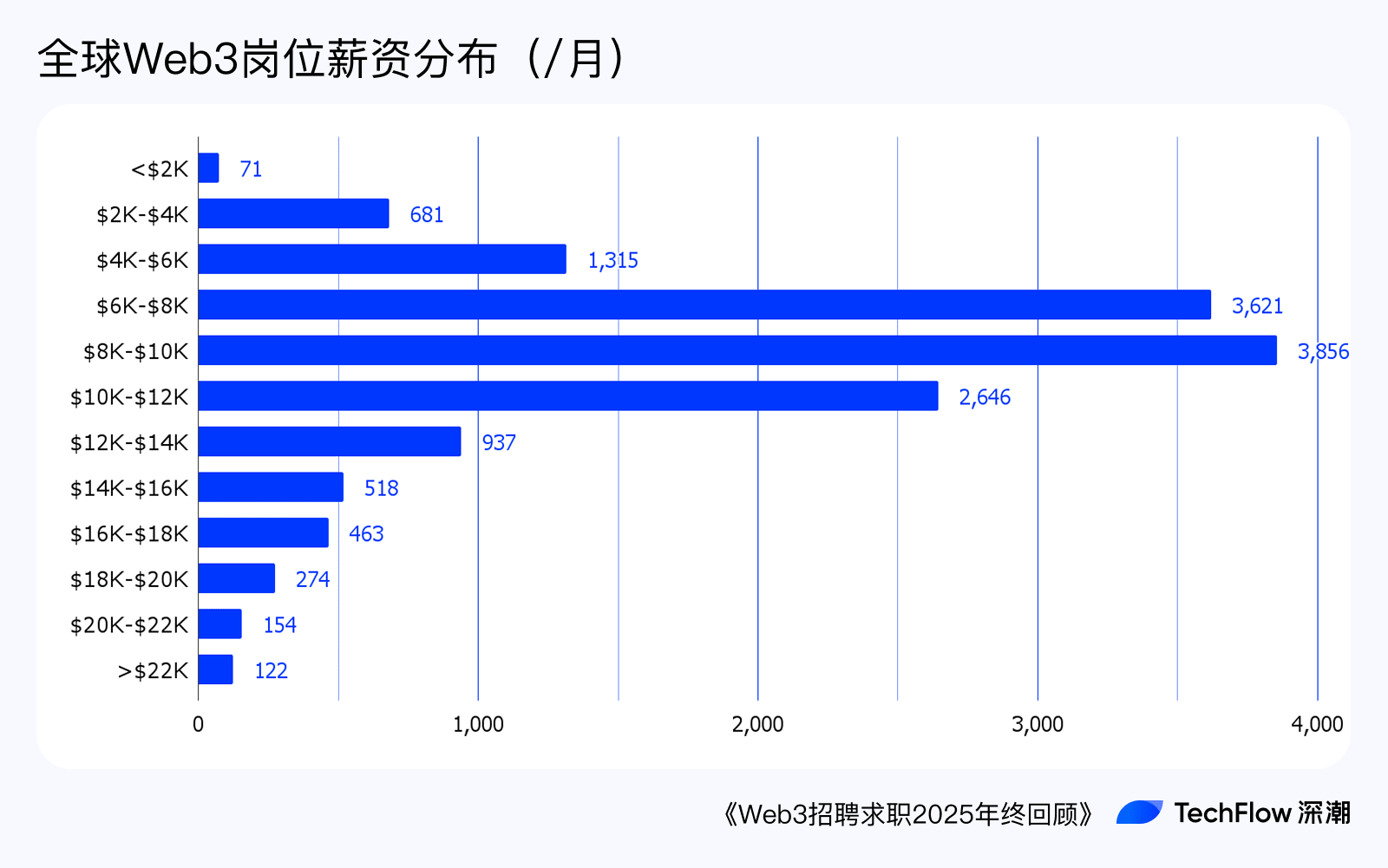
In terms of salary distribution, according to 14,659 job postings with publicly disclosed salaries, the highest concentration was in the $6,000 - $12,000 monthly salary range, but there were also a large number of entry-level positions with $2,000 - $4,000 and high-paying positions with salaries above $12,000.
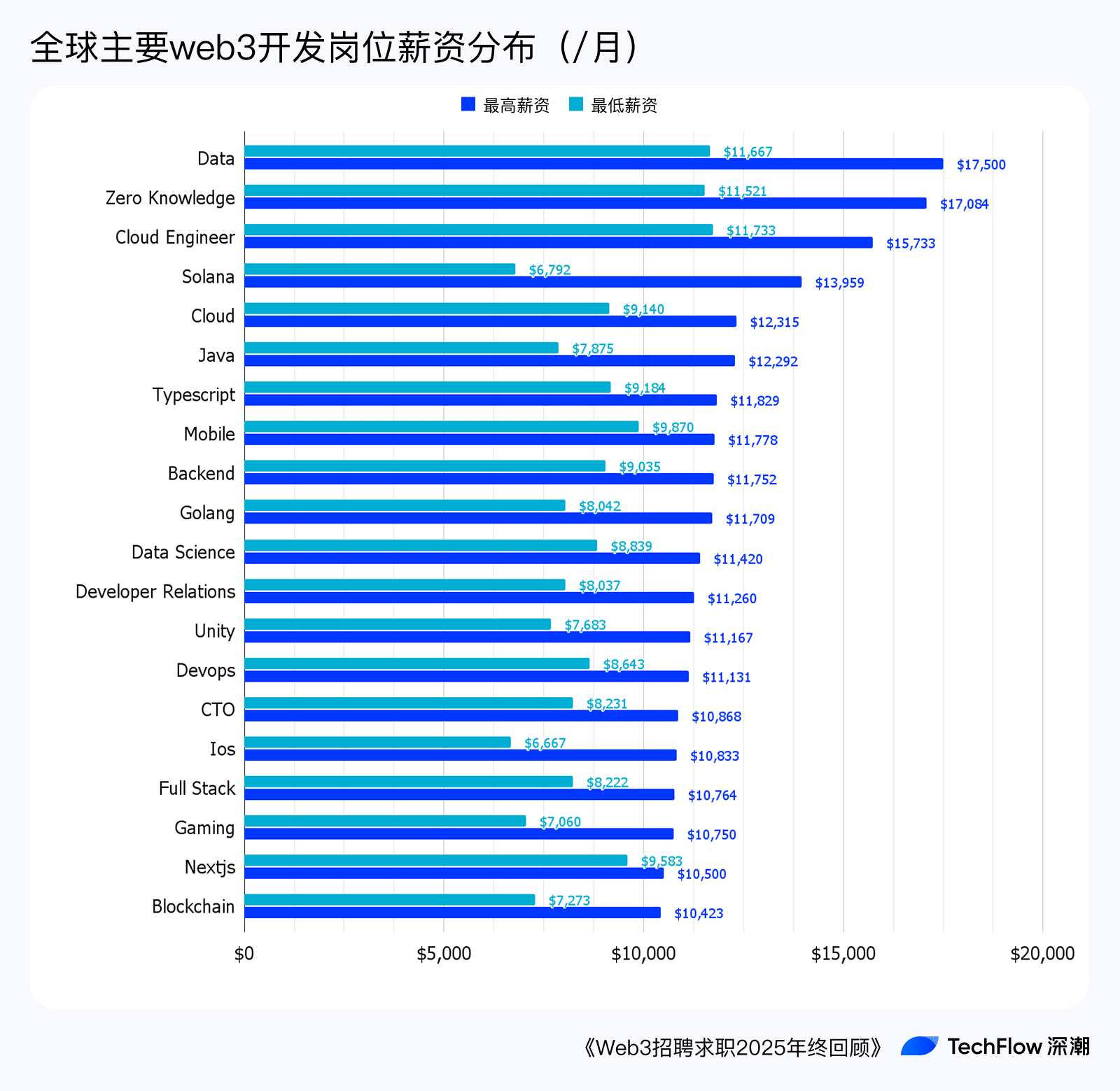
The top 10 highest-paying technical jobs globally are tagged with (based on the median of the lowest and highest salaries):
Data: $11,667 - $17,500
Zero-knowledge proofs: $11,521 - $17,084
Cloud Engineer: $11,733 - $15,733
Solana Development: $6,792 - $13,959
Cloud computing: $9,140 - $12,315
Java Development: $7,875 - $12,292
TypeScript Development: $9,184 - $11,829
Mobile Development: $9,870 - $11,778
Backend development: $9,035 - $11,752
Golang Development: $8,042 - $11,709
Data and zero-knowledge proof-related positions offer the highest salaries, with a maximum monthly salary of $17,500 (approximately 125,000 RMB). These positions require extremely high levels of expertise in mathematics, cryptography, and algorithms, and the scarcity of talent justifies the high salaries. Positions aligned with on-chain technology stack trends, such as cloud engineers and Solana developers, also rank highly.
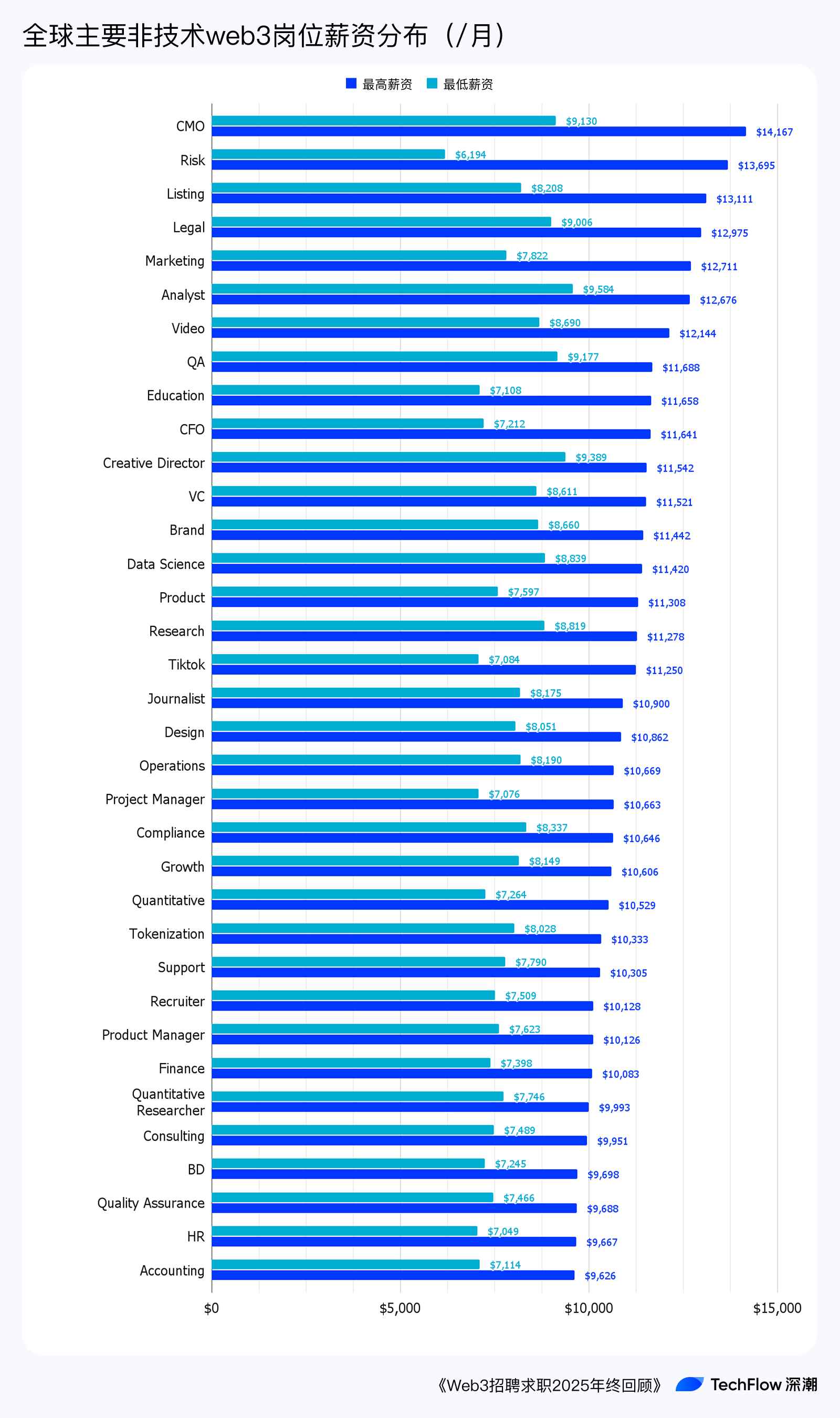
For non-technical positions, the top 10 highest-paying jobs globally are:
Data Analysis: $11,667 - $17,500
CMO: $9,130 - $14,167
Risk control: $6,194 - $13,695
Listing price: $8,208 - $13,111
Legal: $9,006 - $12,975
Market: $7,822 - $12,711
Analyst: $9,584 - $12,676
Video production: $8,690 - $12,144
QA: $9,177 - $11,688
User education: $7,108 - $11,658
As a core position connecting project teams, exchanges, and users, it's no surprise that the listing department has become one of the highest-paid sectors.
The high salaries of CMOs, marketers, and other similar roles reflect the industry's continued need for skilled marketers to build strong communities.
The high salaries for risk control and legal positions also reflect the scarcity of such roles in this industry.
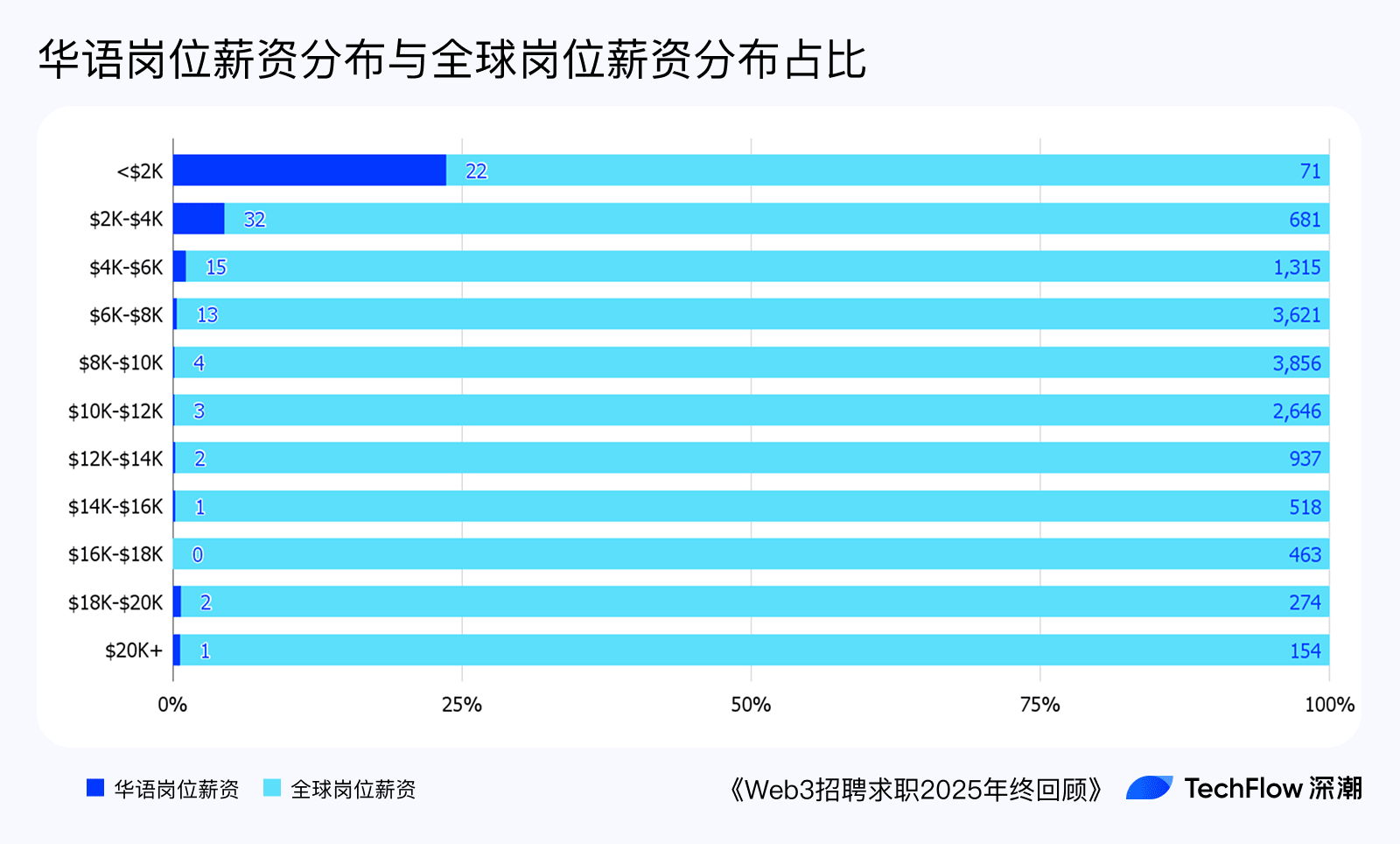
However, in the Chinese job postings database of abetterweb3, the salary distribution for both technical and non-technical positions shows a sharp drop, with most positions concentrated around $2K - $4K, equivalent to RMB 14,000 - 28,000, which is on par with most small and medium-sized internet companies in China.
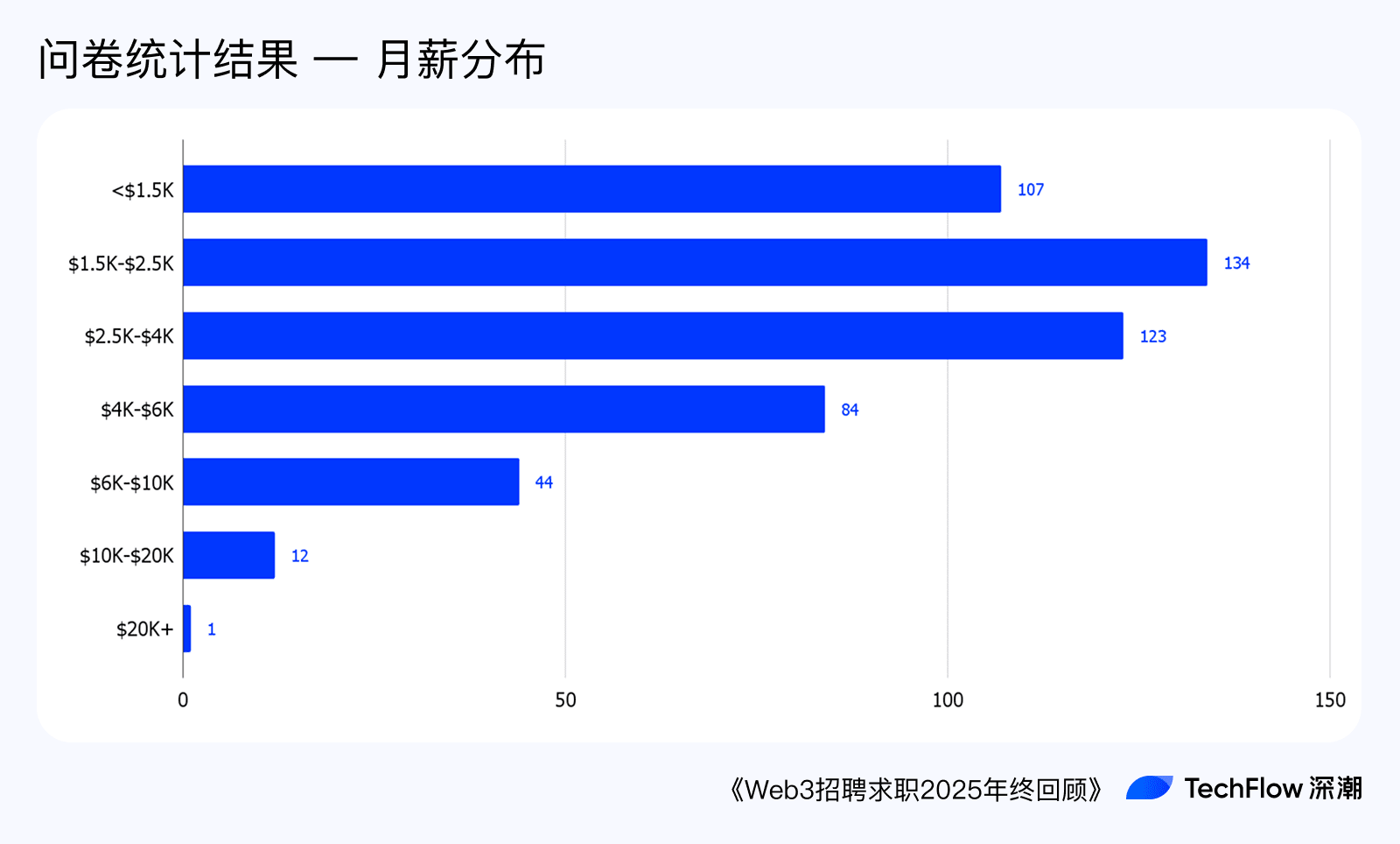
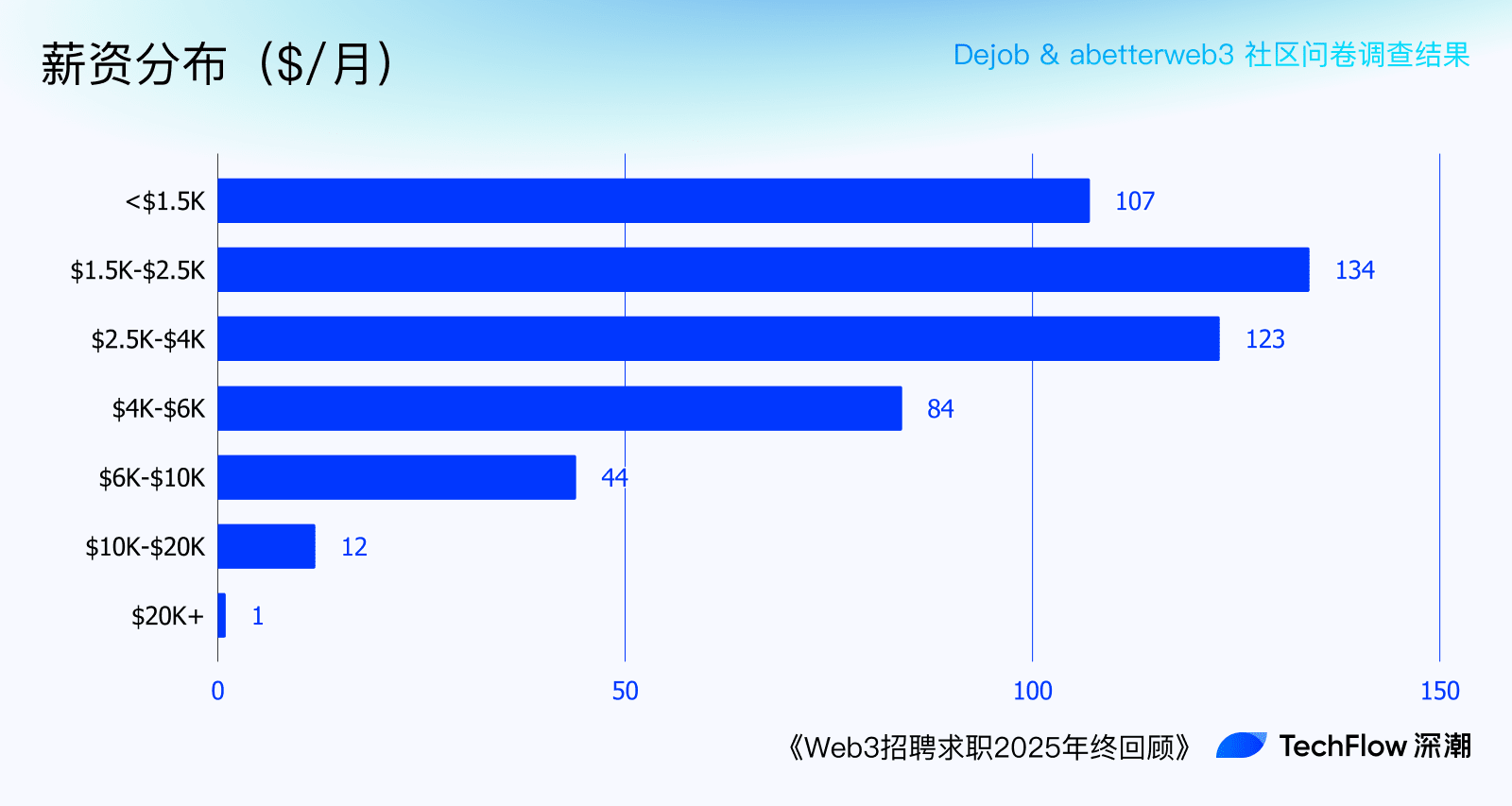
The salary statistics we collected from the questionnaires were even more dismal. More than 20% of respondents earned less than $1,500 per month (approximately 10,000 RMB), with the vast majority earning between $1,500 and $4,000 (approximately 10,000 to 28,000 RMB). This may be related to the lack of a regulatory environment for Web3 in East Asia—low wages, or even wage arrears, only make companies thrive, leaving workers with no recourse and their career survival entirely dependent on finding a good boss.
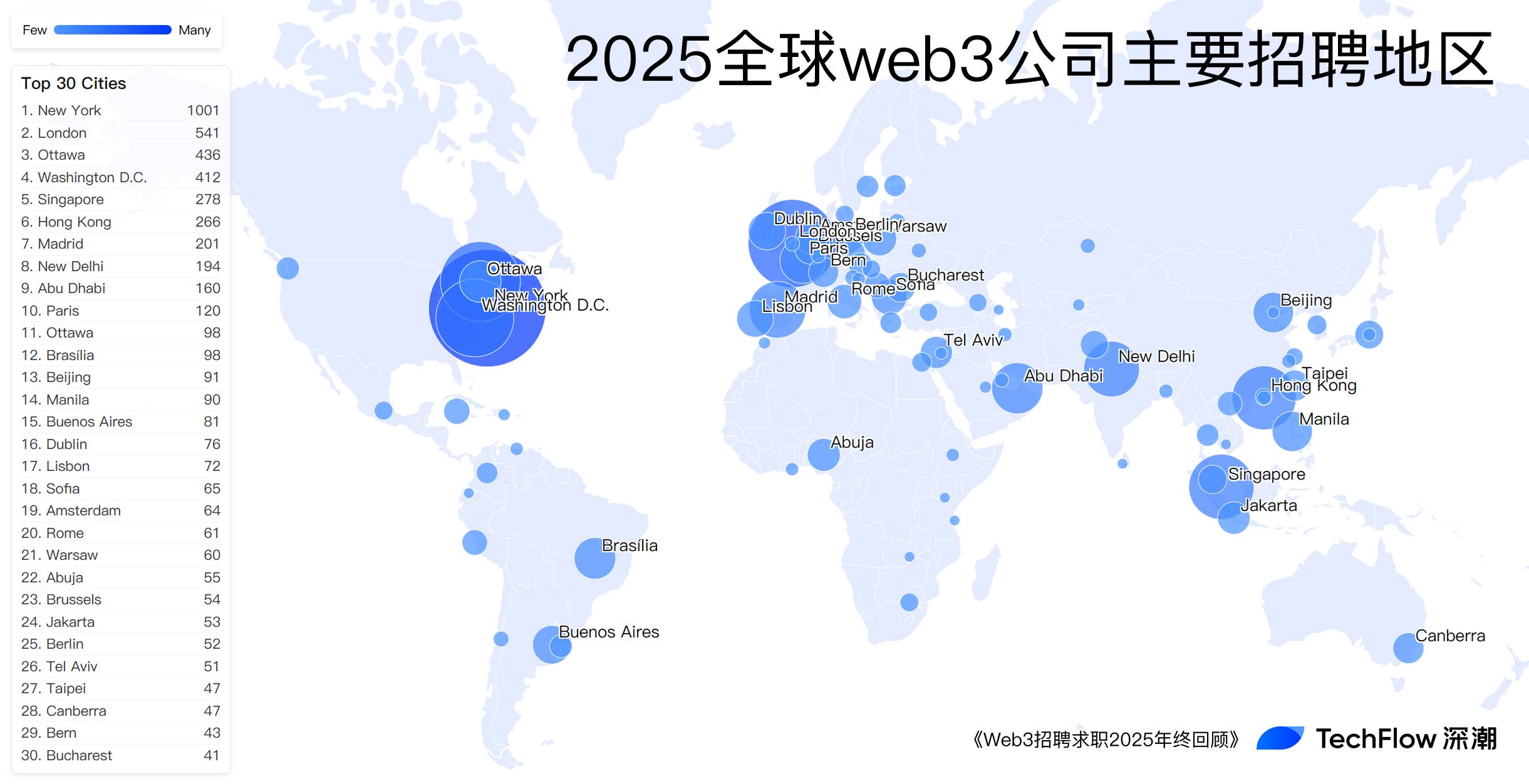
Judging from the publicly disclosed recruitment requirements for different regions, the United States and the United Kingdom have naturally become global hubs for crypto startups amid the wave of compliance.
As global financial centers, Canada, Singapore, Hong Kong, and Dubai are active in investment and financing, and have a wealth of talent, naturally attracting many Web3 companies.
Compared to before 2021, Web3 companies in mainland China have almost disappeared from recruitment due to successive rounds of high-pressure regulatory measures. Only a few teams remain in relatively open cities such as Shanghai, Shenzhen, Beijing, Hangzhou, and Chengdu.
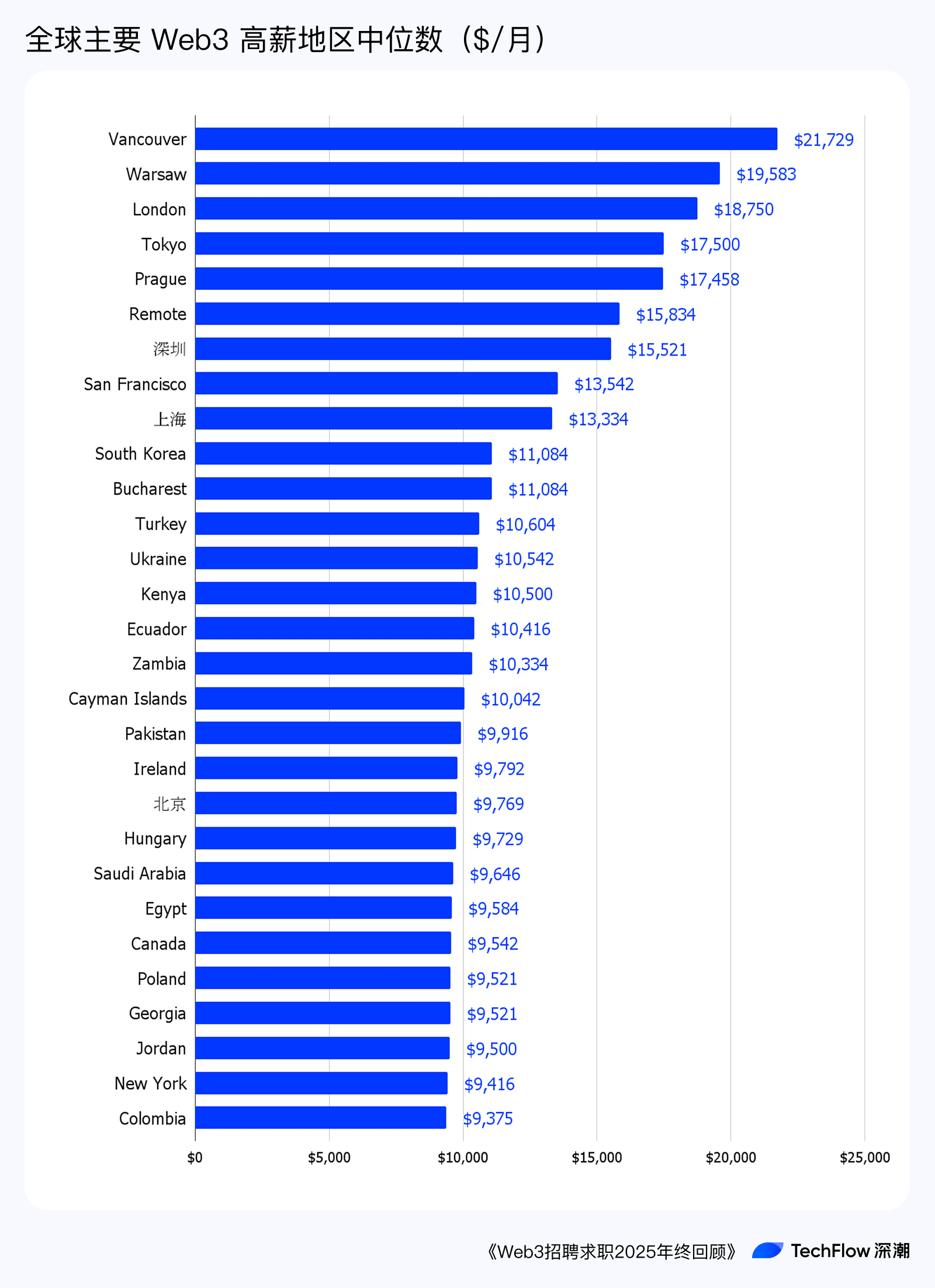
In terms of salary distribution, in addition to common European and American cities, two European cities, Warsaw and Prague, and two Asian cities, Shanghai and Shenzhen, unexpectedly entered the top 10 high-salary regions in Web3 (see the figure below).
This may be related to the type of local Web3 company (such as Star Infra, exchange), the presence of senior or experienced positions, and the presence of management/C-level staff.
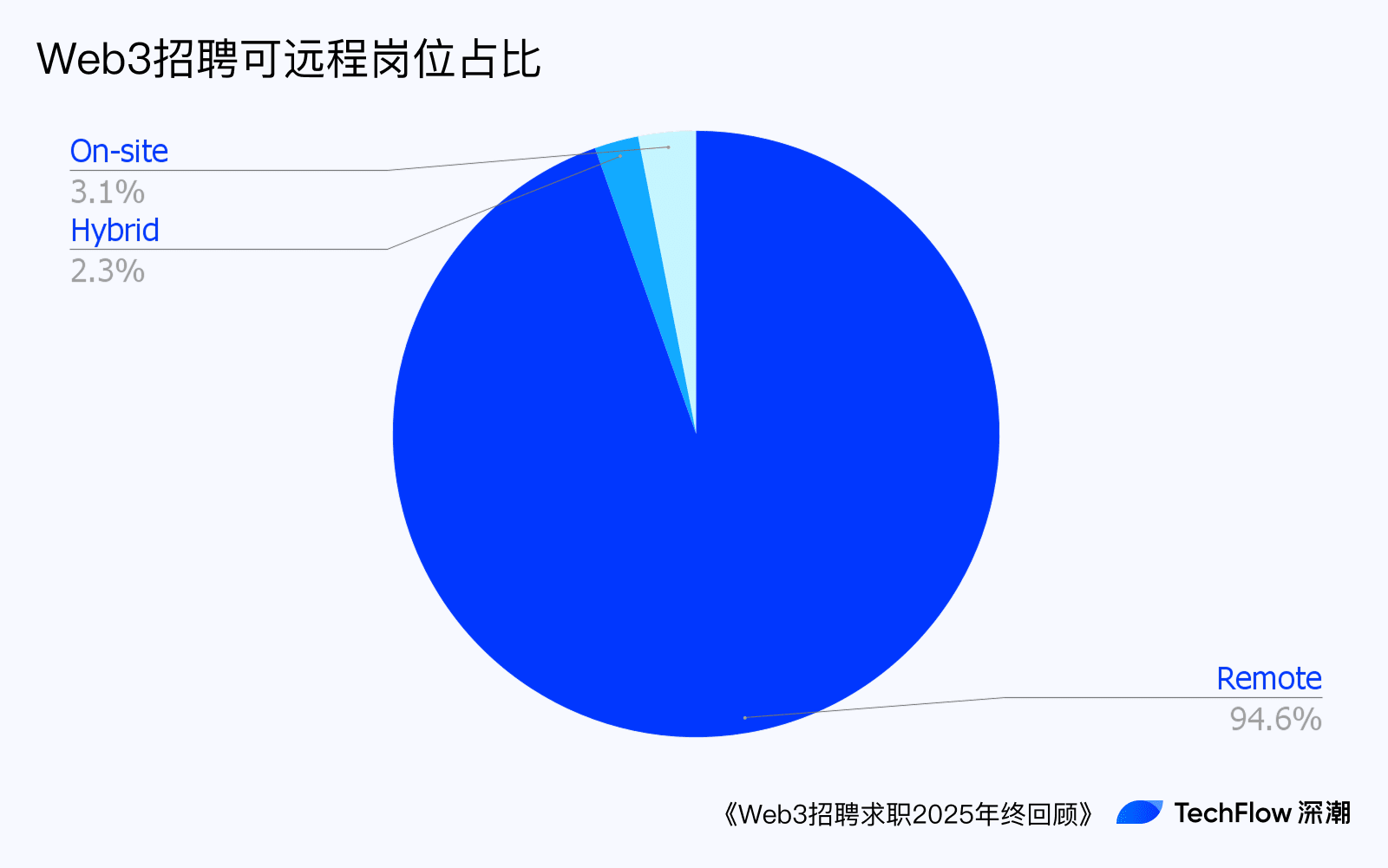
It is worth mentioning that among the 5,467 valid data entries, 5,171 were remote positions, accounting for 94.6%.
This reflects the "nomadic" cultural genes characteristic of the Web3 industry—under the regulation and disciplinary measures of different countries over the past decade or so, Web3 companies have long been accustomed to weakening national/regional restrictions on talent in order to survive, exchanging loose cooperation for a more covert existence.
In addition, an interesting statistic is that part-time/contract jobs account for 8.8% of all jobs globally, and 33.7% of jobs offered to Chinese people.
This kind of part-time work is not similar to the "side hustles" such as product sales/e-commerce that many people in traditional internet giants engage in. Instead, it involves genuinely working for multiple projects and companies to earn multiple incomes. This may be related to the widely accepted culture of anonymous collaboration in the Web3 industry.
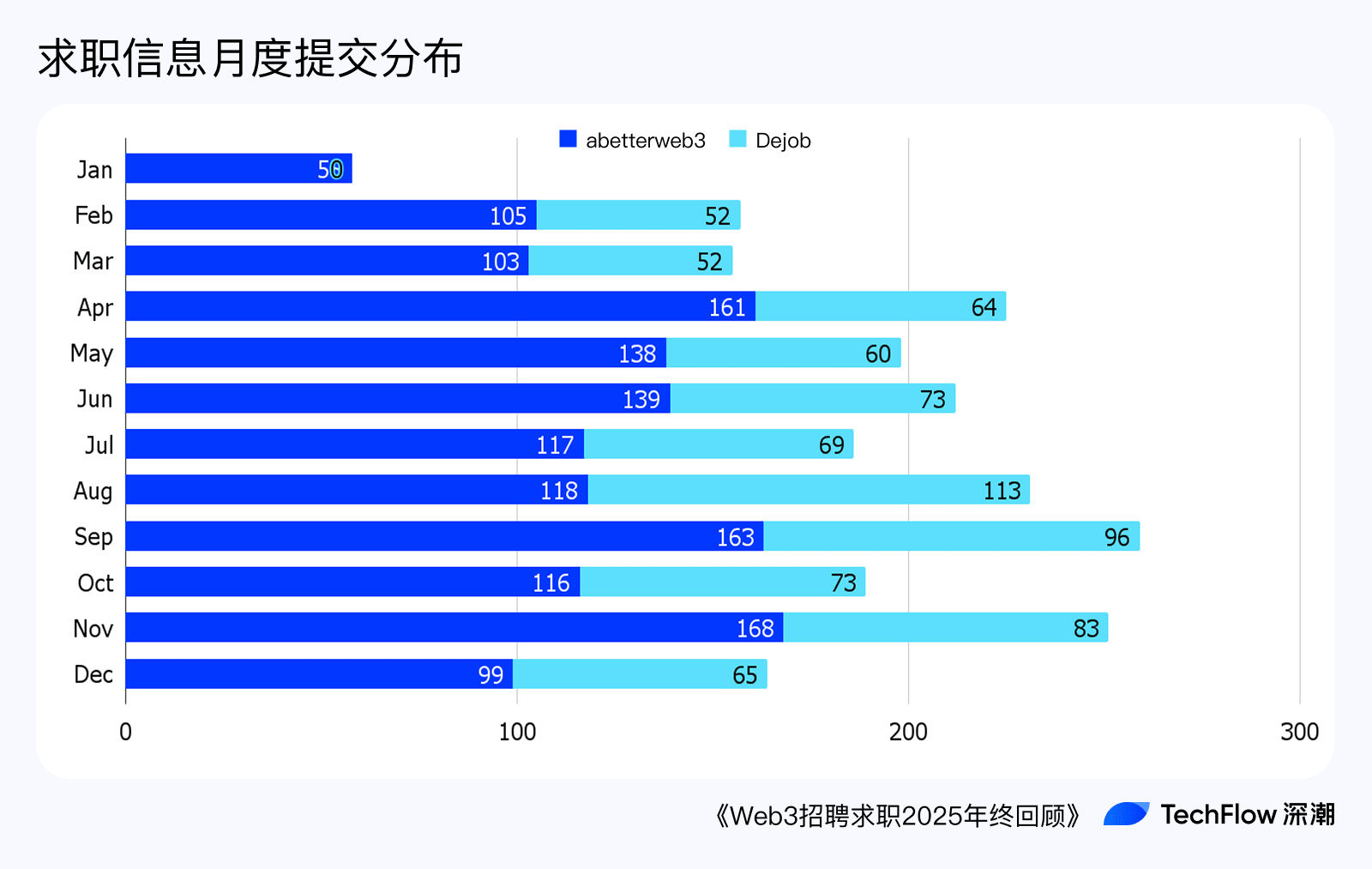
Based on job search data (a total of 2,666 entries) from two major Web3 Chinese-language recruitment platforms , abetterweb3 and Dejob , we can see some of the industry's true nature—a facade masking underlying problems.
The number of job applications submitted by Chinese job seekers generally increases from the beginning to the middle of the year; however, except for the spring months, the trend is not significantly different, and there are no significant characteristics like the traditional peak recruitment seasons of March, April, September, and October.
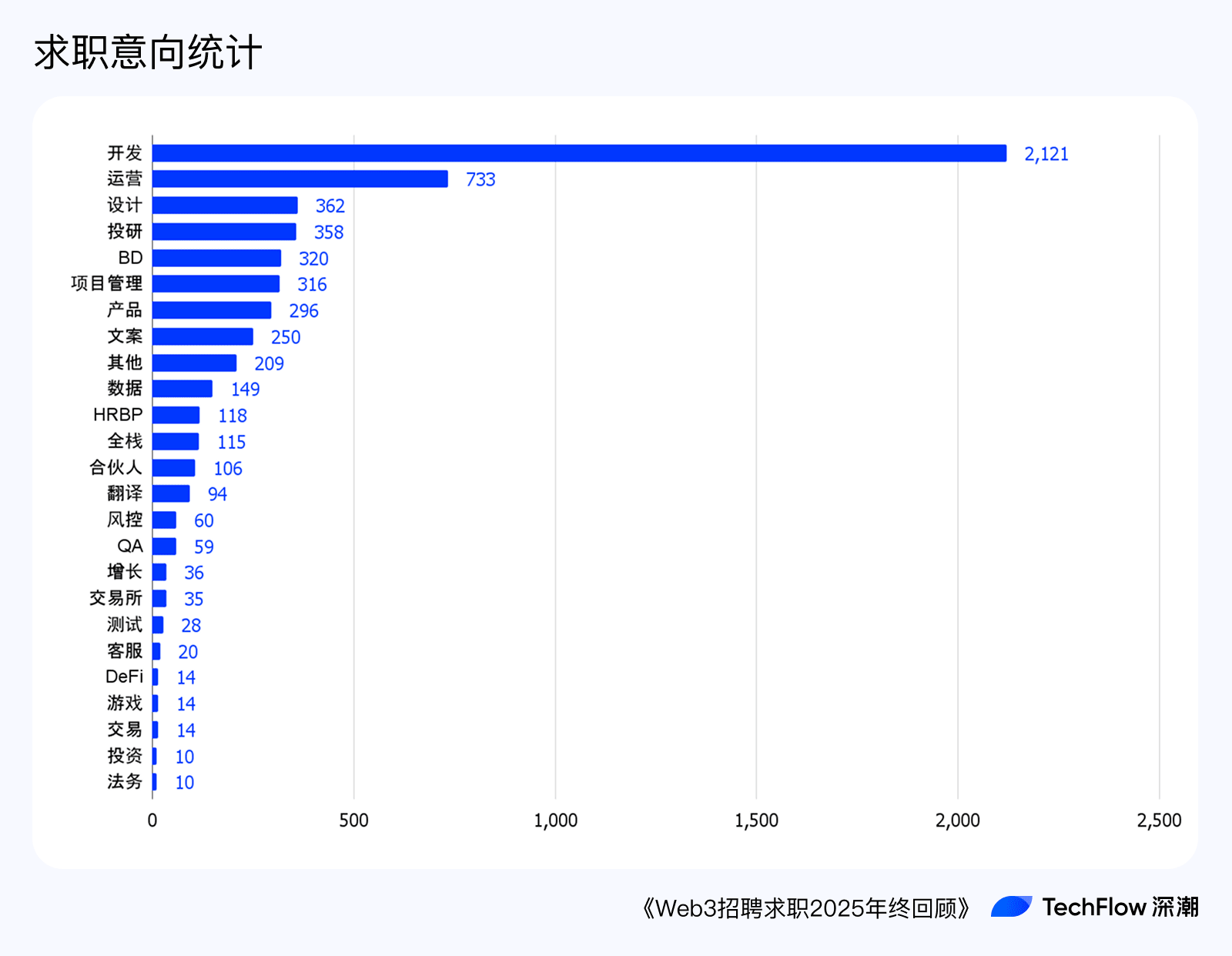
The top 10 most sought-after job positions are: Development, Operations, Front-end, Back-end, Investment Research, Business Development, Project Management, Product, Design, and Copywriting. This basically covers the main job types in this industry.
The appearance of the term "partner" 106 times indicates both a strong entrepreneurial atmosphere in the crypto industry and the lack of a mature entrepreneurial matching mechanism, forcing people to express their entrepreneurial aspirations on job search platforms.
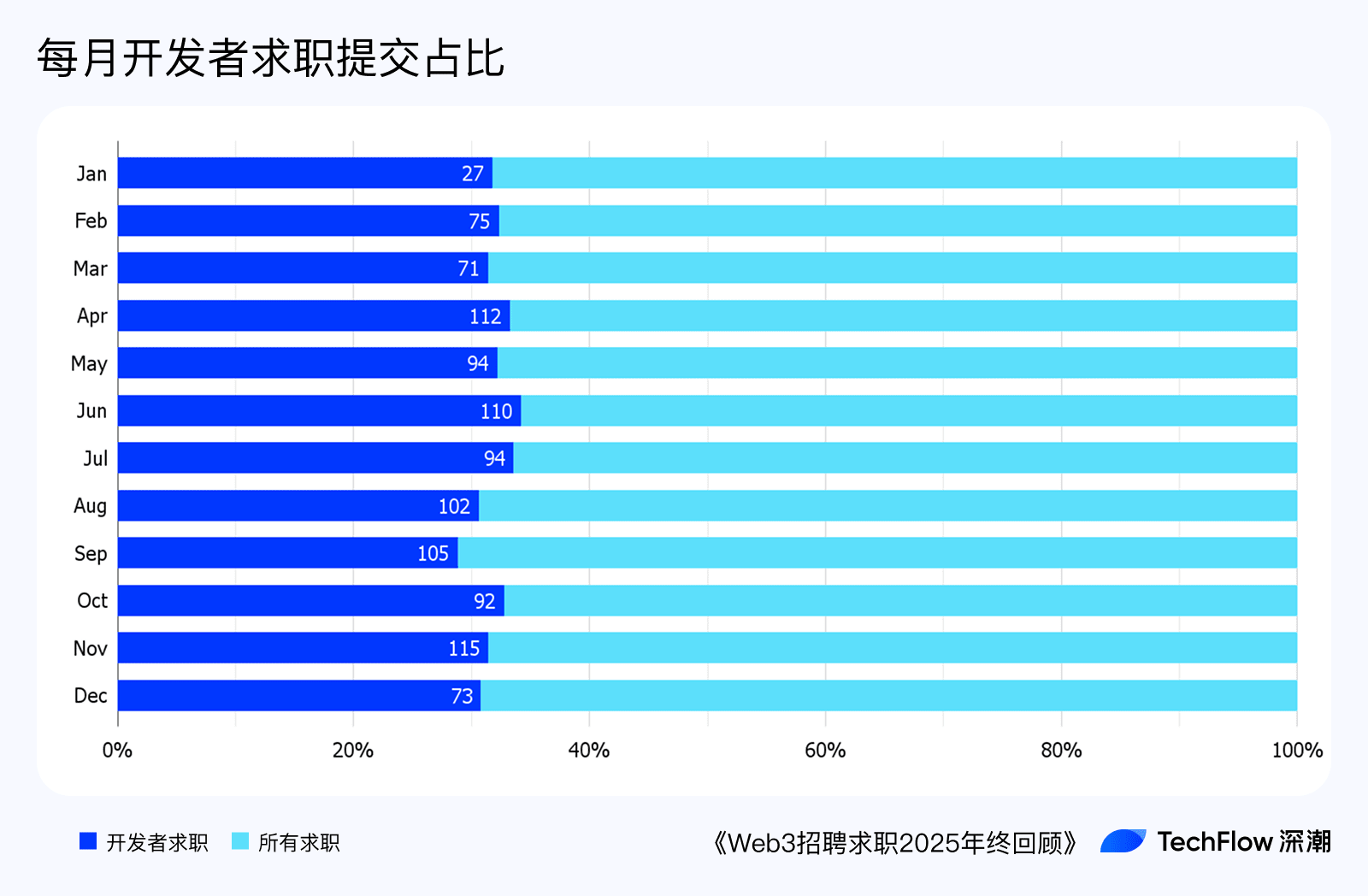
Developer job postings account for about 30% of the total number of job seekers each month.
The active job-seeking behavior of technical talents reflects both the continued influx of developers into the industry and the potential for an abnormal shortage of job openings, leading to an overcrowding on the job-seeking side.
It's worth mentioning that many job seekers mentioned coming from major internet companies like BAT (Baidu, Alibaba, Tencent) in their experiences.
It can be seen that talents with experience in established internet companies are actively seeking career transition opportunities due to the common "35-year-old age limit".
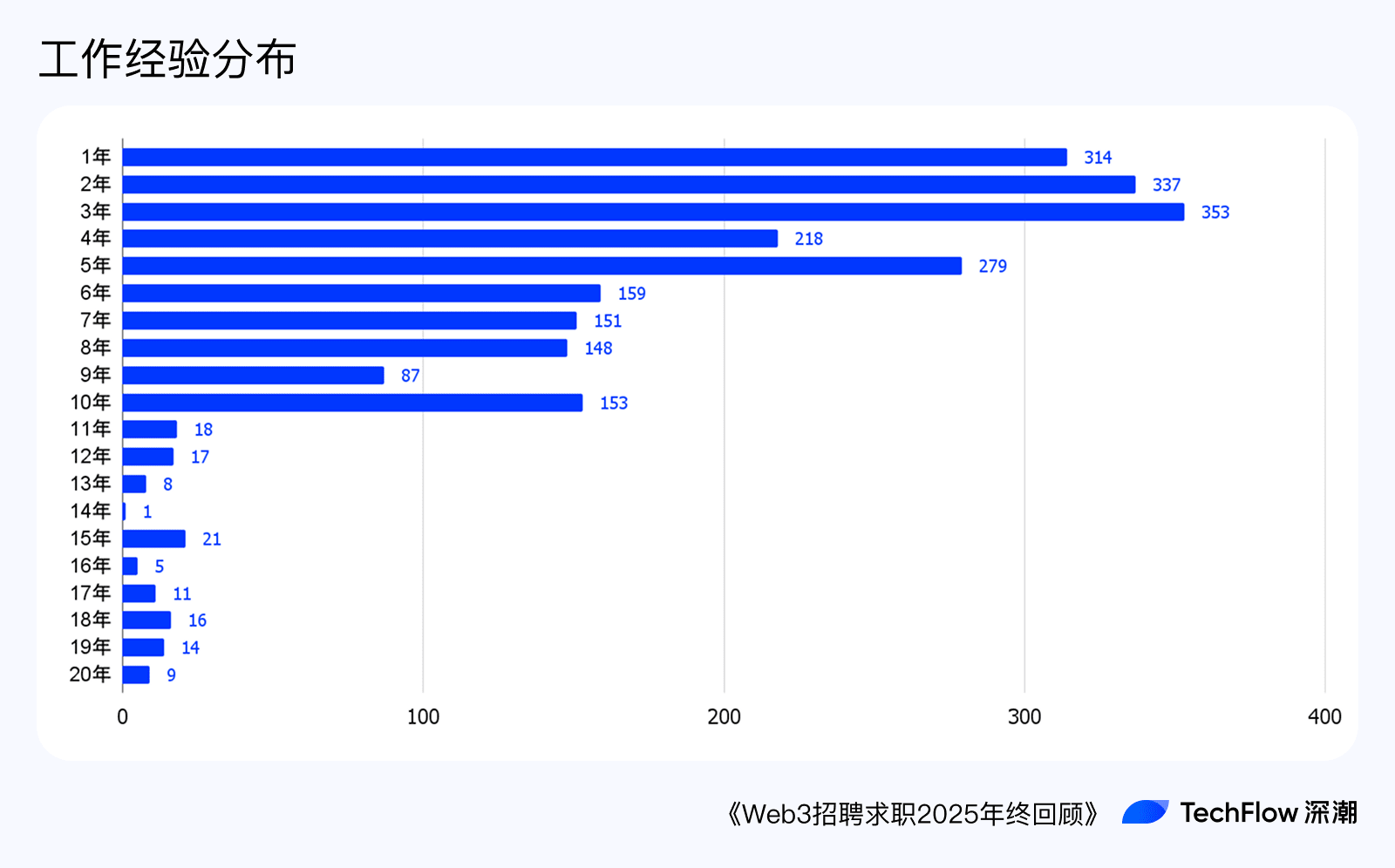
In terms of work experience, newcomers (1-3 years) account for as much as 30%, but there are also many veterans who have worked for 7, 8 or even more than 10 years.
Although these numbers do not represent the majority, behind each one lies the helplessness of middle-aged people who are forced to step out of their comfort zones.
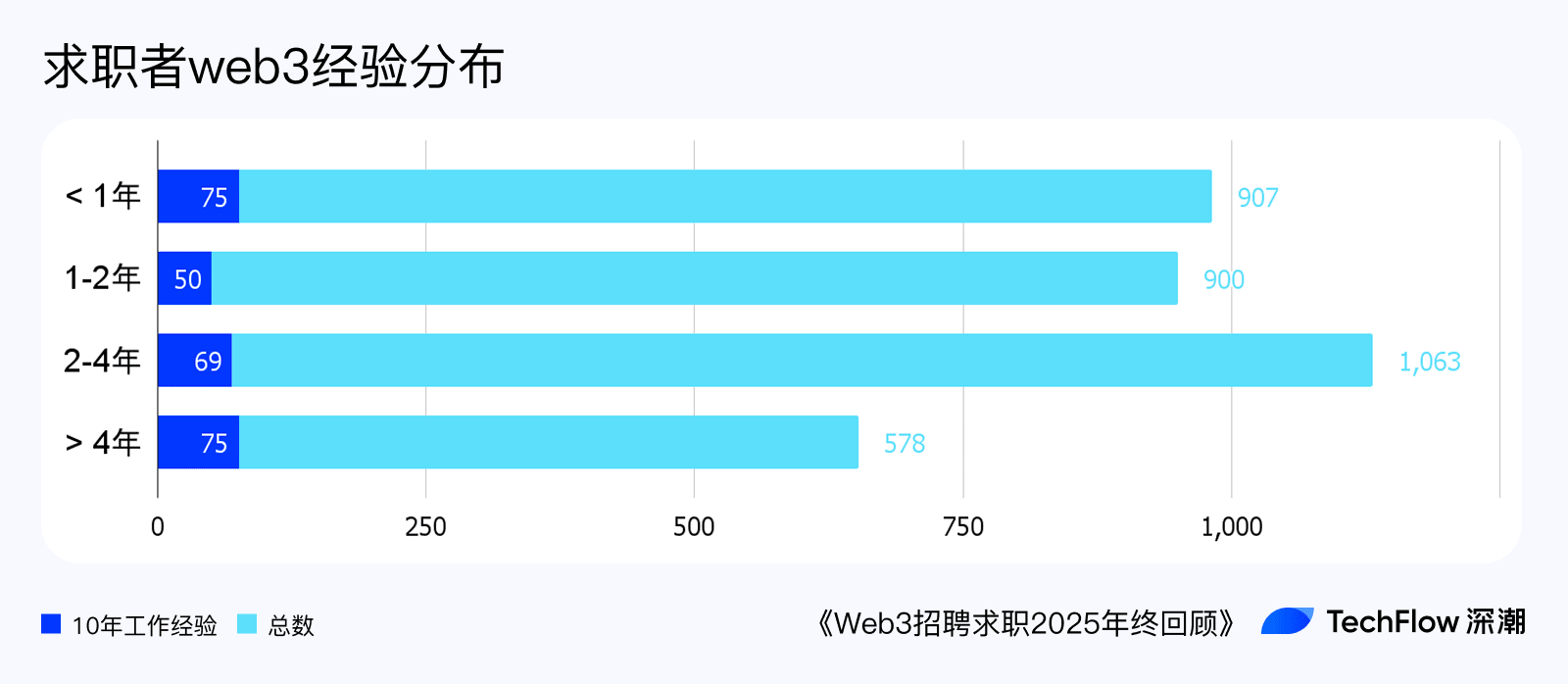
Regarding the distribution of Web3 industry experience, half of all job seekers had less than two years of experience with Web3.
This shows that even in 2025, there are still a large number of newcomers who are curious about the industry actively seeking opportunities to enter the field through Web3 vertical recruitment channels.
Of course, this may also be related to the fact that senior Web3 talent only moves through internal referrals and no longer uses recruitment platforms.
Among those with 10+ years of work experience, most still have a limited understanding of Web3 and may face difficulties in switching careers, as most Web3 companies highly value candidates' native cryptographic experience.
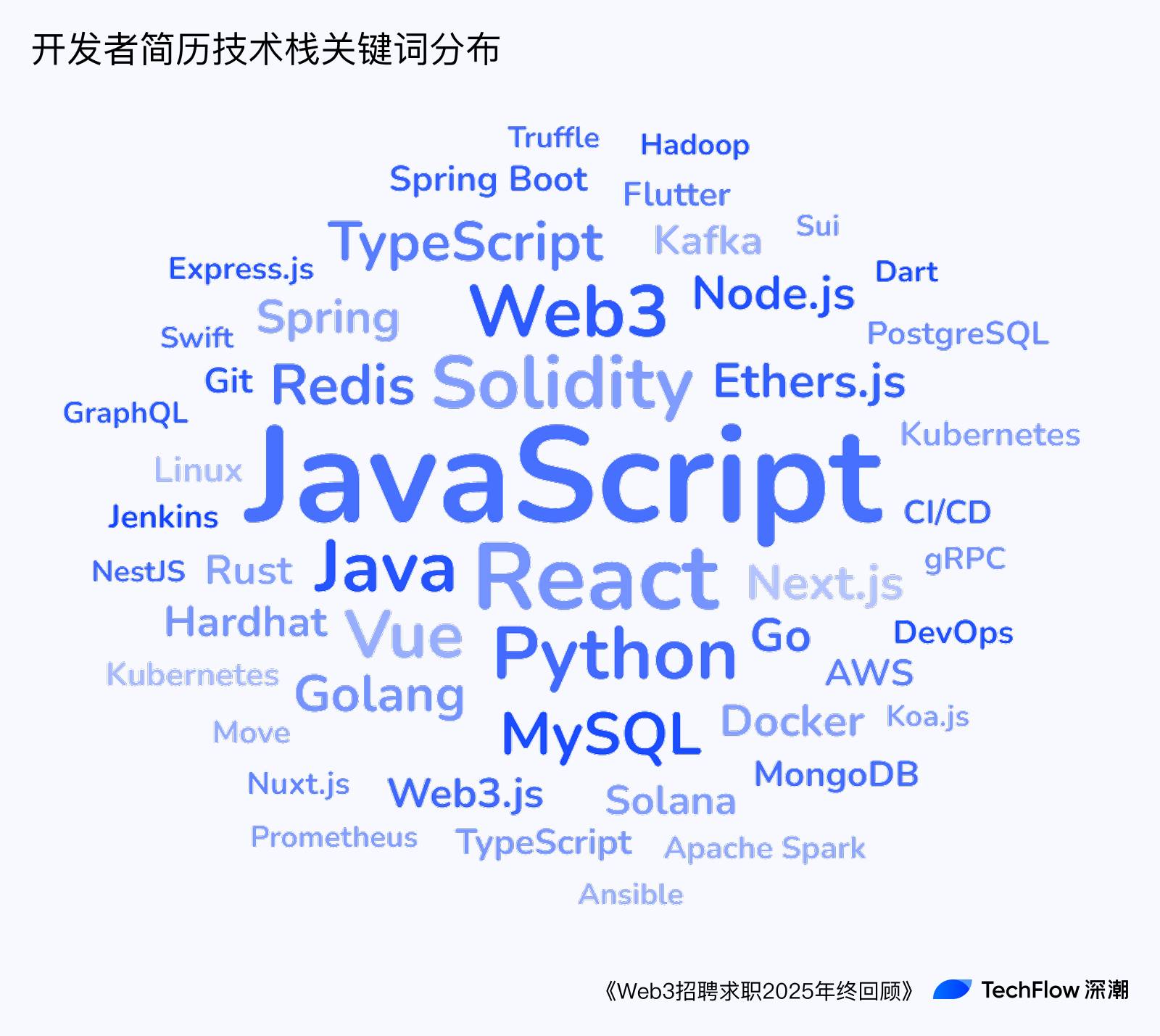
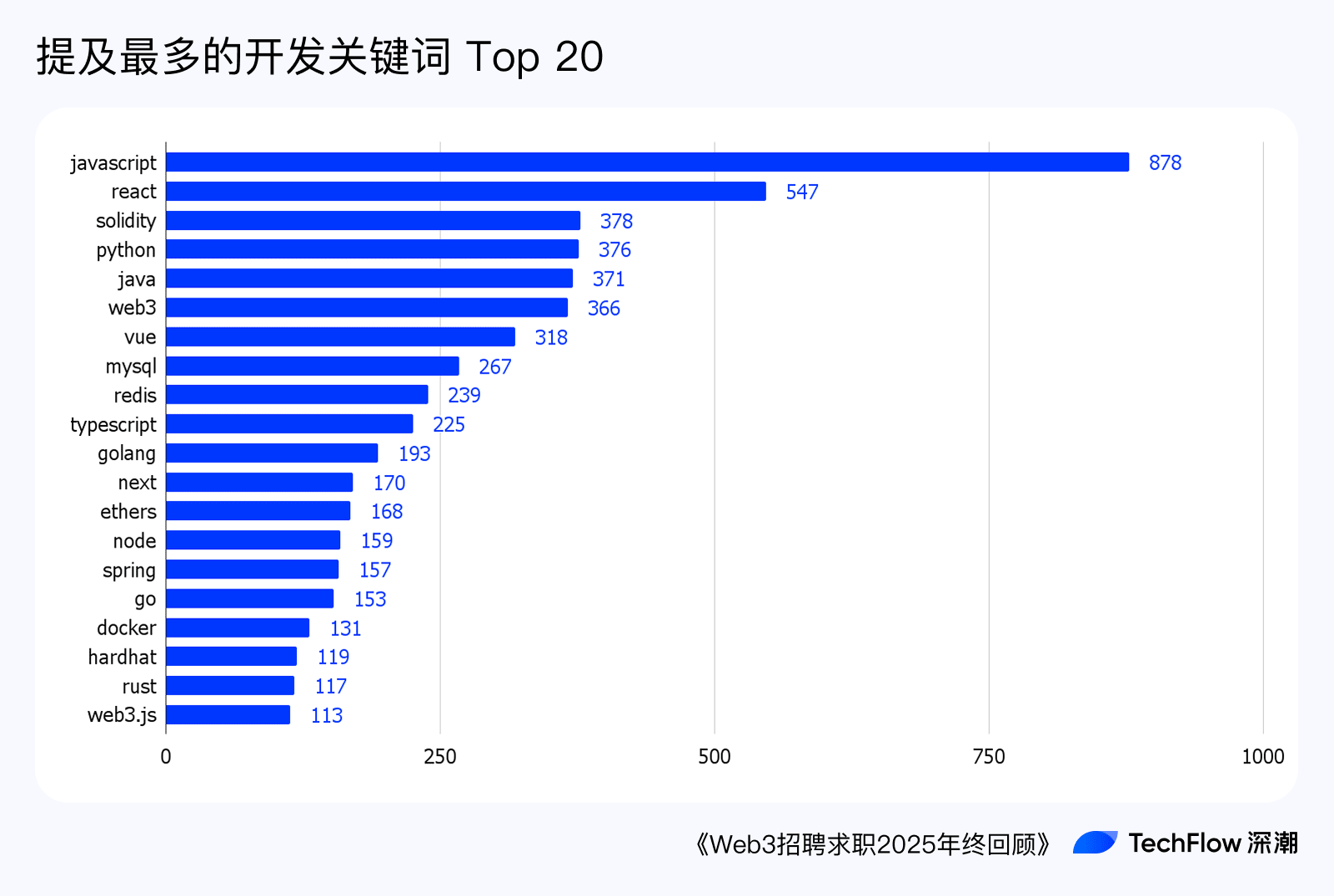
In descriptions of past experience and preferred technology stacks, JavaScript, React, and Vue, commonly used front-end technologies, appear frequently. For back-end technologies, mainstream languages like Golang and Python are predominant, while blockchain-specific languages like Solidity and Move remain relatively niche. (The world's best language battleground)
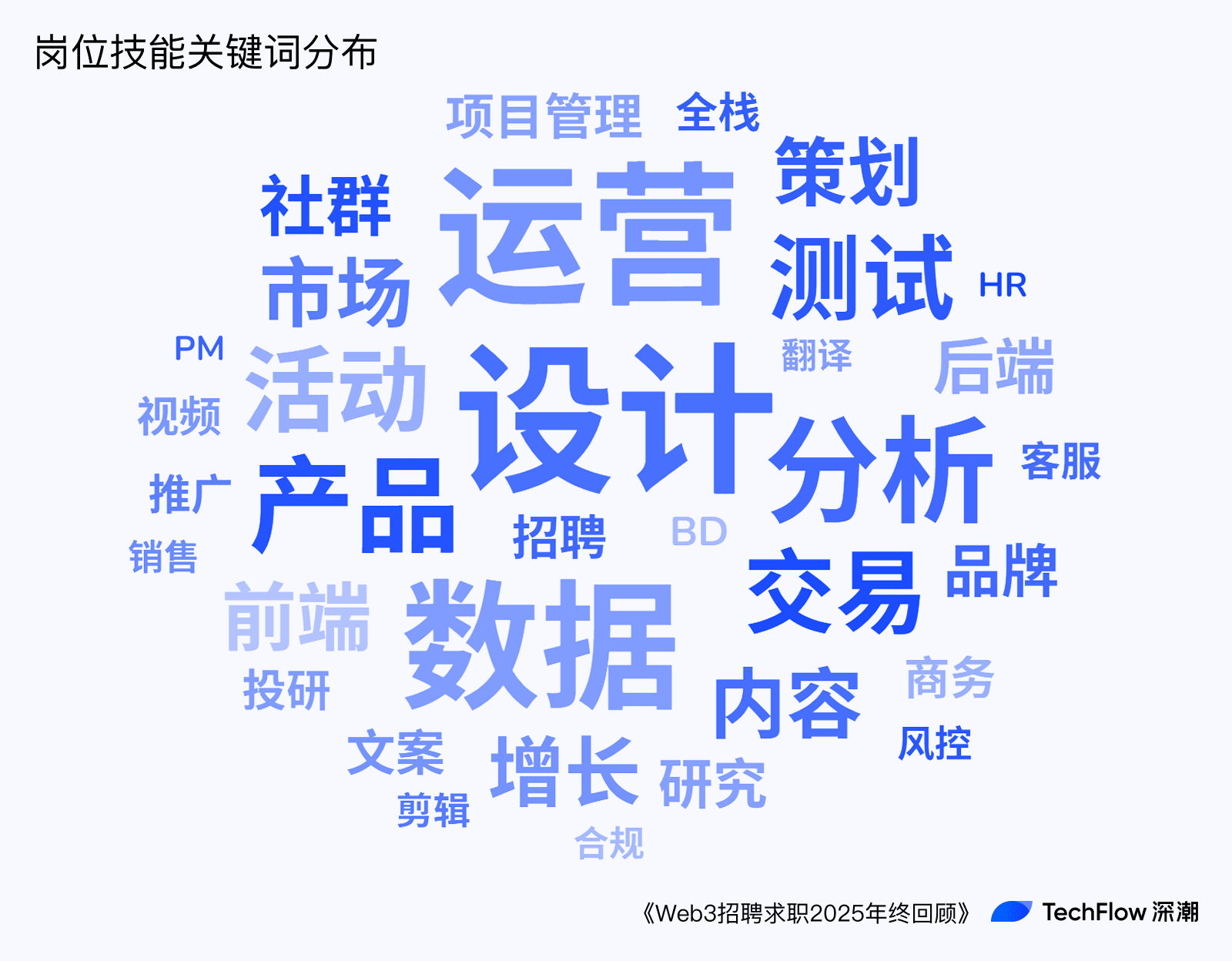
In terms of job skills, verbs such as design, operations, data, product, and analysis are very prominent.
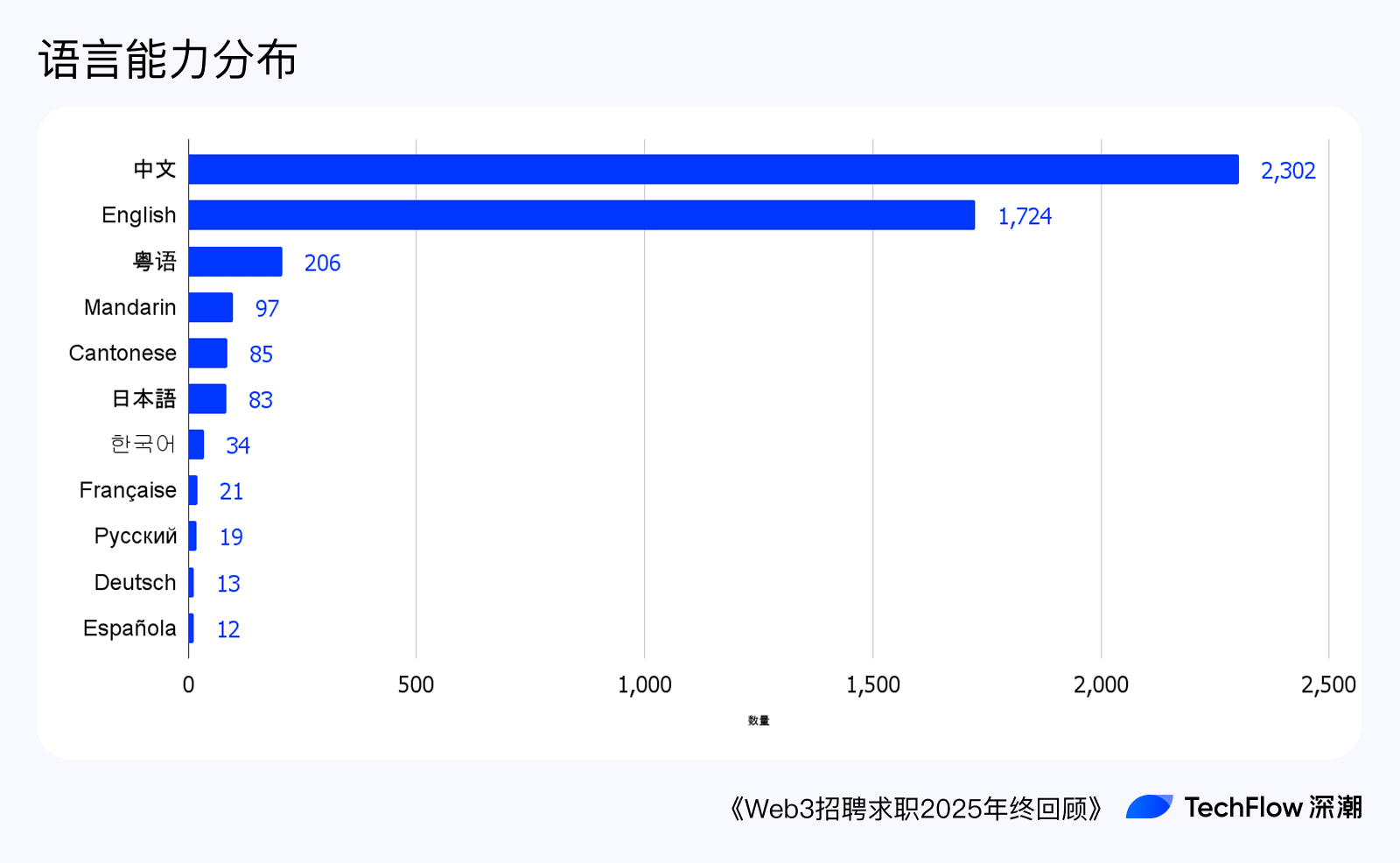
In terms of language skills, over 62% of job seekers chose both Chinese and English, indicating that bilingualism is a necessary skill.
People who speak less commonly spoken languages such as Cantonese, Japanese, and Korean are a valuable resource for specific markets (such as Hong Kong, Japan, and South Korea) and are very scarce in the general population.
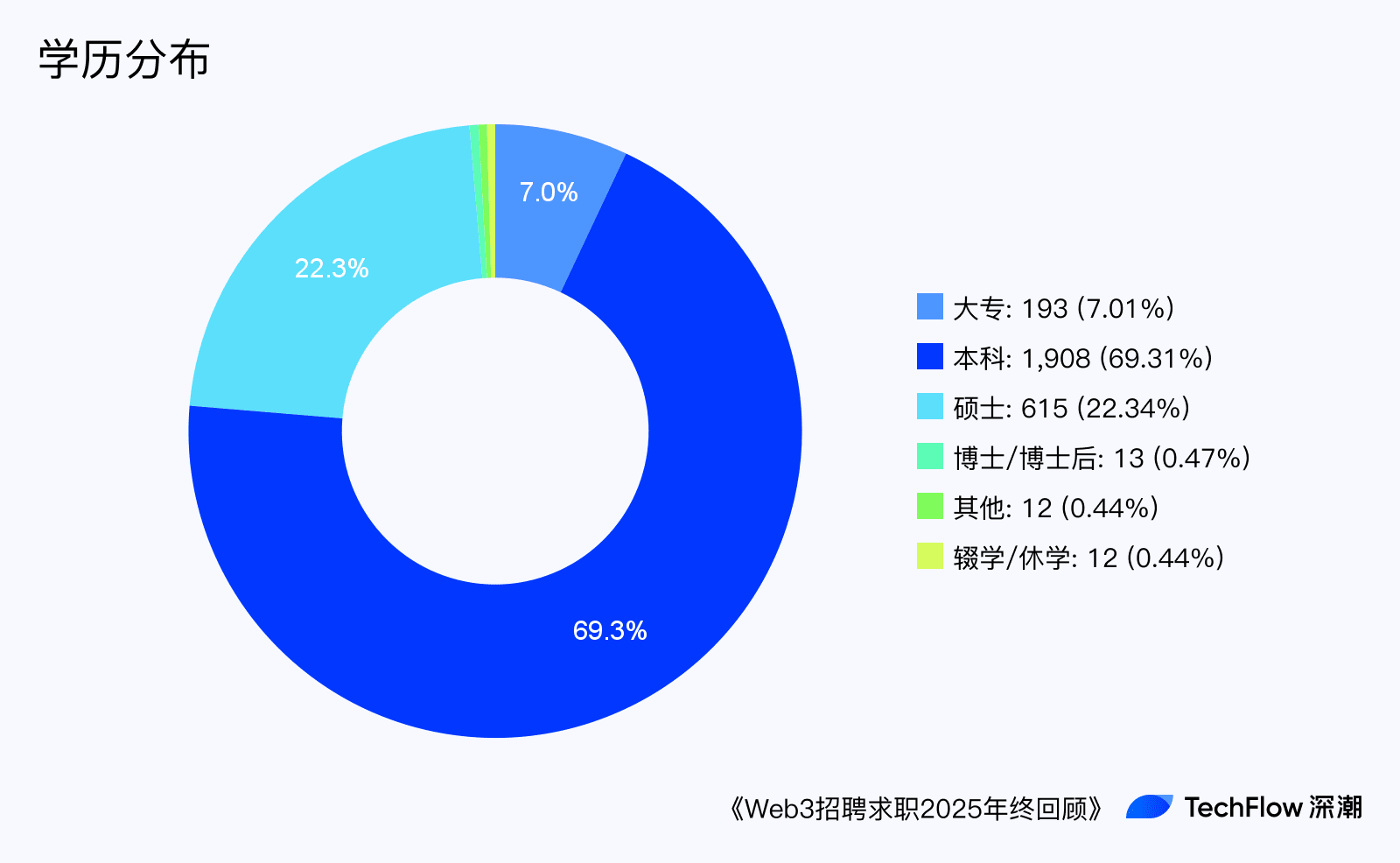
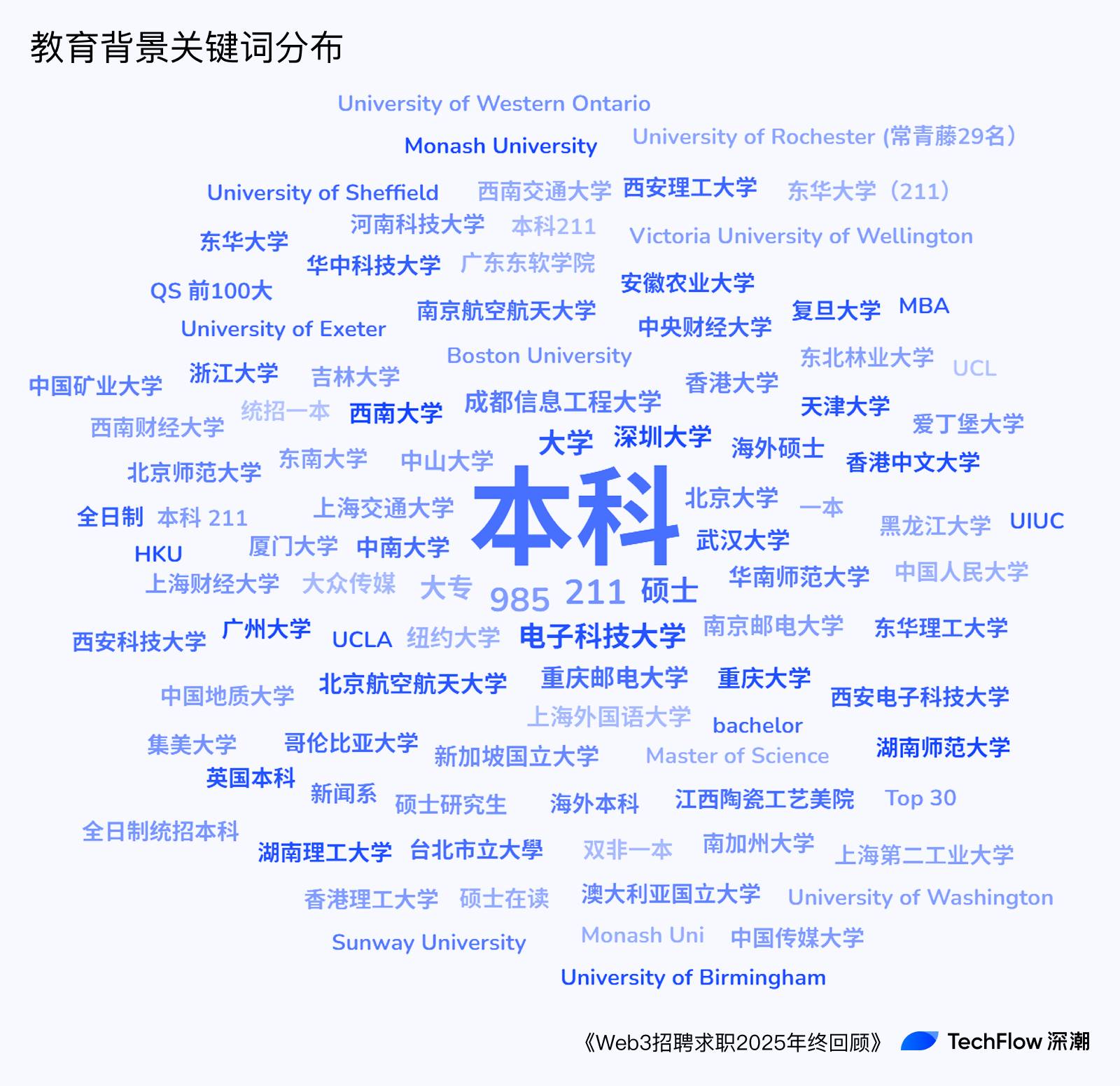
In terms of education, bachelor's degrees are the most common, but whether in recruitment or job seeking, graduates from 985/211 universities do not constitute the absolute majority. Among the popular educational background terms, there are prestigious domestic universities such as Peking University and Wuhan University, as well as well-known overseas institutions such as New York University and National University of Singapore, and many graduates from ordinary colleges or even junior colleges.
This indicates that the Web3 industry still values skills more and has not reached the point of saturation where academic qualifications block career advancement.
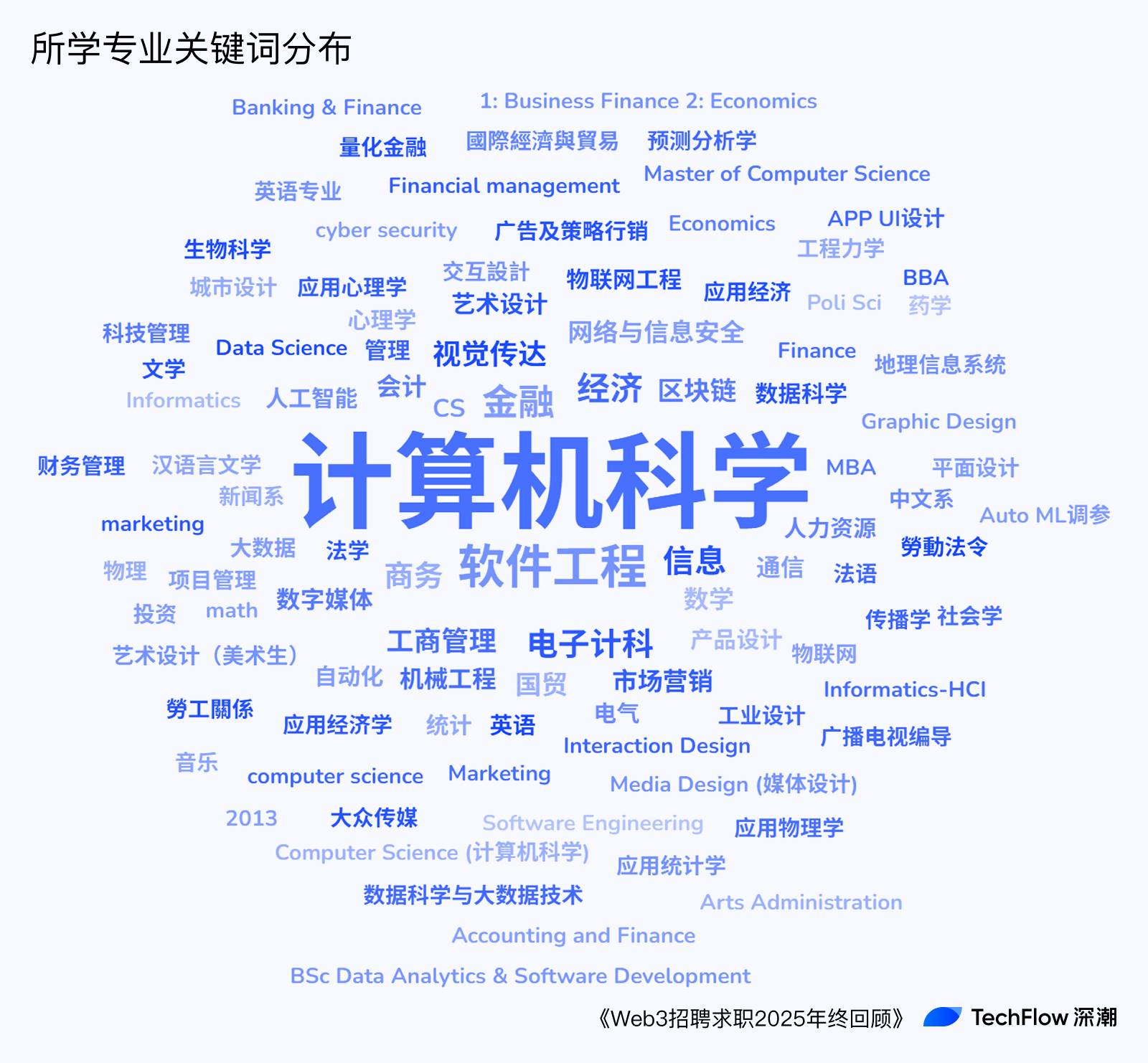
Students come from a wide variety of backgrounds. While computer science/CS students make up a significant number, students from other majors also have backgrounds that match design, product, and analyst positions.
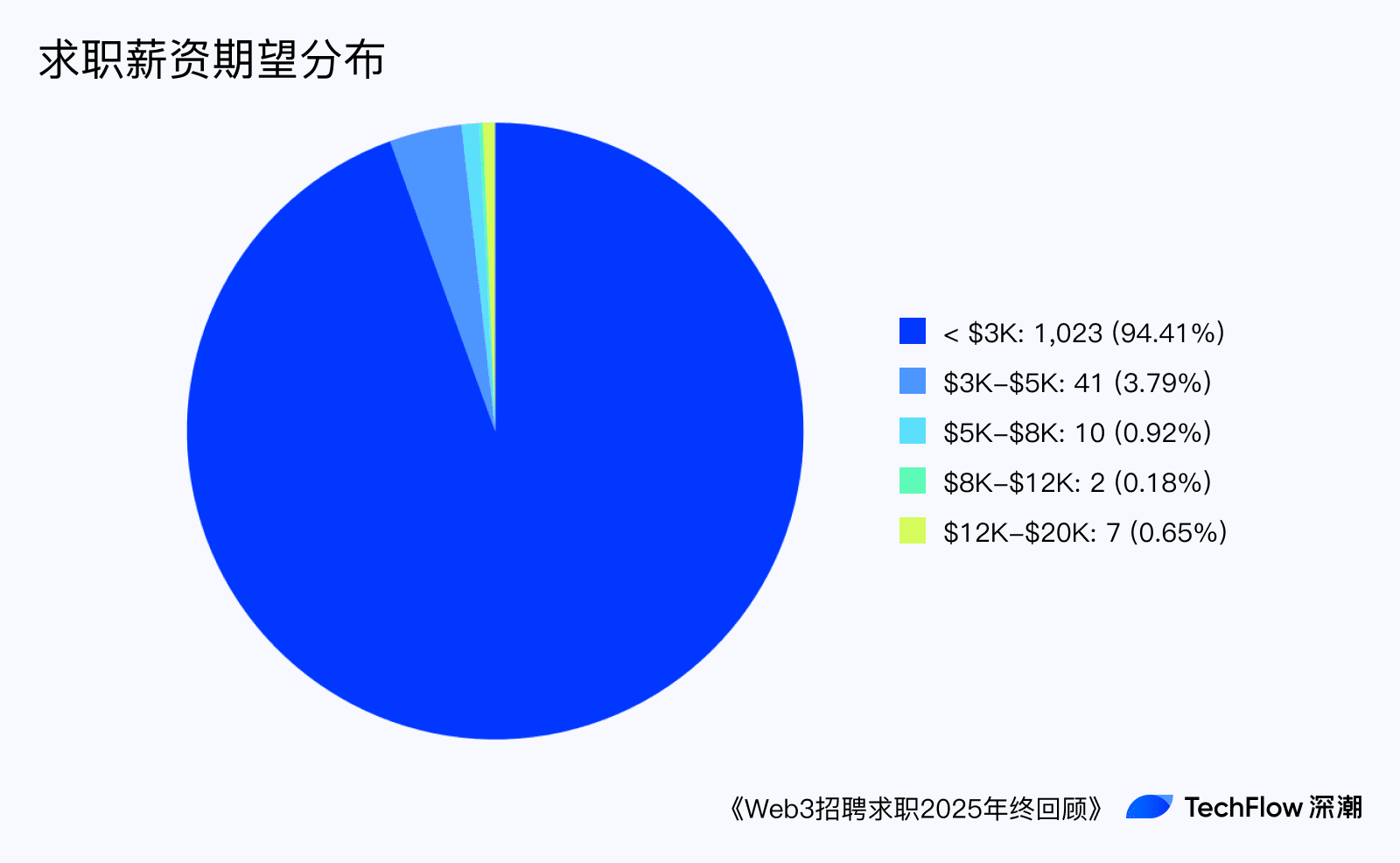
Regarding salary expectations, among the 1,083 valid entries that reflected salary expectations, the job expectations of Chinese-speaking talents were drastically lower than the global average monthly salary level—the proportion of those expecting less than $3,000 reached an astonishing 94%.
There could be several reasons for this phenomenon:
Information gap: As mentioned earlier, most people do not actually have much Web3 experience and may not have a deep understanding of the salary levels in this industry, leading to some mismatch when self-assessing.
Cost of living: Most Chinese-speaking job seekers are likely active in regions with lower costs of living, such as mainland China, Southeast Asia, South America, and Central Europe. They may be able to leverage geographical arbitrage through remote work.
Industry Cycle: Since this data collection took place in December 2025, the market has entered a bear market, and many job seekers are in urgent need of a job, so they hope to increase their chances of getting a job by lowering their asking price (i.e., involution).
In short, currently, most Web3 talent is not as expensive and demanding as some people believe. After several years of expansion and dissemination, Web3 industry salaries have essentially reached parity with Web2 salaries.
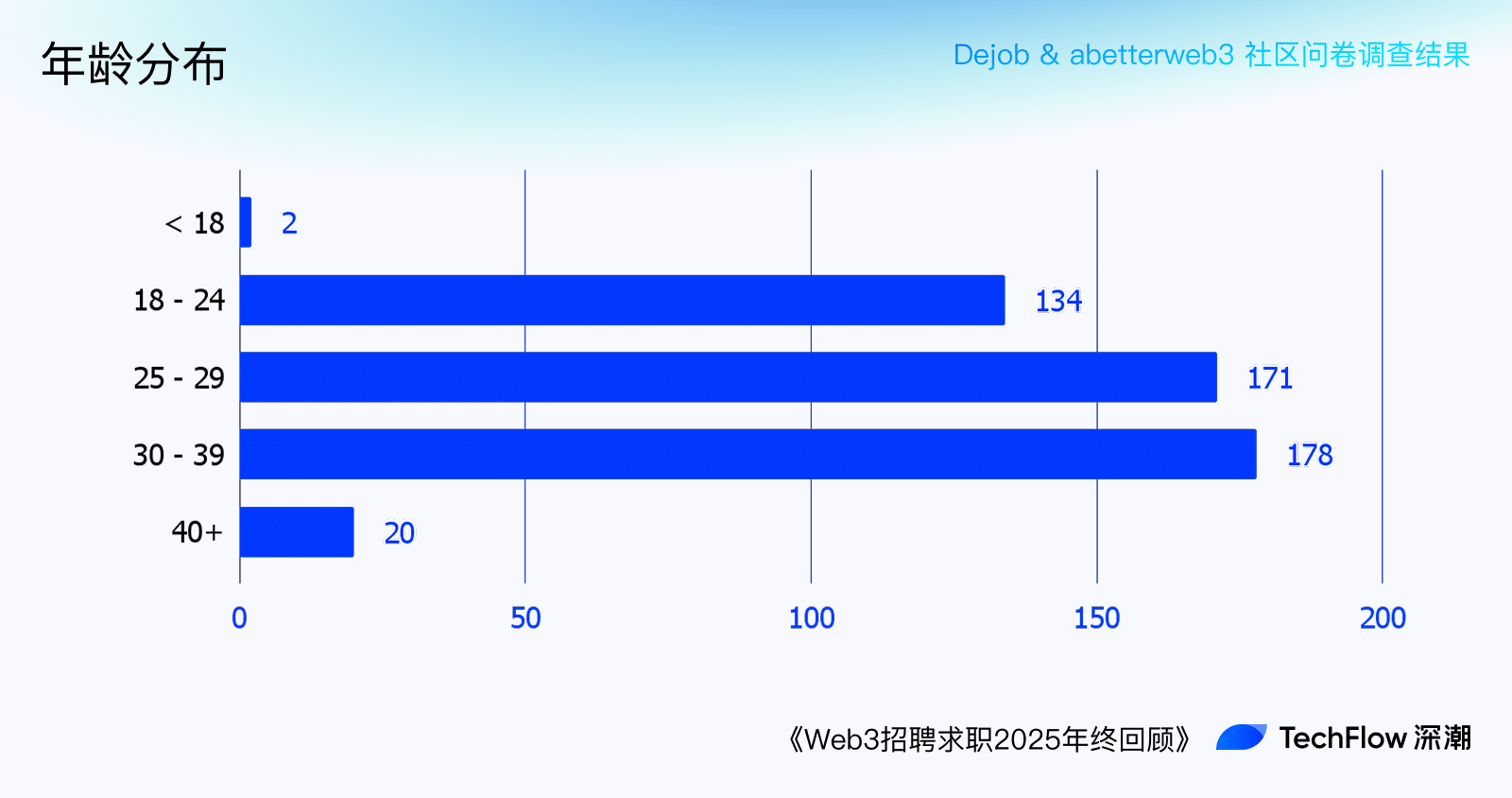
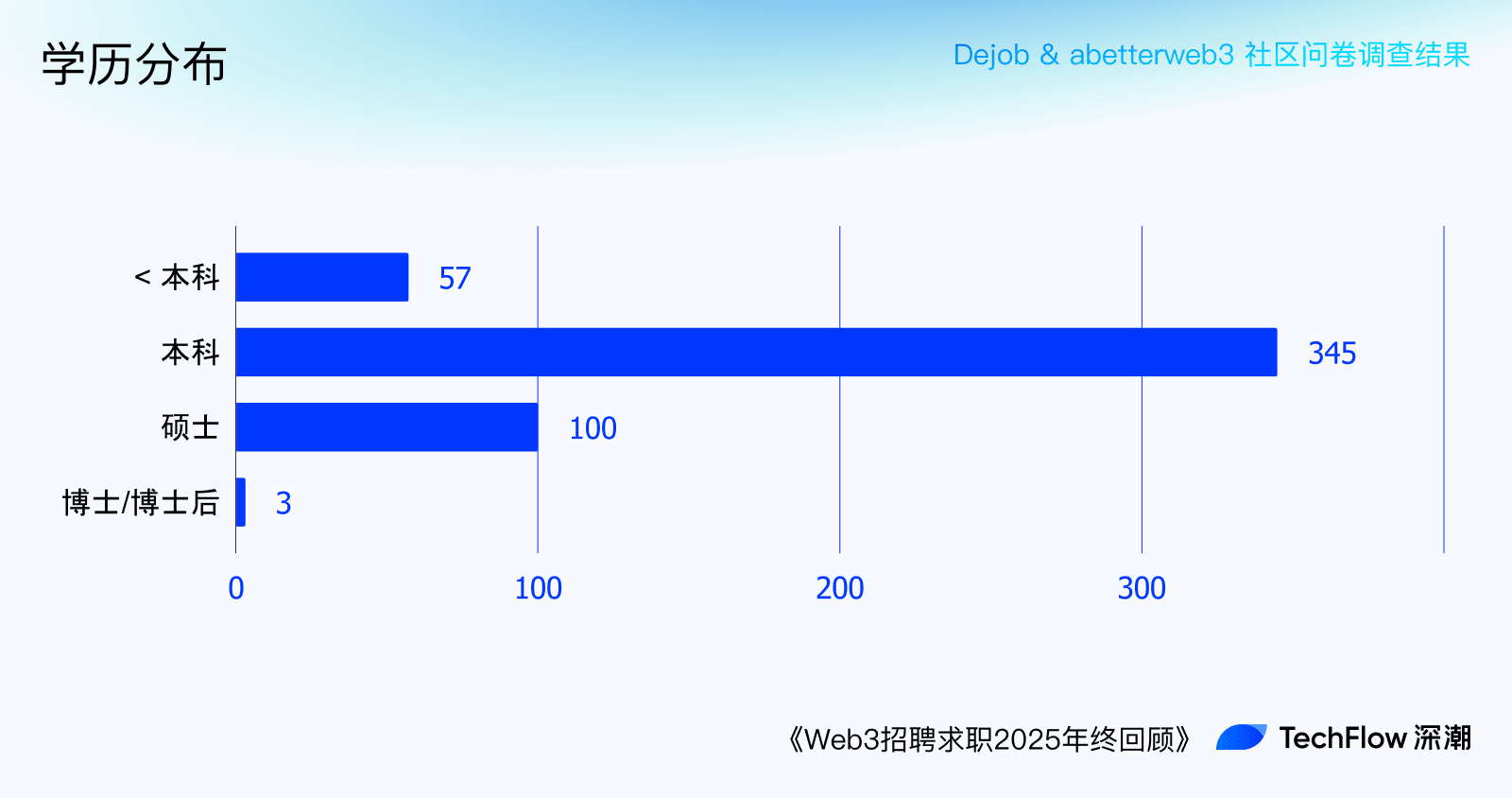
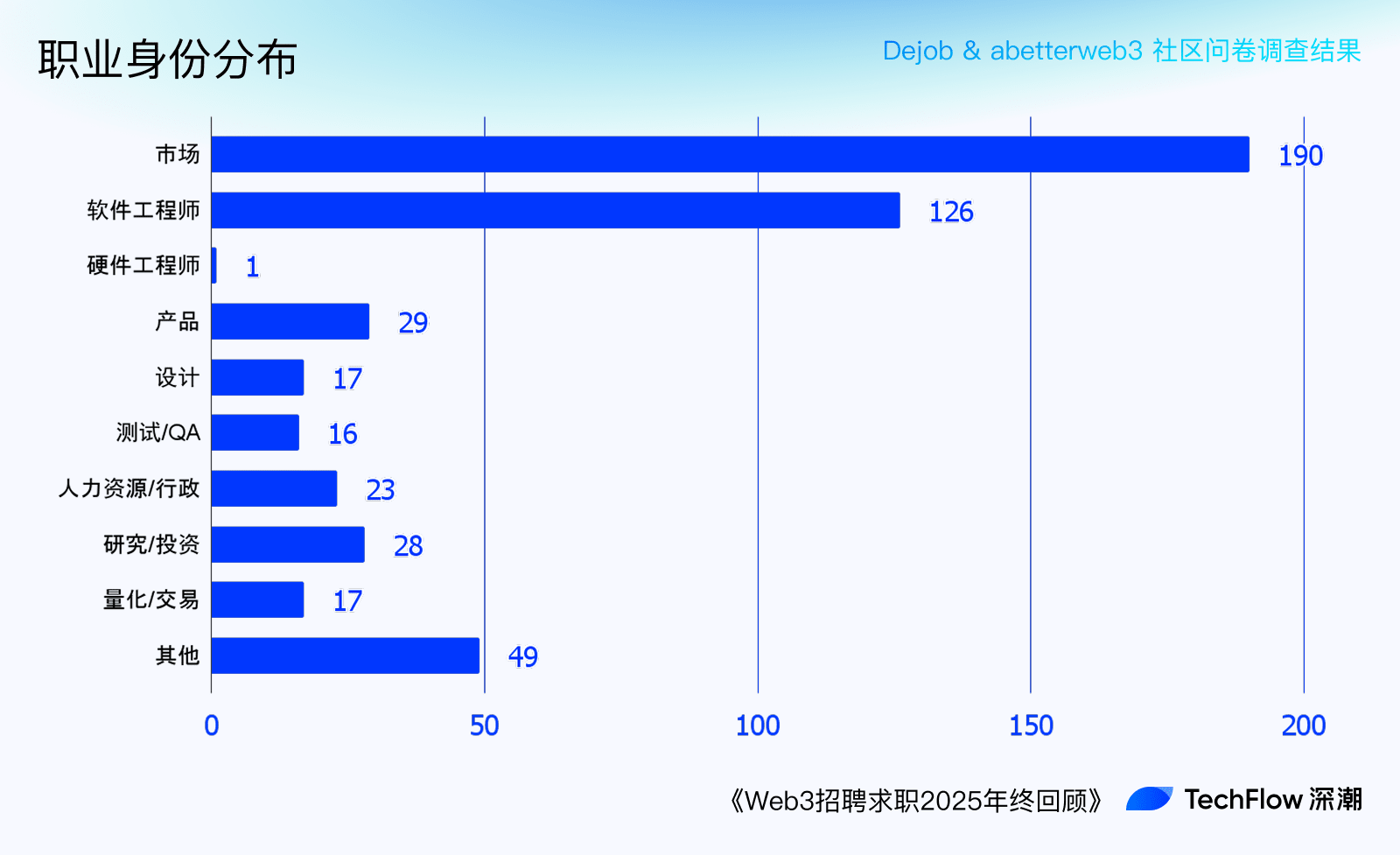
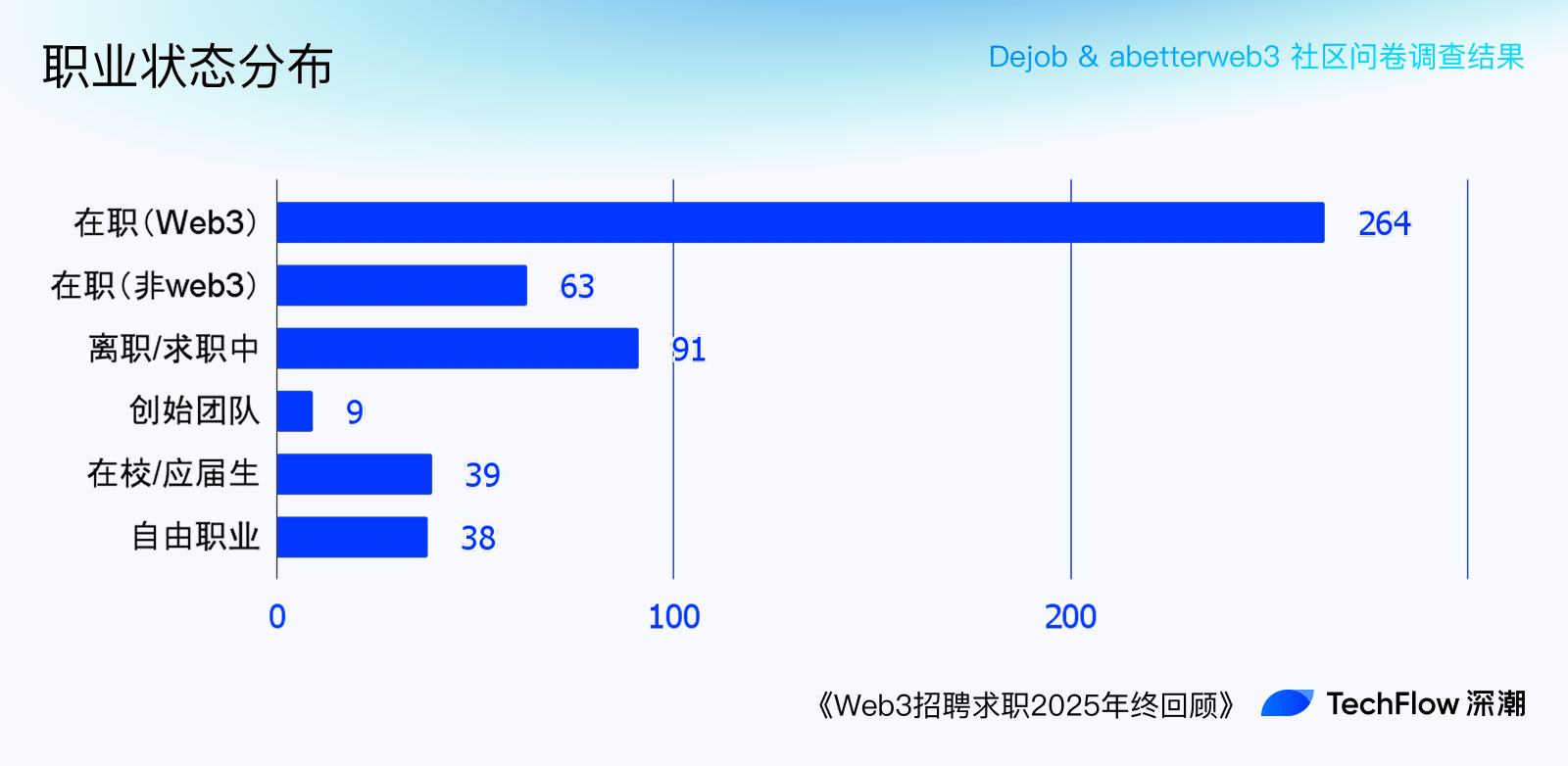
From the 506 questionnaires collected from industry practitioners, we can obtain a more direct and authentic portrait of the industry.
In terms of age distribution, the majority of the workforce is aged 18-29, but there are also quite a few young and middle-aged professionals (>30 years old).
This may be related to the fact that the "35-year-old age limit" is not as severe in the Web3 industry. Compared to internet companies, Web3 companies value experience, ability, and efficiency more, and each company prefers to have experienced professionals who can quickly build products "plug and play".
The distribution of educational backgrounds is basically consistent with the previous talent data statistics, with undergraduates being the majority, but there are also those with less than an undergraduate degree as well as those with master's and doctoral degrees, and the proportion of master's and doctoral degrees is not high.
In terms of professional roles, the most numerous are marketing roles (operations/business development/customer service, etc.), followed by developers (front-end/back-end/smart contracts/blockchain, etc.).
Following that are product, human resources, investment research, design, and trading. Among the submissions in the "Other" category, risk control & security, and KOLs are the most common.
Regarding employment/resignation status, only 52% of respondents are currently employed by Web3. More than 30% are in a relatively flexible lifestyle.
This indicates that market conditions have affected many people's hiring practices; on the other hand, it may also be because certain unique business models of Web3 have made it unnecessary for some people, such as KOLs and traders, to work to generate cash flow.
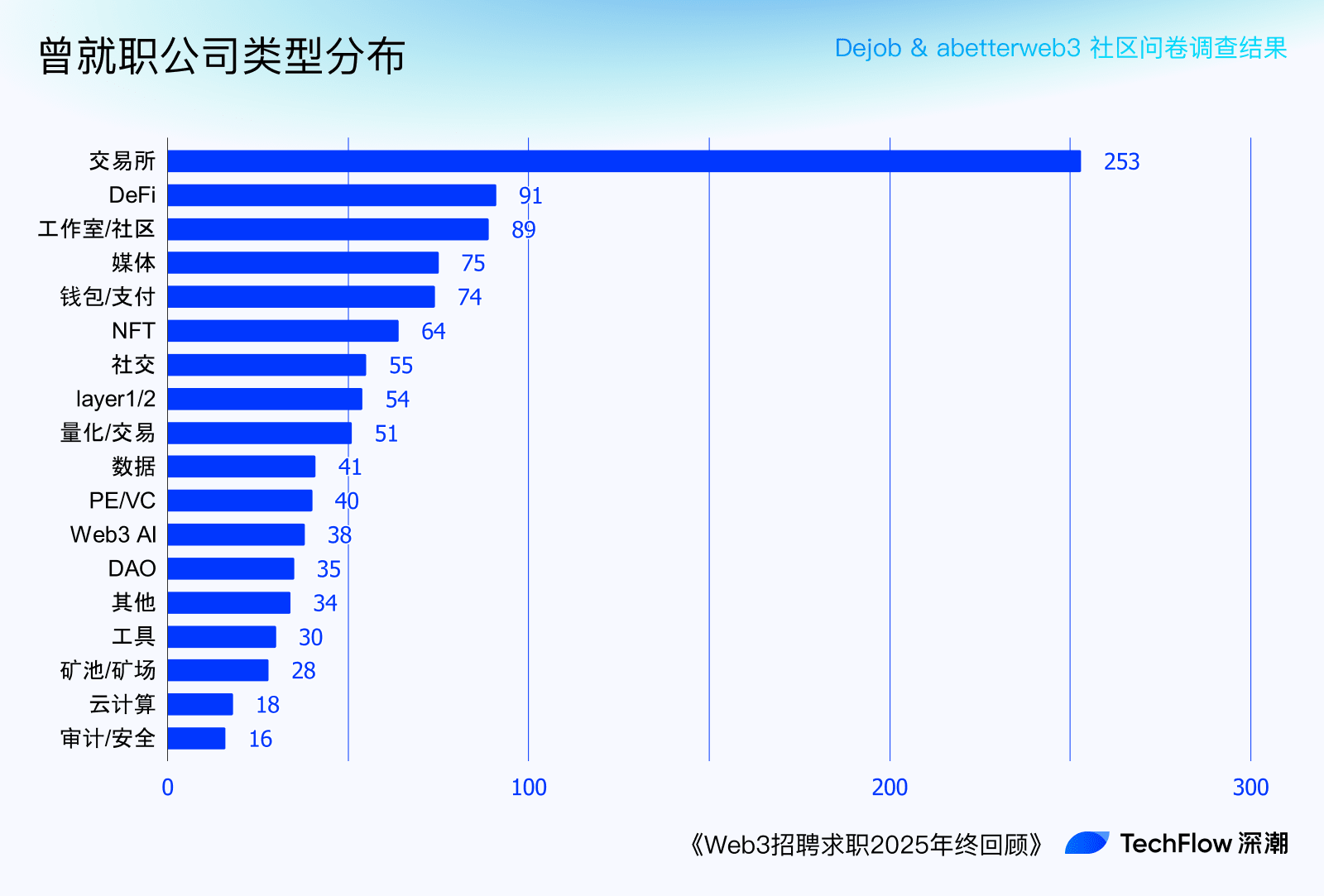
More than half of the submissions indicated that they had worked in exchanges, followed by common business models such as studios/communities, DeFi, media, and wallets.
Both talented individuals and job seekers flock to the stock exchange in an absolute Matthew effect.
This also reflects the current industry predicament to some extent: apart from exchanges, the revenue-generating capacity of most other business models gradually decreases from the C-end to tools to the underlying layer.
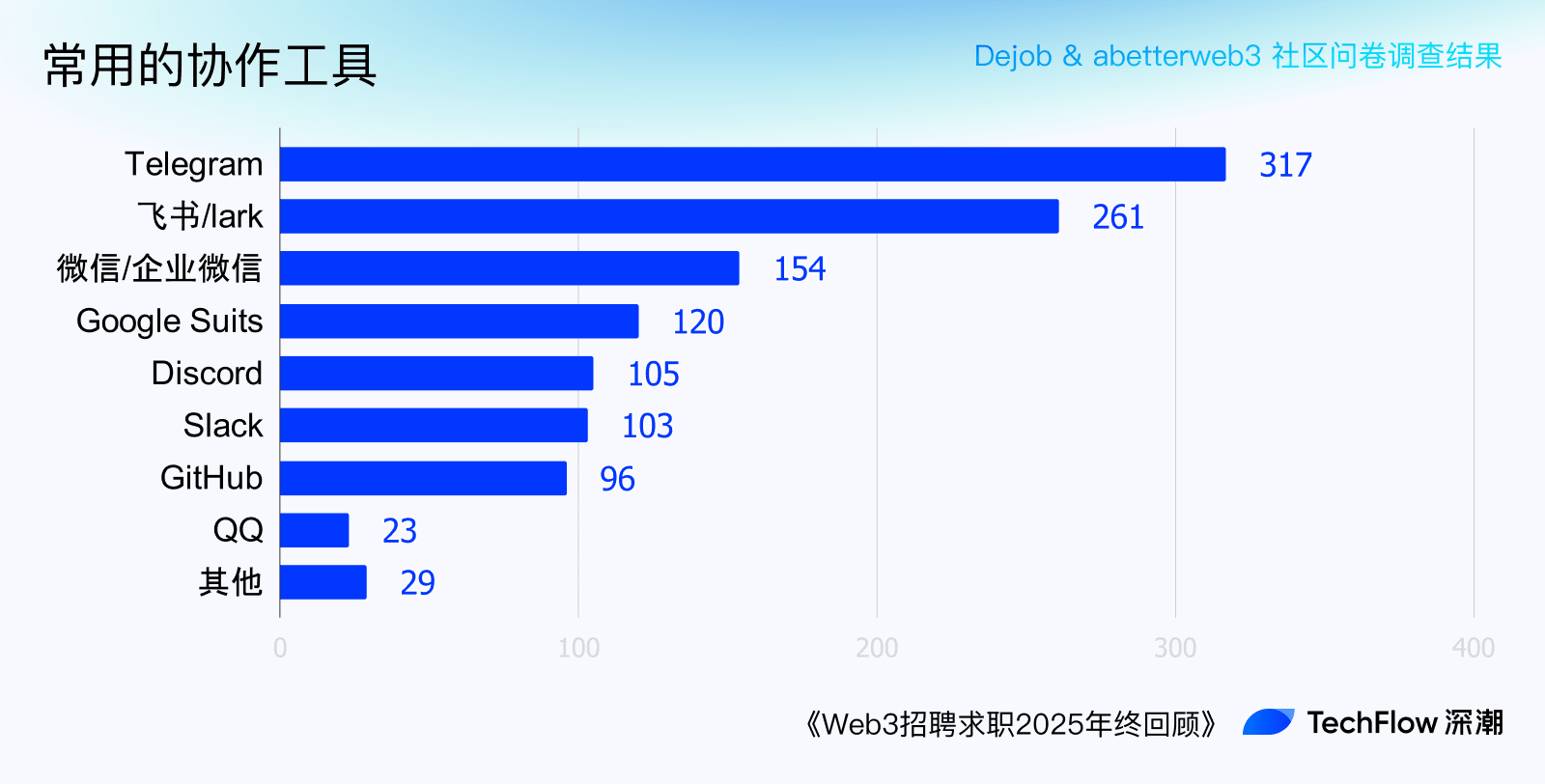
Regarding remote collaboration tools, since this survey took place in a Chinese-language vertical Web3 recruitment community, Telegram was favored by most companies due to its confidentiality and ease of use. This was followed by domestic mainstream tools Lark and WeChat, and finally, Google Suits, Discord, Slack, and other tools commonly used by foreign companies.
In terms of income, contrary to the myth of getting rich overnight, most Web3 employees earn less than those in most top internet companies, and they also suffer from a serious lack of long-term incentives (currency/currency rights), year-end bonuses, and layoff compensation.
More than 70% of people earn less than $4,000 a month (equivalent to RMB 28,000), and those earning $10,000 a month, which are commonly seen on Xiaohongshu, are even rarer.
Nearly half of the respondents had experienced layoffs, and 40% of those laid off said they received no compensation, while 21% said that even if they did receive compensation, it would fall far short of the legally mandated standard (such as n+1).
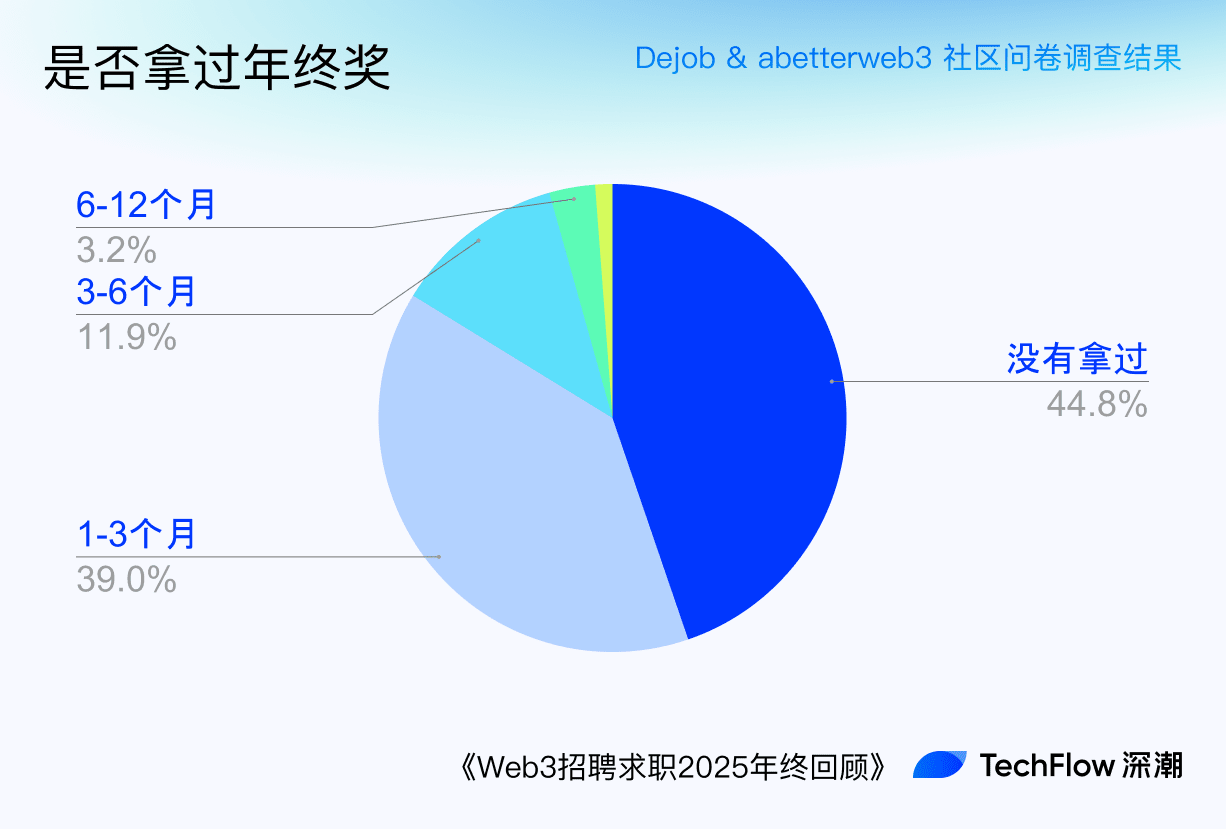
Nearly half of the respondents said they had never received a year-end bonus; even those who did receive a year-end bonus generally received 1-3 months' salary, which is roughly the same as most internet companies outside the Web3 industry.
Regarding the well-known "climbing ladder" incentives, nearly 70% of practitioners said they had never received them. Even if they had, very few received more than 20% of their salary.
A quarter of the respondents even reported an overall loss after entering the cryptocurrency market, essentially working for free; the rest mostly accumulated only around $100,000 (equivalent to 700,000 RMB).
However, on the other side of seemingly hopeless income levels, Web3's strong remote work culture can be said to offer many working people a slight respite.
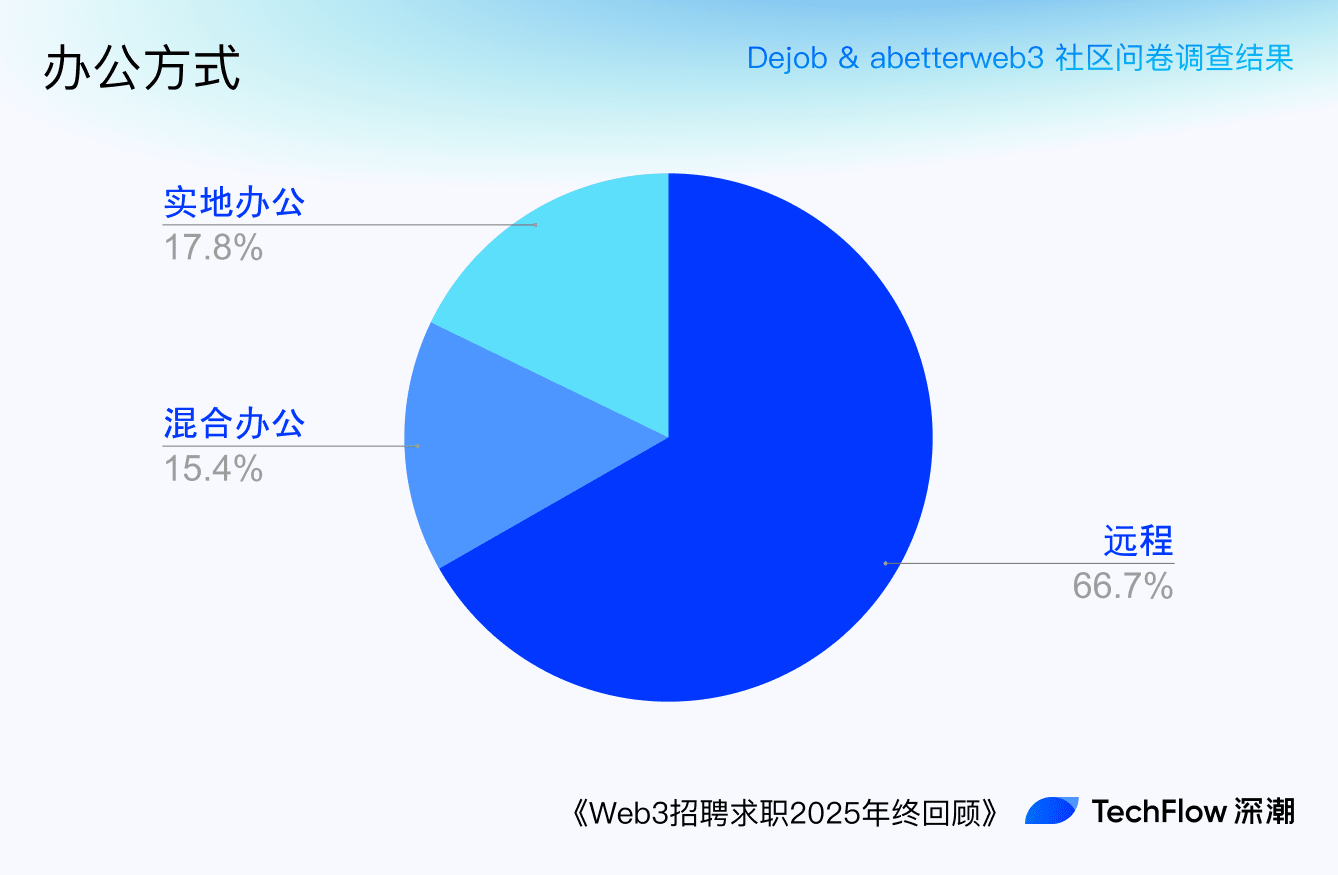
Nearly 70% of the responses indicated that the company supports remote work, and another 15% indicated support for hybrid work arrangements, meaning that although there is an office, being on-site is not mandatory, or that employees can work from home a few days a week.
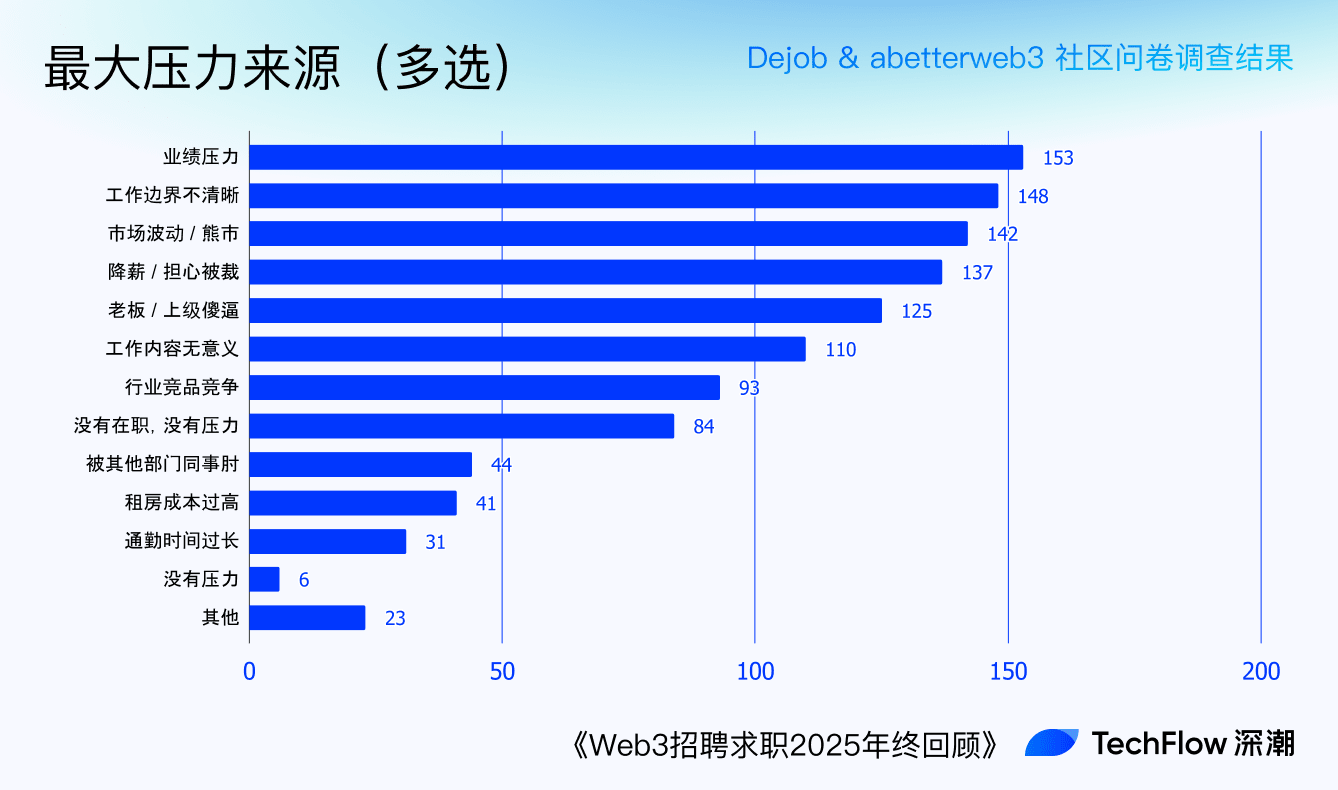
Remote work can indeed alleviate the pain of working to some extent. In response to the question of "the biggest source of stress," 31 respondents chose "too long commuting time."
Other top sources of stress include product growth, job boundaries, market volatility, fear of being laid off, and having an incompetent boss.
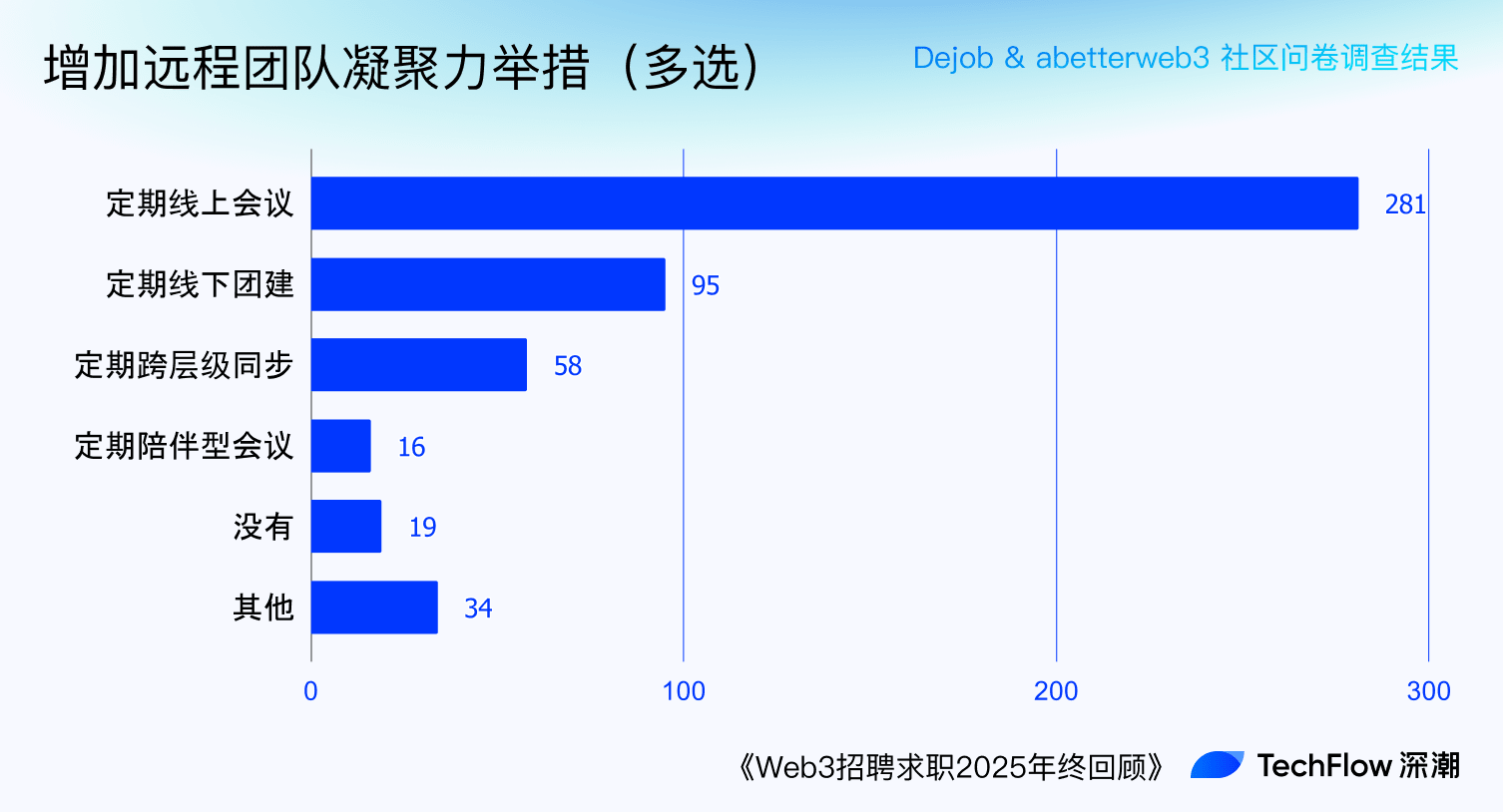
To maintain the mental health of employees as social animals, many companies have taken measures to maintain team cohesion.
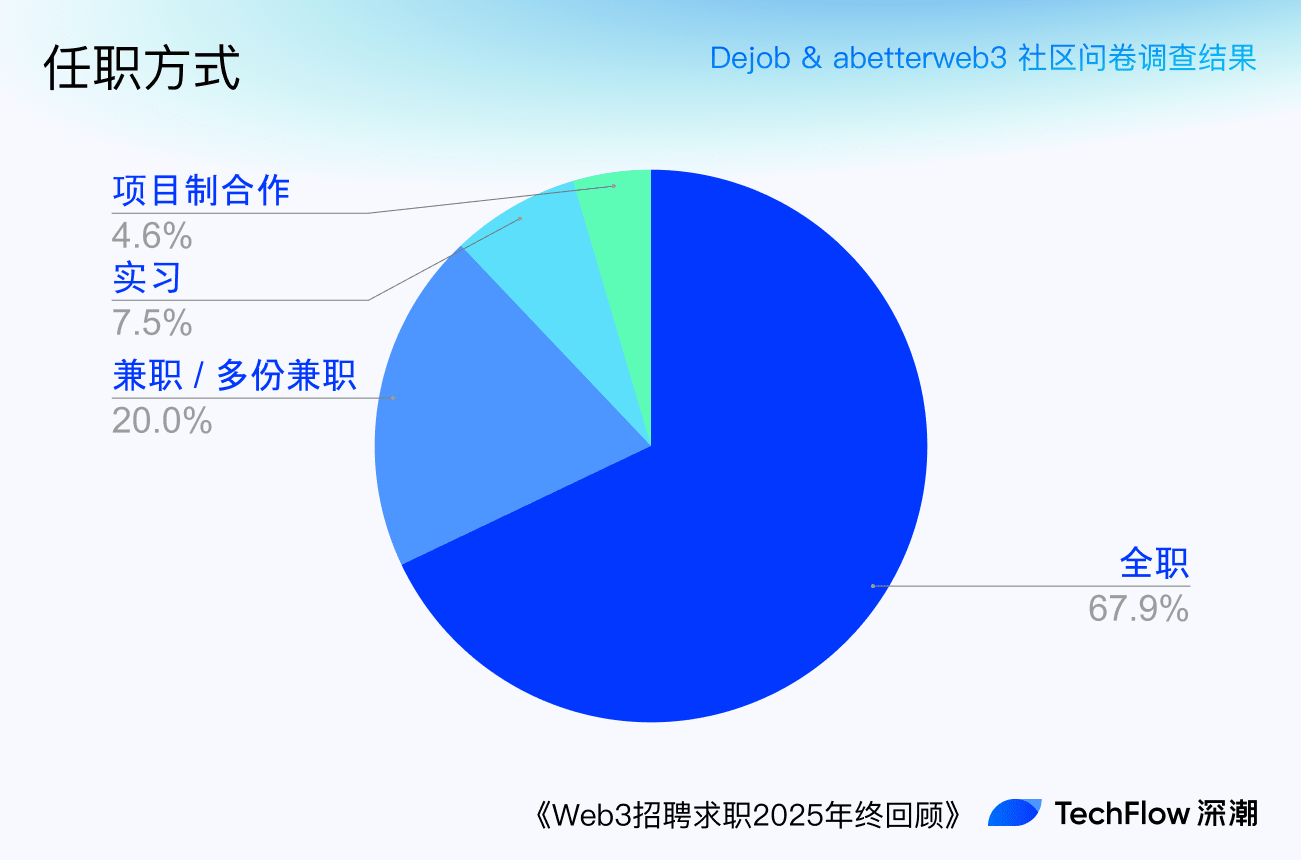
The combined effects of low income and job insecurity have led many to take on multiple jobs. 20% of respondents indicated they had part-time work. This also reflects the technology-driven culture of most Web3 companies; as long as they can solve problems and possess the necessary skills, they don't interfere with employees' lifestyles or income patterns.
Regarding overtime intensity, 80% of people work approximately 40-50 hours per week. Therefore, it seems that the overtime intensity at Web3 is less than that of many 996/007 sweatshops at Web2.
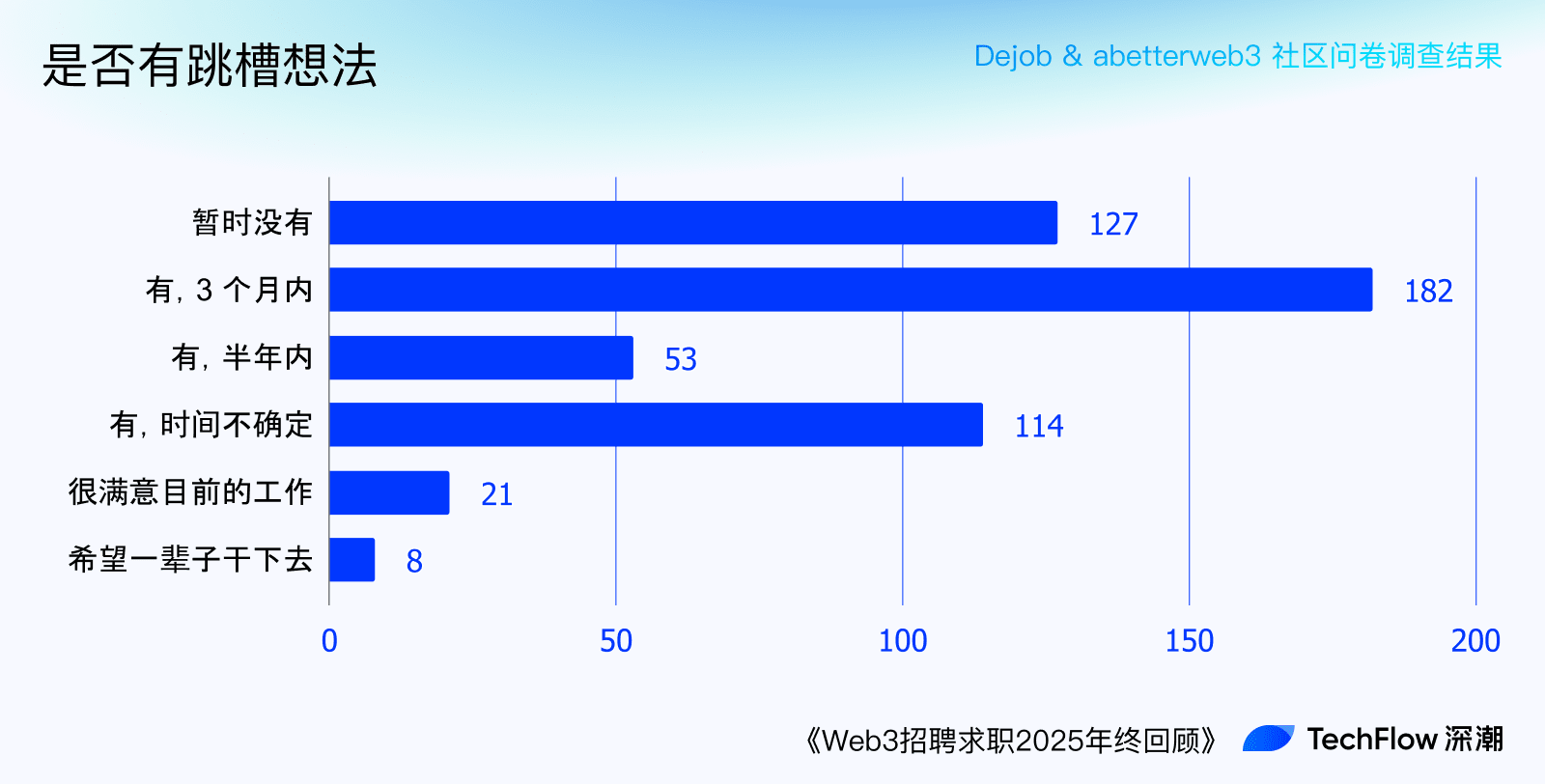
Regarding job hopping, over half of the respondents wanted to change companies, with 30% planning to switch within 3-6 months. However, about a quarter were satisfied with their current situation, and eight even found a dream company they "hoped to work for for life."
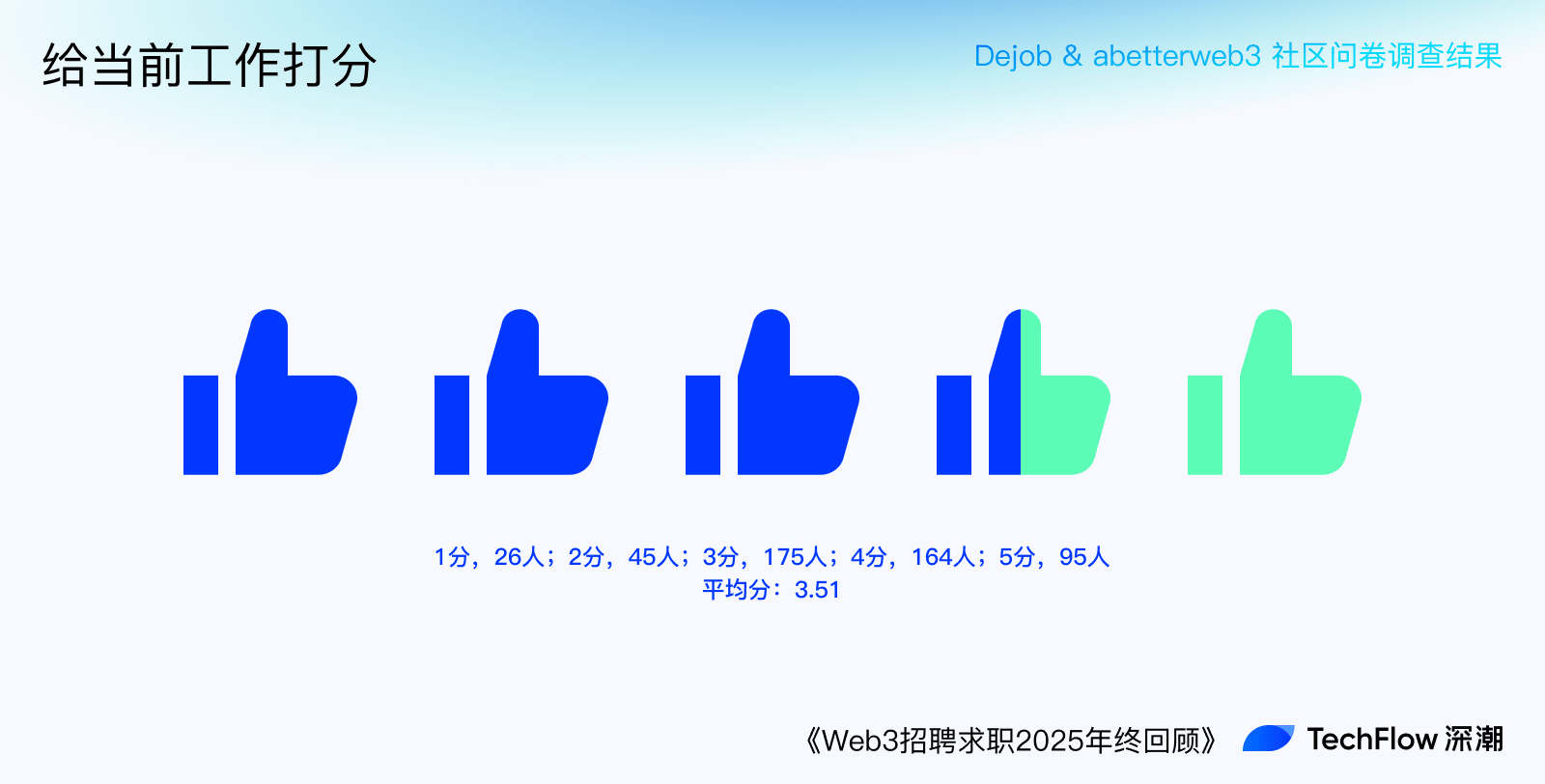
Considering factors such as minimal overtime, remote work options, and part-time availability, many people gave their current jobs a positive evaluation. The average score for their current job was 3.51.
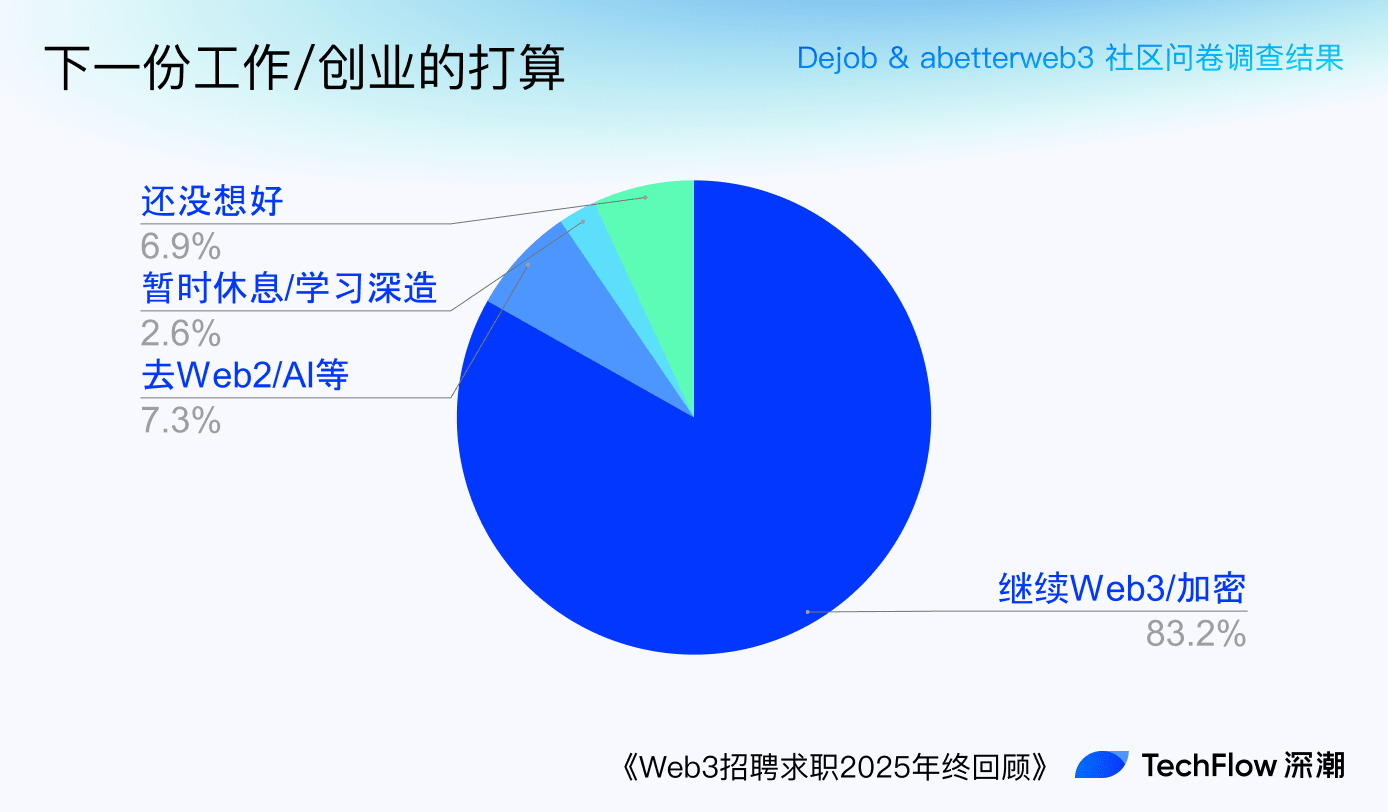
When asked whether their next job would also be in the cryptocurrency industry, over 80% of respondents chose to stay, while 7% chose to leave.
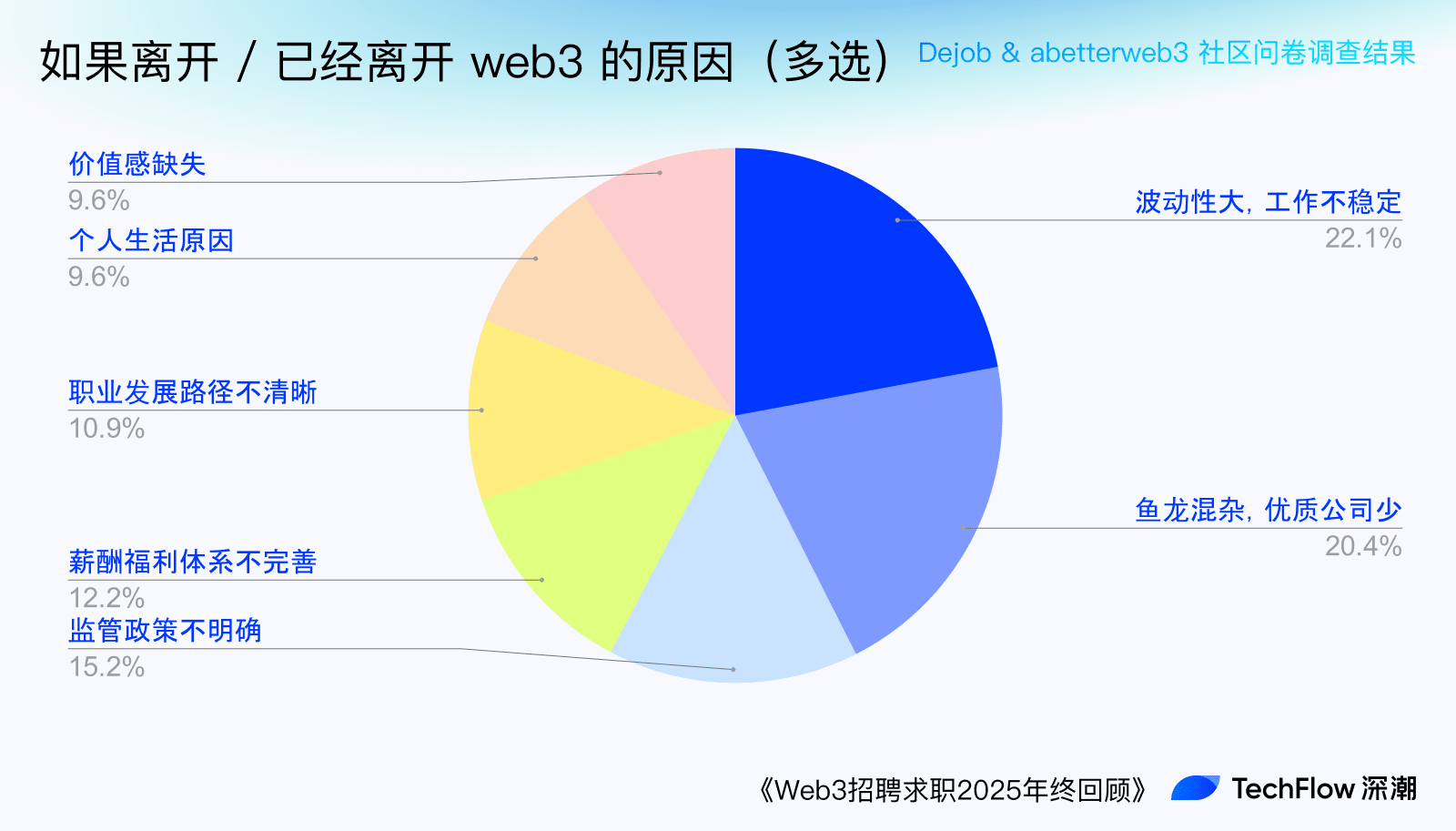
The reasons given for leaving reflect the cold indifference within this industry.
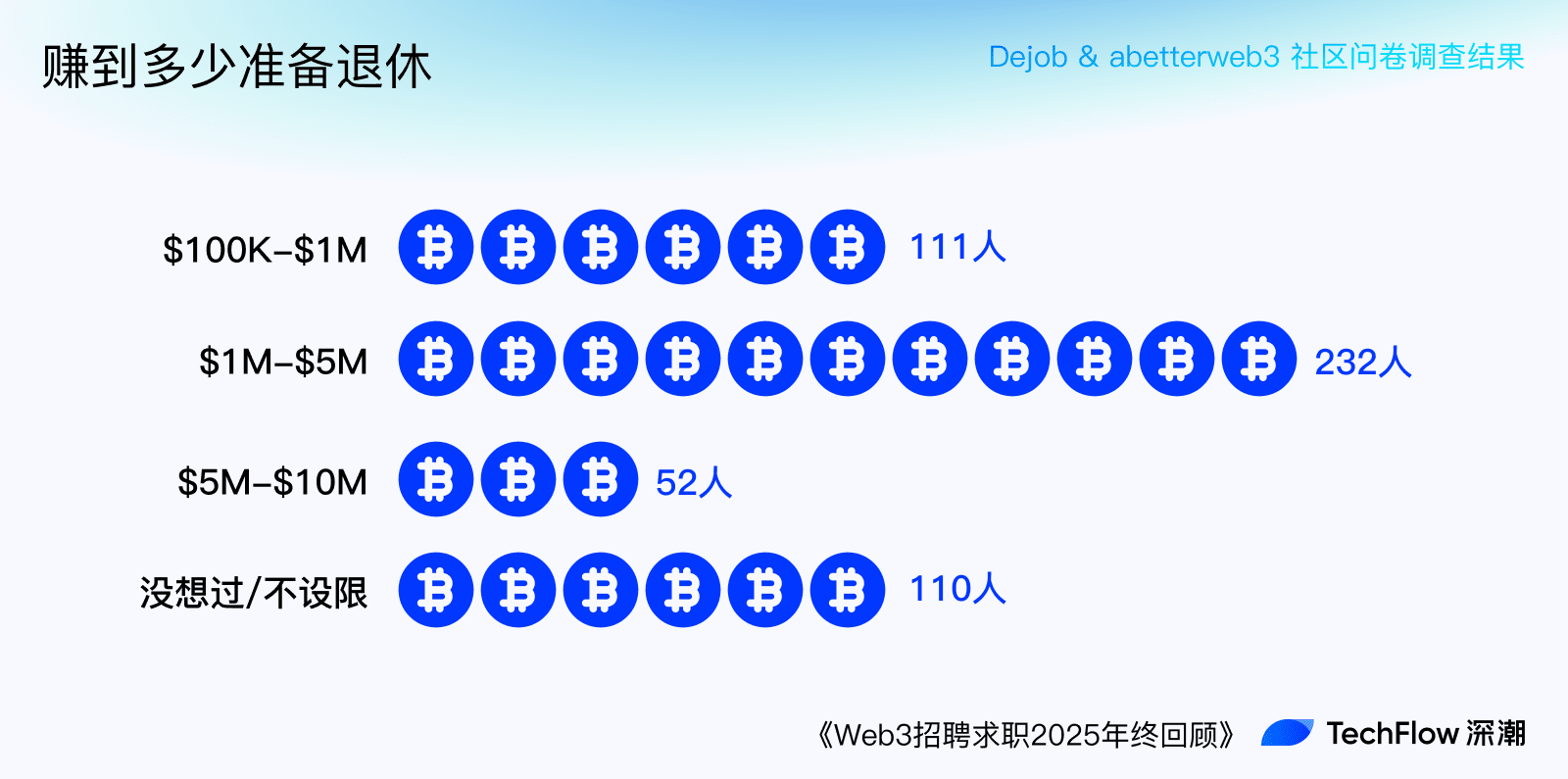
But all this planning is ultimately for early retirement. When asked "At what level of wealth would you consider quitting your job?", the vast majority chose $1M - $5M (equivalent to 7 million to 35 million RMB). This may indeed be the limit of wealth one can achieve through working. However, 20% chose "no limit," reflecting their confidence in their abilities.
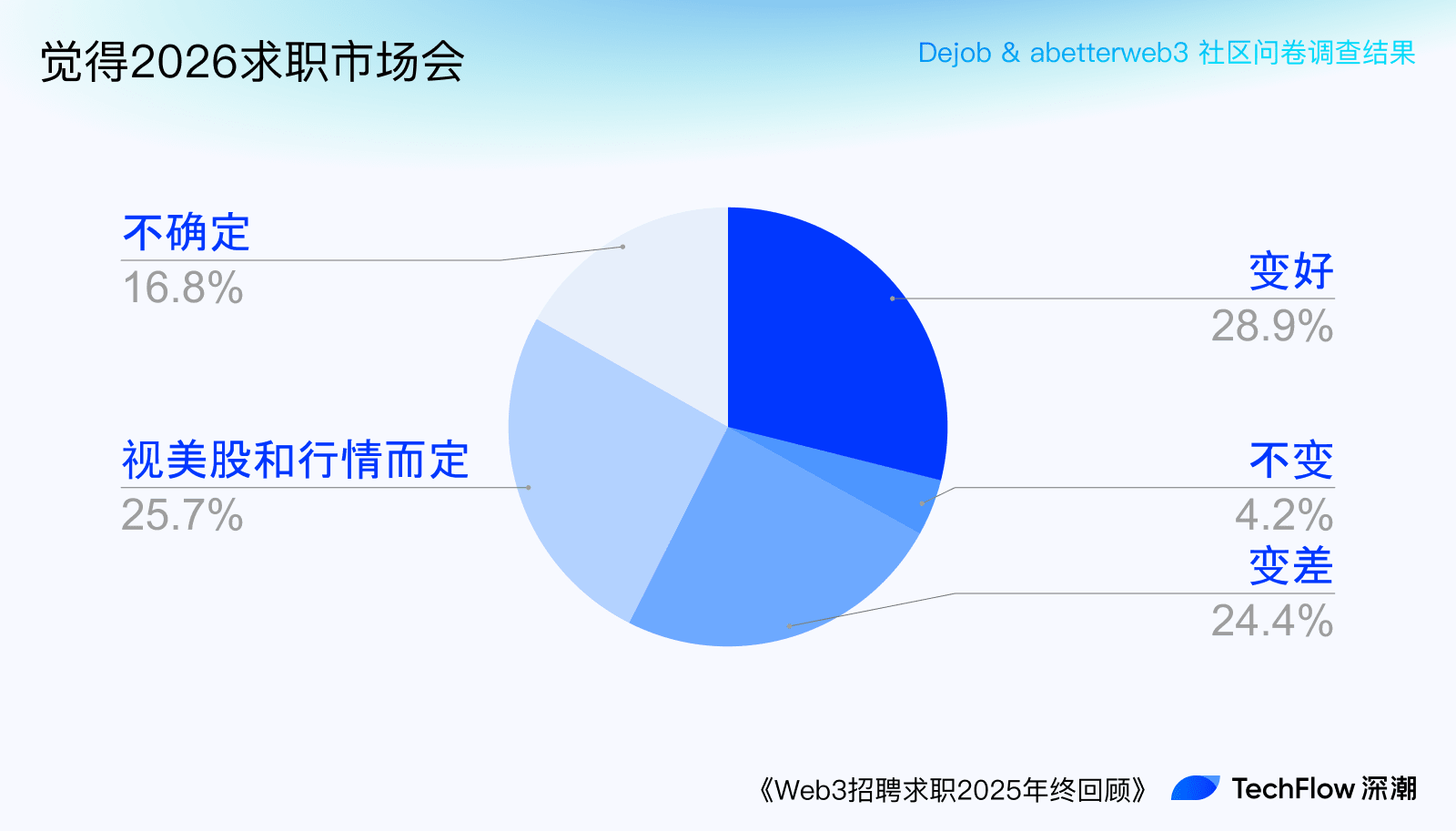
Regarding whether they are optimistic about the job market in 2026, only 28% of people think it will improve, while the majority are pessimistic or taking a wait-and-see attitude.
In addition to the above questions, we have added a few optional questions, which collected some job seekers' most honest opinions on companies in the current industry (for entertainment purposes only).
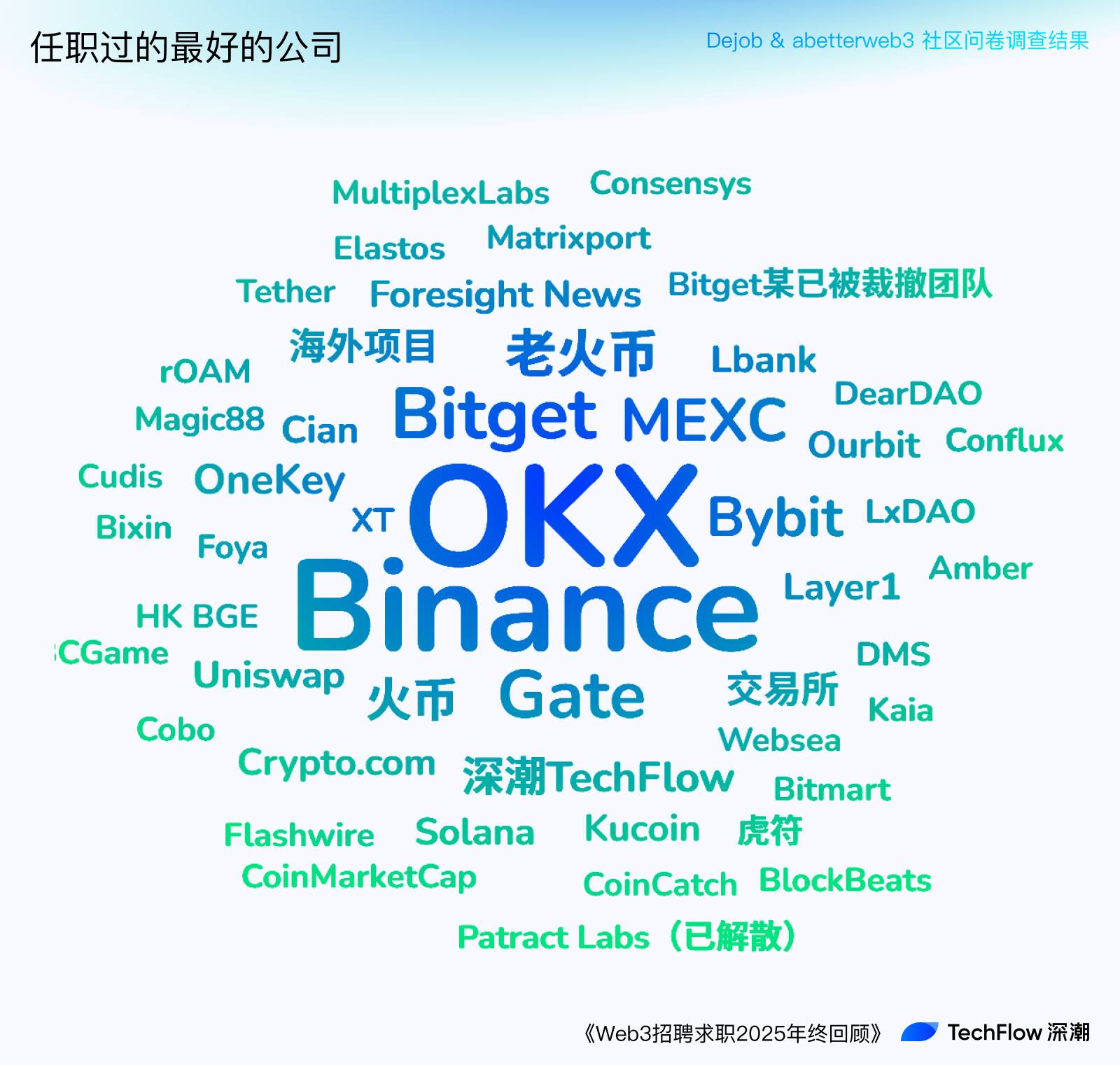
OKX (26), Binance (23), Bitget (10), Gate (9), MEXC (7), Bybit (6), Huobi (5), Huobi (4), TechFlow (3), OneKey (3)
Surprisingly, some disbanded teams were also mentioned, such as Huobi during Li Lin's era, a Bitget team that has since been laid off, and Consensus Lab, which has also disbanded. Perhaps these once-great companies deserve to be remembered for a lifetime.
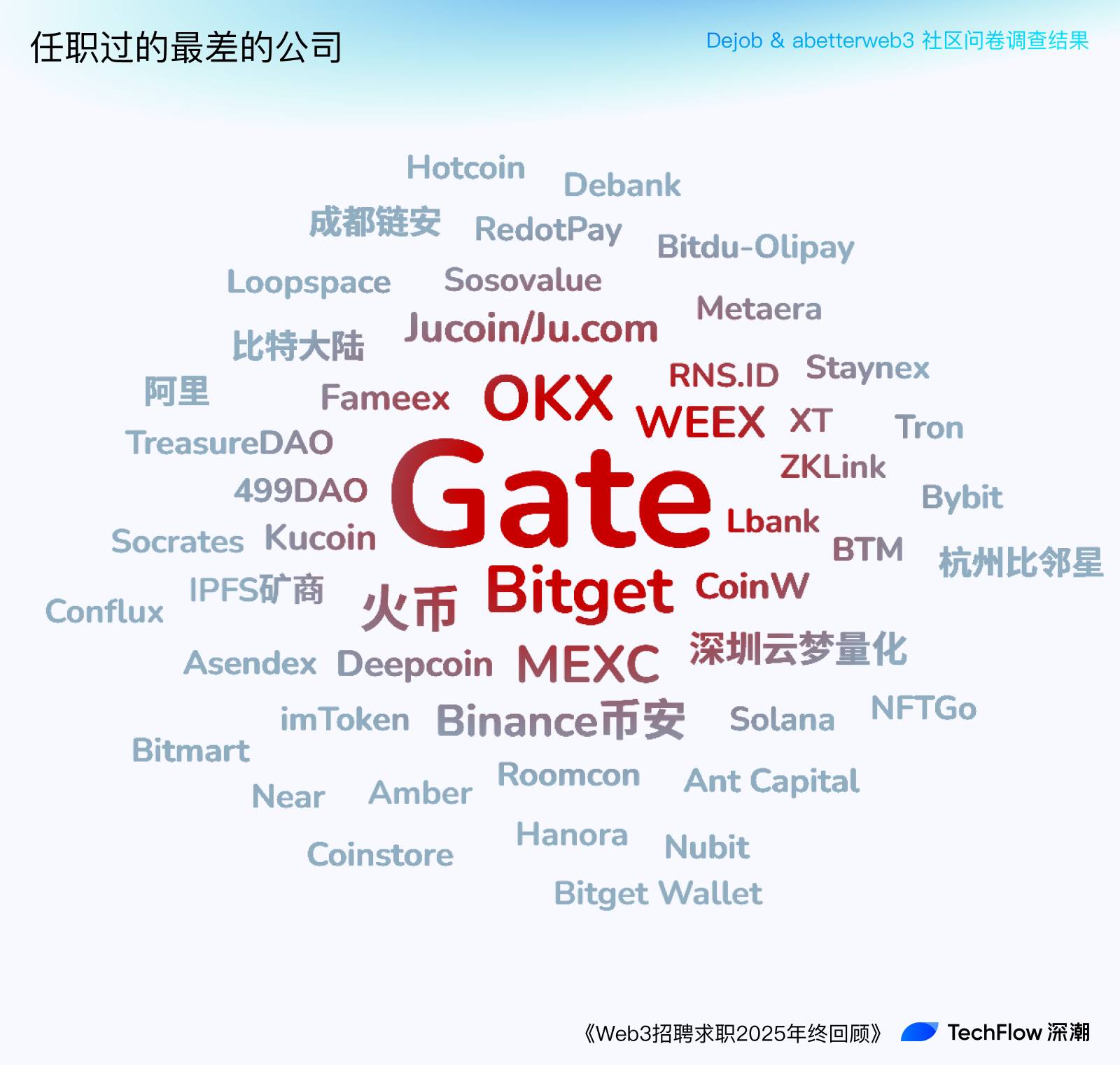
In response to the question "What's your worst crypto company? ", the top ten companies are:
Gate(43), Bitget(13), OKX(12), MEXC(8), Huobi(7), Binance(5), WEEX(5), CoinW(2), Kucoin(2), Lbank(1)
Some exchanges appear on both the best and worst lists. This may indicate that exchanges have extensive internal business lines and complex personnel, and the working experience of working in different departments or under different leaders can be vastly different.
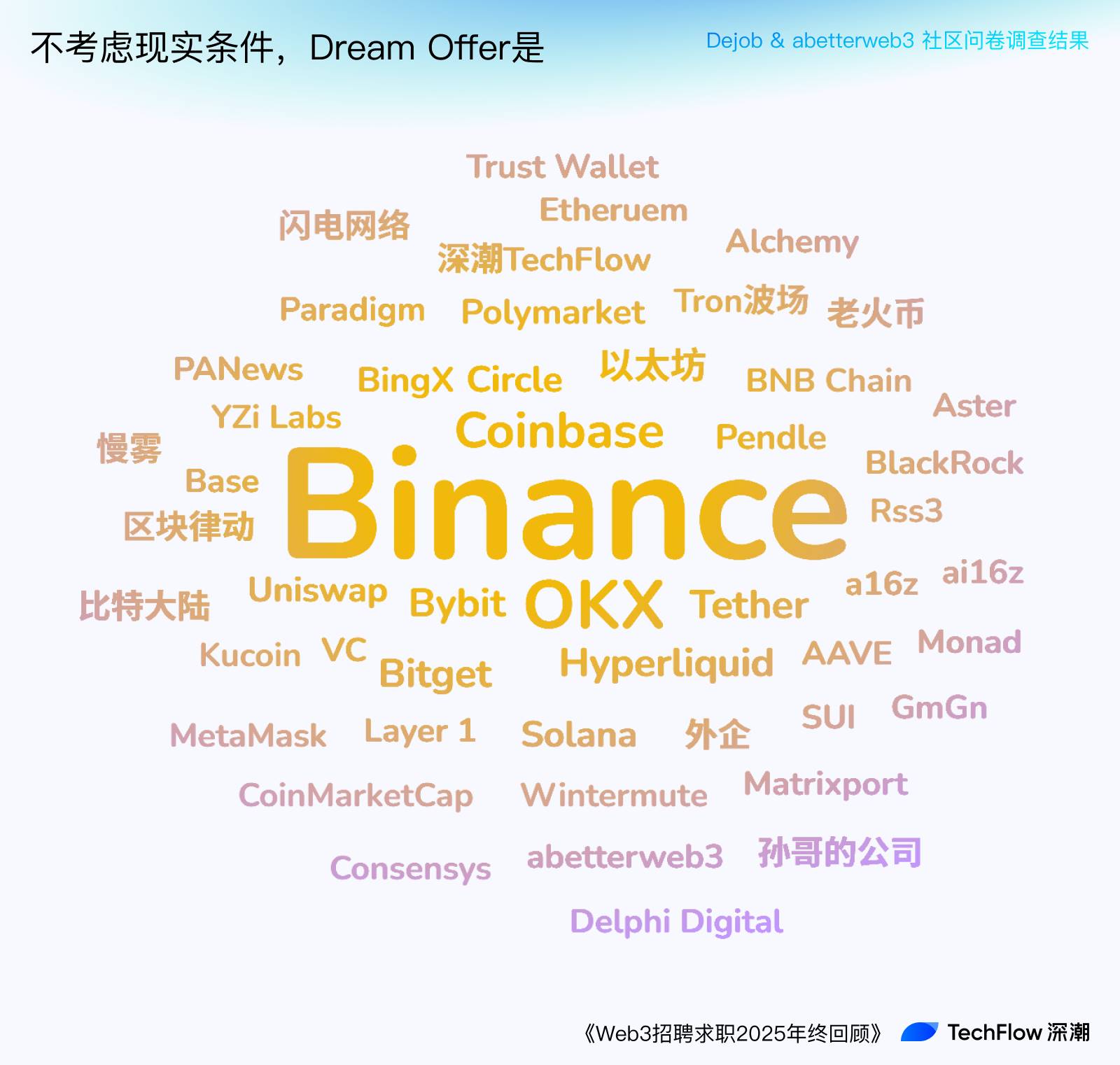
Binance (177), OKX (50), Coinbase (25), Hyperliquid (11), Bybit (11), Bitget (10), Tether (10), Circle (6), Solana (5), Ethereum (5)
Binance, as the industry leader, unsurprisingly topped the list. Known as the "Tencent of the crypto world," Binance serves both as a credential for outsiders and a prestigious brand for professionals, truly deserving its reputation for supporting individual career development. The inclusion of Hyperliquid, a rising star in the blockchain industry and a non-exchange company in the top 10, reflects the strength of its community and the public's desire for non-exchange products. Beyond the leading exchanges, the number of foreign companies/overseas infrastructure providers significantly increased in this answer, reflecting, to some extent, the biases many job seekers hold towards foreign companies and their disappointment with Chinese-led teams.
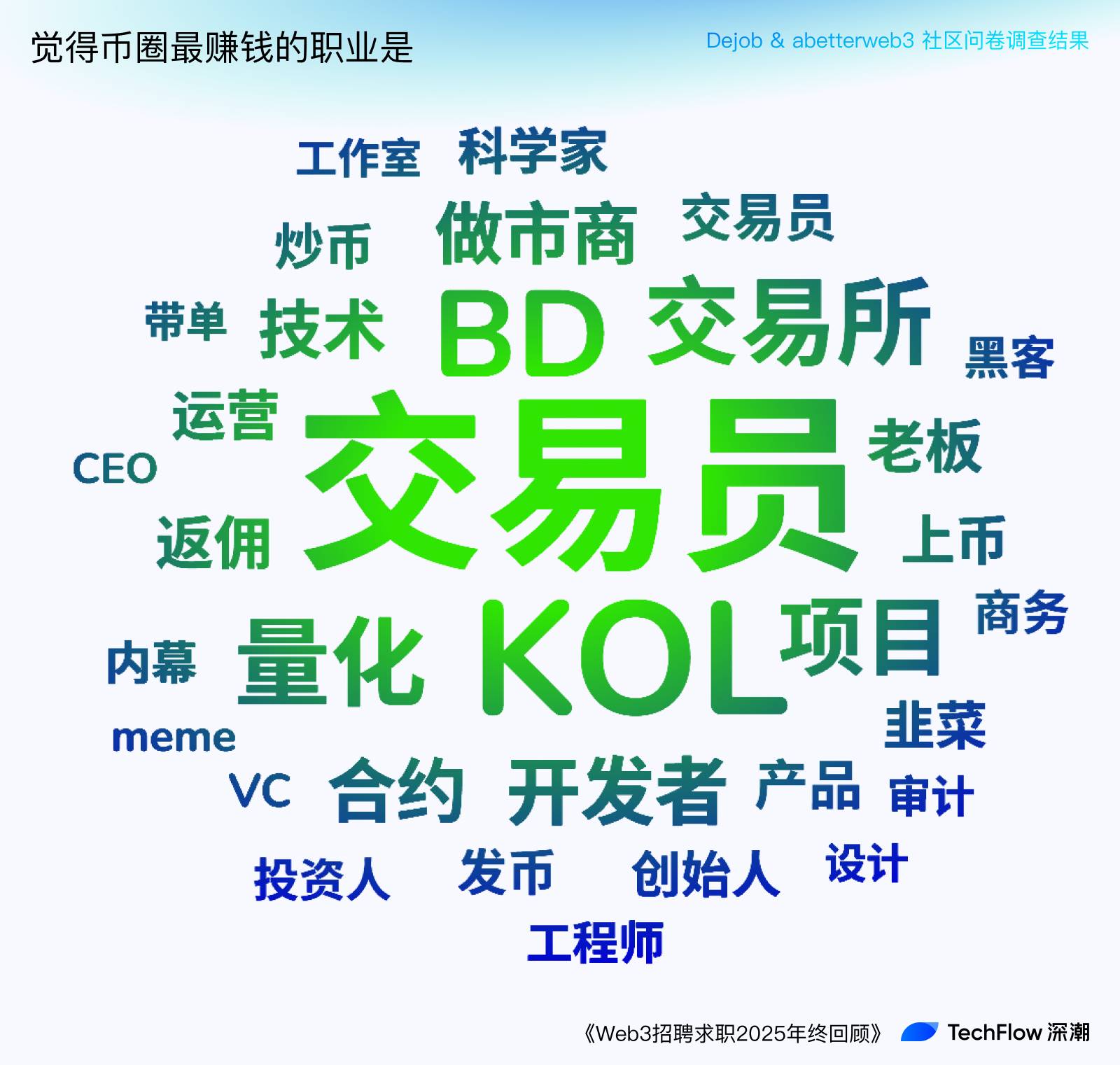
Traders (85), KOLs (68), Business Makers (47), Exchanges (32), Quantitative Analysts (32), Projects (27), Developers (20), Contracts (17), Market Makers (16), Technologists (14)
Traders topped the list, likely because the erratic market conditions of the past two years have made many realize that no matter what company or profession they hold, nothing beats directly engaging in the market themselves. Key Opinion Leaders (KOLs) followed closely behind, probably because they have access to primary holdings of projects, possess informational advantages, or can directly influence individual investments for profit . Purely technical positions, far removed from the market, were also mentioned, perhaps because most non-developers see "technology" as an indispensable element for "super individuals" to achieve leaps in their careers.
If you are interested in more details about the answer, we have published this part of the answer in an online document, which you can click to view 👀.
You can also click here to view the full version of the questionnaire results ↓
As an aside: Qualities that HR professionals value
To better help job seekers understand the recruiter's perspective, we also interviewed several senior HR professionals from different companies.
Regarding whether the demand for Web3 jobs has been shrinking in recent years, an HR representative from an exchange interviewed stated that the number of job postings they've handled has indeed been declining since 2020. Furthermore, the current situation in 2025 is that development headcount is rarely updated; only business development, marketing, and operations staff are being hired and leaving repeatedly. The reason is obvious: the industry doesn't have that many new features to develop, but it still needs people to drive growth.
Another HR professional stated that overall demand has not decreased, but the demand for entry-level positions has decreased while the demand for senior/expert positions has increased . Yet another HR professional noted that while demand hasn't shrunk, recruitment standards are rising, particularly the noticeable increase in educational requirements, although it's not yet as competitive as the Web2 sector.
When asked what kind of people are more likely to make a "good first impression," HR professionals' answers tend to revolve around two points: good education and good background (working for a large company, with relevant experience).
However, there's a survivor bias here: companies that can hire HR professionals are often already well-established, so it's understandable that they require specific educational backgrounds. But some HR professionals interviewed indicated that educational requirements vary depending on the job type. Positions requiring a degree, such as backend development, algorithm development, and blockchain, have always had these requirements; positions that don't require a degree don't necessarily require one now. Furthermore, this HR professional mentioned that a Web2 background is a plus for product development positions, but a Web2 background is actually a minus for non-product development positions like marketing and operations that require a proactive approach to user engagement.
Regarding the qualities they value, several HR professionals interviewed mentioned that they highly value competence, self-motivation, learning ability, and the willingness to integrate into Web3 . Oona, a senior HR professional, stated that teams may prioritize "plug-and-play" skills and the ability to "solve problems immediately upon hiring." However, as an HR professional, she assesses a candidate's suitability more comprehensively, often considering the aforementioned qualities and intelligence. She also highly values a candidate's job-hopping history, preferring candidates with stable