Targeted at traditional entrepreneurs, this article deciphers crypto funds by illustrating their evolution from speculative instruments to institutional-grade asset classes.
It breaks down the profit logic, advantages, disadvantages and historical performance of six core strategies including Long Only and quantitative trading, analyzes the unique arbitrage and trend opportunities in the crypto market, and provides a selection guide based on capital nature and risk appetite, helping entrepreneurs allocate crypto funds in a rational manner.
Targeted at traditional entrepreneurs, this article deciphers crypto funds by illustrating their evolution from speculative instruments to institutional-grade asset classes.
It breaks down the profit logic, advantages, disadvantages and historical performance of six core strategies including Long Only and quantitative trading, analyzes the unique arbitrage and trend opportunities in the crypto market, and provides a selection guide based on capital nature and risk appetite, helping entrepreneurs allocate crypto funds in a rational manner.

Introduction
- Long Only?
- Market Neutral?
- Funding Rate?
- Multi-Strategy?
- Web3 VC?
- CTA? Factor Models?
More importantly:
What exactly do these strategies do? Which ones are stable? Which have high drawdowns? Which have actually been profitable over the past five years?
- Explain how crypto funds are categorized in plain language
- Break down how each strategy actually makes money
- Highlight the pros and cons of each approach
- Analyze their performance trends over the past five years
- Guide entrepreneurs on how to choose the right crypto fund
After reading, you will be able to clearly judge:
“Whether crypto funds are suitable for me, and if so, which type to choose.”
Why Are More Traditional Entrepreneurs Looking into Crypto Funds?
Trend 1: Global Institutions Are Quietly Increasing Crypto Allocations
- BlackRock and Fidelity have launched Bitcoin/Ethereum ETFs.
- JPMorgan, Deutsche Bank, and other financial giants are expanding crypto-related custody services.
- Sovereign wealth funds, pension funds, and insurance capital are starting to allocate to digital assets.
Trend 2: Crypto Funds Are Far More Professional Than Individual Trading
- Clear trend signals → ideal for quantitative strategies
- Fragmented exchanges → create arbitrage opportunities
- Perpetual contract mechanism → generate funding rate yields
- Short innovation cycles → deliver outsized VC-style returns
- Transparent on-chain data → enable verifiable strategy backtesting
Trend 3: Entrepreneurs Need New Vehicles for Asset Allocation
Many business owners are asking:
“Where will the next five years of growth come from?”
- Aggressive growth: Capture market trends
- Defensive stability: Earn arbitrage profits
- Innovation exposure: Bet on cutting-edge Web3 projects
- Rapid institutionalization: With mature custody, auditing, and compliance frameworks
Six Core Strategies of Crypto Funds
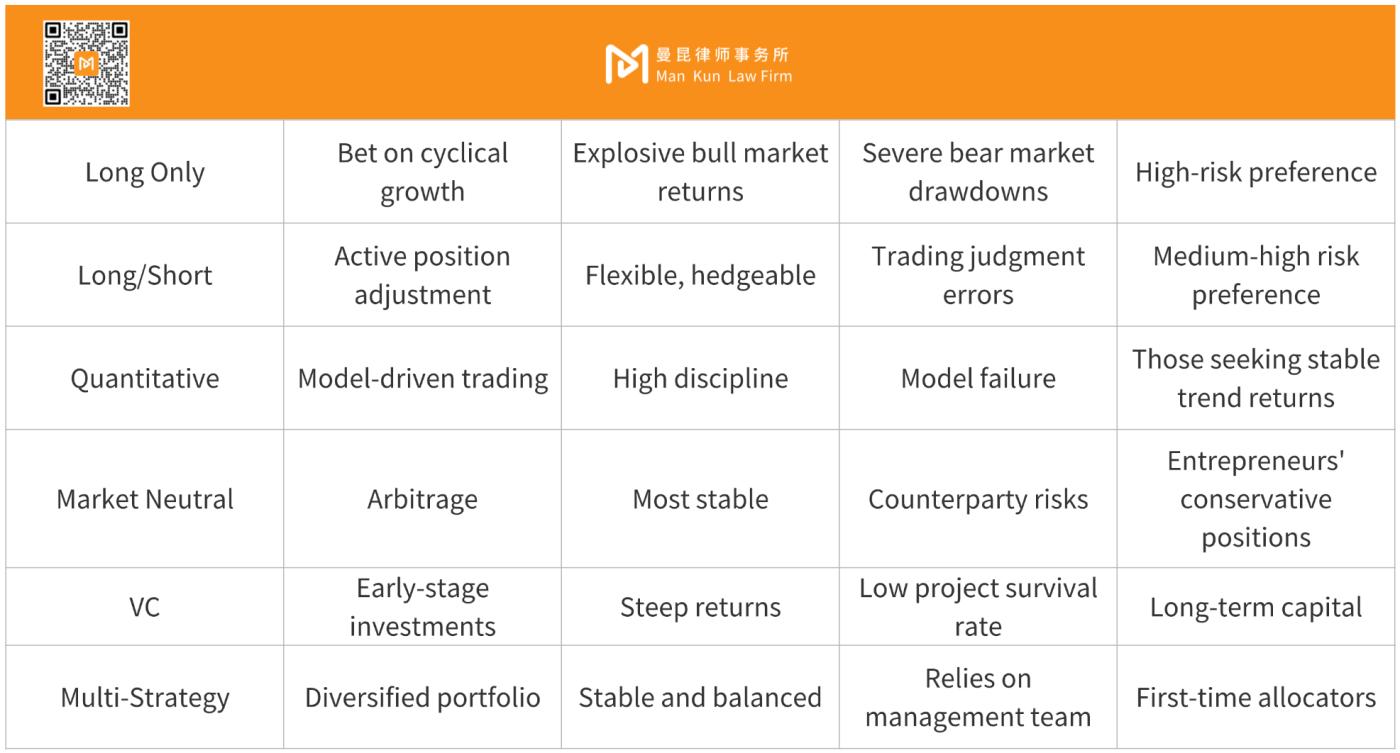
1. Long Only – Bet on Cycles, Capture Major Trends
How does it make money?
Buy mainstream crypto assets (BTC, ETH, top-tier altcoins) and hold them long-term, adding positions during market dips.
Core logic in one sentence:
“Believe in crypto’s long-term appreciation—and hold on tight.”
- Delivers the highest returns in bull markets
- Simple, transparent, and low-cost to operate
- Suffers extreme drawdowns in bear markets
- Requires very high risk tolerance
2. Long/Short – Profit in Both Bull and Bear Markets; Trader Skill Is Critical
How does it make money?
Relies on the team’s market judgment:
- Go long → increase positions when bullish
- Hedge or short → reduce exposure when bearish
- Event-driven → capitalize on news, airdrops, and protocol upgrades
Simplified explanation:
“Professional traders manage your portfolio dynamically.”
- Can hedge risks during market downturns
- Lower volatility compared to Long Only strategies
- Success depends entirely on the trading team’s expertise
- Identifying skilled managers is the key challenge
3. Quantitative Directional – Models Rule, Emotions Are Irrelevant
How does it make money?
Execute trades using mathematical models:
- Trend-following CTA
- Momentum strategies
- Multi-factor models
- Statistical arbitrage signals
Simplified explanation:
“Algorithmic trading—no news watching, no emotional bets, just strict adherence to model signals.”
- High discipline and consistency
- Strong performance when market trends are clear
- Minimizes human error
- Models can suddenly fail during regime shifts
- Sensitive to transaction costs and slippage
4. Market Neutral / Arbitrage – One of the Lowest Directional Risk Strategies
How does it make money?
Construct portfolios that are agnostic to market direction, profiting from price discrepancies and interest spreads.
- Funding rate arbitrage
- Spot-perpetual basis arbitrage
- Cross-exchange arbitrage
- Market making
- Low-risk on-chain yield strategies
Simplified explanation:
“Crypto’s version of money market funds + arbitrage funds.”
- Lowest volatility among all strategies
- Minimal drawdowns
- Stable cash flow generation
- Limited upside potential
- Risks concentrated in counterparty (exchange) and on-chain technical failures
5. Crypto VC (Venture / SAFT) – Bullets for Betting on Innovation
How does it make money?
Invest in early-stage Web3 projects, profiting from:
- Equity appreciation as projects grow
- Token Generation Events (TGEs)
- Secondary market exits after token unlocks
- A single successful project can offset all losses
- Gains insight into the future direction of the industry
- Low project survival rate
- Long lock-up periods
- Opaque valuation methodologies
6. Multi-Strategy – Combine the Strengths of Multiple Approaches
- Long Only
- Quantitative strategies
- Arbitrage
- VC investments
- Event-driven trades
Core objective:
“Pursue balanced returns under controlled risk.”
- Lower drawdowns than Long Only strategies
- Higher returns than pure arbitrage strategies
- Complex fund structure and operations
- Requires top-tier fund management capabilities
Summary: The pros and cons of the above strategies are summarized as follows:
The Real Profit Logic Behind Crypto Funds
1. Perpetual Contract Mechanism → Funding Rate Arbitrage Opportunities
This means:
“When the market is bullish, longs pay shorts—shorts earn steady income.”
- Buy spot assets
- Short perpetual contracts
2. Multi-Exchange Structure → Inherent Arbitrage Opportunities
- A large number of exchanges
- Fragmented liquidity
- Divergent exchange preferences
- Inconsistent stablecoin ecosystems
- Cross-exchange arbitrage
- Spot-futures arbitrage
- Futures-perpetual arbitrage
3. High Volatility → Trend Strategies Are More Effective
- Trends are more pronounced and persistent
- Trading signals are clearer
- Quantitative models have more “data to feed on”
Performance of Various Strategies Over the Past Five Years
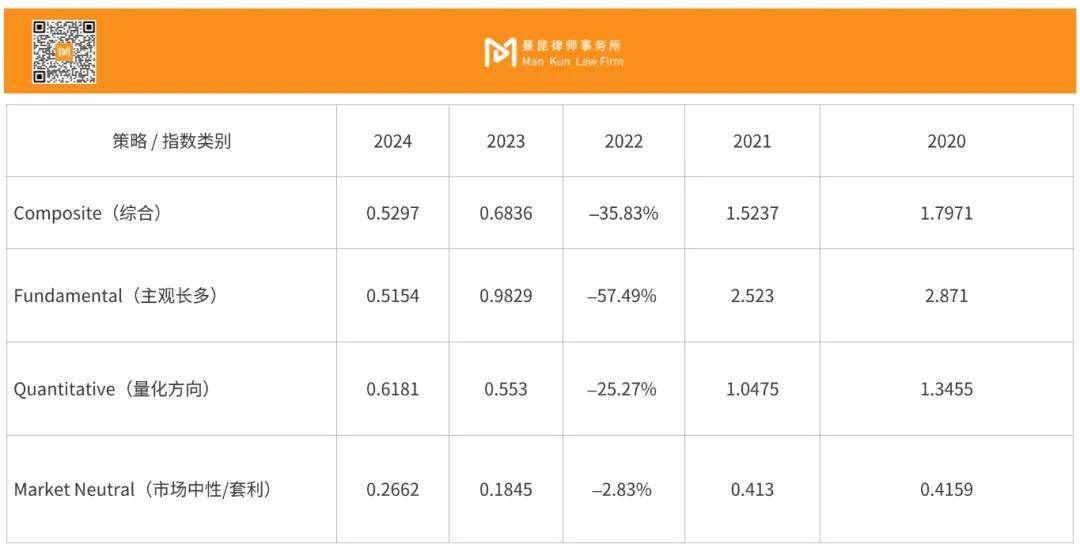
- Long Only: Highest upside, steepest downside
- Bull markets (2017, 2020–2021, 2023): Top performer
- Bear markets (2018, 2022): Worst performer with maximum drawdowns
- Characteristics: High elasticity, high volatility, high returns, high risk.
- Quantitative Directional: Moderate-to-high returns, controlled drawdowns
- Bull markets: Captures trend gains effectively
- Bear markets: Models automatically cut positions to reduce losses
- Characteristics: Smoother return curve; ideal for investors seeking “stable trend returns.”
- Market Neutral / Arbitrage: The most stable strategy type
- Characteristics: Moderate but consistent annual returns, minimal drawdowns; suitable as a core portfolio holding or for corporate cash management.
- Industry trend: Consistently “steady, steady, steady.”
- Crypto VC: Extremely polarized returns
- Top-tier funds: Deliver astronomical IRRs (driven by one or two blockbuster investments)
- Median funds: Offer mediocre performance
- Characteristics: Long investment cycles, high risk, high uncertainty; suitable only for long-term capital with no short-term return expectations.
- Multi-Strategy: The most entrepreneur-friendly option
- Characteristics: Stable, balanced, and risk-controlled; ideal as a beginner’s entry point to crypto funds.
How Should Traditional Entrepreneurs Choose a Crypto Fund?
1. Is this capital “discretionary” or “needed soon”?
- Discretionary capital (no near-term use): Market Neutral, Multi-Strategy
- Capital for growth (willing to accept volatility): Quantitative Directional, Long Only
- Capital for high-risk bets: Crypto VC
2. How much volatility can you tolerate?
Can you stomach a maximum drawdown of -70% from a Long Only fund?
If not, this strategy is not for you.
3. Do you want stability, balance, or explosive growth?
- Stability: Arbitrage / Market Neutral
- Balance: Multi-Strategy / Quantitative Directional
- Explosive growth: Long Only / Crypto VC
Crypto Funds Are Becoming the Next Generation of Hedge Funds
- ETFs
- Custody services
- Auditing standards
- Regulatory frameworks
- Institutional participation
- Real-world industry applications
- Mature strategy systems
Still Hesitant and Uncertain? Here’s What to Do
- Which funds are actually worth investing in?
- Which strategies align with your capital’s risk profile?
- Which “fine print” in fund documents, structures, and fee schedules could impact your future exits?
- Which risks are controllable, and which are structural?
- Which teams are truly institutional-grade, and which are just “retail traders in institutional clothing”?
〈How Can Traditional Entrepreneurs Understand Crypto Funds?〉這篇文章最早發佈於《CoinRank》。