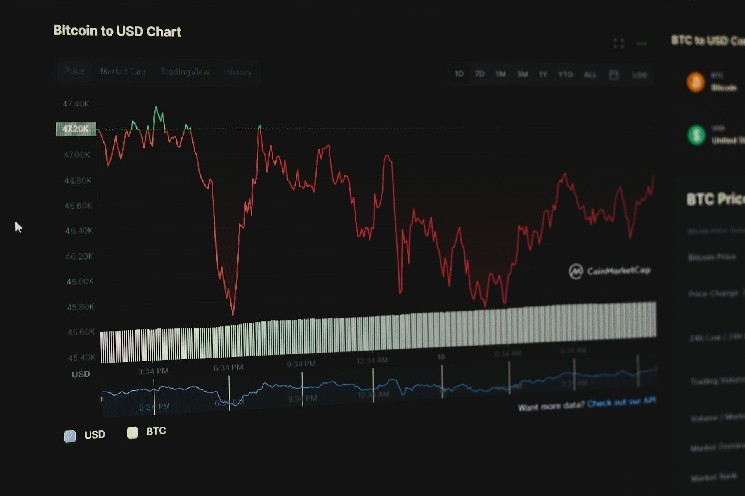
The Bitcoin (BTC) network's mining difficulty is threatening another all-time high ahead of its first adjustment in 2026. The sharp increase in computational power and the rapid block generation speed are the primary causes, once again raising the alarm for the mining industry, which is facing a battle for survival.
Mining difficulty is expected to reach 149 trillion by January 2026.
According to cryptocurrency data platform CoinWars, the Bitcoin network will adjust its mining difficulty at block height 931,392 on January 8, 2026. The projected difficulty is approximately 149 trillion, which would be higher than the 148.2 trillion recorded during the last adjustment in 2025. The current average block generation time is approximately 9.95 minutes, which is faster than the target of 10 minutes. In this case, the network will automatically increase the difficulty to return the speed to its original level.
This increase is reminiscent of the mining industry's roller coaster ride throughout 2025. September, a period of steep price increases, saw two major difficulty increases, followed by a market crash in October that significantly threatened miners' profitability.
Increased computational power means heightened competition for survival.
Bitcoin mining difficulty refers to the complexity of the mathematical problem miners must solve to generate a new block. As difficulty increases, more computational work is required to achieve the same reward, which requires improved equipment performance and increased energy consumption. Given the mining industry's slender profit margins and massive investment in equipment, increasing difficulty continues to pressure less efficient companies out of the market.
Bitcoin's design automatically adjusts mining difficulty every 2,016 blocks, approximately every two weeks. This mechanism acts as a self-defense system to prevent any single miner or group from suddenly dominating the network by injecting massive amounts of hashrate (computational speed).
Bitmain Implements Mining Price Reduction Strategy to Combat Worsening Profitability
Bitmain, a leading manufacturer of mining equipment, has significantly reduced the prices of its equipment, reflecting the pressure on the industry. According to internal price lists and promotional materials, a promotional offer dated December 23rd included a bundle of four S19 XP+ Hydro miners and an ANTRACK V2 container for approximately $4 (approximately 5,728 won) per terahash (TH). Deliveries are scheduled to begin in January 2026.
Such aggressive discounts are interpreted as a response to stagnant demand and equipment oversupply. Industry insiders analyzed the decision to set low prices in advance and ship products reflecting the expected market decline, saying it was a strategic decision to clear inventory and secure customers.
Declining hashrate could be a sign of a price rebound
Meanwhile, analyst firm VanEck recently reported that the Bitcoin network hash rate decreased by approximately 4% in December. The hash rate is a measure of the total computing power of miners worldwide, and a decline typically indicates increased equipment downtime due to declining profitability.
VanEck analysts stated that "when hashrate declines persist for a period of time, there is a higher probability of a subsequent price recovery in the market, and this tends to be stronger." However, this is based on historical data and does not necessarily imply a definitive price rebound.
🔎 Market Interpretation
Bitcoin's mining difficulty is likely to reach an all-time high of 149 trillion by early 2026, signaling that block generation is occurring faster than expected. As competition for computing power intensifies, many miners could face declining profitability.
💡 Strategy Points
This is a time when a rapid generational shift toward more efficient equipment compared to existing equipment is likely to occur. Efficiency indicators are likely to become a more important criterion than price when purchasing equipment and selecting vendors.
📘 Glossary
Mining difficulty: The complexity of the mathematical operation required to create a new block on a blockchain. The higher the number, the more computational effort and competition there is.
Hash rate: An indicator of network computation speed, representing the collective computational power of miners.
💡 Want to know more? AI-prepared questions for you:
A. Bitcoin mining difficulty can be thought of as a numerical representation of the difficulty of the mathematical problem that must be solved to find a new block. The increase in difficulty to 149 trillion means that the computing power required to mine Bitcoin has significantly increased compared to the past. This signals that more miners are competing to secure the network worldwide, but it also means that miners must expend more electricity and equipment to achieve the same rewards.
A. The Bitcoin system is designed to produce a new block approximately every 10 minutes on average. However, if blocks start coming out a bit faster, such as recently, at an average of 9.95 minutes, the network determines that mining is "too fast" and automatically increases the difficulty to return the speed to 10 minutes. This automatic adjustment mechanism operates approximately every two weeks and serves as a key safety measure to maintain the network's stability and decentralization by preventing any single miner from suddenly monopolizing block production by overwhelmingly allocating computing power.
A. As difficulty increases, miners must perform more calculations to earn the same amount of Bitcoin, which increases electricity and equipment costs, easily reducing profitability. Especially with the price surge and subsequent plunge in 2025, many mining companies faced the double burden of declining mining profits while maintaining electricity, labor, and equipment costs. Since mining is a business that relies heavily on equipment investment and electricity costs, rising difficulty is often interpreted as a signal that "we will have difficulty sustaining operations unless we use more efficient equipment or lower our electricity costs."
A. Bitmain, a major Bitcoin miner manufacturer, has recently been running a promotion, bundling several generations of miners together for incredibly low prices, around $4 per terahash. Despite the release date being January 2026, this low price is likely a move to clear inventory and maintain market share as the overall profitability of the mining industry deteriorates, reducing demand for expensive equipment. Falling miner prices could shift the competitive landscape within the industry, as miners using existing equipment face increased pressure, while new entrants and large miners gain the opportunity to expand their equipment more cheaply.
A. Hash rate represents the total computing power simultaneously generated by Bitcoin miners worldwide. A higher number indicates that the network is protected by a greater number of computers. The recent 4% decrease in hash rate over the past month can be interpreted as a sign that some miners are shutting down their equipment or halting mining operations due to declining profitability. Some analysts note that miners often reduce their equipment due to financial difficulties before a later positive price trend. However, this does not guarantee an immediate price increase or decrease, and it should be understood as one of several variables.
TP AI Precautions
This article was summarized using a TokenPost.ai-based language model. Key points in the text may be omitted or inaccurate.
Get real-time news... Go to TokenPost Telegram
Copyright © TokenPost. Unauthorized reproduction and redistribution prohibited.