



Author: Noir
Compiled by: TechFlow TechFlow
Most Web3 content creators believe they are not good at storytelling because they feel they are "not creative enough".
But my friend, that's usually not the real root of the problem.
In fact, the real problem is:
—Your content lacks comparison.
Hey, it's either the content:
They all sound the same.
It felt very bland.
Or nothing at all.
When nothing changes, there is no story to tell.
What is comparison?
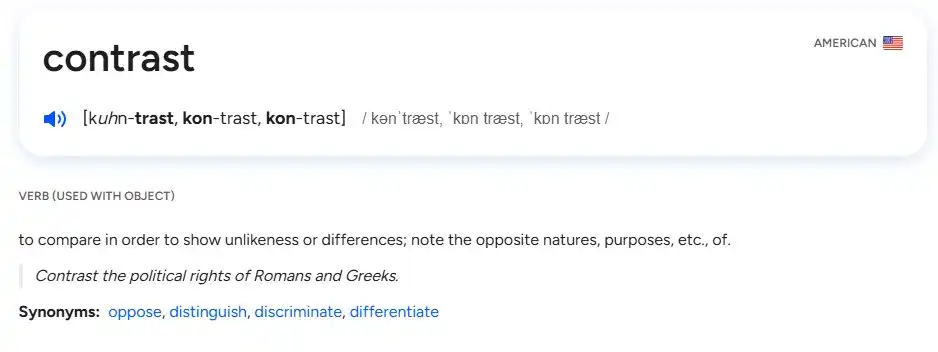
Comparison actually refers to something being different from the previous content .
Yes, it's that simple.
Not necessary:
Ornate language,
An unexpected plot twist,
Or background music.
Essentially, contrast is a kind of transformation , for example:
From "before" to "after"
From "expectation" to "reality"
From "belief" to "understanding"
Without this transformation , your content is nothing more than information.
Yes, maybe it works, but to make someone remember it? Hmm... unlikely.
Why does a lack of comparison render content weak?
The Web3 world is full of:
Features, data, commitments, roadmap...
However, most of the content is presented in a too straightforward manner:
"That's its function."
"That's its advantage."
"That's why you should pay attention to it."
However, the brain is not interested in this linear information.
It is awakened when something unexpected happens.
Why does content lose its appeal when it lacks comparison?
The Web3 world is filled with:
Features, data, commitments, roadmap...
However, most of the content is presented in a too straightforward manner:
"That's its function."
Why is it good?
Why do you need to care about it?
However, the brain is not activated by these linear pieces of information.
It is only awakened when something unexpected happens.
A simple example about "contrast"
(You must have seen this countless times)
Expressions without comparison:
Solana offers fast transaction speeds and low costs.
Your brain will respond: Okay... and then what?
Expressions with contrast:
I clicked send, switched pages, and then realized the transaction was already complete.
The same idea, but with a completely different impact.
The second way of expressing it creates a "moment". Do you understand?
Why does "comparison" make people feel uncomfortable?
(And why this is important)
Comparison often requires you to acknowledge:
You were wrong, you were confused, you underestimated something.
That's why most people avoid it.
But this discomfort is precisely what makes the content seem authentic .
People don't like things that are perfect.
They are more likely to connect with empathy and vulnerability .
Someone might think, "Wait... I've felt that way too."
Congratulations, you succeeded.
How do I add a "comparison" feature to my content?
Before releasing, ask yourself this question:
What changes have occurred here?
If you can't answer, try adding the following:
A mistaken assumption you once made
A moment of hesitation
An unexpected result
A "small decision" that was almost not made
There's really no need for any dramatic plot.
All you need is a small change that resonates with people .
The eccentric's summary
Don't get me wrong, creativity does play an important role in storytelling.
But not everyone is born creative. This article is specifically written for those who really want to learn storytelling skills.
Its core lies in: sincerely showcasing the "transformation".
In the complex and noisy world of Web3
Contrast is a way to stand out without having to shout it out :)
Remember to follow me, or else you will... (This content does not comply with Chinese mainland regulations and is recommended for deletion).





