


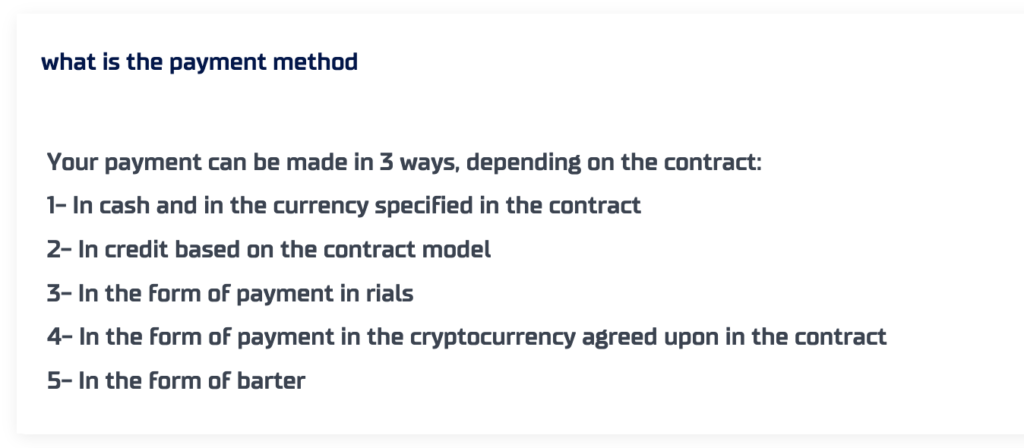
Iran's Ministry of Defense export center, Mindex, announced it is ready to negotiate military contracts, accepting cryptocurrency, barter, and Iranian rials for future sales of Emad ballistic missiles, Shahed armed drones, Soleimani-class warships, and short-range air defense systems. This is widely interpreted as Tehran attempting to circumvent Western financial sanctions through decentralized payment networks.

Iranian state-owned arms exporter Mindex
Mindex is Iran's state-owned arms export arm, currently offering services in multiple languages including Persian, English, and Russian, and claims to maintain client relationships in 35 countries. The Financial Times verified the authenticity of this online platform through archived records, domain registration data, and technical analysis.
The official website now includes instructions on supporting cryptocurrency payments.
Economic and sanctions pressure
Iran's move reflects its rapidly deteriorating domestic economy. The rial has depreciated by 40% against the dollar in nearly a month, falling to a historic low of 1,450,000:1; official inflation is at 38.9%, and basic necessities prices are soaring, sparking days of protests.
Meanwhile, US President Trump warned that Tehran would face "severe consequences" if it restarted its nuclear program, and foreign media reported that Washington is accelerating the tightening of trade and dollar settlement channels between the US and Iran. Faced with this dual pressure, Iran sees cryptocurrency as an alternative to quickly obtain foreign exchange and reduce the risk of regulatory tracking, a tactic similar to Venezuela's past launch of the Petro cryptocurrency.
Whether this arrangement can generate substantial cash flow in the short term remains to be seen. The transparency of on-chain activities in the crypto asset market may cause potential buyers to worry about exposing transaction details; however, if Iran successfully establishes an "on-chain dark pool" in the military trade sector, other sanctioned countries may follow suit.





