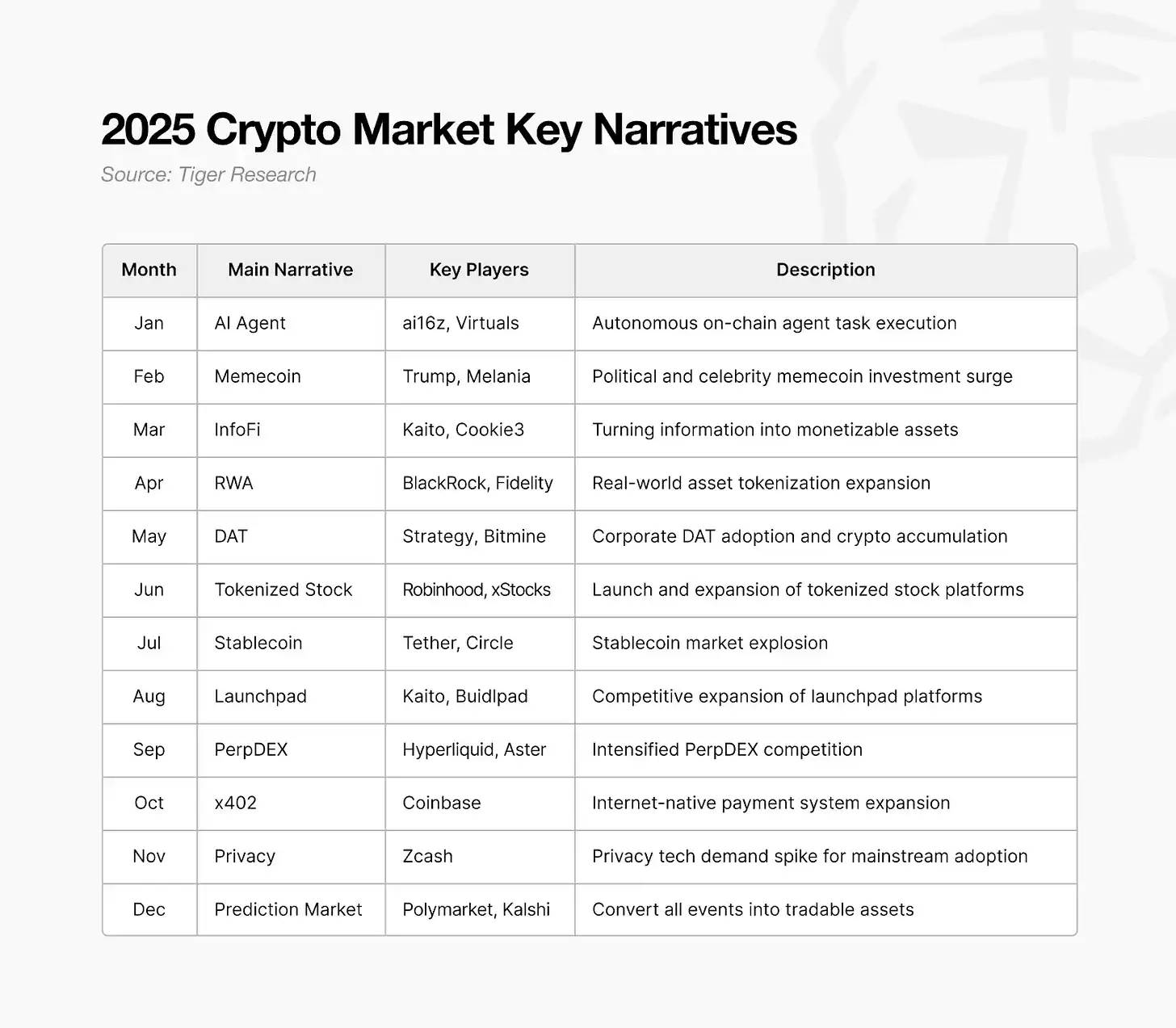
This report was written by Tiger Research . 2025 saw the rise of numerous narratives in the cryptocurrency industry. Some were short-lived, collapsing quickly; but those key narratives left us with profound and lasting insights.
Key Insights
- The cryptocurrency market in 2025 experienced a dramatic shift in narrative, with market fatigue and skepticism accumulating throughout the year.
- Most narratives only consume short-term attention, but some narratives give rise to real application scenarios and market structures, steadily driving the industry's evolution.
- Beyond the speculator-centric trend, more narratives that facilitate retail investor participation are emerging and expanding, broadening the base for market participation. This is also a significant shift.
1. Narrative, narrative, and more narrative
The most striking feature of the cryptocurrency market in 2025 will undoubtedly be the astonishing speed of narrative shifts. Market attention will move on to the next hot topic before the current narrative has even been fully validated.
Meme coin has driven a particularly dramatic turn of events. New narratives have emerged surrounding Trump, Musk, and Sidney Sweeney, and investors' attention has shifted rapidly accordingly.
The crux of the problem is that most narratives have proven to be nothing more than one-off euphorias. They consume short-term attention but fail to build the infrastructure to evolve into a real industry. Some market participants even fabricate false narratives to exploit investors. As a result, market participants are increasingly weary and skeptical.
That said, not all narratives end in exhaustion. Some narratives have established themselves as a real industry, genuinely driving the evolution of the cryptocurrency market. So, what has survived, and what has vanished? This report will delve into the key narratives shaping 2025 and extract lessons from their rise and fall.
2. What insights does the narrative of 2025 reveal?
Source: Tiger Research
2.1. Retention value far exceeds new customer acquisition.
Source: Dune
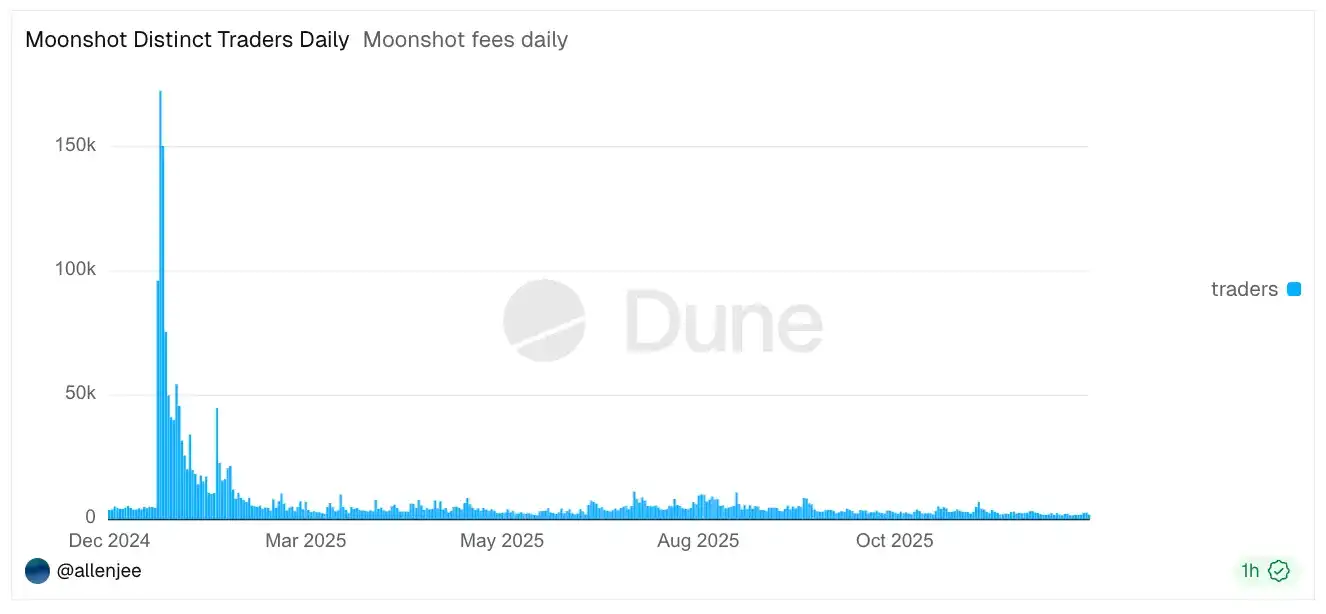
Memecoin has garnered the most market attention this year. Its simple and intuitive features have even attracted those who previously dismissed cryptocurrencies or found them too complex. Trading applications like Moonshot have further lowered the barrier to entry, leading to a surge of new users in a short period.
However, most users did not stay for long. They came seeking quick profits and left just as quickly. Their activity neither spread to other services nor generated any lasting spillover effect. Although the market saw a large influx of users, it only generated a one-off surge of participation.
This case clearly demonstrates that a large influx of users is indeed possible when the right catalyst meets low barriers to entry. Meme Coin exemplifies this potential. At the same time, it also reveals the reality that inflows alone are far from sufficient. If a project fails to design a reason for users to stay, inflows will quickly turn into outflows. User retention remains a core challenge.
2.2. The Two Sides of InfoFi: Light and Shadow
2025 was also a year in which InfoFi gained serious attention. InfoFi services flourished around platforms like Kaito, with users embracing a model where they produced information and were incentivized for it. Combining incentive mechanisms with information production was a significant experiment, bringing numerous individual investors into the market.
However, limitations quickly became apparent. Content quality is inherently subjective and difficult to quantify. Incentive allocation, on the other hand, requires objective standards based on metrics, which gradually distorted participants' behavior. Participants began prioritizing sensational content over accuracy. As a result, Platform X transformed from a space for information aggregation into something more akin to a billboard.
InfoFi has demonstrated its potential to stimulate information production. However, it also leaves an unresolved question: how should we assess and reward information quality? If this problem cannot be solved, InfoFi may not only fail to expand the information ecosystem but could also exacerbate market fatigue.
2.3. Privacy has become a basic necessity.
Source: rwa.xyz
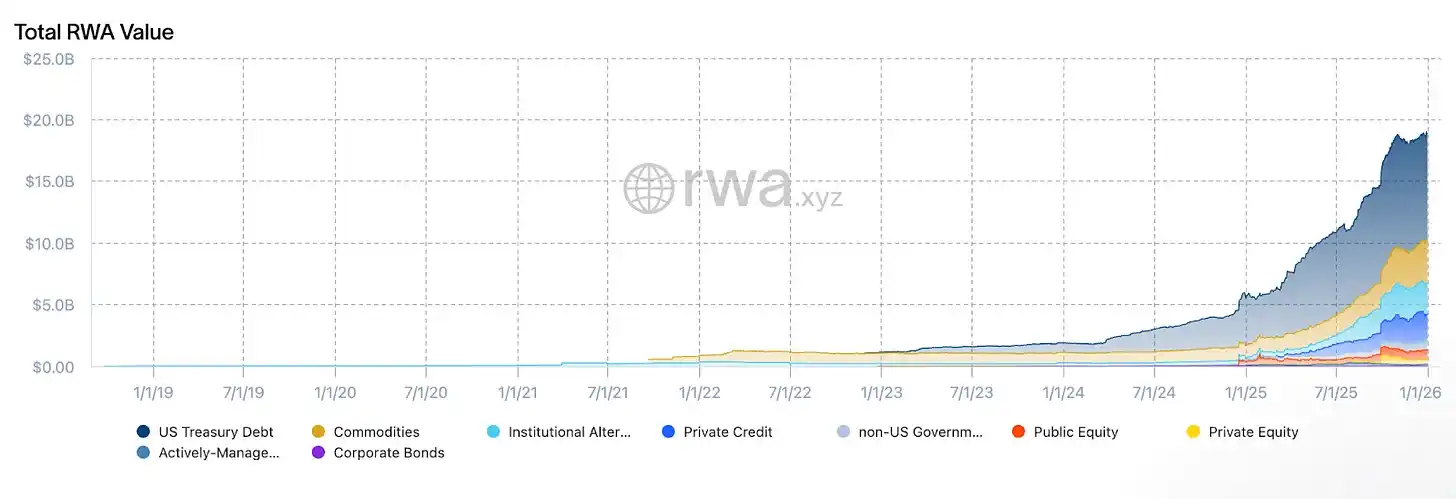
With the accelerated influx of institutional capital, the cryptocurrency market is shifting from retail-dominated to institutional-dominated. Accompanying this shift, the privacy sector is gaining attention. This is no coincidence.
Source: Tiger Research
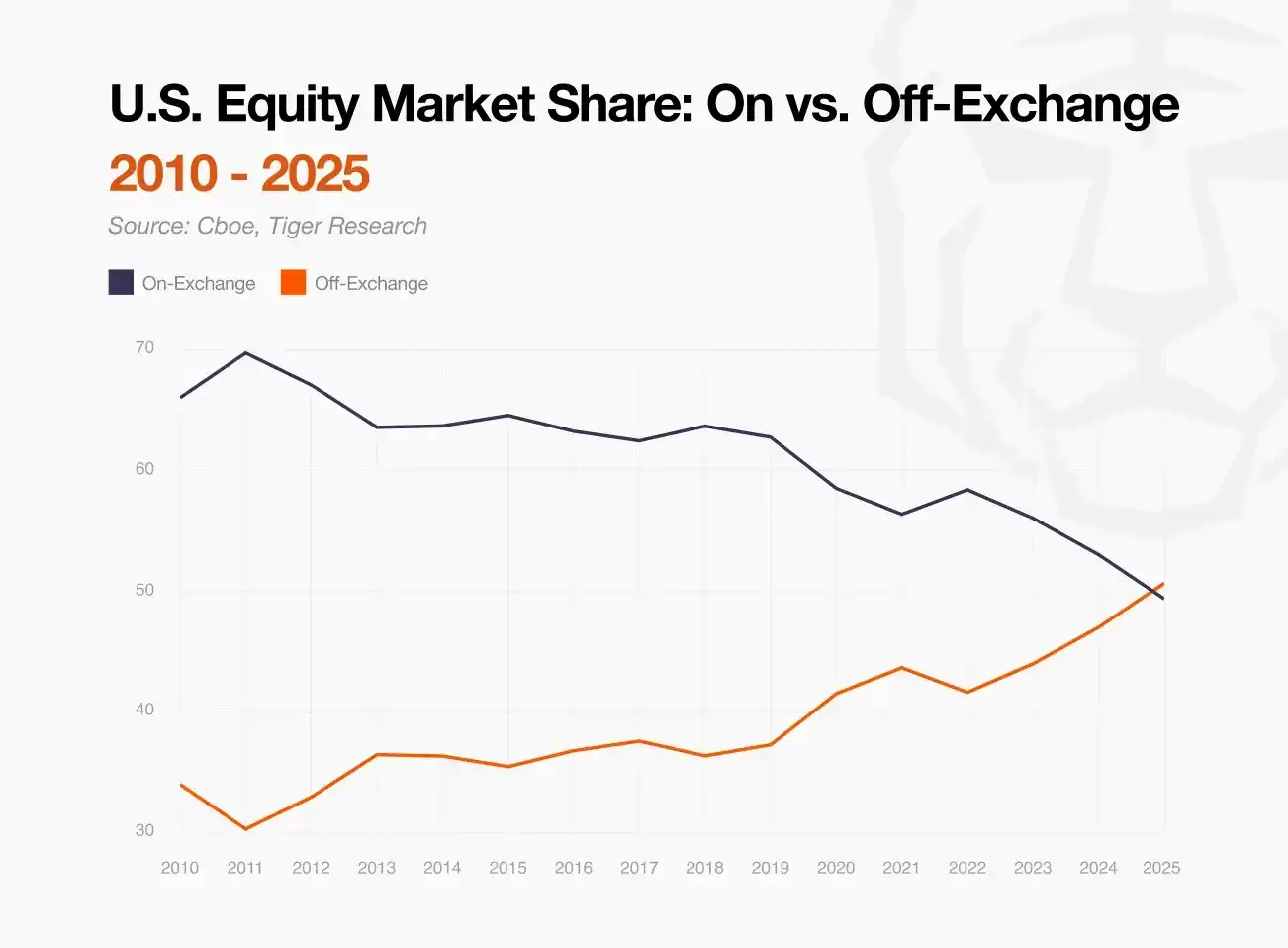
On-chain transparency has long been considered an advantage of cryptocurrencies. However, an environment that exposes transaction size, timing, and holdings means complete exposure of institutional investors' strategies. The rising proportion of off-exchange trading in traditional finance also reflects the market's growing unease about a completely transparent structure.
Transparency has not benefited all participants fairly. As discussions about institutional participation and market expansion continue to deepen, privacy can no longer be considered a secondary issue.
2.4. A Year in which Cryptocurrencies Demonstrate Product-Market Fit
2025 will be the year that cryptocurrencies transcend abstract potential and begin to demonstrate real-world, viable applications. Stablecoins, x402, and prediction markets, though distinct in form, share a core advantage: they organically combine the borderless monetary nature of cryptocurrencies and their ability to provide trust in transactions with real-world problem-solving.
The key to these cases is that cryptocurrencies can facilitate transactions and provide trusted outcomes without the need for a central authority. In environments with global participation, cryptocurrencies can realize transactions and verify results without intermediaries. Traditional systems struggle to offer such advantages. These cases demonstrate that cryptocurrencies can exhibit relative advantages in areas that meet specific conditions.
These examples do not prove that cryptocurrency is a panacea for all fields. However, they demonstrate that when the unique properties of cryptocurrency align with the problem structure, projects can achieve a clear product-market fit. These conditions were first revealed more clearly in 2025.
3. The rapid narrative cycle and the sedimentation of memories
The cryptocurrency market in 2025 saw an unusually large number of narratives emerge. Before the current narrative could be fully validated, attention shifted to the next story, and many narratives quickly faded after a brief period of consumption. Given the astonishing speed of these shifts, the year could easily have appeared as a waste of time.
However, it would be arbitrary to dismiss 2025 as meaningless based solely on this impression. While narratives may be short-lived, various experiments are progressing simultaneously behind the scenes, and institutions are beginning to seriously plan and integrate. The trends of this period have transcended purely speculative narratives. Compared to stories centered on a small circle of speculators, narratives that are more easily accessible to retail investors are constantly emerging. This is beginning to broaden the base of market participation.
The narrative of rapid consumption failed to yield immediate results. However, the process helped us clarify which frameworks were effective and which were merely illusions. Now is the time to use these lessons as fuel to move to the next stage.