



Since 2019, BTC has never experienced four consecutive months of decline. Now, this seemingly uncanny phenomenon appears to be still in effect. Since the drop in October of this year, BTC has been declining for three consecutive months, falling to a low of around $80,000.
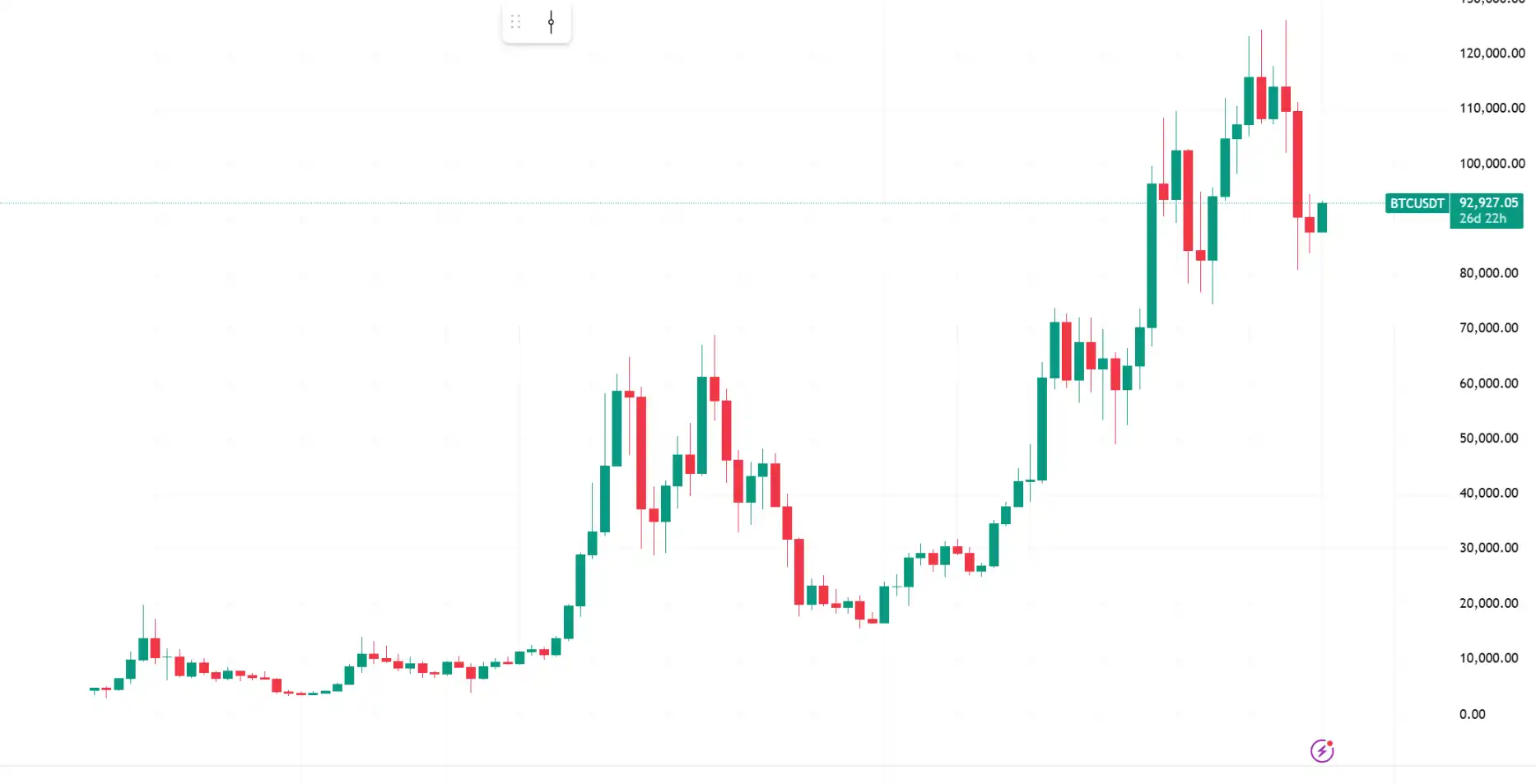
Starting January 1st, Bitcoin's daily chart showed five consecutive days of gains, even breaking through $93,000 on January 5th. ETH also strongly broke through $3,200. PEPE, BONK, PENGU, BOME, and other meme coins have recently taken turns topping the gainers list.
According to Coinglass data, the total open interest across the network reached $216 million in liquidations in the past 24 hours, of which $168 million were short positions.
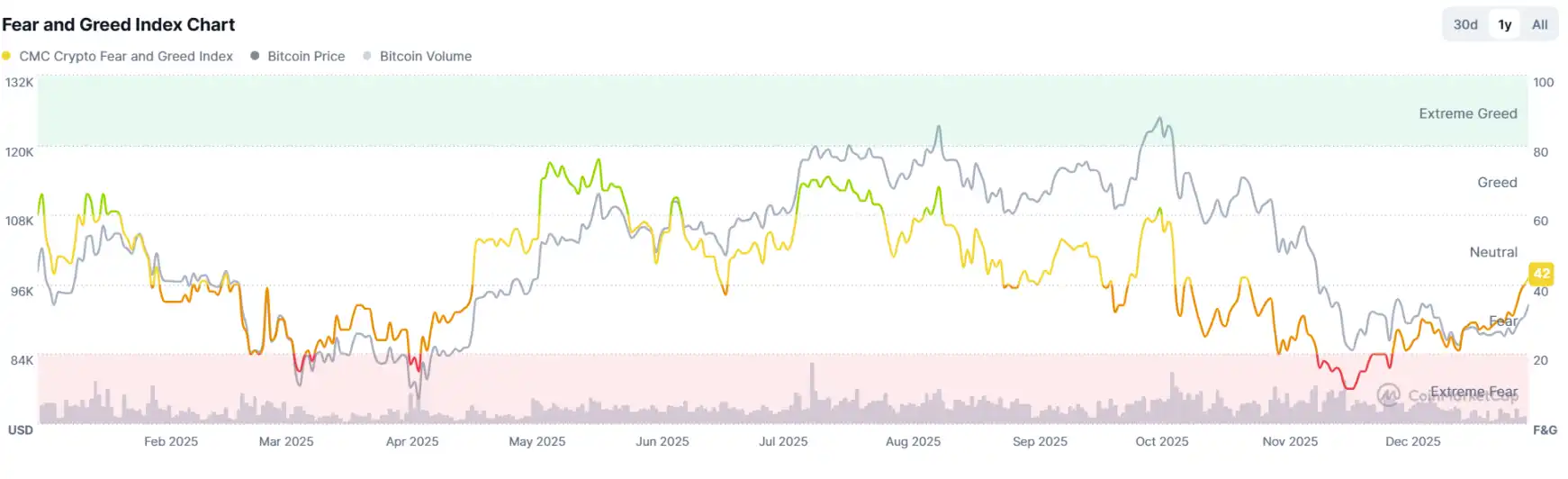
After more than three months of stagnation, the Fear & Greed Index rose to 42 today, a rare occurrence, returning to a neutral market sentiment.
Global risk asset markets saw a broad rally today, led by Japanese and South Korean stocks. South Korea's KOSPI index rose over 2.27% in early trading, breaking through 4,400 points for the first time and setting a new all-time high. Japan's Nikkei 225 index surged over 1,100 points in early trading, just 2% shy of breaking its all-time high. The Shanghai Composite Index opened 0.46% higher, approaching 4,000 points. The Hang Seng Index opened 0.09% higher.
In the US stock market, S&P 500 futures rose 0.46%, Nasdaq futures rose 0.26%, and Dow Jones futures rose 0.58%. Precious metals surged, with spot gold breaking through $4,420 per ounce, a 24-hour increase of over 2%, and spot silver breaking through $76 per ounce, a jump of 4.5%.
Is a major resurgence of counterfeit products on the rise?
The Federal Reserve will inject $16 billion in liquidity by the end of 2025.
Crypto assets, led by Bitcoin, are closely linked to global market liquidity. When liquidity is low, prices are unlikely to rise significantly, while when liquidity is abundant, prices can continue to recover.
According to Barchart data, on December 30, 2025, the Federal Reserve injected $16 billion into the U.S. banking system through overnight repurchase agreements, marking the second-largest liquidity injection since the COVID-19 pandemic.
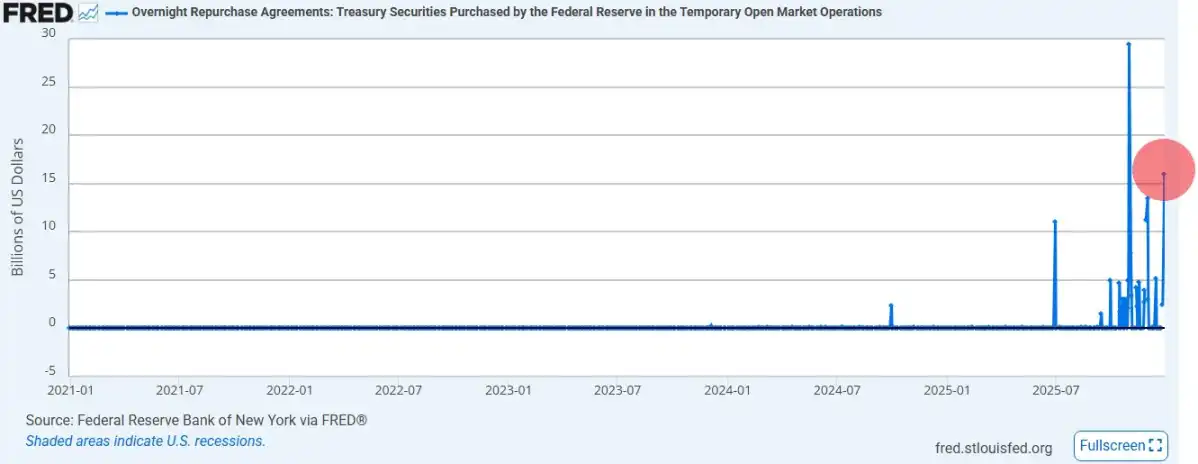
This move is generally seen by the market as a supportive signal from the Federal Reserve in response to potential bank liquidity shortages or financial stress. Although the charts show a recent surge in injections, the overall trend reflects a loosening of monetary policy. In the cryptocurrency market, such liquidity injections often stimulate a rebound in risk appetite, as cheap funds easily flow into higher-risk asset classes, driving up crypto asset prices. Investors may interpret this as the Federal Reserve's reluctance to allow a hard landing for the economy, thereby boosting market confidence and avoiding the risk of a more severe recession.
On December 31, BitMEX co-founder Arthur Hayes stated that liquidity in the crypto market may have bottomed out in November and is slowly recovering, making it time for cryptocurrencies to start rising.
In a report, Jens Naervig Pedersen, a foreign exchange and interest rate strategist at Danske Bank, stated that global market liquidity is expected to remain thin this week but may pick up next week. The strategist noted, "Looking ahead, market liquidity should improve next week as more economic data is released." Key data next week includes important US labor market data, such as the December non-farm payroll report released on January 9th and the ISM survey. Market liquidity is typically low during the year-end period as many market participants take holidays or close positions.
BTC and ETH spot ETFs saw large net inflows at the start of the year.
After months of lackluster performance, Bitcoin spot ETFs saw a net inflow of $355 million on December 30, followed by another net inflow of $471.14 million on January 2.
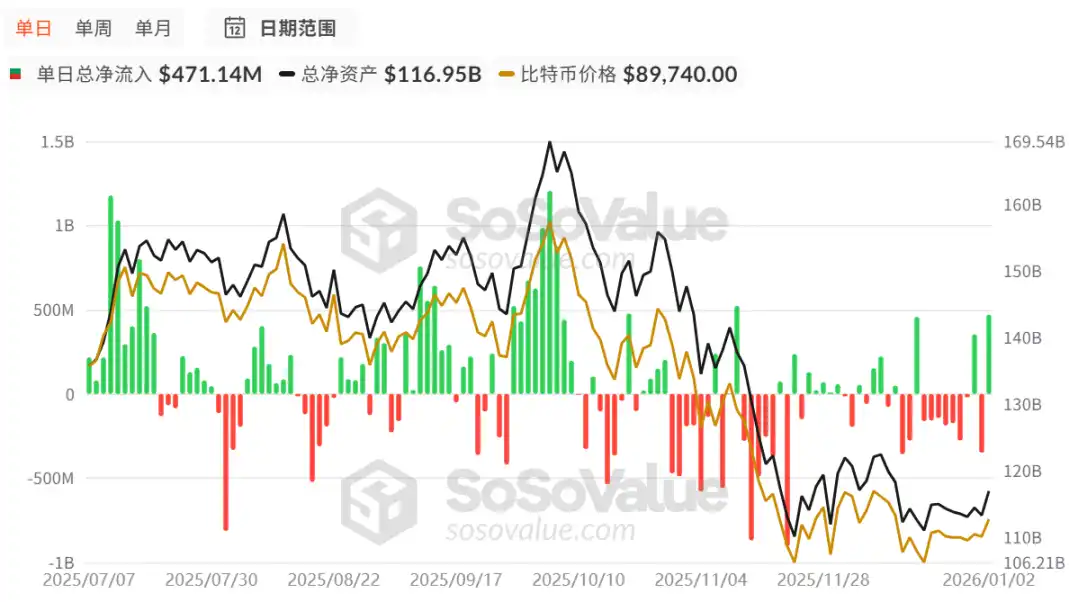
The magnitude and momentum of its sudden increase in net inflows were relatively large.
Regarding the ETH spot ETF, there was a net inflow of $67.84 million on December 30th, and it reached $174.43 million on January 2nd, marking a new high for single-day net inflows since December of last year.
The performance of the two ETFs remains to be seen, but the net inflows at the beginning of the year will have a significant positive effect on boosting the price of the currencies.
What will the market do next?
On January 3, Jack Yi, founder of Liquid Capital, tweeted, "Before the bull market in 2026, short sellers who close their positions early will suffer small losses, while those who close them late will suffer huge losses. Those who are still bearish in the market now are either just talking big or cannon fodder. After more than a month of volatility, the bulls will definitely be triumphant. Pessimists are always right, and optimists always move forward."
On the same day, 10x Research also published an article suggesting a potential structural rebound opportunity in the market. "Beneath the surface of the cryptocurrency market, significant changes are taking place. As Bitcoin's dominance begins to wane, our models detect key turning points historically marked by a shift from defense to opportunity. What's noteworthy in this cycle is not a single token or narrative, but rather the broad synergistic validation pattern emerging between mainstream coins and select Altcoin. Momentum effects, relative performance, and market participation are beginning to resonate, and traders cannot ignore this."
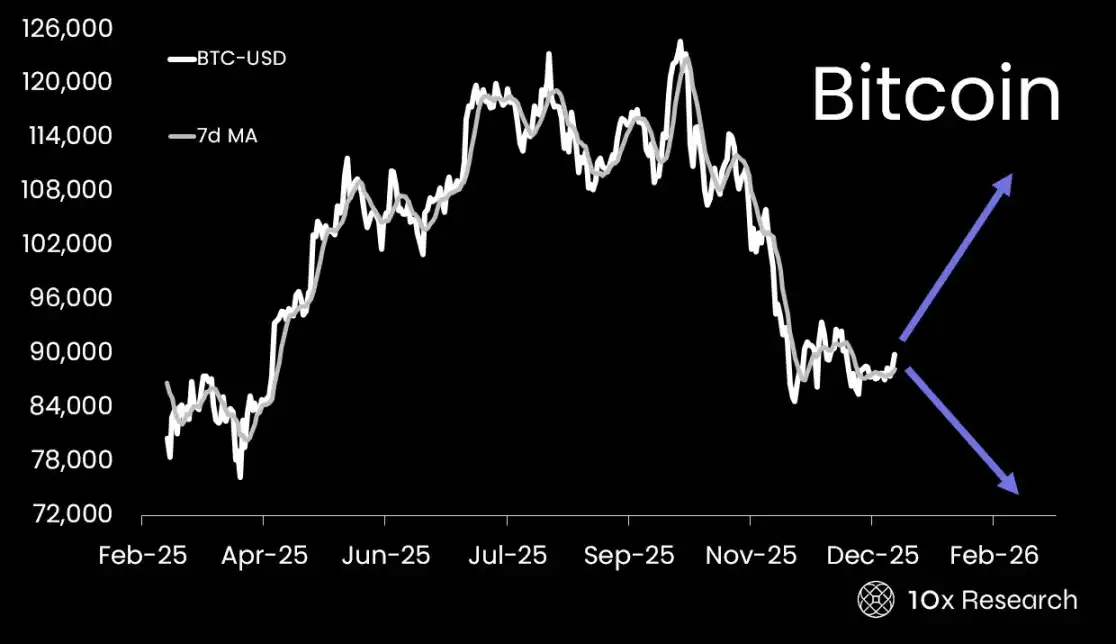
10x Research states that the current environment is not one of broad-based gains, nor is passive waiting advisable. The next phase will place greater emphasis on discipline, strategic rules, and active position management. Clear risk control will be key to distinguishing profitable traders from market noise. While most investors await headlines for direction, traders should focus on market structure and signal verification.
Analysts at blockchain analytics platform Santiment noted strong sentiment among cryptocurrency market participants on social media at the start of the year, but cautioned that further market gains depend on retail investors' ability to remain rational. "We need retail investors to maintain a certain level of caution, a certain level of pessimism, and a certain level of impatience," said Santiment analyst Brian Quinlivan in a YouTube video released Saturday. While other crypto sentiment indicators show fear among market participants, Quinlivan stated that Santiment's social media data points in the opposite direction. "The current sentiment is very positive," he said. "Usually this is somewhat worrying, but this could just be a normal post-holiday rebound." Quinlivan said he is not overly concerned about a "massive surge of FOMO," but added that such sentiment could flood the market if Bitcoin quickly climbs to $92,000.
However, the data chart also reveals some pessimism in the market.
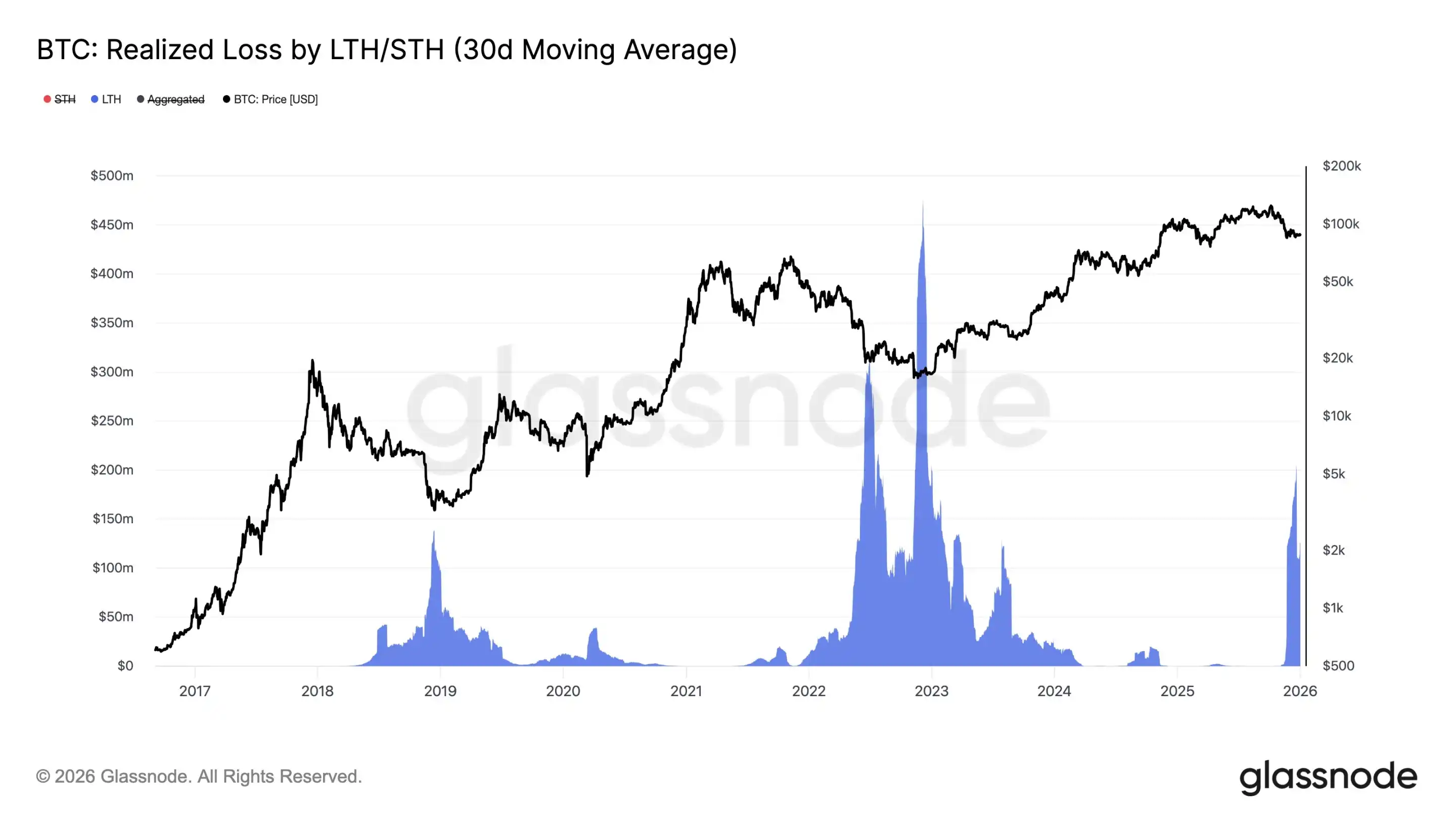
Glassnode recently tweeted that the slowdown in fund inflows coincides with long-term holders increasing their profit-taking. This situation is gradually emerging as BTC prices fluctuate within a narrow range. This reflects increasing investor fatigue over time, a common characteristic of prolonged bear markets.






