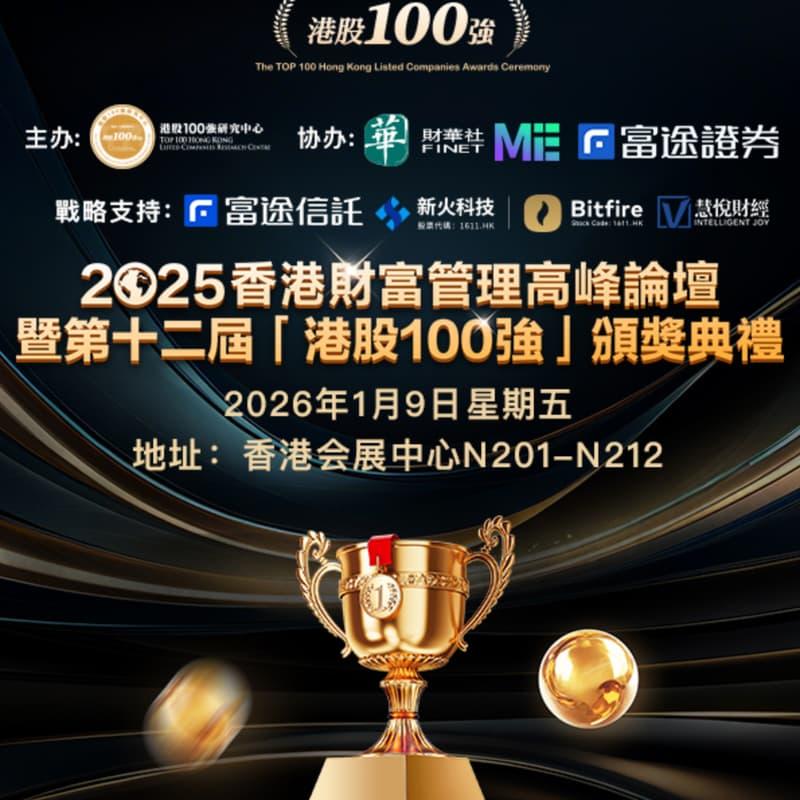
On January 9, 2026, the Hong Kong Convention and Exhibition Centre will welcome...
2025 Hong Kong Wealth Management Summit and the 12th Annual "Hong Kong Top 100" Awards Ceremony .
On the eve of this juncture, market attention has shifted beyond just the awards themselves.
Instead, it began to focus on a deeper issue—
As Web3 gradually enters the mainstream financial discussion framework, who will truly be included in the long-term financial narrative?
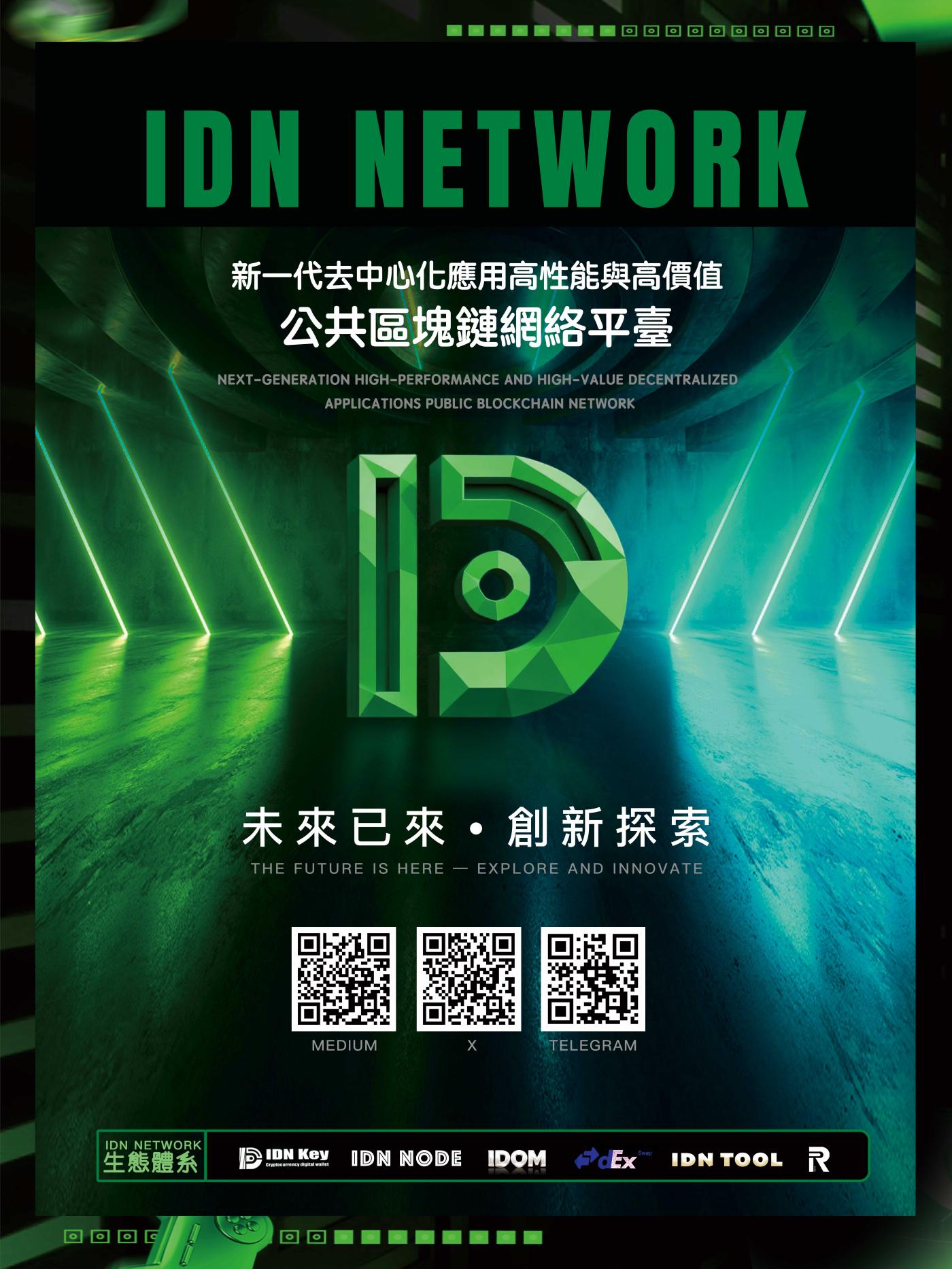
Against this backdrop, IDN Network chose to come to Hong Kong and participate in this large-scale wealth management forum, which is dominated by traditional finance but is also beginning to open up to new technologies.
This is not a simple industry appearance, nor is it for short-term exposure.
For IDN, this is more like a clear strategic choice.
In an era where Web3 is no longer just about narrative but is beginning to demand "explanation of value,"
What truly needs to be brought to the forefront is not the concept itself, but whether the infrastructure possesses the long-term adaptability to the real-world financial system .
I. From “crypto narrative” to “financial consensus”, why now?
In the past few years, Web3 has been placed more in a context of high volatility and high narrative;
The traditional financial system, on the other hand, has always revolved around institutions, risk control, and sustainability.
But as we move into 2025-2026, this boundary is changing.
The Hong Kong stock market is gradually recovering, and risk appetite in the capital market is picking up.
Technology, ESG, and digital assets are being incorporated into a more comprehensive discussion framework for wealth management.
Web3 is beginning to move from "peripheral innovation" to the core of discussions on "asset allocation and financial infrastructure".
During this time window, Web3 is no longer just being asked "Will it rise?"
Instead, they were repeatedly asked a more fundamental question:
Does this underlying network truly possess the ability to carry long-term value?
It is against this backdrop that IDN Network chose to enter Hong Kong, a core financial hub.
For IDN, this is more than just attending a conference.
It is also the beginning of entering the mainstream financial field of vision and being subject to higher standards of scrutiny.
To address a question that can no longer be avoided:
Is the underlying infrastructure of Web3 ready to engage in dialogue with the real financial system?
II. The true meaning of attending the conference: not to showcase, but to be understood.
In this high-level forum that brought together government officials, leading securities firms, listed companies, and Web3 institutions,
IDN is more concerned with the three kinds of connections that are forming offstage than with the performances on stage.
1️⃣ Connection with the traditional financial system <br>As Web3 begins to be incorporated into discussions of wealth management, asset allocation, and compliance,
Does the infrastructure possess stability, scalability, and long-term governance capabilities ?
It is becoming a core criterion for judgment.
2️⃣ Connecting with Real Assets and Real Needs <br>From RWA and data assets to decentralized computing power,
IDN focuses not on short-term concepts, but on whether the network can support real-world business operations in the long term .
3️⃣ Connection with Asian financial hubs <br>Hong Kong remains an important node connecting global capital with the Chinese market.
Choosing to enter the mainstream view here is itself a judgment on the long-term potential of Asia's Web3 infrastructure .
III. When Web2 and Web3 sit side by side, infrastructure moves to the forefront.
One significant change in this forum is that:
Web2 and Web3 are no longer discussed separately.
Traditional finance focuses on risk control, compliance frameworks, and stable returns;
Web3 complements open networks, data sovereignty, and composable financial structures.
The IDN Network is positioned at the intersection of these two aspects.
It is not trying to replace traditional finance.
Rather, it aims to provide a more open and collaborative financial system for the future.
At the same time, it possesses a fundamental network infrastructure with long-term viability.
Fourth, IDN has chosen a "slow but deterministic" path.
After going through multiple cycles, projects that truly survive and thrive often share similar characteristics:
Instead of chasing trends or rushing to create narratives, they appear in the right place at crucial moments.
IDN Network chose this time to enter Hong Kong.
This is not a short-term move, but part of its long-term strategy.
This means that IDN is emerging from within the Web3 community.
Gradually moving towards a broader financial system, industrial structure, and real-world application scenarios.
Conclusion
When the market re-discusses "value," infrastructure naturally comes to the forefront.
The upcoming 2026 Hong Kong will be more than just a conference venue.
It's more like an observation window—
Web3 is being re-examined.
Infrastructure is becoming a new starting point for consensus.
IDN Network appears at this node.
It is precisely at the intersection of traditional finance and new technology that we hope to...
Let's explore a longer-term issue together with the industry:
What kind of underlying infrastructure should the next generation of financial networks be built on?