Today is January 7th, and global financial markets continue to fluctuate under the influence of the Trump administration's geopolitical actions. President Trump's announcement that Venezuela will transfer a large amount of crude oil to the United States further lowered oil supply expectations, causing Brent crude to fall to around $60 per barrel and WTI crude to fall to around $56 per barrel, with the decline widening.
This eased concerns about a global energy shortage but also exacerbated pressure on the energy sector. Nevertheless, Wall Street remained strong, with the Dow Jones Industrial Average recently breaking the 49,000-point mark to a new record, driven by financial and technology stocks.
European markets were also optimistic, with the FTSE 100 in London climbing to a new high above 10,100 points, boosted by energy, defense, and healthcare stocks. Asian markets, however, were relatively cautious. Japan's Nikkei 225 index recently hit a record high of 52,518 points but retreated slightly today. New export controls by China on potentially military-use items for Japan exacerbated geopolitical tensions, prompting investors to reduce their risk exposure. Overall, markets are digesting the impact of the Venezuelan crisis while focusing on upcoming US employment data and business activity indicators, which could strengthen expectations of interest rate cuts and support risk assets.
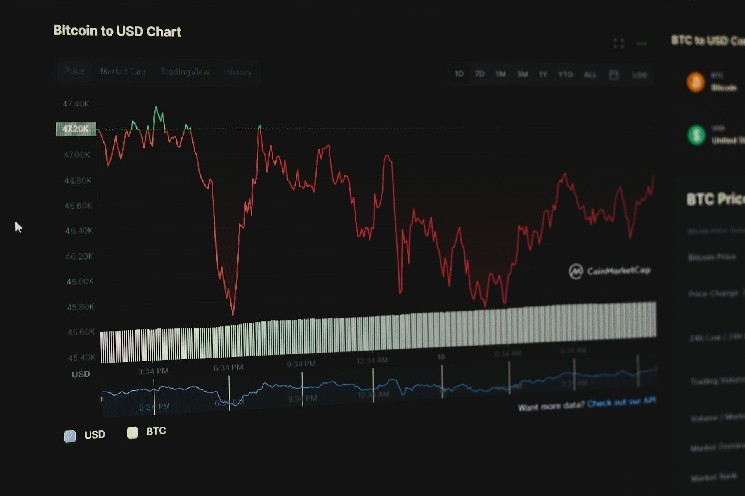
In this macroeconomic environment, the cryptocurrency market has demonstrated resilience, with a strong start. Bitcoin is trading at approximately $92,700 today, a slight pullback from yesterday, but remaining above $90,000 overall, with a solid market capitalization. Traders are betting on a short-term breakout above the $100,000 mark, leading to active options trading. While warnings of a vulnerability in older Bitcoin Core wallets (affecting only specific versions and not the network core) triggered brief caution, Bitcoin's technical picture remains consolidation: a break above $94,500 could open a path to $97,000-$100,000; otherwise, it may test the $90,000 support level. The long-term bullish trend remains intact, supported by continued institutional inflows and improved regulation.
In contrast, Solana (SOL) is emerging as a bright spot in 2026, with its price returning to the $135-$141 range, shaking off the shadow of the 34% pullback in 2025 and gradually aligning with strong on-chain fundamentals. Solana's average TPS reached 1,100, a year-over-year increase of 34%, far exceeding competitors such as BSC, highlighting its Layer 1 dominance.
The resurgence of Meme coin further catalyzes network activity: In the first week of 2026, the total market capitalization of Meme coin surged by 30%, with Solana, as the main platform, benefiting greatly. Bonk saw a weekly increase of over 50%, and Launchpad's trading volume hit a three-month high, accounting for nearly 97% of Meme coin network transactions. This influx of funds stems from Solana's high throughput advantage, perfectly supporting high-frequency Meme trading.
Institutional interest is at an all-time high. Morgan Stanley recently filed an application with the SEC for a Bitcoin and Solana spot ETF, marking the first time a traditional giant has launched such a product under its own brand, signifying further clarity in the regulatory environment. Assets under management for Solana-related investment products (ETFs and trusts) have surpassed the $1 billion mark, reaching approximately $1.02-1.09 billion, representing about 1.4% of Solana's total market capitalization. The continued strong inflows reflect institutions increasing their Solana exposure through regulated channels, with products like Bitwise leading the way. Under the Trump administration, the approval of crypto trading through bank intermediaries and new ETF listing standards have accelerated this trend.
Furthermore, the highly anticipated major upgrade to Solana, Alpenglow, will completely restructure the consensus mechanism, replacing Tower BFT and PoH, and introducing Votor (a lightweight voting aggregation mechanism achieving finality in 100-150 milliseconds) and Rotor (optimized block propagation, as fast as 18 milliseconds). The upgrade has received widespread support from validators and is expected to be rolled out gradually from early to mid-2026, potentially propelling Solana into a new era of sub-second finality and further strengthening its leading position among high-performance blockchains.
Overall, the global volatility at the start of 2026 presents opportunities for crypto assets. Bitcoin's steady consolidation provides a market anchor, while Solana, fueled by the meme craze, its on-chain dominance, the ETF boom, and its upcoming upgrade, is poised for a convergence of price and fundamentals.
The opportunity will be gone in the blink of an eye, everyone gather quickly!
Don't let hesitation delay your chance to make money, and don't get burned by worthless cryptocurrencies. Join Sister Miao and let's ride this bull market together!
Contact me via WeChat: Mixm5688 or QQ: 2234099968