According to a recent report by Fortune magazine, Bitcoin staking protocol Babylon (a blockchain project founded by Stanford University professor David Tse) announced on January 7, 2026, that it had completed a $15 million funding round, led by a16z Crypto (Andreessen Horowitz's crypto division). Valuation details for this round have not yet been fully disclosed, but the company stated that the funds will be used to further develop the protocol and plans to integrate the technology with the lending protocol Aave in the second quarter of 2026, at which point it is expected to begin generating revenue.
It is reported that Babylon had previously completed multiple rounds of financing between 2023 and 2024, including $70 million (led by Paradigm) and $18 million, with a total financing amount exceeding $90 million.
What is Babylon?
Babylon is a decentralized Bitcoin staking protocol designed to allow Bitcoin holders to directly use BTC as collateral to generate yield and provide security for other Proof-of-Stake (PoS) chains without the need for third-party intermediaries. Traditionally, when Bitcoin holders want to earn yield, they must hand over their BTC to a centralized platform (such as Coinbase) in exchange for stablecoins or wrapped BTC, which is then used in lending protocols like Aave. In this process, users lose control of their private keys and face intermediary risks.
Babylon's core technology, BTCVaults, offers a more direct alternative: users can lock up Bitcoin for staking, earn rewards, and retain self-custody, completely bypassing intermediaries. Founder David Tse stated, "We are using cutting-edge technology to build a protocol that allows people to achieve their goals directly, making Bitcoin more productive."
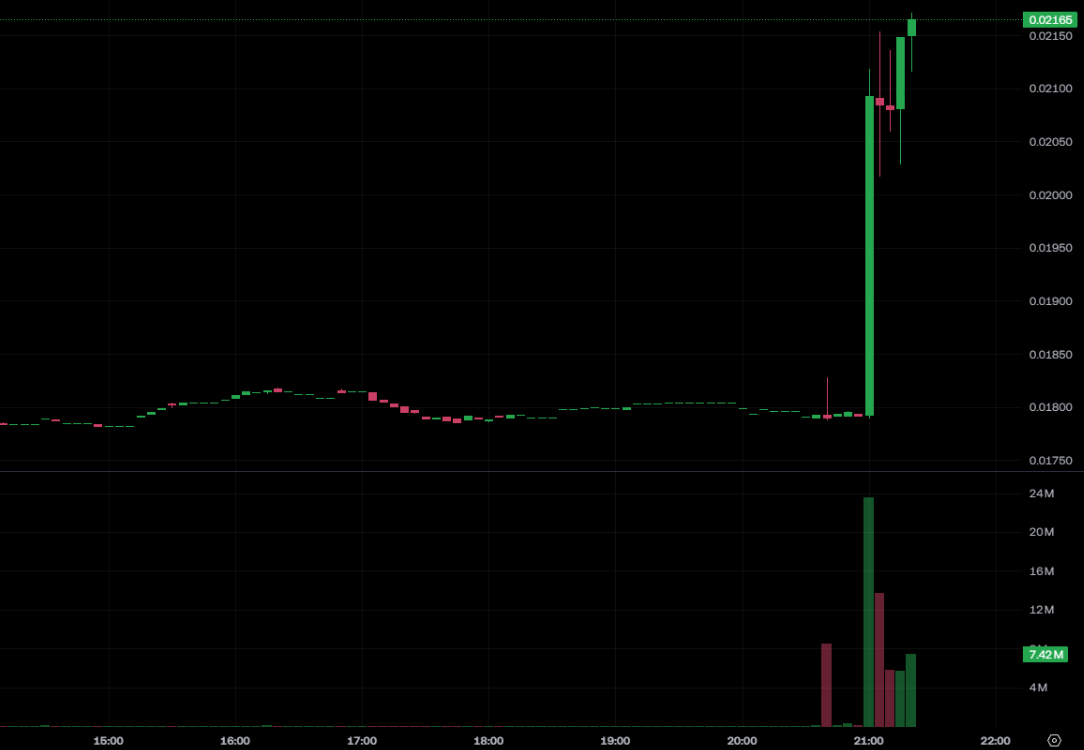
$BABY jumped in response.
Encouraged by the financing news, the market reacted positively, and the Babylon token briefly rose above $0.02, currently trading at $0.02133, representing a 15% increase in the past 24 hours.