The market is not seeing enough inflows to keep up the current price rally. Unfortunately, it seems like the most recent surge we saw across multiple assets lured a lot of bulls in and quickly shut down any possibilities of a proper recovery.
Shiba Inu lured everyone in
The market experienced a brief resurgence of optimism following Shiba Inu's recent attempt to remove another zero from its price. SHIB briefly traded at levels that pointed to a significant technical breakout. That optimism soon faded. Nearly instantly the price reversed, and what at first appeared to be the beginning of a more significant recovery is now seen as a possible trap for late buyers.
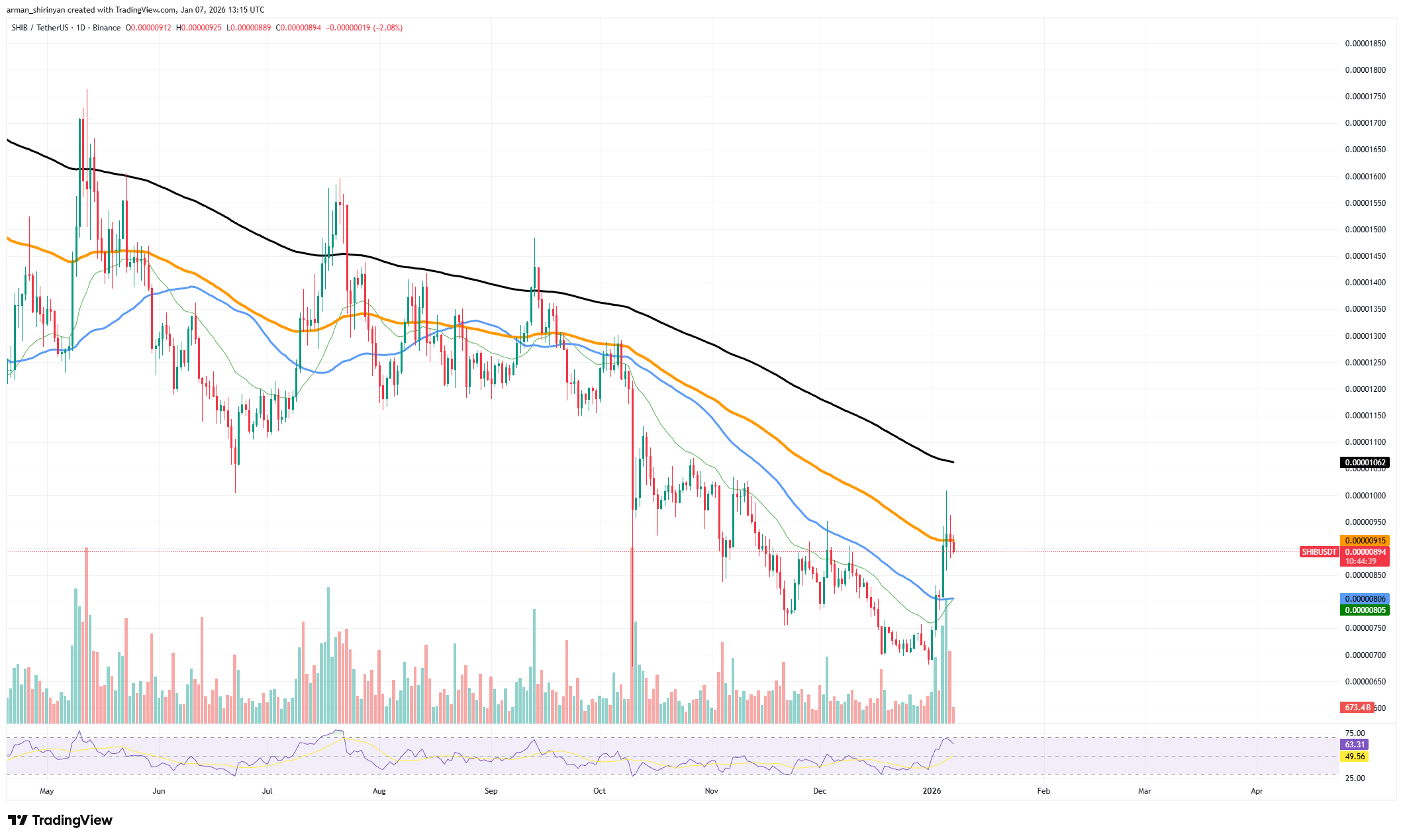
There was a lot of psychological weight to the zero removal. Crossing a round-number threshold is interpreted by many retail participants as proof of fresh momentum. In the case of SHIB, the push through important short-term moving averages and the move above that level reinforced the appearance of strength.
However, the follow-through never showed up. Within hours, selling pressure increased, erasing gains and driving the price back to the previously recovered levels. The rally's failure can be explained by on-chain data. Shortly after the spike, significant exchange inflows emerged, indicating that token holders were transferring tokens to exchanges with the intention of selling.
In this case, exchange inflows perfectly matched the price reversal, making them one of the most trustworthy indicators of distribution. The market witnessed opportunistic exits rather than accumulation. This behavior is consistent with the dead cat bounce's traditional profile. Sharp but brief rallies can be produced by oversold conditions and short covering following a protracted downtrend.
Momentum traders and late retail buyers are frequently drawn in by these actions, which then reverse once selling picks back up. With long-term moving averages continuing to decline and the price finding it difficult to regain significant resistance, Shiba Inu's overall structure is still weak.
This does not imply that SHIB will fail even more in the near future. Both short-lived relief rallies and continued high volatility are still possible. But the story has changed due to the unsuccessful zero removal. Instead of indicating the beginning of a new bullish phase, it highlighted how precarious demand is right now.
Ethereum is too stretched out
Around the $3,200 mark, which has subtly emerged as one of the key battlegrounds for the asset in recent weeks, Ethereum is exhibiting remarkable resilience. The price of ETH continues to stabilize above this threshold despite widespread market reluctance and repeated attempts to drive it lower, indicating that buyers are still willing to defend current levels.
From a technical standpoint, Ethereum is obviously short-term stretched. RSI and other momentum indicators are in overbought territory, which usually prompts worries about a possible pullback.
Normally, this would indicate fatigue. But ETH's actions around $3,200 indicate otherwise. Price action has remained under control, with higher lows forming and volatility compressing rather than expanding to the downside as opposed to a sharp rejection. It is crucial to have stability. Important moving averages that served as resistance during the most recent decline have been reclaimed and held by Ethereum.
Consolidating above them indicates that selling pressure is no longer predominant. Deeper drawdowns are avoided even in the case of minor sell-offs because they are quickly absorbed. This type of reaction typically indicates underlying demand as opposed to speculative chasing. Ethereum is also benefiting from market positioning.
In contrast to previous rally phases, leverage seems more balanced even though ETH is overbought. By doing this, the possibility of a cascading liquidation event that might otherwise hasten losses is decreased. Because of this, any pullback that does happen might only be remedial rather than revolutionary.
The overall outlook for Ethereum is still positive. The asset's recovery structure is still intact, and it is still trading well above significant long-term support zones. Holding $3,200 keeps ETH in a position where a push toward higher resistance levels is still feasible, particularly if the mood of the market as a whole improves.
XRP is setting up trap
The recent price action of XRP is beginning to resemble a classic dead cat bounce, which is a brief rebound following a steep decline that does not result in a long-term trend reversal. Even though the rebound appears convincing at first, there are a few red flags that indicate it might not last long and be followed by another leg lower.
Technically speaking, XRP's recovery followed a protracted decline, which already prompts caution. Although the price has gained some ground, the move's structure is still flawed. Major moving averages, which still function as overhead pressure rather than support, created crucial resistance zones where the rally stalled.
Rather than committing to long-term accumulation, this behavior frequently suggests that buyers are responding to oversold conditions. Momentum indicators corroborate this cautious opinion. RSI has rapidly recovered, but it has not done so with much sustained action. After protracted weakness, such sharp spikes usually indicate relief rallies rather than real trend shifts.
Because purchasing activity has not increased enough to demonstrate a strong conviction behind the move, volume dynamics add yet another level of concern. Context in the market is also important. In recent months, XRP has been under constant selling pressure, and the recovery narrative as a whole has not yet reached a stable state.
Dead cat bounces frequently entice late buyers who anticipate an instant reversal only to watch the price roll over as short-term demand wanes. This raises the possibility of a more severe retracement, particularly if confidence wanes close to resistance levels. A further problem is timing.
It is possible that investors who expect a speedy recovery are underestimating the duration of consolidation phases following significant declines. Before any sustainable upside becomes feasible, XRP may need a lot more time to rebuild a strong foundation. Upside attempts are still susceptible without that foundation.