From the very beginning of crypto contracts, contract trading has essentially been a pre-set game for everyone. Your first step is to convert your assets into USDT, or at least into BTC or ETH. Only then can you participate in mainstream market movements.
Article author and source: SuperEx
From the very beginning of crypto contracts, contract trading has essentially been a pre-set game for everyone. Your first step is to convert your assets into USDT, or at least into BTC or ETH. Only then can you participate in mainstream market movements.
This is like an ironclad rule, unshakeable. As for those small coins in your hands, no matter how optimistic you are about their future value, they are not directly related to contracts. Most of the time, you can only choose to continue holding them or trade them in and out of the spot market.
This is not unreasonable; it's just that over time, we've become accustomed to this structure and rarely ask ourselves: are these valuable small-denomination cryptocurrencies really only meant to be used this way?
While keeping an eye on derivatives product updates recently, I noticed that SuperEx launched a new feature – all-currency contracts. At first glance, it doesn't seem groundbreaking, or even a typical marketing gimmick. But the more you look, the more you realize that it's actually addressing a long-neglected issue: the right to participate in asset transactions.
In this product, users can directly use their small-cap tokens as margin to trade perpetual contracts pegged to BTC and ETH index prices, with profits and losses settled in the original currency. In other words, small-cap coins are no longer just "positions waiting for market movements," but are being systematically incorporated into mainstream market fluctuations for the first time.
Those interested can try it out in the SuperEx APP, or visit the official website: www.superex.com.
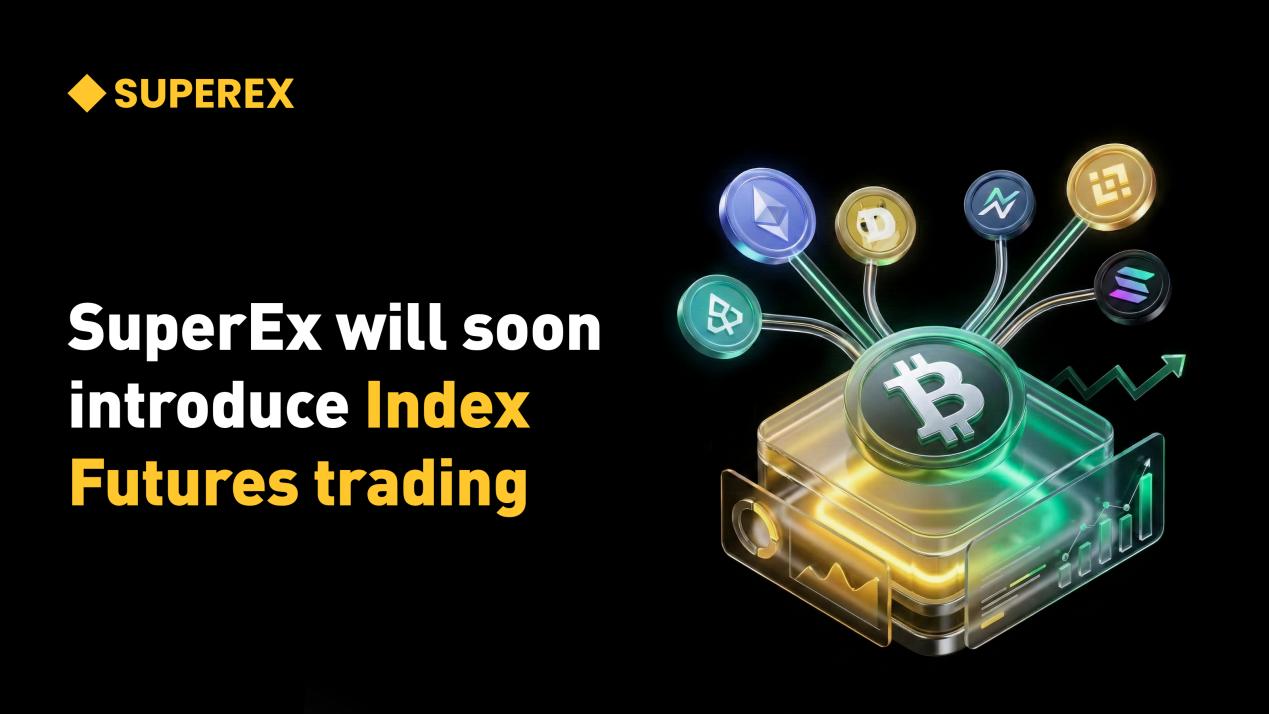
Lowering the capital threshold for participating in mainstream contracts, eliminating the need to switch to USDT, and making it easy to participate in mainstream market trends.
No need to exchange smaller coins for USDT or BTC
Reduce currency exchange friction and potential slippage losses
More flexible fund management methods
In short: Users can access mainstream trading scenarios without exchanging smaller cryptocurrencies for USDT or other assets, avoiding exchange costs and reducing the psychological and decision-making pressure caused by asset fluctuations. For many users, smaller cryptocurrencies are long-term assets, while mainstream cryptocurrency trading presents short-term opportunities. This product combines the two, catering to both long-term investment and flexible trading needs.
Index pricing combined with a perpetual mechanism makes it possible for smaller cryptocurrencies to participate in mainstream market trends.
The key to supporting this model lies in SuperEx's adoption of a multi-exchange weighted index pricing mechanism, combined with a mature perpetual contract structure.
The index price is formed by weighting across multiple platforms.
Effectively filters noise and abnormal fluctuations.
Liquidation and settlement are based on the marked price.
Taking into account both fairness and stability
Users are not trading the price fluctuations of altcoins themselves, but rather the average trend of mainstream assets like BTC and ETH across the entire market. This not only reduces price distortion caused by insufficient liquidity in a single trading session, but also ensures that trading activities truly revolve around the mainstream market trends. Especially when altcoins have limited liquidity and thin order books, they are prone to sudden price shocks, "flash crashes," or violent and abnormal fluctuations, leading to unpleasant experiences such as accidental liquidation.
In other words, smaller cryptocurrencies are merely vehicles for funds, and their price movements are anchored to the mainstream market consensus.
This structure makes the trading experience closer to the logic of "index contracts" in traditional finance, while retaining the advantages of the crypto market's flexible asset forms and open settlement boundaries.
For users, this represents an upgrade in asset efficiency.
In the traditional model, users of smaller cryptocurrencies often face a dilemma: continue holding long-term, missing out on short-term market opportunities; or sell and exchange for USDT to participate in trading, but lose exposure to their original assets.
The emergence of multi-currency contracts has made these two things no longer mutually exclusive for the first time.
Users can participate in mainstream market trends directly without selling or exchanging tokens; profits and losses are settled in the original currency, avoiding the management complexity caused by frequent asset switching. This provides a more balanced path for users who want to invest in the altcoin ecosystem in the long term but also want to grasp mainstream trends.
From this perspective, this is not just "a new contract product," but a way of using assets that moves from passive holding to active management.
For the industry, this represents a loosening of the contractual structure.
More importantly, the significance of multi-currency contracts is not limited to a single platform.
For a long time, the crypto contract market has been highly concentrated on a few settlement assets, which, while improving liquidity, has also limited the scope for participation with diverse asset portfolios. SuperEx, through its combination of index-anchored settlement and multi-currency settlement, has effectively provided a new structural model for the contract market.
This proves one thing: the right to trade in mainstream markets is not necessarily tied to a particular settlement currency.
If this model is more widely accepted, the future contract market may gradually shift from "centralized settlement coins" to "diversified asset entry points".
Other core advantages of the product
1. New tools for hedging and arbitrage
Users can achieve the following through this product:
hedging against risks associated with small-cap cryptocurrency holdings.
Directional trading of major cryptocurrencies
l Provides more strategic options for quantitative and professional users
2. Index pricing is more stable and fairer.
Multi-exchange price weighted calculation
l Smoothing abnormal fluctuations
Liquidation and settlement are executed based on the mark price.
It effectively protects the user's transaction experience and system stability.
3. Enrich the contract product portfolio
Unlike traditional USDT-margined contracts and coin-margined contracts, we create...
SuperEx's differentiated index derivatives system enhances the platform's innovative image and market recognition.
Operation process demonstration (personal hands-on experience version)
first step
Asset transfer: Transferring the target token (such as SHIB) from the spot account to the multi-currency futures account, for example: depositing 10,000 SHIB.
Step 2
Select the currency pair to anchor the index price: For example, select the BTC/USDT index price.
Step 3
Set leverage ratio/position mode: For example, select 10x leverage, cross margin mode.
Step 4
Confirm the position size and direction: For example, open a long position of 500,000 SHI.
Step 5
Position management: Real-time monitoring of price fluctuations of the pegged currency, and closing positions when appropriate.
Step 6
Closing position operation: Close the position at an opportune time based on the BTC/USDT index price. For example, if the BTC/USDT index price rises to 110,000 USDT, and the unrealized profit/loss is 50,000 SHIB, then choose to close the position.
Step 7
Settlement: Profit and loss are settled directly in SHIB, with funds arriving in real time. Realized profit/loss: 50,000 SHIB
Note: The above main process description is based on the author's personal practical experience. The steps are for reference only. Actual operation will be affected by transaction fees, holding costs, and price spreads.
In conclusion
From a certain perspective, multi-currency contracts are not teaching users "how to trade more aggressively," but rather redefining something more fundamental: what kind of assets are eligible to participate in the core fluctuations of the market.
When smaller cryptocurrencies can participate directly in the market movements of mainstream assets like BTC and ETH without prior exchange, the previously distinct stratification of assets begins to loosen. Long-term holding no longer inherently equates to "giving up liquidity," and short-term trading no longer requires liquidating positions. Assets begin to have multiple roles, rather than being locked into a single purpose.
This seemingly restrained change is likely more important than mere performance improvements. It doesn't create new speculative tools, but rather gives existing assets more ways to participate in the market.
If the past contract system was essentially about screening "who is qualified to enter the market", then this design is more like answering another question: how can assets maintain efficiency in different cycles, rather than passively waiting?
It may not immediately change everyone's trading habits, but it is likely to gradually change the market's default answer regarding "how assets should be used." And truly valuable products often begin with these inconspicuous changes.