Chen Lei left the country in early April 2020 and has been staying overseas ever since.
Written by: Mahe, Foresight News
In January 2026, Xunlei Corporation and its subsidiary Wangxin Technology filed a civil lawsuit against Chen Lei and his core team for "damage to company interests," seeking damages of up to 200 million yuan. The case has been accepted and filed by the relevant court in Shenzhen.
This lawsuit stems from a series of allegations in 2020, including that Chen Lei embezzled company assets through fictitious transactions and false contracts, and misappropriated tens of millions of yuan for illegal cryptocurrency trading. To evade investigation, Chen Lei left the country in early April 2020 and remained overseas for an extended period, causing the criminal investigation to be temporarily withdrawn due to difficulties in obtaining evidence.
This incident not only exposed the chaotic internal governance of Xunlei, but also reflected the rampant growth and regulatory risks of early Chinese internet companies venturing into the crypto.

Chen Lei began learning programming in high school, entered the Computer Science Department of Tsinghua University, pursued further studies in the United States, gained experience at Google and Microsoft, and then returned to China to join Tencent. Chen Lei embodies the epitome of a typical technical elite.
In 2014, he joined Xunlei as Chief Technology Officer (CTO), at a time when Xunlei was facing a decline in its download business. As a former Microsoft employee, Chen Lei was skilled in distributed computing and cloud computing technologies, which aligned well with Xunlei's core P2P download strategy. From 2015 to 2017, he served as co-CEO of Xunlei, and in July 2017, he officially became CEO and a member of the board of directors.
At this time, the global blockchain craze was rising, the price of Bitcoin was soaring, and Chinese companies were exploring this emerging field. Chen Lei led Xunlei's transformation towards blockchain, seeing it as the key to the company's revival.
WanKe Cloud: From Glory to Decline
Xunlei's landmark product in its foray into the crypto is "OneCloud". In October 2017, Xunlei launched OneCloud hardware, an intelligent shared storage device where users are rewarded with "OneCoins" by contributing idle bandwidth and storage resources.
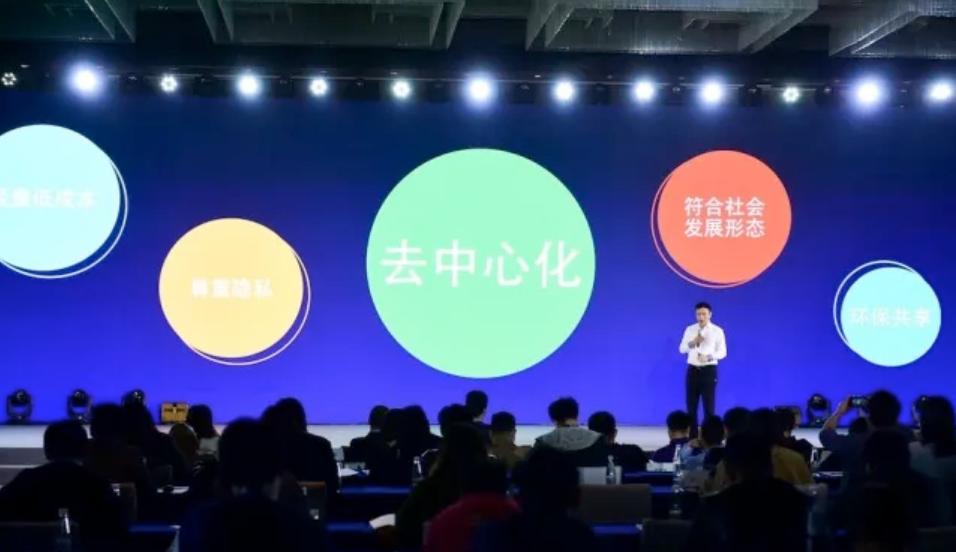
This model quickly ignited the market, leading to a surge in sales of the OneCloud device and a price increase of hundreds of times for LinkToken. At its peak, the OneCloud device generated over 100 million RMB in daily revenue, and even secondhand OneCloud devices, originally priced at 399 RMB each, were being resold for 3,000 RMB. The initial unofficial opening price of LinkToken was 0.1 RMB, but it rose to nearly 10 RMB at its peak.
Chen Lei has repeatedly emphasized in public that this is Xunlei's innovation of "sharing economy + blockchain," aiming to build a distributed computing ecosystem. Xunlei has also established a blockchain lab to promote projects such as OneThing Chain, attempting to gain a foothold in the field of decentralized storage and computing.
However, in late 2017 and early 2018, due to the "94 ban" and the announcement by the China Internet Finance Association, WanKeCoin was renamed "LinkToken". The price of LinkToken continued to fall, triggering protests from some investors.
Having a child with his mistress and misappropriating tens of millions of yuan to speculate in cryptocurrency.
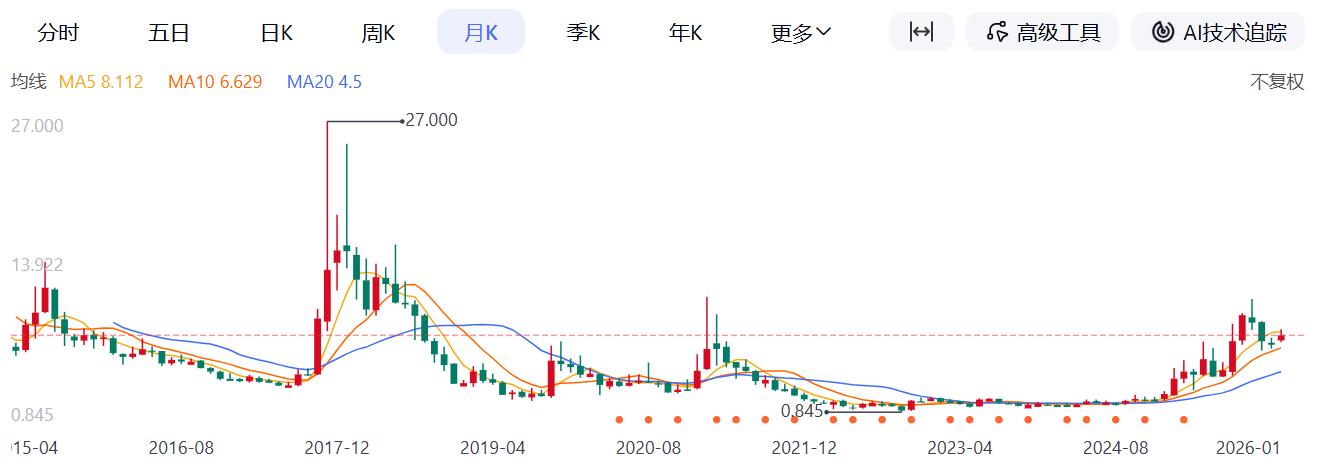
However, thanks to its blockchain strategy, Xunlei's stock price once soared from $4 to $27.
Chen Lei's foray into the crypto appeared successful, but it sowed the seeds of future problems: company resources were skewed towards blockchain, internal management was lax, and the flow of funds was unclear. Entering 2019, Xunlei's blockchain business faced bottlenecks. The global crypto market experienced a downturn, Chinese regulations tightened, and sales of its WanKe Cloud product declined. Chen Lei attempted to expand edge computing through its subsidiary, Wangxin Technology, but internal conflicts began to surface.
According to sources, Chen Lei had a close relationship with Dong Xue, the then senior vice president, who recruited many fellow villagers and relatives from Heilongjiang to key positions, forming a "small circle".
This provided fertile ground for subsequent corruption allegations. In April 2020, Xunlei's board of directors abruptly dismissed Chen Lei on suspicion of embezzlement. An audit by the new management revealed that Chen Lei had transferred funds through Xingronghe (Xunlei's bandwidth supplier), a company he effectively controlled. Xingronghe, established in 2019, had frequent transactions with Wangxin Technology, and Chen Lei was suspected of inflating transaction details and fabricating false contracts to embezzle approximately 200 million yuan from the company.
Even more noteworthy is the allegation of misappropriating funds for cryptocurrency trading. An audit revealed that Chen Lei is suspected of misappropriating tens of millions of yuan from the company for illegal cryptocurrency trading activities, which are explicitly prohibited by the state.
Specific details include: through close associates like Dong Xue, Chen Lei placed personnel in departments such as finance and procurement to fabricate expense reports and overpay salaries, with the funds ultimately flowing into the cryptocurrency market. At the time, Bitcoin prices were rebounding from their early 2020 lows, and Chen Lei may have been speculating on this. This behavior violated China's ban on virtual currency transactions and constitutes suspected embezzlement.
Furthermore, Chen Lei and Dong Xue had a son together during their tenure, suggesting their relationship was more than just colleagues, which further fueled suspicions of favoritism.

Public information shows that Dong Xue previously served as Senior Vice President of Xunlei Group and Vice President of Marketing at Wangxin Technology, overseeing core departments such as business marketing and human resources, and reporting directly to then-CEO Chen Lei. The two had already crossed paths during their early days at Tencent Cloud Computing (Dong Xue was a regular public relations staff member at Tencent Cloud). After Chen Lei joined Xunlei in 2014, Dong Xue gradually rose through the ranks, becoming one of his key confidantes. Even during Chen Lei's tenure, there were internal rumors that the two were in a romantic relationship (or an improper relationship).
The Xunlei board of directors once questioned Chen Lei in person, and he assured them, based on his "Christian reputation," that the two were merely colleagues and had no other relationship.
However, after Chen Lei was dismissed, the company's audit and investigation revealed that Chen Lei and Dong Xue had a child together during Chen Lei's tenure at Xunlei. This directly contradicted Chen Lei's previous assurances, confirming the existence of a close personal relationship between the two, forming a tight-knit community of interests.
To evade investigation, Chen Lei and Dong Xue left the country together in early April 2020, transferring the shares to relatives at a low price, making it difficult for Xunlei to hold them accountable.
In October 2020, Xunlei filed a complaint with the Shenzhen Public Security Bureau against Chen Lei and others for suspected embezzlement, and the police opened an investigation. The company issued a statement urging Chen Lei to return to China to cooperate, but to no avail. The criminal case was withdrawn at the end of 2022 due to Chen Lei's overseas stay and obstacles to obtaining evidence.
Five years later, in 2026, Xunlei restarted the civil lawsuit, with the focus still on fund transfers and misappropriation for cryptocurrency trading. New evidence shows that Chen Lei dismissed dozens of core employees before his removal from office, resulting in talent loss and compensation losses.
If successful, this case could provide a model for corporate governance in China. Chen Lei's journey from starting with blockchain innovation at Xunlei to his alleged misappropriation of funds for cryptocurrency speculation highlights the opportunities and pitfalls of the early crypto. Xunlei once revived itself using the blockchain concept, but collapsed due to regulatory issues and internal corruption. Chen Lei's case serves as a warning that technological innovation must be compliant with regulations, and that overstepping personal ambitions will inevitably lead to serious consequences.