Current situation
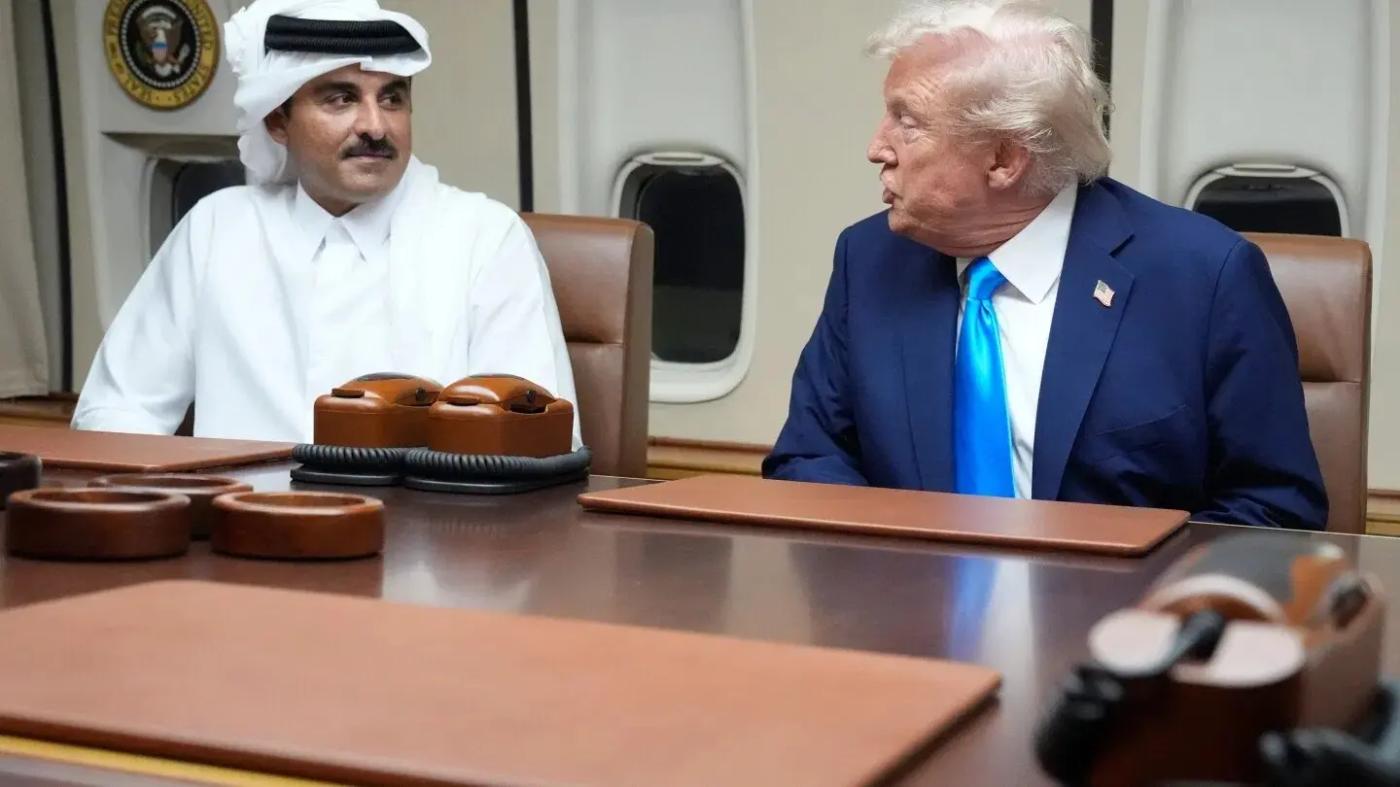
In mid-January 2026, the market will not be facing a publicly announced war plan, but rather a rapidly escalating cycle of tension, with official statements deliberately remaining ambiguous: the United States has begun withdrawing or advising on the withdrawal of some personnel from key areas in the Middle East, including Al Udeid Air Base in Qatar . According to the Financial Times, the base houses approximately 10,000 US troops ; Reuters also points out that as regional tensions rise and Iranian officials warn of retaliation against neighboring countries hosting US troops should a US strike occur, the US has taken preventative measures to withdraw personnel.
For investors, the most important signal is that these actions are not simply "verbal threats" or media manipulation—the transfer of personnel and assets is extremely costly in reality and is usually not done merely as a gesture; but at the same time, these measures do not constitute confirmation of an impending military operation, which means that the market is pricing in a "probability distribution" rather than a single certain outcome.
Why do these changes quickly translate into asset prices?
When geopolitical risks escalate from background noise to actionable tail risks, assets that directly price uncertainty are often the first to react. This week's market movements exemplify this: Reuters reported that on January 14, 2026, spot gold briefly touched a record high of $4,639.42 per ounce , while spot silver also broke through $90 per ounce for the first time . This rise was attributed to the combined effect of expectations of interest rate cuts and geopolitical uncertainty. However, the following day, as Trump signaled a "wait-and-see" approach, gold prices retreated as profit-taking occurred.
This process itself is significant, illustrating that the current market is in a state where investors are willing to pay a premium for safe haven when the situation is uncertain; however, once official statements lean towards downgrading, the panic will be quickly digested.
Bitcoin's position in this macro environment
Bitcoin's reactions are often simply categorized as "risk assets" or "safe-haven assets," but a more accurate description is that it is a macro asset highly sensitive to liquidity . Short-term movements depend on whether the dominant market transmission path is "panic" (which could push up the dollar and tighten financial conditions) or "hedging demand" (which would cause funds to flow into non-sovereign value storage assets).
In this round of events, Bitcoin clearly participated in the rise of "macro hedge assets." Bloomberg reported that Bitcoin rose to $97,694 intraday on January 14, 2026, with a single-day increase of up to 3.9%, marking its highest level since mid-November ; at the same time, this rise liquidated more than $500 million in short crypto option positions , indicating that structural pressures in the market were significantly released.
The core issue is not "whether to use force," but "how to escalate the situation."
For the market, the more tradable issue is not whether Trump will launch a strike, but rather the nature and scale of the potential escalation , and its impact on oil prices, the dollar's performance, and global liquidity. Even within the narrative of "digital gold," these variables continue to dominate Bitcoin's short-term direction.
If the conflict is contained within a limited timeframe and does not affect energy supply, the market tends to absorb the shock relatively quickly, especially against the backdrop of loose monetary policy expectations. However, if the escalation scenario involves regional energy disruptions or triggers broader retaliatory actions, risk assets as a whole may face liquidity tightening pressure, and highly leveraged positions, including those in the crypto market, will be under pressure.
What should we focus on next?
The key to determining whether the market has moved from the "risk premium phase" to "crisis mode" lies not in a single news item, but in whether preventative actions evolve into sustained adjustments in military posture, and whether official statements become more consistent across different institutions. Isolated defensive measures may simply be acts of caution, while coordinated actions across institutions and regions usually indicate a higher level of strategic intent.
Current public reports indicate that Reuters is emphasizing the preventative evacuation following Iranian warnings, while the Financial Times and Associated Press are focusing on U.S. efforts to mitigate the risk of potential retaliation. These reports collectively paint a picture of a strategic posture of "preparing for volatility but without publicly committing action."
in conclusion
Based on publicly available information, it's impossible to determine whether Trump will definitely take military action against Iran, but the market has already priced in this possibility as a significant risk. This is precisely why traditional safe-haven assets like gold have hit new highs, and it also explains why Bitcoin was able to rise to around $97,000 amidst macroeconomic risk aversion .
Bitcoin's future direction will likely depend not on any breaking headline, but on whether the evolving situation increases the probability of energy shocks and a stronger dollar (which is usually detrimental to liquidity-sensitive assets), or further strengthens the demand for hedging in an environment of political and monetary uncertainty—in the latter case, Bitcoin has benefited in tandem with gold on several occasions in the past.