Original title: 10 Predictions for 2026
Original source: Delphi Digital
Original translation: Blockchain in Plain Language
Perpetual contract decentralized exchanges (Perp DEXs) will become the next Wall Street, with AI agents enabling autonomous trading, transforming the trading platform into a "super app." The following are the report's core predictions:
1. AI agents begin autonomous trading.
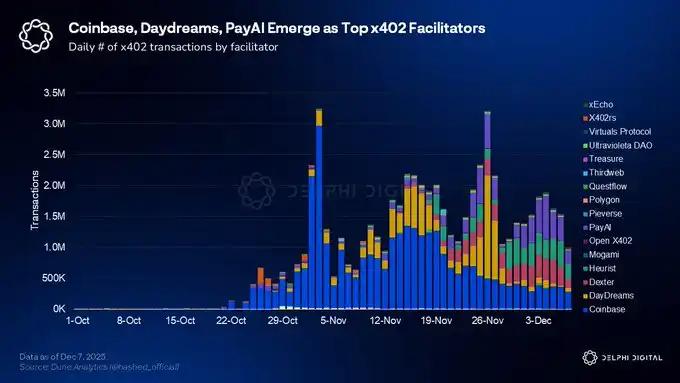
The x402 protocol allows any API to set access permissions via cryptocurrency payments. When an AI agent needs a service, it can instantly pay with stablecoins, consuming a shopping cart or subscription. The ERC-8004 standard adds trust by establishing reputation (including performance history and staking collateral). These two elements combine to form a autonomous agent economy. Users can delegate travel plans, and the AI agent automatically outsources the task to miners to search for agents, paying data fees via x402 and booking tickets on-chain, requiring no human intervention throughout the process.
2. Perp DEXs devour traditional finance
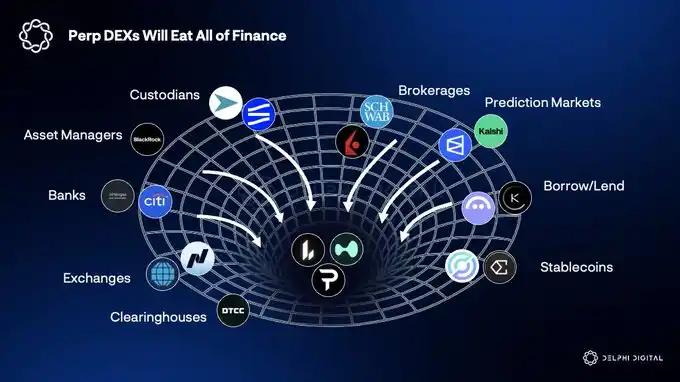
Traditional finance is expensive due to its fragmentation: transactions take place on trading platforms, settlements are made at the New York exchange, and custody is handled by banks. Blockchain will compress all of this into a single smart contract. Hyperliquid is currently building its reorganization capabilities. Perp DEXs could simultaneously act as traders, trading platforms, custodians, banks, and Manhattan exchanges. Platforms like Aster_DEX, Lighter_xyz, and Paradex are rapidly catching up.
3. Prediction markets are being upgraded into traditional financial infrastructure.
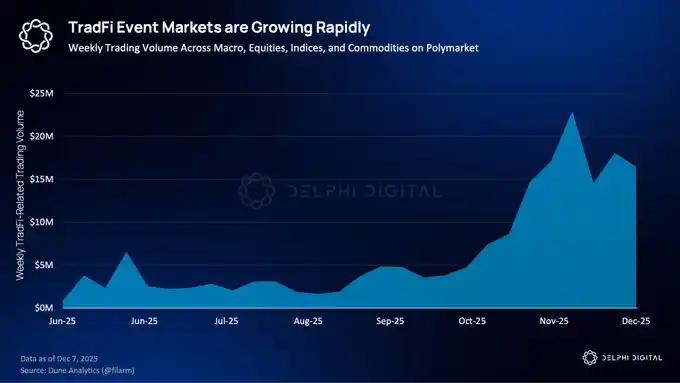
Thomas Peterffy, Chairman of Interactive Brokers (IBKR), views prediction markets as a real-time information layer for portfolios. Early demand focuses on weather-related congruence for energy, logistics, and insurance risks. 2026 will see the emergence of new categories: stock event markets based on earnings performance, macroeconomic value indicator markets such as CPI and Fed decisions, and cross-asset relative markets. Traders holding tokenized Apple stock (AAPL) can hedge earnings risk through simple binary contracts or more complex options. Prediction markets will become a primary derivative product.
4. The ecosystem reclaims stablecoin rewards from issuers.
Last year, Coinbase earned over $900 million in USDC reserve revenue solely from its issuance channels. Public chains like Solana, BSC, and Arbitrum generate approximately $800 million in transaction fees annually, yet their networks hold over $30 billion in idle USDC and USDT. This situation is changing. Hyperliquid has acquired USDH reserve revenue through auctions. Ethena's "stablecoin instant service" model is being adopted by Sui, MegaETH, and Jupiter. Lost revenue that would otherwise flow to issuers is being reclaimed by platforms that create demand.
5. DeFi overcomes the challenge of under-collateralized lending

While DeFi lending protocols boast massive Value Locked (TVL), almost all require over-collateralization. zkTLS (Zero Knowledge Transfer Layer Security) is key to solving this: users can prove sufficient bank balances, thus generating an identity account or identity credit card. 3jane leverages verified Web2 Finance data to provide instant USDC under-collateralized lines of credit, dynamically adjusting interest rates based on real-time monitoring. This framework can also directly provide funding based on the performance history (credit score) of AI agents. Maple Finance, Centrifuge, and USDai have been working on this area. 2026 is the year under-collateralized debt transitions from experimentation to infrastructure.
6. Onchain FX: Finding a product-market fit.
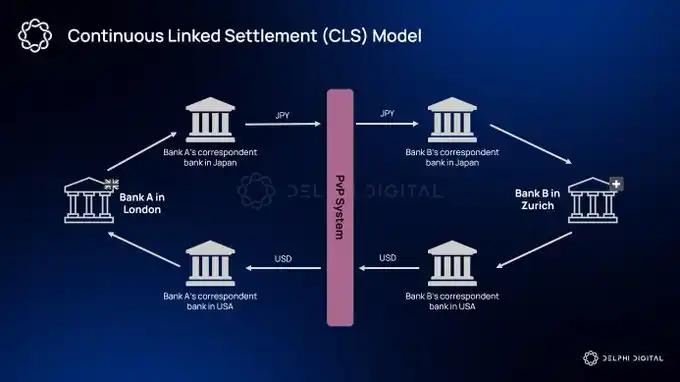
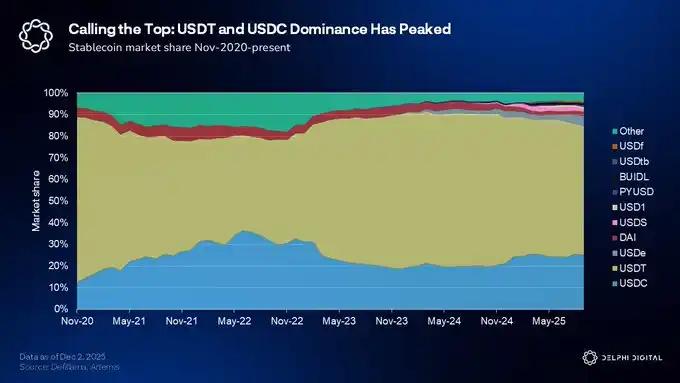
USD stablecoins account for 99.7% of the supply, but this may be the peak of their dominance. The traditional foreign exchange market is massive but riddled with intermediaries and inefficient settlement processes. On-chain FX eliminates these intermediaries by placing all currencies as tokenized assets on a shared execution layer. Emerging market currency pairs will experience explosive growth, as traditional FX is most expensive and inefficient there. These neglected areas are where cryptocurrencies can realize their most tangible value.
7. Gold and Bitcoin Lead Currency Devaluation Trade
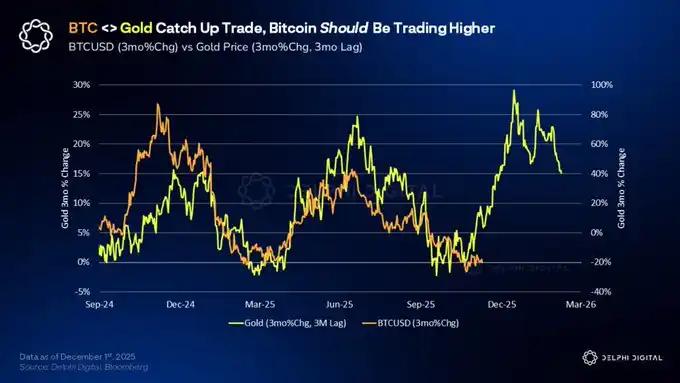
Gold surged 60% after being viewed favorably, with central banks around the world purchasing over 600 tons despite record high prices. The macroeconomic backdrop supports continued strength: global central bank interest rate cuts, persistent fiscal deficits, and a record high global M2. Gold typically trades three to four months ahead of Bitcoin. As currency devaluation becomes a major topic around 2026, both gold and Bitcoin will attract safe-haven inflows.
8. Trading platforms are transforming into "everything apps".
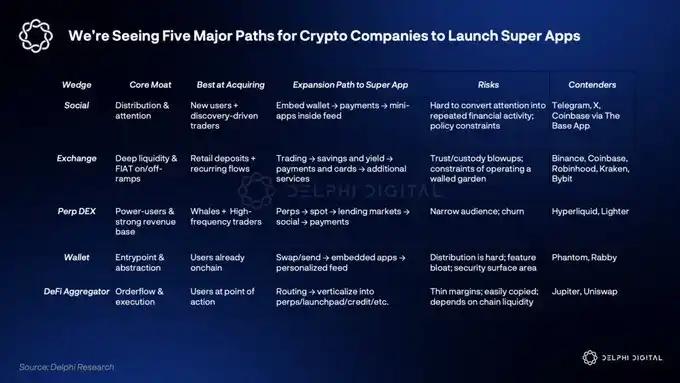
Coinbase, Robinhood, Binance, and Kraken no longer own trading platforms. Coinbase serves as the platform, the Base App as the interface, and USDC provides supplemental revenue. Robinhood's Gold membership grew by 77%, becoming a retention engine. Binance has over 270 million users and a payment volume of $250 billion. As decentralization costs decrease, platforms with users will reap the highest value. By 2026, the winners will begin to diverge.
9. Privacy infrastructure is catching up with market demand.
Privacy is under immense pressure: the EU passed the Chat Monitoring Act, capping cash transactions at €10,000. The foundation for privacy infrastructure is emerging. Payy_link launched a private encrypted card, SeismicSys provides protocol-level encryption for fintech, and KeetaNetwork enables anonymous KYC. Without a public payment track, stablecoin adoption will reach multiple users.
10. Altcoin are becoming more decentralized (not all cryptocurrencies are rising at the same price).
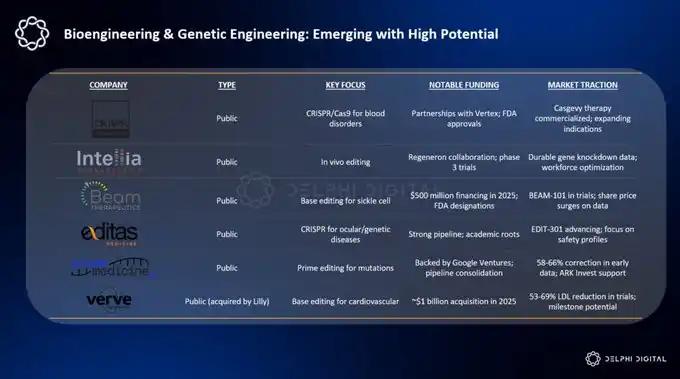
That kind of "broad-based" bull market is over. Over $3 billion in token unlocks are stalled, and there's competition for funding from AI, robotics, and biotechnology. Capital will flow into structural needs: tokens with ETF inflows, protocols with real revenue and buybacks, and applications with clear product-market fit. Winners will be concentrated in teams that build moats in real economic activity.
in conclusion
Cryptocurrencies are entering a new phase: institutionalization has arrived. Prediction markets, on-chain lending, agent economics, and stablecoin infrastructure represent a genuine paradigm shift. Cryptocurrencies are becoming a fundamental layer of global finance.