Who can stand ads that occupy half the screen?

As expected, ChatGPT's announcement of the launch of ads was met with a barrage of criticism in the comments section.
Some complained that the ads were too big and they felt uncomfortable looking at them.

Some questioned why a non-profit organization would engage in commercialization, asking if its original mission had been lost.
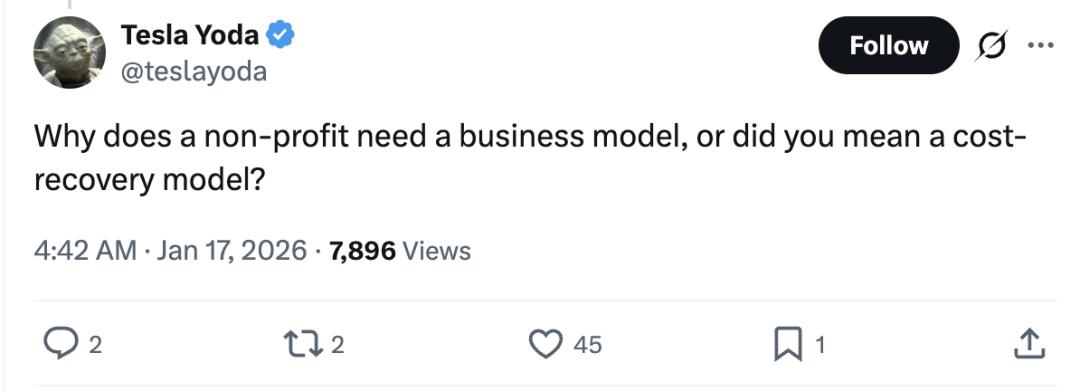
Some even suggested abandoning it altogether and switching to Claude and Grok.

There were even those who directly renamed GPT to "Advertising GPT," which sounded sarcastic and insincere.

Netizens unleashed their fury, and Ultraman's statement from years ago that "advertising is ChatGPT's last lifeline" came back like a boomerang, slamming back hard on his own head.
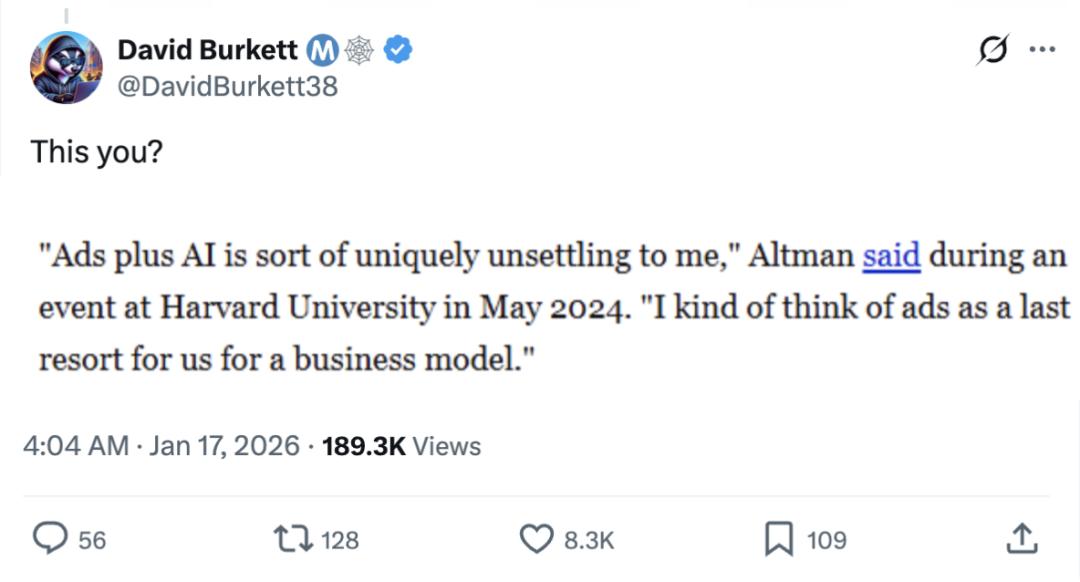
The question is: knowing you'll get scolded, why do you still go on?
The answer is simple—
OpenAI is out of money , and Ultraman has run out of ideas.
OpenAI is out of money.
OpenAI's financial difficulties are not unfounded. A New York Times report explicitly points out:
OpenAI will face a funding shortage within 18 months and is highly likely to be acquired by well-funded large companies like Microsoft and Amazon.
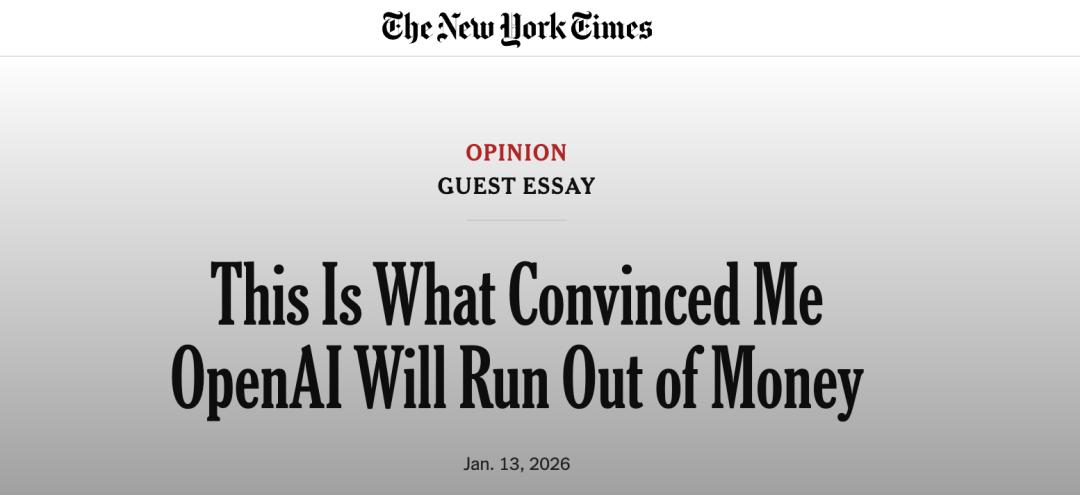
At first glance, it seems like OpenAI could run out of money in just a year and a half?
After all, when it comes to fundraising, Ultraman is practically a "superman".
For example, in March of last year, Altman set a record by raising $40 billion, more than any other company has raised in a private funding round.
During his nearly 10 years as CEO of OpenAI, the company never stopped raising funds.
The problem is that OpenAI has raised a lot of funding and burned through a lot of money.
Data shows that OpenAI's annual spending is expected to exceed $ 8 billion in 2025 and reach $ 40 billion by 2028.
What's outrageous is that OpenAI's $1.4 trillion data center construction plan is still waiting for continued funding.
In comparison, OpenAI's annual revenue last year was only $20 billion , which is not even in the same order of magnitude as its revenue and expenditure, undoubtedly posing a huge financial challenge.
Even more serious is the fact that the industry generally believes that even under the most optimistic expectations, the entire AI industry still has a funding gap of at least $800 billion , which makes OpenAI's financial situation even more strained.
Unlike companies like Google, Microsoft, and Meta, which have mature traditional businesses to fuel their new ventures, OpenAI has virtually no "safety cushion."
Against this backdrop, renting out the screens of 800 million monthly active users to advertisers seems to be a move that Ultraman has no choice but to make.
While this move will undoubtedly draw a lot of criticism, perhaps it is as Ultraman previously said—
This was their "last straw".
In fact, Ultraman had already started planning to run advertisements last December.
However, Google's Gemini 3 was coming on strong at the time, and OpenAI immediately triggered a "code red".
Therefore, the relevant plans were postponed, and the focus was temporarily shifted to competing with Google and Anthropic.
Now that they've caught their breath, the advertising campaign is back online immediately.
According to a source close to OpenAI, OpenAI expects to generate “low billions” of dollars in revenue from advertising by 2026, and then scale up this revenue stream year by year thereafter.
However, whether this plan can be successfully implemented remains to be seen.
In particular, it remains to be seen whether users will "vote with their feet" because of the ads, and whether other companies will follow OpenAI's lead and adopt the same advertising model.

In addition, according to sources, OpenAI is in preliminary talks with investors about a new round of financing that could amount to as much as $80 billion .
OpenAI's business loop
For this startup valued at nearly $750 billion and with over 3,000 employees, the advertising feature is no accident. It's part of OpenAI's overall business strategy.
Since last Friday, OpenAI announced that it will test ads in the free version of ChatGPT, with the first batch of test subjects being logged-in adult users in the United States.
The advertisement will appear at the bottom of the ChatGPT answer and will be clearly marked as "sponsored content".
This move marks a significant step for OpenAI in shifting its business model from relying on subscription revenue to advertising revenue.
OpenAI emphasizes that advertising content will not affect ChatGPT's answers, and users can confidently trust the objectivity of its responses.
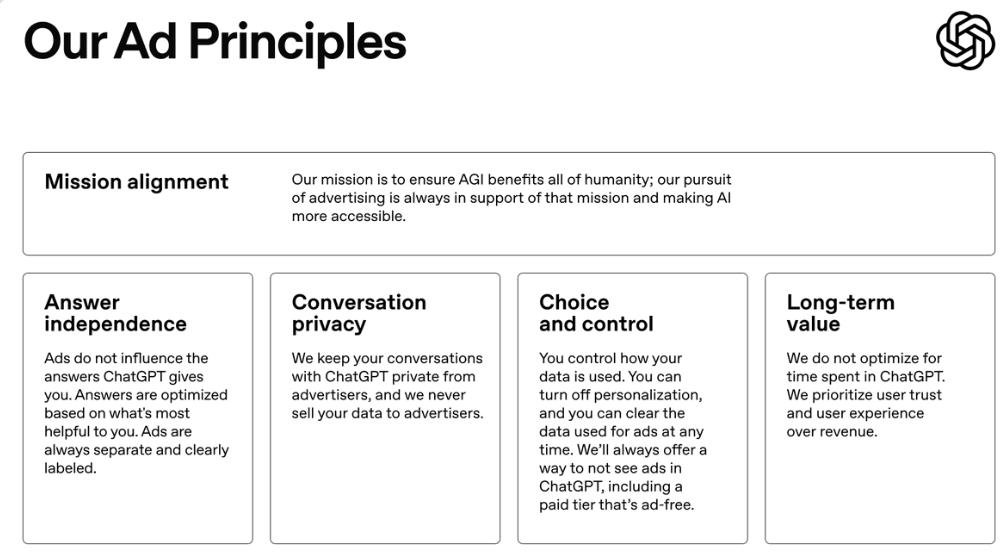
OpenAI does not sell user data or conversation content to advertisers, and users can also turn off ad personalization features based on chat history.
In addition, OpenAI has launched a new subscription tier called Go , which costs $8 per month and offers users some upgrade features, such as longer memory capacity and more image generation capabilities.
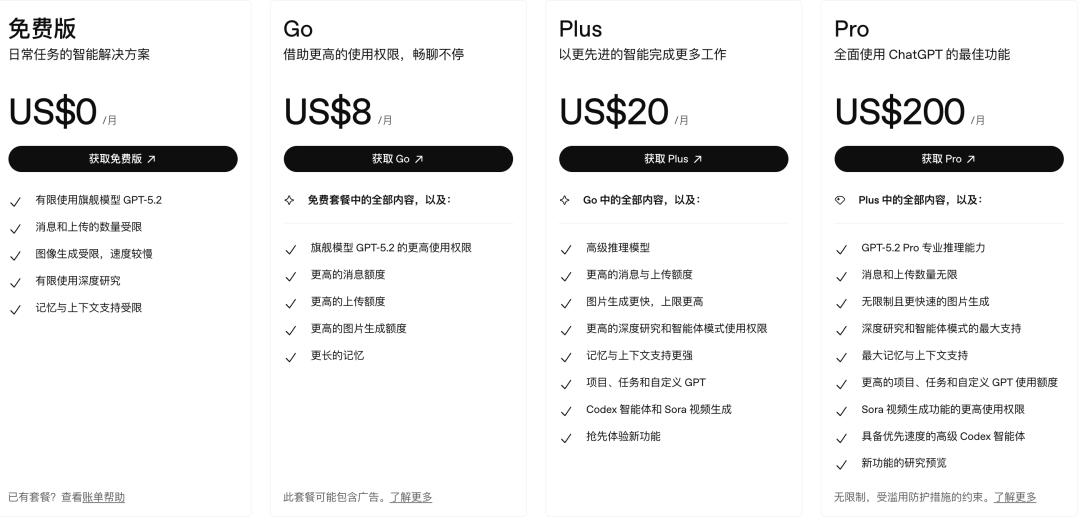
However, Go subscribers will also see ads, while Plus ($20/month) and Pro ($200/month) subscription tiers, as well as OpenAI enterprise customers, will not be affected by ads.
In addition to advertising, OpenAI CFO Sarah Friar stated in her latest report—
The article "A Business Model That Expands to Match the Value of Intelligence" also reveals OpenAI's subsequent business plans and reasons for investing in infrastructure.
Sarah Friar stated that the core principles of OpenAI are:
Business models should expand along with the value created by intelligence.
For example, when people needed stronger capabilities and higher reliability, OpenAI launched a consumer subscription service.
As AI gradually integrates into teams and workflows, a work scenario subscription model has been launched, and a pay-as-you-go billing model has been introduced to match costs with the actual amount of work completed.
At the same time, OpenAI has also built a platform business that allows developers and enterprises to embed intelligence into their own systems via APIs, with spending directly linked to the deliverables.
The advertising feature, which was launched last week, is designed to further assist users in making decisions in business and transactional scenarios.
In the future, apart from advertising revenue, OpenAI will continue to drive revenue growth through subscription tiers and pay-as-you-go APIs (linked to production workloads).
As intelligent agents penetrate fields such as scientific research, drug discovery, energy systems, and financial modeling, new distribution models will emerge, including licensing, IP-based collaborations, and outcome-based pricing.
Achieving this goal requires substantial investment in infrastructure.
Sarah Friar noted in the report that OpenAI's weekly active users (WAU) and daily active users (DAU) continue to reach record highs.
This growth benefits from a flywheel effect driven by computing power, cutting-edge research, products, and monetization:
Investment in computing power drives leaps in research and modeling capabilities; powerful models lead to better products and wider adoption, which in turn drives revenue growth, which in turn supports the next round of investment in computing power and innovation. This cycle is constantly reinforcing.
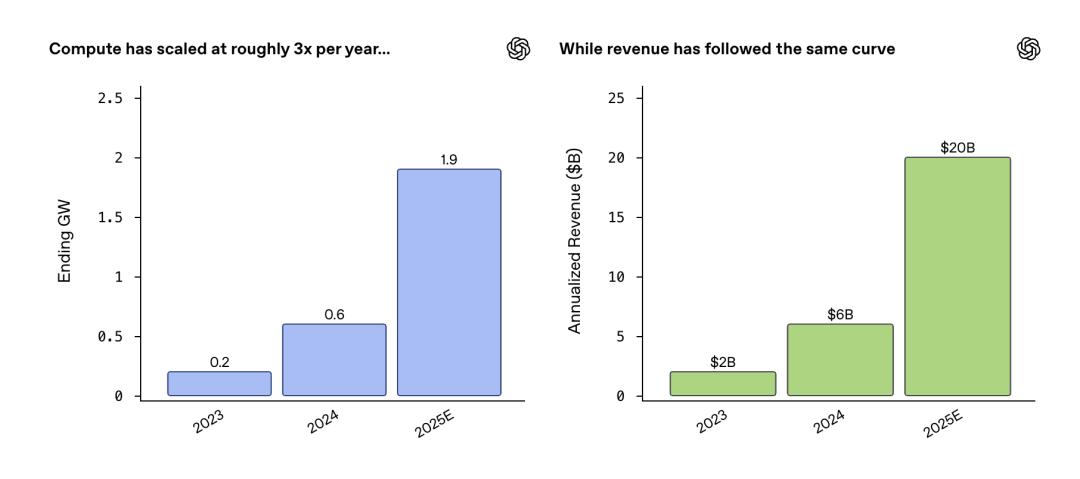
According to the data in the report, between 2023 and 2025, OpenAI's computing power increased 9.5 times, and its revenue also showed the same growth curve, with a year-on-year increase of three times, and a tenfold increase in three years.
The specific data is as follows:
2023: Computing power 0.2GW, ARR (Annualized Recurring Revenue) $2 billion
2024: 0.6GW computing power, $6 billion ARR
2025: 1.9GW of computing power, ARR exceeding $20 billion
All of this demonstrates that computing power is closely related to income growth .
Investing more computing power leads to increased revenue.
In the future, with further improvements in computing power, the growth rate of revenue will also accelerate.
From launching advertising features to expanding its business model, OpenAI's every step now seems somewhat rushed compared to Google's calm and composed approach.
The reality of "running out of money" forces it to make this choice, and advertising may only be the first step in solving its immediate crisis.
Reference Links
[1]https://www.ft.com/content/ec1656cd-e07b-48ed-92a8-26c7fe517899?utm_sf_post_ref=652820930&utm_sf_cserv_ref=10977192
[2]https://finance.yahoo.com/news/openai-is-the-2025-yahoo-finance-company-of-the-year-120054312.html?guccounter=1
[3]https://openai.com/index/a-business-that-scales-with-the-value-of-intelligence/
[4]https://www.tomshardware.com/tech-industry/big-tech/openai-could-reportedly-run-out-of-cash-by-mid-2027-nyt-analyst-paints-grim-picture-after-examining-companys-finances
This article is from the WeChat public account "Quantum Bit" , author: focusing on cutting-edge technology, published with authorization from 36Kr.