Technology itself is not wrong, but there are limits to its use.
Article by: Lawyer Liu Zhengyao
Article source: Wu Blockchain
Introduction
A recent report by The Paper has gone viral: "Man's account has a large amount of Bitcoin, police in two places intervene and file cases on different charges." Many people interpret this news as having a certain "deep-sea fishing" flavor in the crypto. In fact, even as a criminal defense lawyer who specializes in "speaking out" for criminal suspects and defendants, Attorney Liu attempts to interpret this event from a more comprehensive perspective, hoping to provide everyone with more perspectives for reference.
On the surface, this seems to be a series of events that appear to be full of dramatic tension, even absurd, after the cross-provincial intervention of the police in Hunan and Henan provinces, the seizure and liquidation of more than 80 million yuan worth of Bitcoin, and the change of the charges against him from "operating a casino" to "theft" and "embezzlement".
But at its core, this is a clash between technology, money, and law in a gray area. The truth not only concerns the fate of Li Dong (pseudonym), but also reflects the many legal dilemmas and real-world pain points in handling virtual currency cases.
01 Case Summary: From "Tech Elite" to "Prisoner"
Source: Li Dong (pseudonym), born in the 1980s, resides in Shenzhen and boasts an impressive resume: a former cybersecurity engineer at a well-known internet company, who later started his own internet company. To those around him, he is a technically astute elite; to his family, however, he may be seen as the pillar of the family, accumulating wealth through stock and cryptocurrency trading.
However, the gears of fate began to turn in September 2024.
(I) The First Shot Shot by Hunan Police
In May 2024, police in Zhangjiajie, Hunan Province, opened a case involving online gambling. In September of the same year, Li Dong was summoned on suspicion of "operating a casino." Police seized 103 bitcoins from his digital wallet and converted them into over 49.61 million yuan. Subsequently, the charge was changed to "illegally obtaining data from a computer information system," and Li Dong was released on bail pending trial, temporarily gaining his freedom.
(II) The "Baton" of Henan Police
Just four days after being released on bail, Li Dong's freedom came to an abrupt end. The Changge City Public Security Bureau in Henan Province traveled to Shenzhen to take him away. The initial charge remained "operating a gambling den," based on reports from local gamblers about the "XX Sports" gambling website, which Li Dong was suspected of having connections to.
However, as the police investigation deepened, the charges underwent another major change. In July 2025, the Changge City Procuratorate filed a public prosecution against Li Dong on charges of "theft" and "infringement of citizens' personal information."
(III) "Hacker" or "Market Maker"?
The indictment by the Changge City Procuratorate in Henan Province has revealed another side of the Li Dong case: Li Dong is accused of exploiting technical loopholes to "double-cross" the overseas gambling website "XX Sports".
The prosecution alleged that in 2020, Li Dong exploited a vulnerability in the "XX Sports" server to steal over 1.84 million pieces of citizens' personal information (including personal information of residents of Changge City). Even more alarmingly, he altered the bank card numbers of agent accounts with high commission rates and numerous downlines on the "XX Sports" platform, replacing them with bank card numbers under his control. Ultimately, he diverted over 35.5 million yuan in commissions that "XX Sports" should have paid to gambling website agents to his own bank accounts, of which 29.05 million yuan was held by Li Dong through the purchase of cryptocurrencies such as Bitcoin.
(iv) Disposal of substantial assets
In addition to the nearly 50 million yuan seized by Zhangjiajie police, Changge police also confiscated approximately 80 bitcoins from Li Dong, worth over 40 million yuan. Thus, bitcoins worth over 80 million yuan in Li Dong's account are now entirely under police control. The case went to trial in Changge City Court in January 2026, with the defense attorney arguing for acquittal. A verdict has not yet been announced.
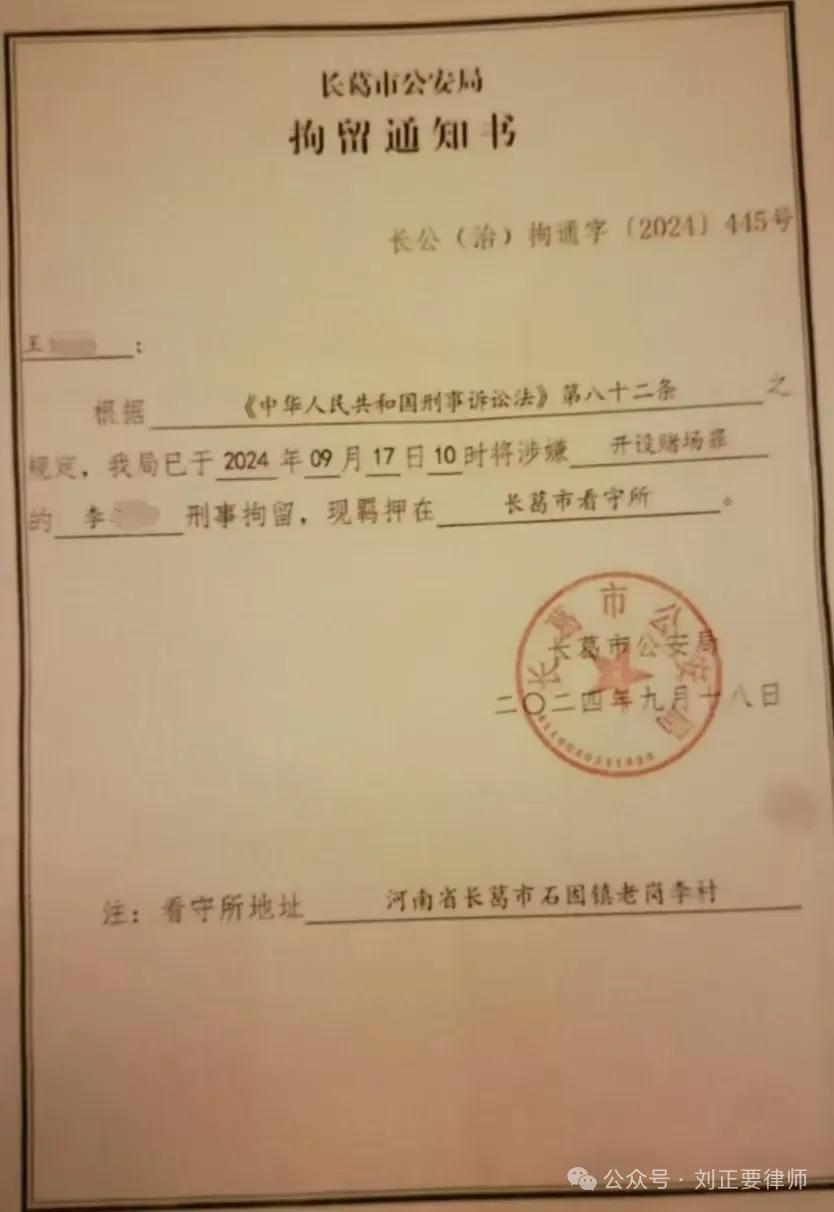
(Image source: The Paper, please contact us for removal if it infringes on your rights)
02 The core issues that everyone cares about
This case has sparked heated online discussions not only because of the huge amount of money involved, but also because it contains too many details that have confused and unsettled the public—especially those in the crypto and legal circles.
Attorney Liu must emphasize that the following information comes from news media reports and cannot be guaranteed to conform to legal facts (for example, how exactly is the evidence presented in the case file?). Apart from the judicial authorities handling the case, Li Dong himself, and his defense lawyer, no one else, including Li Dong's family, has a comprehensive understanding of the case. Therefore, our analysis and judgment here are merely legal education analyses based on publicly available information (which may not all be accurate), and nothing more, and are not intended for any other purpose.
After analyzing online public opinion, the core issues that people are most concerned about mainly focus on the following points:
(I) "Double Penalties for One Incident" and Jurisdiction Disputes
Why was Henan police able to intervene again after Hunan police had already filed a case and seized a huge amount of assets? Is there a risk that the same alleged crime could be evaluated twice by police in both locations? Does this comply with the jurisdictional provisions of the Criminal Procedure Law?
(ii) Does "double-crossing" constitute theft?
If Li Dong really used technical means to steal money from the gambling website, would this "double-crossing" be considered a crime? Since the funds from gambling websites are ill-gotten gains, is theft of contraband protected by criminal law?
(iii) Procedural Justice in Asset Disposal
Is it legal for the police to directly convert the seized Bitcoin into cash before the case has even been adjudicated? Does the family's claim of "profit-driven enforcement" hold true? After all, tens of millions of yuan is undoubtedly a huge sum for local finances.
(iv) Was there any torture or forced confession?
According to Li Dong's lawyer, Li Dong's previous confessions were obtained by police officers through threats against his pregnant wife, and therefore lacked legal validity. Therefore, the lawyer requested that these confessions be excluded as illegal evidence.
(v) Issues with electronic evidence
News reports stated that lawyer Li Dong's viewpoint was that after the police in Changge City, Henan Province intervened, the portable hard drive containing the information in question was not sealed, and the electronic data in question showed signs of being modified multiple times; much of the relevant personal information of citizens was not complete personal information, and Li Dong did not profit from it.

03 Attorney Liu's Interpretation of the Core Issues
Regarding the aforementioned complex and sensitive legal issues, Liu Zhengyao, a criminal lawyer specializing in crypto, offers the following perspectives:
(a) Regarding jurisdiction: It is not always the case that whoever files the case first has jurisdiction.
root:
"In this case, the Zhangjiajie police in Hunan Province had already opened an investigation in May 2024 and had taken coercive measures against Li Dong and seized his property. Theoretically, if the Changge police in Henan Province were investigating the same criminal facts , then the Zhangjiajie police should have unified jurisdiction or consolidated the cases, rather than opening a case in a different location."
However, as mentioned earlier, we are not parties involved in the case or lawyers. Whether the cases filed by the public security organs in Zhangjiajie and Changge are based on the same facts is something that, at least as a criminal lawyer, I dare not make a hasty judgment without seeing the case files.
However, setting aside the rights and wrongs of the Li Dong case, the reason why many criminal cases involve "jurisdiction disputes" is indeed often related to the property involved.
(ii) Regarding “double-crossing”: Is stealing money from a gambling website considered theft?
Before discussing this topic, we must first understand the background of the "victim" in this case – XX Sports (the specific name can be found in the report by The Paper).
Online, you may often see news about "XX Sports" sponsoring top European football teams (such as Real Madrid and Aston Villa). However, beneath this glamorous "sports sponsorship" facade lies a black market industry targeting Chinese users. Public information shows that XX Sports is a typical large-scale overseas online gambling platform that uses sporting events for illegal betting, and is even involved in money laundering and capital flight. Because its funds are mostly illegally transferred through cryptocurrencies (such as USDT and BTC), and it operates as an illegal entity (running a casino) in mainland China, it is seen as a "fat sheep" to be slaughtered by hackers.
So, if Li Dong really did use technical means to take money from the illegal giant "XX Sports", would this "double-crossing" behavior be considered a crime?
“In the past, people’s basic sense of justice believed that ‘stealing money from a thief is not stealing,’ and there was even a sense of chivalry in ‘robbing the rich to help the poor.’ But this logic does not work in modern criminal law.”
Current judicial theory and practice tend to hold that possession itself is protected by law. Regardless of whether the victim is a legitimate company or an illegal gambling website, as long as you disrupt the other party's possession of property and transfer it to yourself without any legal basis, you may meet the elements of theft.
The legal logic is more likely this: the ill-gotten gains from gambling websites should be confiscated by the state according to law, not "embezzled" by individuals through hacking. To illustrate further: "You can report drug dealers and have the police seize their drug money; but you can't break into their homes and steal it to spend. Once you do that, you go from being a 'whistleblower' to a 'thief.' 'Eating each other' is still illegal, and just because the victim is a 'dragon' doesn't mean the law allows you to play the 'Robin Hood' and secretly divide the spoils."
(III) Bitcoin “preliminary handling”: Is it compliant to sell coins before conviction and sentencing?
This is currently the most pressing issue raised by families, lawyers, and the public in cryptocurrency cases: "The person hasn't been sentenced yet, but the cryptocurrency has already been sold." Is this practice legal? Is there any legal basis for it?
Attorney Liu has published extensively on the judicial handling of cryptocurrency cases. My view is that it is not illegal or irregular for the public security authorities to dispose of and liquidate seized cryptocurrency before a court judgment. The basis for this is as follows:
We will not elaborate further on Article 236 of the "Regulations on Procedures for Handling Criminal Cases by Public Security Organs", Article 21 of the "Several Provisions on the Management of Case-Related Property by Public Security Organs", and Article 7 of the "Opinions on Further Regulating the Handling of Case-Related Property in Criminal Proceedings", etc. Interested readers can consult these documents on their own.
However, it is important to note that if the public security authorities want to take action first, they must obtain the suspect's consent, and this must be genuine consent, not "forced consent."
Another issue that needs attention is the disposal price. Li Dong was placed under investigation by the Zhangjiajie police in Hunan in May 2024 and brought to justice in September. Let's assume that the local public security bureau carried out the judicial disposal on November 11, 2024 (this is just a hypothetical date) and converted 103 Bitcoins into RMB of about 49.61 million. Is this price reasonable?
On November 11, 2024, we saw on a cryptocurrency website that the price of Bitcoin was 577,717.15 yuan (RMB). Therefore, the value of 103 Bitcoins would be 59,504,866.45 yuan. The disposal price entrusted by the Zhangjiajie Public Security Bureau to the disposal agency for the return of funds was 49.61 million yuan (the return rate was 83.38%). In current judicial disposal practices, opinions may differ on whether this handling fee is reasonable and compliant.
(Screenshot source: CoinPrice.com)
(iv) Issues concerning torture to extract confessions and electronic evidence
The biggest challenge in cases of forced confessions is obtaining evidence. Without proof that investigators used torture, verbal claims from the client, lawyer, or family are unlikely to be accepted by the court. While lawyers can request access to the audio and video recordings of police interrogations, in practice, situations may arise such as malfunctioning recording equipment or torture occurring outside the interrogation location (this is not to say that such situations occurred in Li Dong's case), making it legally impossible to prove torture. Therefore, it is extremely difficult for defense lawyers to apply for exclusion of charges.
Using electronic evidence in defense is a problem that defenses face in currency-related criminal cases, and indeed in all cybercrime cases. Based on the criminal defense cases I've been involved in, almost every case has some procedural or substantive flaws in the electronic evidence. However, in terms of effectiveness, the prosecution's common approach is to have the investigating authorities provide supplementary "statements," making it difficult to achieve a revolutionary defense outcome.
04 Conclusion: Holding money is not a crime, but the "source" of the currency matters.
Li Dong's case is still ongoing, and the ownership of his 80 million yuan in "digital wealth" remains a mystery. However, this case serves as a stark warning to everyone in the crypto and technology sectors.
At the end of the article, Attorney Liu would like to clarify a very important concept, which is also a misconception among many readers: holding a large amount of virtual currency is not illegal in itself.
Under my country's current legal framework, while the trading and speculation of virtual currencies are prohibited, holding digital assets such as Bitcoin, Ethereum, and Tether at the individual level is recognized as a "virtual commodity" and protected by law. As long as you purchased them through legitimate labor income or obtained them through early mining, owning one Bitcoin or 10,000 Bitcoins is legally the same as owning 10,000 Bitcoins; both are your property.
The real red line is—"Where did your cryptocurrency come from?"
(i) If you use technical means to attack other people's systems for profit, you may be suspected of theft or illegally obtaining computer information system data ;
(ii) If you are helping fraud gangs or gambling gangs to launder money and earn "U", then you may be guilty of aiding and abetting fraud or concealing or disguising the proceeds of crime .
(iii) If you set up a platform to attract people to speculate on cryptocurrencies, you may be suspected of the crimes of operating a casino, organizing and leading pyramid schemes, or illegal business operations .
The tragedy of Li Dong's case (regardless of his ultimate guilt or innocence) lies in the fact that his wealth became entangled with the gray areas of "gambling websites" and "technological vulnerabilities." Technology itself is not guilty, but its use has boundaries. For the vast majority of technical personnel and investors, remember: do not attempt to challenge the bottom line of the law, and do not fantasize about "getting a share" or "double-crossing" in the gray market. In today's era of big data and penetrating supervision, any illegal means of acquiring wealth may ultimately result in a tragedy of "doing all the work for others."
May the Li Dong case receive a fair verdict, and may every reader's path to wealth proceed steadily in the sunlight.