How can a complete beginner earn MRR (Monthly Recurring Revenue) through app development? Recently, a blogger (Ernesto Lopez) shared a practical guide based on his own experience on how to develop and promote an app from scratch to achieve high MRR. Details are as follows.
Article author and translator: Ernesto Lopez, Felix
Article source: PANews
How can a complete beginner earn MRR (Monthly Recurring Revenue) through app development? Recently, a blogger (Ernesto Lopez) shared a practical guide based on his own experience on how to develop and promote an app from scratch to achieve high MRR. Details are as follows.
My first app earned $20,000 in just 30 days after launch. What I'm about to share might change your life. The reason I entered the B2C app space is that apps are the only business model that can truly generate passive income.
Build once, sell forever, no phone calls or annoying meetings, and it's a subscription-based service. More importantly, it feels really cool to own an app.
Over the next five years, mobile applications will create more millionaires than e-commerce. However, opportunities are limited, and only a very small minority will succeed. How to get started developing a B2C application? It's actually not that difficult.
My first app, "Snapout," earned me $20,000 in 30 days with just two viral videos, despite having zero experience.
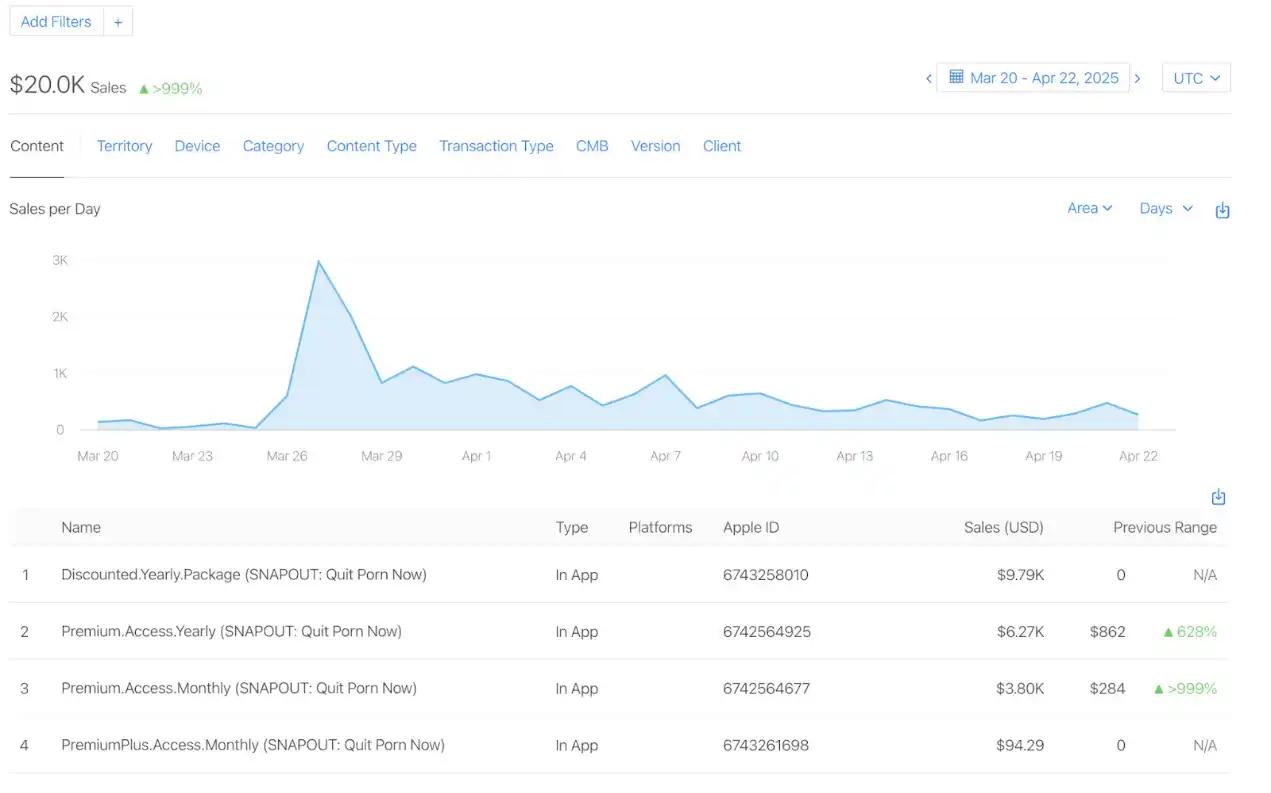
Was it luck? Of course not, it was the result of a series of careful planning. You can achieve similar results if you follow these steps.
1. Validate your app idea (don't waste time)
Most people fail before they even begin. Creativity is a double-edged sword; everyone wants to develop their "dream app." But the most crucial step before starting to build an app is choosing a market segment and validating your app idea. Make sure it's something consumers truly want.
The following is the process of developing 10 applications on my own:
1. Identify Pain Points: Find the problems that people struggle with every day, and an app that can solve them. Here are some proven app sub-segments for you to choose from:
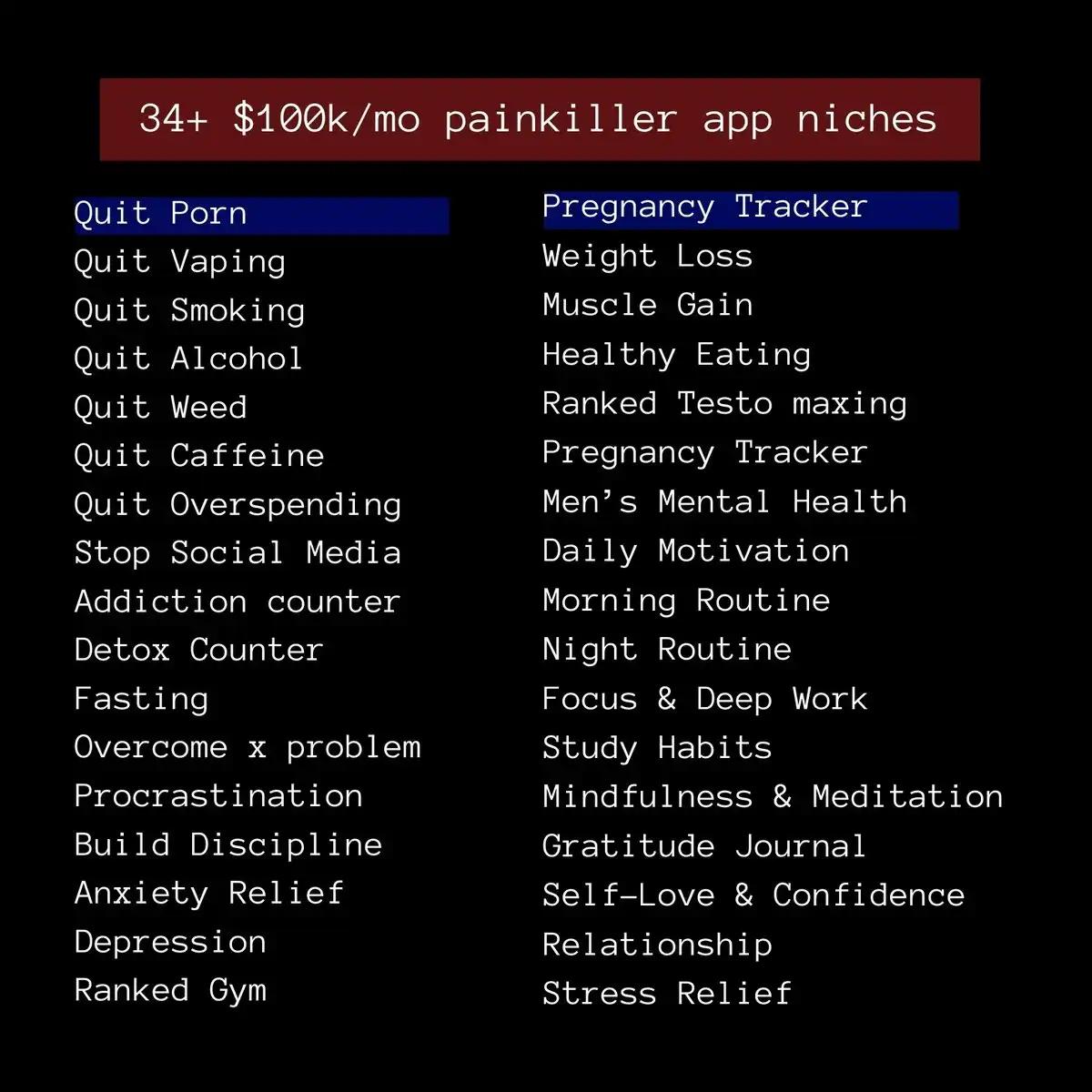
(34 niche application areas with over $100,000 in revenue over 34 months: quitting pornography, quitting e-cigarettes, quitting smoking, quitting alcohol, quitting marijuana, quitting caffeine, quitting excessive consumption, quitting social media, withdrawal counters, detox counters, fasting, overcoming sexual problems, overcoming procrastination, cultivating self-discipline, relieving anxiety, depression, gym rankings, pregnancy tracking, weight loss, muscle gain, healthy eating, maximizing testosterone, pregnancy tracking, men's mental health, daily motivation, morning habits, nighttime habits, focus and deep work, study habits, mindfulness and meditation, gratitude journaling, self-love and self-confidence, interpersonal relationships, stress relief)
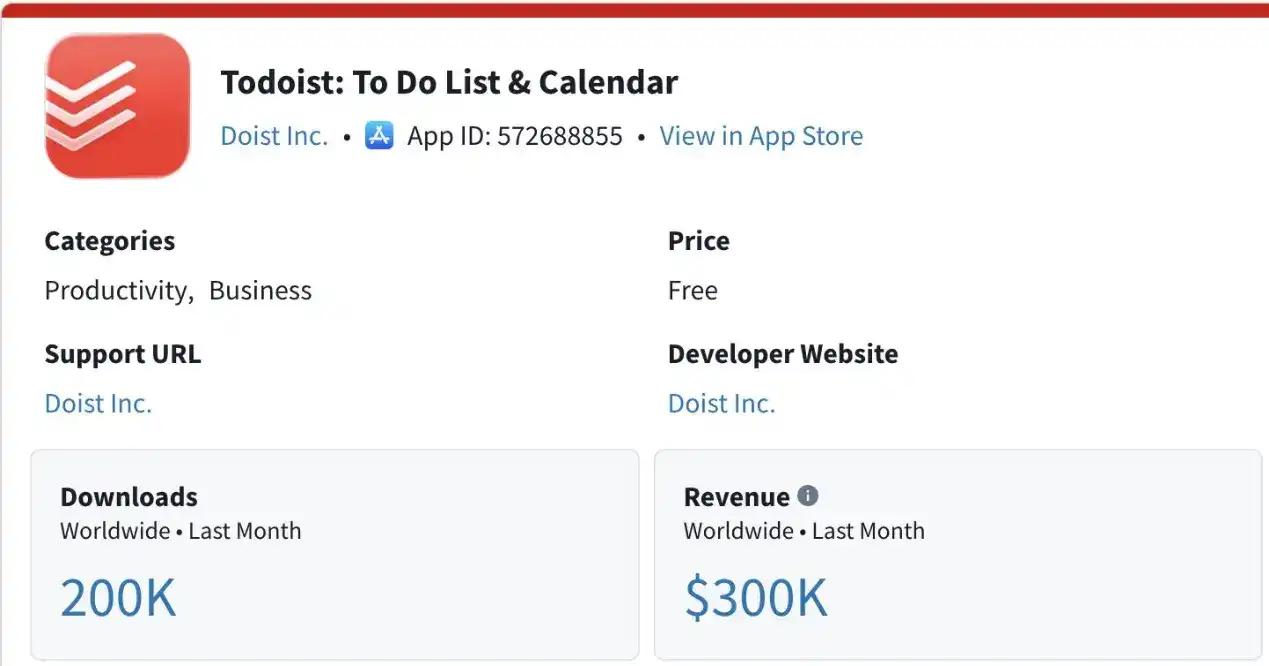
2. Check the app store: Make sure someone has already paid for this app.
If some apps are generating over $10,000 in monthly revenue, that's a good sign.
3. Download the apps of your top competitors: You need to carefully study the strategies of your competitors (those who are making the most money).
After downloading the app, take screenshots of the tutorial and the core app loop. Examine every detail carefully.
4. Search on TikTok/Instagram: figure out their main growth strategies.
This can generally be summarized into the following four points:
- Influencer Marketing
- Faceless Slideshows (Note: A content format that combines images, text, audio, and transitions)
- User-generated content (UGC) creators
- Paid advertising
Once you see competitors making money and creators consistently producing related content, your idea has been validated and you can start building it.
2. Building an application + tool stack
Developing an app in 2026 has never been easier. The key is rapid building.
The first version of the MVP (Minimum Viable Product) for all my applications is usually ugly. Sometimes, a few weeks is equivalent to decades; sometimes, decades are equivalent to a few weeks. For an application, it's about doing decades' worth of work in a few weeks.
I typically use the following tool stack to build applications within 3-7 days:
- Rork and Cursor → Writing code with AI
- ChatGPT → Write prompt words
- Superwall → Create a paywall
- Firebase → Database (not always required)
- Pinterest and Dribbble → Design Inspiration
- Xcode → Submit App
The process is as follows:
1. Find inspiration from Pinterest, Dribbble, and competitors.
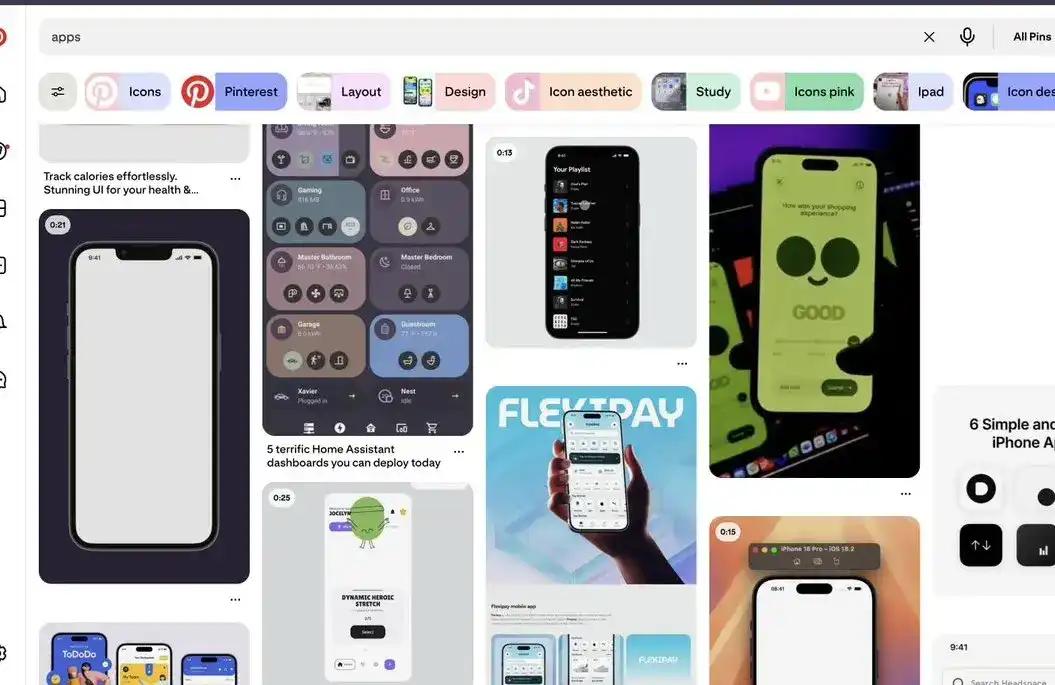
Once you find an application style you like, save the image and send it to ChatGPT along with the following tips:
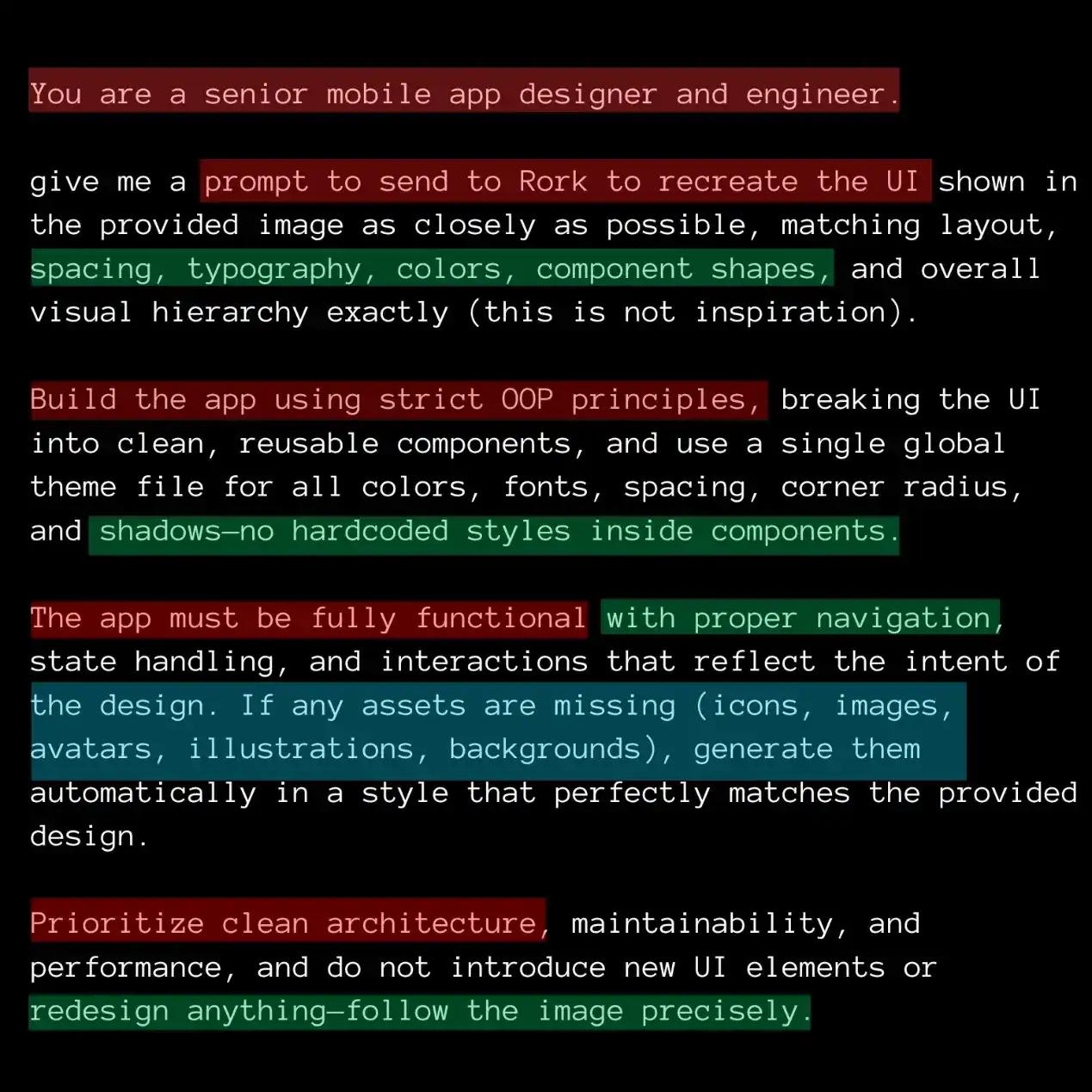
It will generate a prompt that you can send to Rork or Cursor so they can turn your design into a usable application.
Important note: Please be sure to add reference images to Rork or Cursor, along with tips, for best results.
2. Learn from new user onboarding and pricing strategies
Once you have a satisfactory app design and style, learn from the new user onboarding process of your main competitors.
New user onboarding accounts for 70% of an app's success. It's the key to converting downloads into paying users. If your new user onboarding is poor, no one will pay for your app.
If their app generates more than $10,000 in revenue per month, it means their onboarding of new users has proven effective.
The main purpose of new user onboarding is to remind users why they downloaded the application in the first place, to make them realize that they have a problem, and that your application is the solution.
The following is the best user onboarding structure:
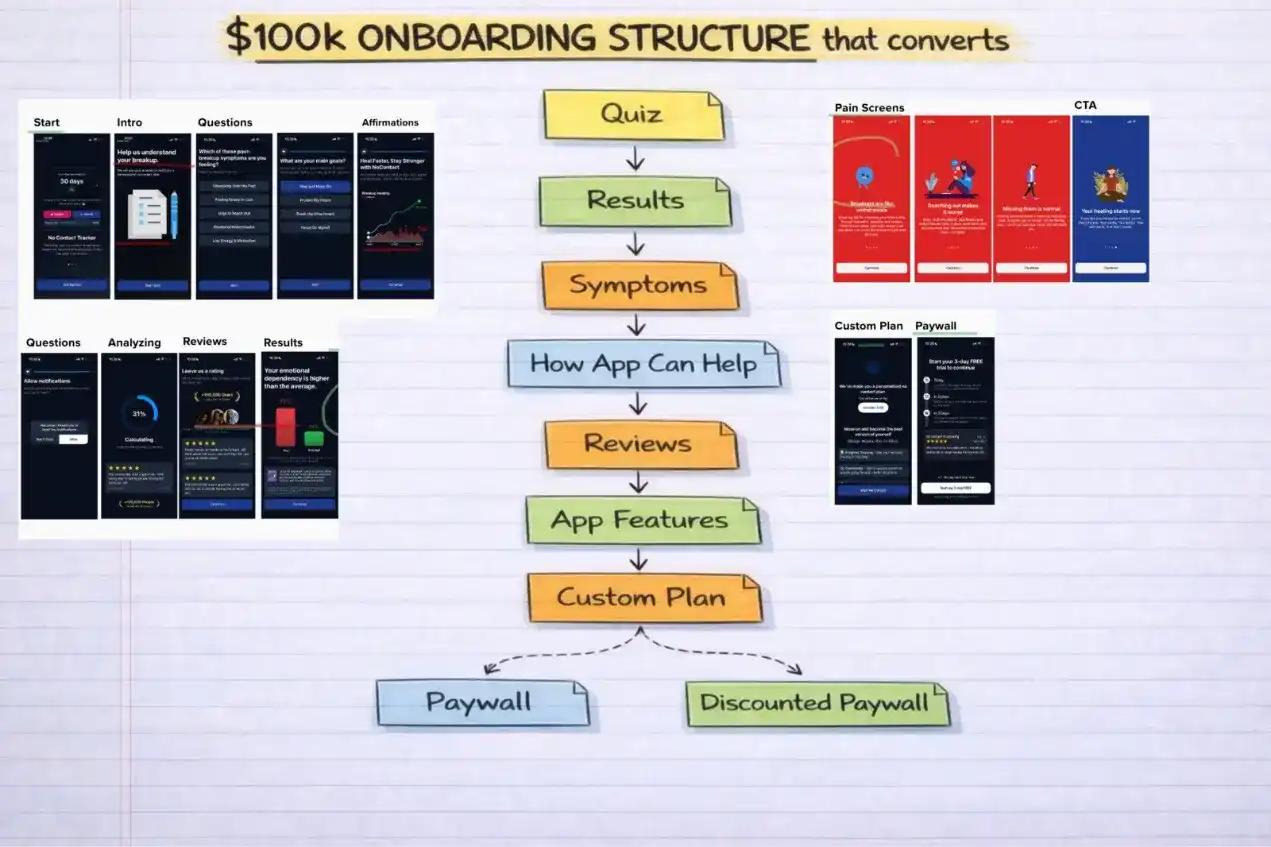
The "borrowing from user guidance" mentioned here does not mean completely copying it, but rather borrowing the structure they follow.
You can design user onboarding according to your own style, but of course, the content within the app must also be unique.
The key is that you build your user onboarding based on the validated data that your competitors have already collected.
After the user onboarding is complete, add an unskippable paywall at the end.
Forcing users to pay upfront or start a free trial is a proven and effective way to maximize revenue.
Don't be afraid to charge; use the same pricing and offers as your competitors. You can use Superwall or Revenue Cat to build a paywall. I personally use Superwall.
3. Publish the application
To publish your app, you'll first need an Apple Developer License, which costs $99 per year. Apply as soon as possible; the review process typically takes 3-5 days.
1. App Store settings (basic requirements)
You only need the following:
- Application name (must be clear and concise)
- A striking subtitle
- 3-5 screenshots
- Concise description
Subtitle + The first screenshot determines everything.
- Counterexample: "AI-enabled productivity experience"
- Positive example: "Block distractions and maintain focus for longer periods."
Explain the application's functions directly, without using fancy fancy terms.
2. Screenshots that drive conversions
Screenshots are crucial for conversion; they should be clear, concise, and to the point. Use large fonts, show only one concept per screen, and keep the interface simple. Like Cal AI (an app that earns $3.6 million a month):
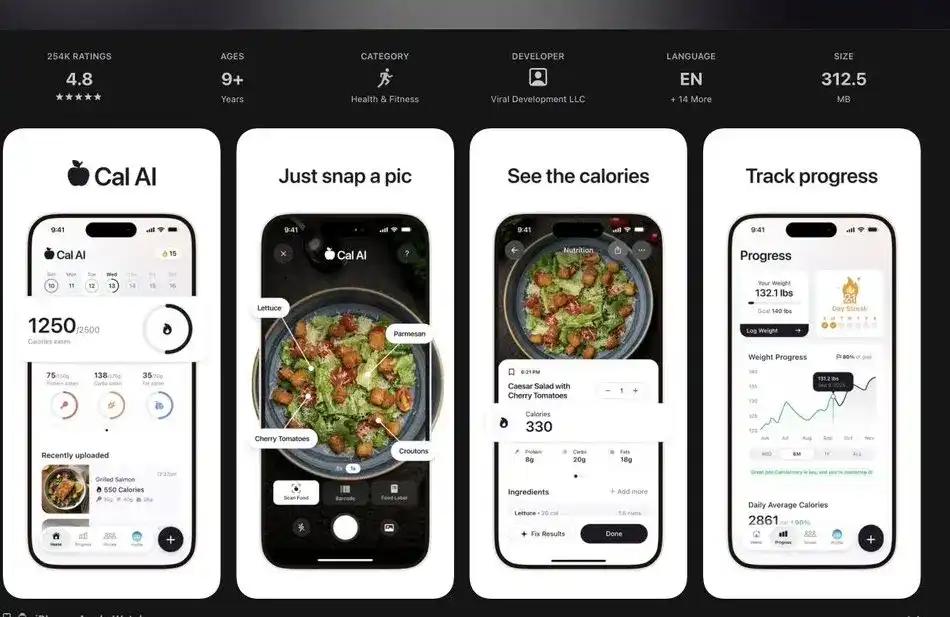
Ugly but clear screenshots > Beautiful but confusing screenshots.
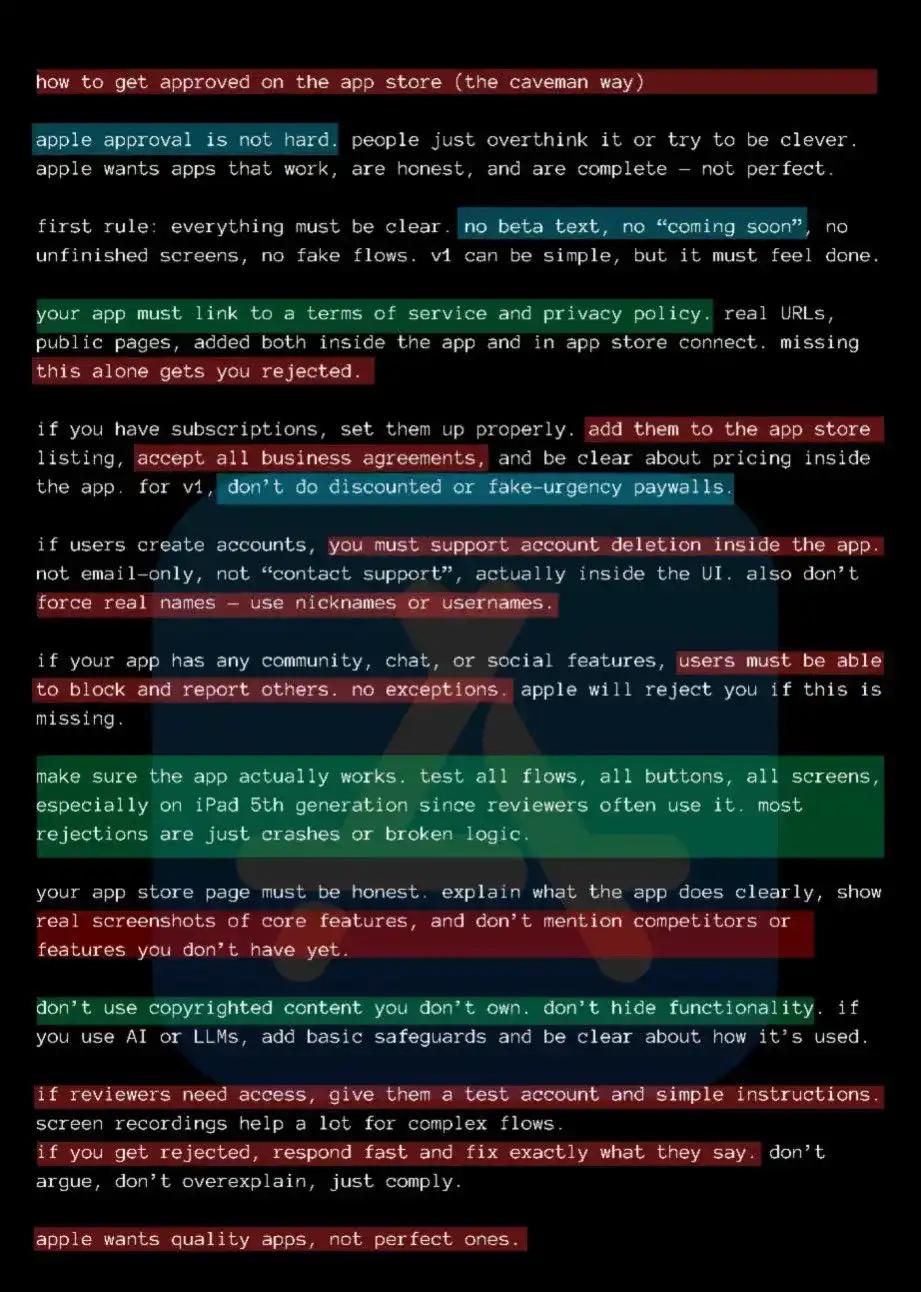
3. How to avoid being rejected by the App Store
The App Store is notorious for rejecting apps, so here's a guide to avoid these pitfalls:
4. Promote application
Once you publish your "creative code" to the App Store, you should start making money.
Attention brings wealth, so you need to be good at marketing. If you can master this, you'll one day become rich through your app.
Here are 5 channels you can use to attract users' attention to your app:
1. User-generated content (UGC) (requires payment)
UGC stands for User Generated Content. It involves hiring creators to create new TikTok/Instagram accounts specifically for your app and post videos. Typically, they post 30-60 videos per month. These are excellent for generating ad creatives, and if one of your creators finds a viral content pattern, you can have other creators replicate that pattern. Reaching 100 million views within 30 days is common.
Individuals typically pay UGC creators $15 per video, with additional rewards if the video goes viral.
- 100,000 views = $150
- 250,000 views = $300
- 500,000 views = $600
- 1 million views = $800
A single video can earn you up to $850, but 1 million views can bring you far more than that.
Where can I find UGC creators? There are two ways:
- Find creators through platforms or agencies like Sideshift
- Flood TikTok with posts, then manually email the creator.
I personally don't recommend using an agency. My personal approach is to hire a relative who's addicted to TikTok, have them flood the feed daily, and then send the creator 100 private messages and emails.
Make sure you optimize your recommendation page (account nurturing) to only display relevant creators.
Practical experience: Always sign a contract and send them at least one text message every day.
2. Online influencers (payment required)
This is one of my favorite methods. Because a good influencer can make your app go viral quickly. I hired an influencer at $1 per thousand impressions. That is, 1000 views = $1.
This influencer went viral quickly after posting her first video, generating $20,000 in revenue for my first app. All of this happened within 30 days.
You can find influencers using the same methods discussed in the "User Generated Content" (UGC) section above.
If you can close a deal at $1 per thousand impressions, you lose nothing. Because if they don't perform as expected, you don't lose any money. But if they perform exceptionally well, you gain a lot of app sales.
Practical experience: Set the cost per thousand impressions cap to $1,000.
3. Anonymous content (free)
This is the most underrated method, and most people don't use it. These anonymous accounts typically take the following forms:
- Slideshow Video
- Screen recording
- screen text
- Footage clips + subtitles
- With an eye-catching app demo
Using these accounts, you can post content 3-5 times a day, and it's free.
If a certain format becomes popular, you can immediately double down on the investment. The same eye-catching style, the same structure, but different text. That's the secret to anonymous accounts getting millions of views.
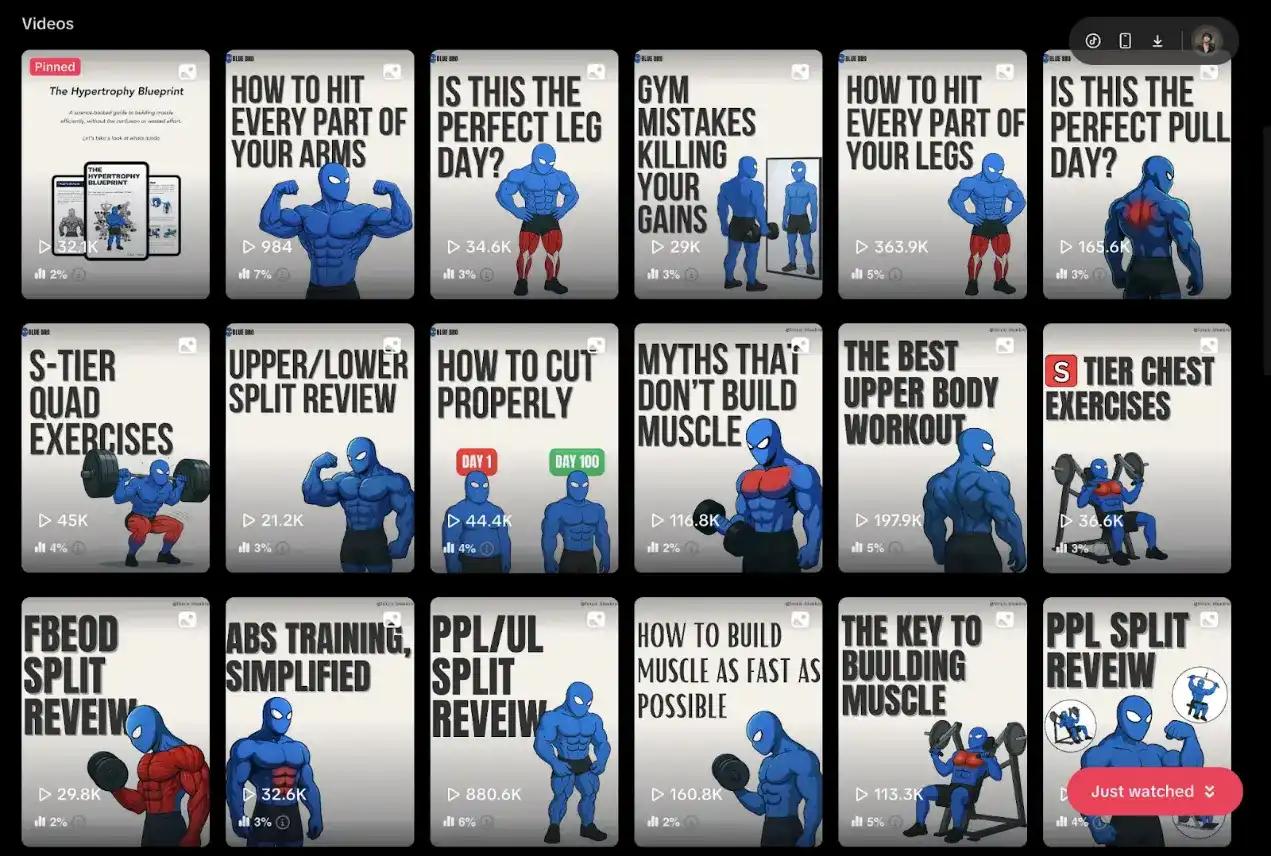
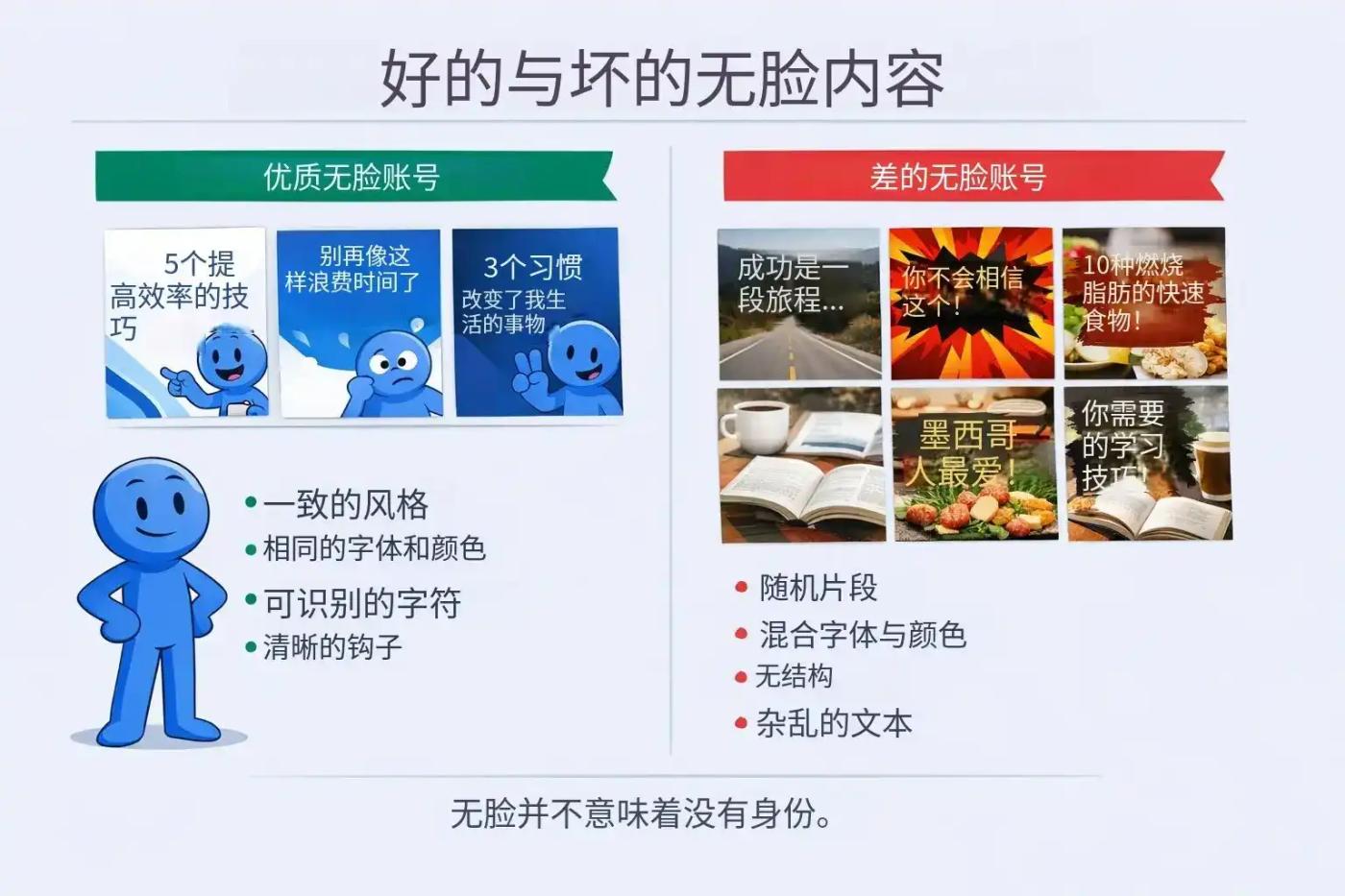
The most important advice is to maintain consistency. Even with anonymous accounts, build your brand. If your anonymous account looks like a Pinterest news feed, you're doomed. Instead, maintain a consistent style. Sometimes, it's even helpful to use a single, recurring character.
For example, the blue character in the image below has over 50 million views, all generated using CHATGPT.
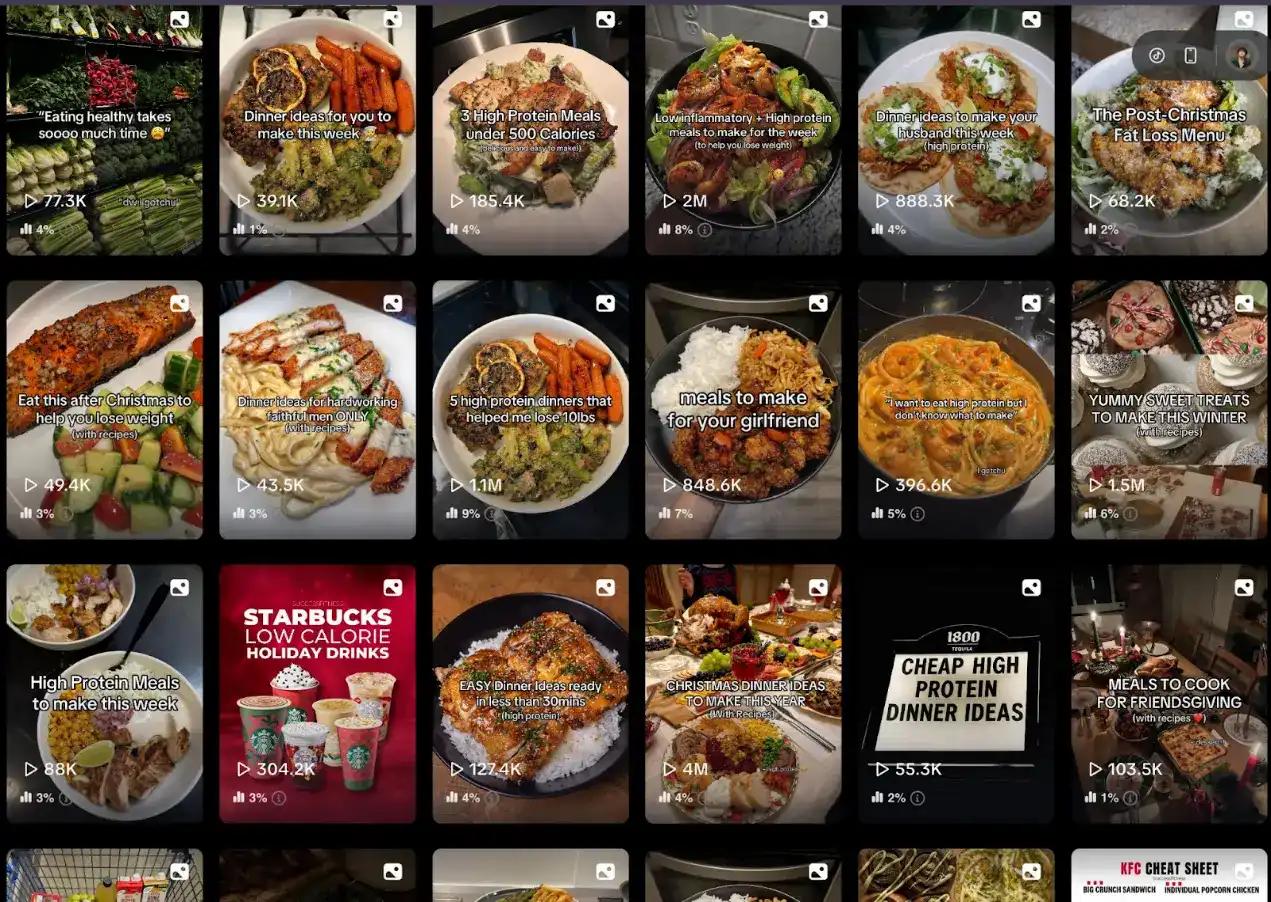
Here is another example of an account that uses a slideshow format and has millions of views:
Here is a bad example of an anonymous account:
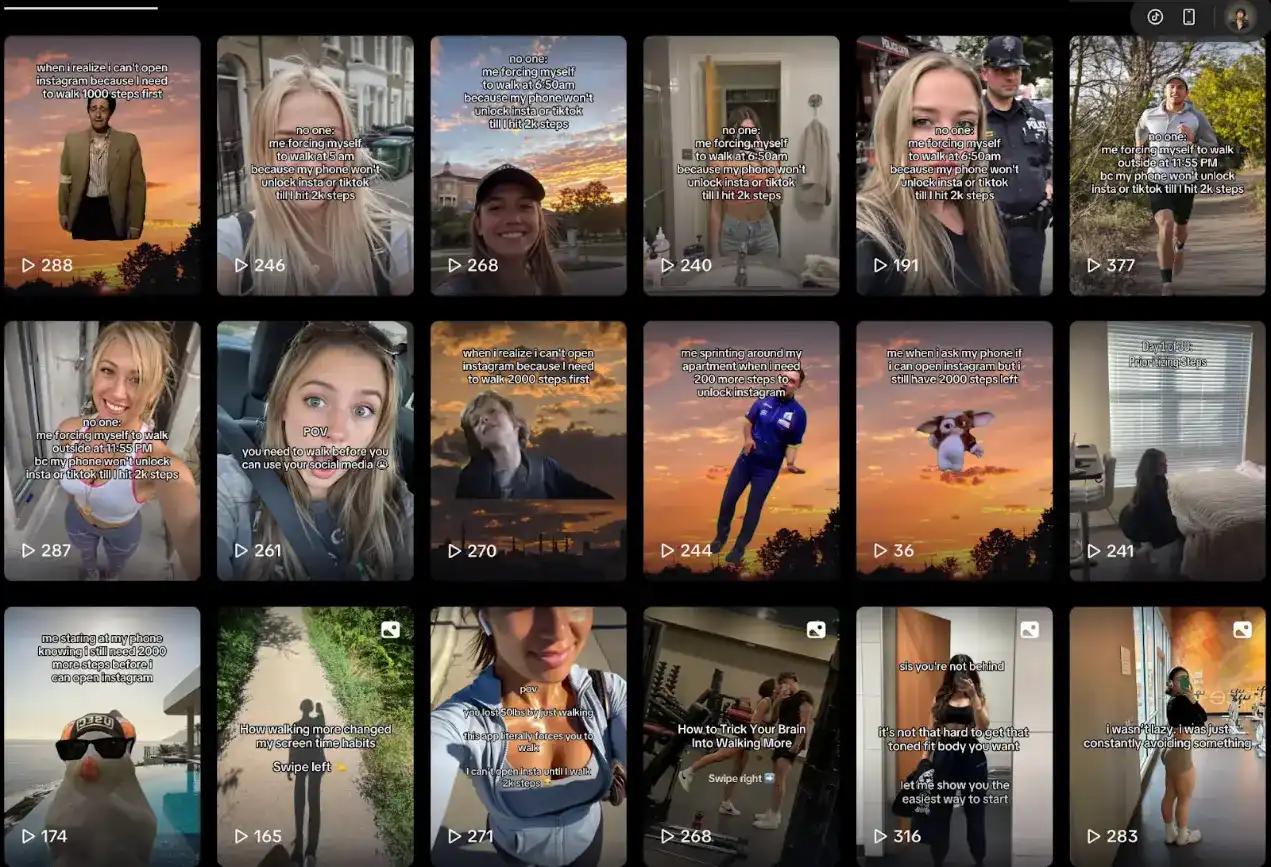
It looks very casual and lacks consistency.
Summarize:
4. The founder appears in the video (free of charge).
If you have no experience in content creation, this model is unlikely to succeed. However, we still encourage everyone to give it a try.
A prime example of a founder-driven content model is Cormac, whose Oasis Health app found a viral formula and garnered millions of views. Its revenue last month exceeded $100,000.
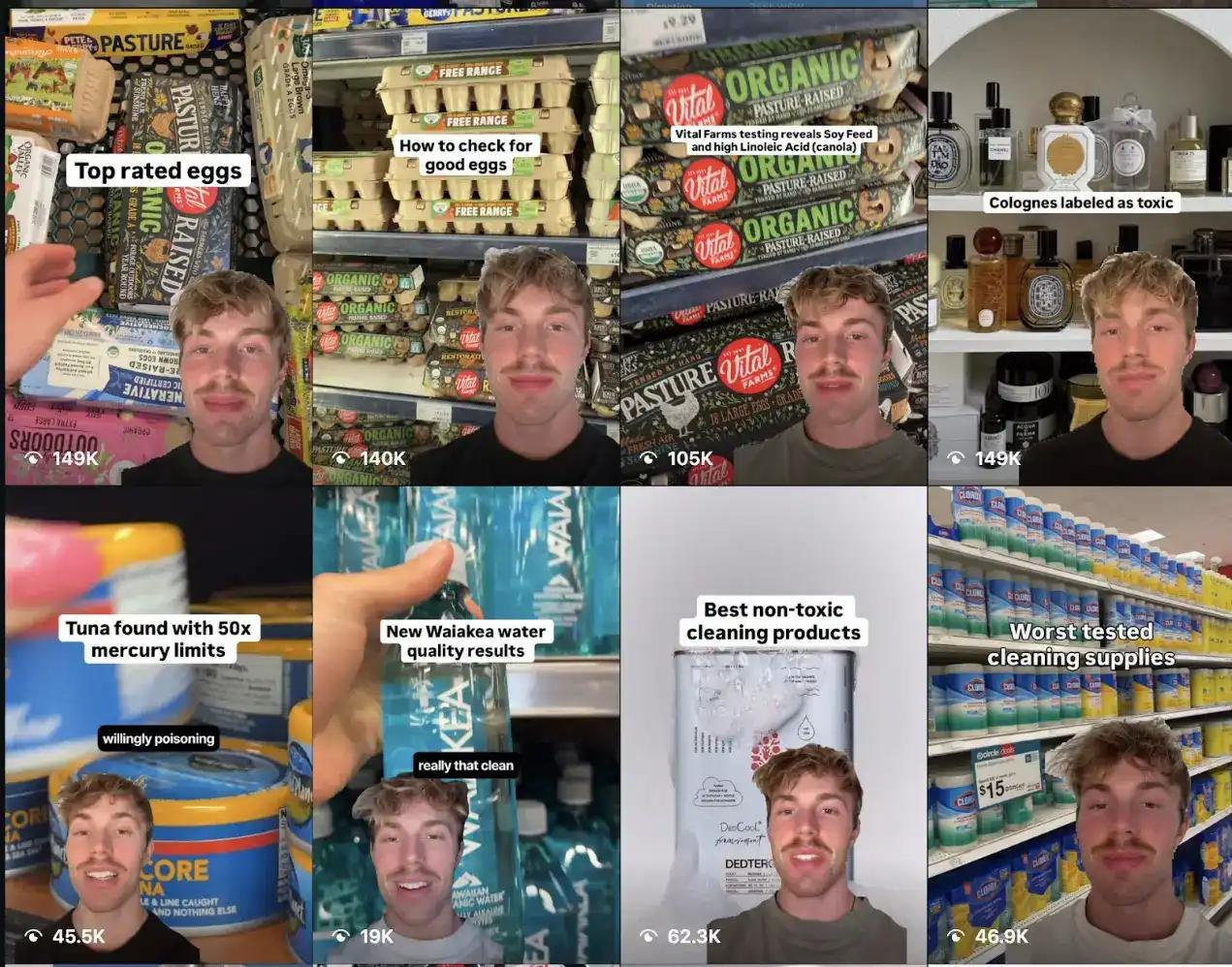
I recently tried it myself, borrowing a content model that had 200,000 views, and my video reached 549,000 views. Even if you have money to invest in influencers, you should still create founder-driven content. This helps you cultivate a keen sense for viral marketing. Then you can pass that keenness on to your creators and operate like a true founder.
5. Paid advertising (requires payment)
Paid advertising is severely undervalued, but in my opinion, it's the best growth channel because of its scalability and predictability. Once you find the right cost-per-acquisition (CPA) and have some successful creative ideas, you can truly scale indefinitely.
Summarize
Developing an app is like developing digital real estate. Treat the app as the property and the users as the tenants. Once you understand this formula, you can replicate it infinitely.
Recurring revenue is the only true business model, and applications are the perfect way to achieve this goal.