


The Russian Federal Service for Supervision of Media, Information Technology and Mass Communications (Roskomnadzor) appears to be stepping up stricter controls targeting technology-based crypto media outlets.
Users in many parts of Russia have reported experiencing connection issues or interruptions when accessing several crypto news websites, without any official explanation.
To check XEM these issues were a common occurrence, we tried accessing numerous crypto-related websites from different locations and thoroughly examined the network connections.
Many websites are inaccessible when using the local Wi-Fi network. However, these websites work normally when accessed through other connections.
Therefore, the cause was not a website crash or server error. The test results indicated that the problem was due to network-level intervention measures.
Blocking patterns reveal enforcement at the Internet service provider (ISP) level.
At the same time, regulations on crypto in Russia are also undergoing changes, such as easing restrictions on individual crypto transactions.
In this context, tests from the Outset PR analytics team show that access to some international crypto media sites is being blocked at the network level.
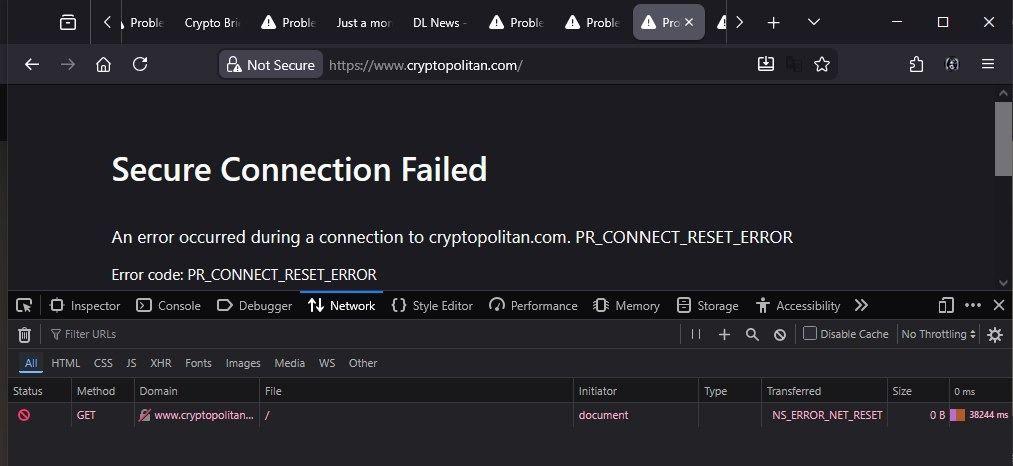
Before conducting the analysis, we selected a representative group of financial and crypto information channels to reflect the diversity in language, geographic location, and editorial content.
This list includes Benzinga, Coinness, FastBull, FXEmpire, CoinGeek, Criptonoticias, Cointelegraph, CoinEdition, The Coin Republic, AMBCrypto, and Nada News. However, this is not a complete list.
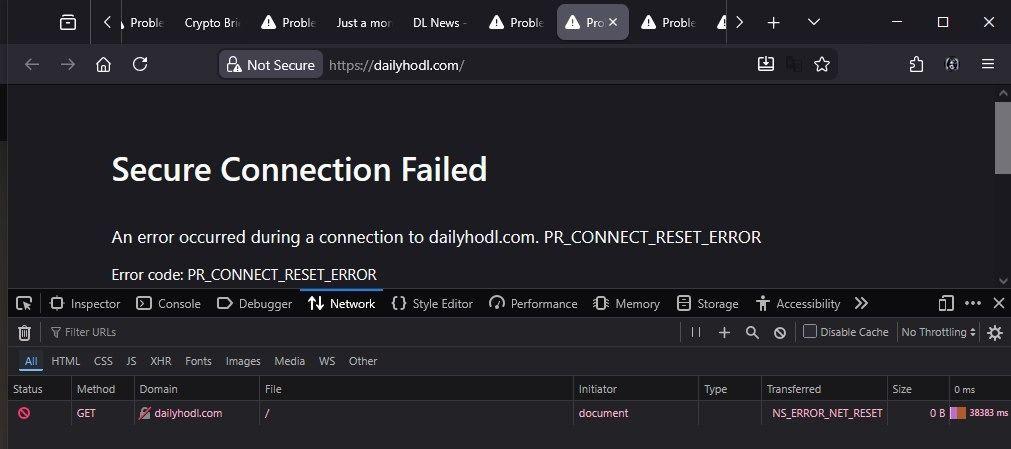
According to analysts in the field, as many as 1 in 4 crypto and finance websites may have restricted access.
Notably, BeInCrypto did not experience any access restrictions during testing. This allowed the testing team to make a more objective comparison to XEM whether the restrictions were random or widespread.
Blocking access at the network level in Russia is nothing new. The Russian authorities have previously applied similar measures to social networks, chat applications, and online gaming services.
After confirming that some domains were inaccessible via domestic Wi-Fi, we continued our technical investigation to find out how this restriction was implemented.
The tests focused on verifying whether Deep Packet Inspection (DPI) was being used – a technique that helps network operators control and set limits on different types of internet traffic.
When we enabled the DPI bypass tool, previously blocked websites were accessible normally. This indicates that this type of restriction relies on DPI filtering and is not related to DNS issues, server errors, or website crashes.
To test which network provider was responsible for access, we asked 10 crypto users in different regions to try accessing these sites using their local Wi-Fi networks, without using a VPN or any other supporting software. Only 2 reported relatively stable access; the rest were unable to access the listed sites.
The results show that this is not a nationwide ban, but rather a decentralized restriction – network operators will proactively apply access blocking through their own technology and at different times.
Therefore, some network providers completely block access, while others only cause interruptions or allow regular access.
Despite variations from place to place, users consistently encounter the same connection reset error when attempting to access these sites, regardless of their region or internet provider.
Not listed in official block lists.
We also checked to XEM if these websites were officially listed as restricted. However, none of the domains were on Roskomnadzor's public "blacklist."
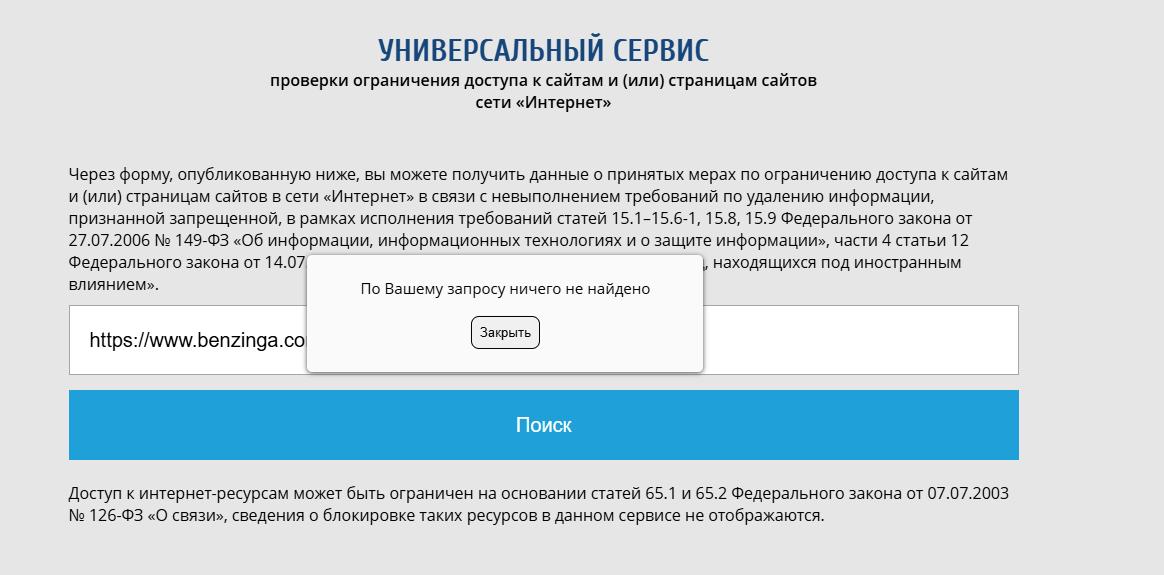 Source: Rkn.gov.ru
This suggests that the restrictions are not based on a public content removal process. Roskomnadzor also notes that there are instances of access restrictions that do not need to be publicly disclosed to users:
"Access to Internet resources may be restricted in accordance with Articles 65.1 and 65.2 of the Federal Law on Telecommunications of Russia. Information regarding these restrictions will not be made public in this registration system."
In summary, the analysis shows that access to many crypto and financial news sites is restricted on some domestic networks, but remains normal on others. The blocking originates from individual network providers, rather than a nationwide ban.
Restricted equipment does not appear on Roskomnadzor's public list, and connection errors are the same in areas with blocking measures.
In general, this evidence suggests that network-level internet access control in Russia is being implemented unevenly across network providers.






