"People in every era have their own way of doing things, and perhaps what people in our era need to do is Binance Alpha," Binance co-CEO He Yi said at the end of December 2025.
However, as time has passed, according to data from the Alpha123 platform, the number of Binance Alpha users has dropped from nearly 500,000 in November 2025 to about 200,000 today, a decline of more than 60%.
At the same time, the overall profitability has declined significantly. The "profit-seeking" sector, which once generated monthly earnings of over $2,000 per account in mid-2025, is no longer as glamorous as it once was.
According to statistics from the Alpha123 platform, Binance Alpha currently has an average of 203,000 daily active users. As of January 28, a total of 18 airdrops have been directly distributed this month, with the number of airdrops ranging from 13,000 to 72,000, averaging about 33,000 airdrops per user, which is about 16.2% of the average daily active users.
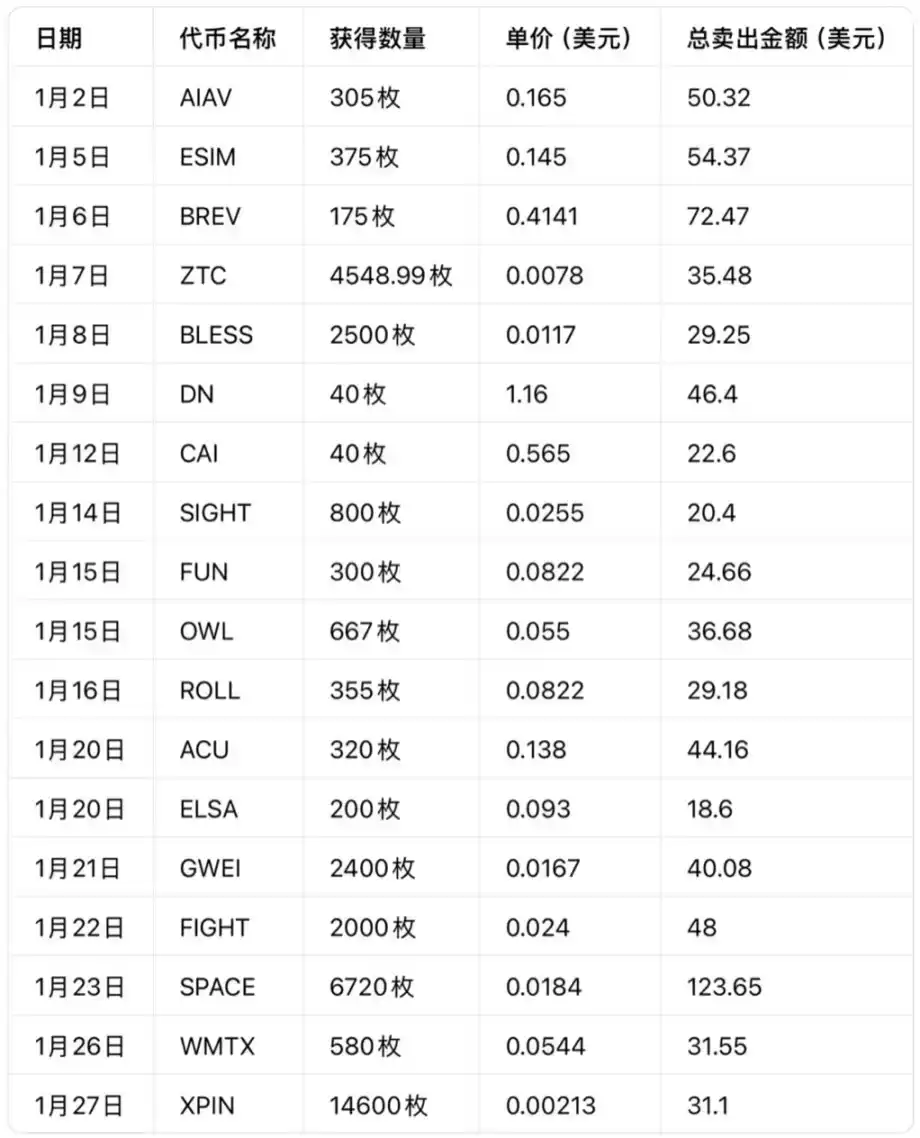
As of January 28, only one of the 18 Alpha rounds this month yielded a single return exceeding $100, namely $123.65 for SPACE (price calculated based on the latest opening price 10 minutes after the market opened). Meanwhile, 14 rounds yielded returns below $50, with the lowest return being only $18.60 for ELSA.
This month, the minimum Alpha points threshold was 230, and the maximum was 257. On January 26th, the threshold for claiming the Alpha token WMTX reached a high of 241 points, but the single-period return was only $31.55. If you earn 16 points daily, theoretically you can accumulate 240 points in 15 days, since Alpha points refresh every 15 days. Once the threshold exceeds 240 points, you will not be able to claim it within a single period. For example, the 241 points required for WMTX means that simply relying on consistent daily point accumulation will not be enough to reach the target within a single period.
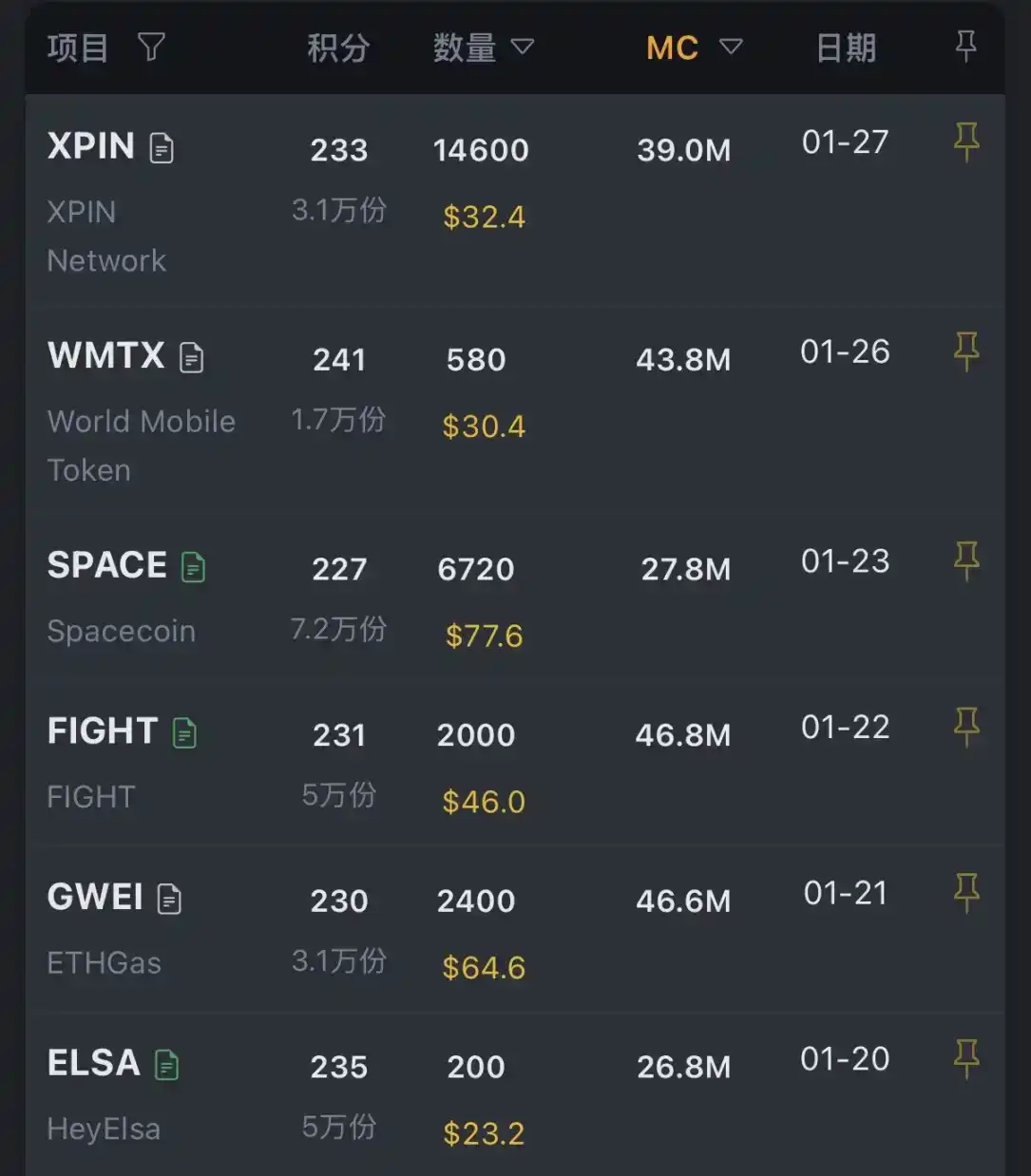
Compared to the period in mid-2025 when a single account could earn nearly $2,000 per month, the theoretical cumulative earnings for the first 18 periods in January of this year were approximately $715.70. This figure is based on the premise that "every period reaches the points threshold and the maximum number of periods with the highest earnings are successfully claimed". If 16 points are earned daily, the maximum number of times the earnings can actually be claimed is 5, resulting in an earnings of approximately $261.43.
Taking SPACE, which previously generated over $100 in revenue, as an example, the threshold for claiming points was 227 points, with each claim requiring 15 points. Users automatically earn 1 point daily from their account balance, with the remainder earned through trading. Based on the current point-to-trading-volume correlation, earning 15 points requires approximately $32,700 in trading volume. Assuming a typical trade size of around $330 per transaction for most participants, this equates to needing to complete 100 trades per day.

According to my investigation, the current limit order fee rate for Binance Alpha is 0.01%, while the market order fee rate is typically 1%. To generate $32,700 in trading volume using market orders, the daily fee would be at least $327, not including price spreads. Trading Alpha tokens in the Binance wallet incurs a 0.01% service fee and a 0.01% transaction fee per transaction, with network fees of approximately $0.10 per transaction. Based on a daily trading volume of $32,700, the total cost would be approximately $17. The minimum cost to reach 240 points over 15 consecutive days would be $255, and each Alpha claim requires 15 points, totaling a cost of $17.
To reduce the pressure of transaction volume, the platform periodically launches multiple-point promotions, which lowers the "transaction threshold" to some extent, but also amplifies price risk. Under the 4x points mechanism, theoretically, only about 25 transactions per day, each around $330, are needed to earn 15 points. However, these tokens are usually more volatile and have limited liquidity; price slippage and short-term fluctuations can quickly erode potential gains.
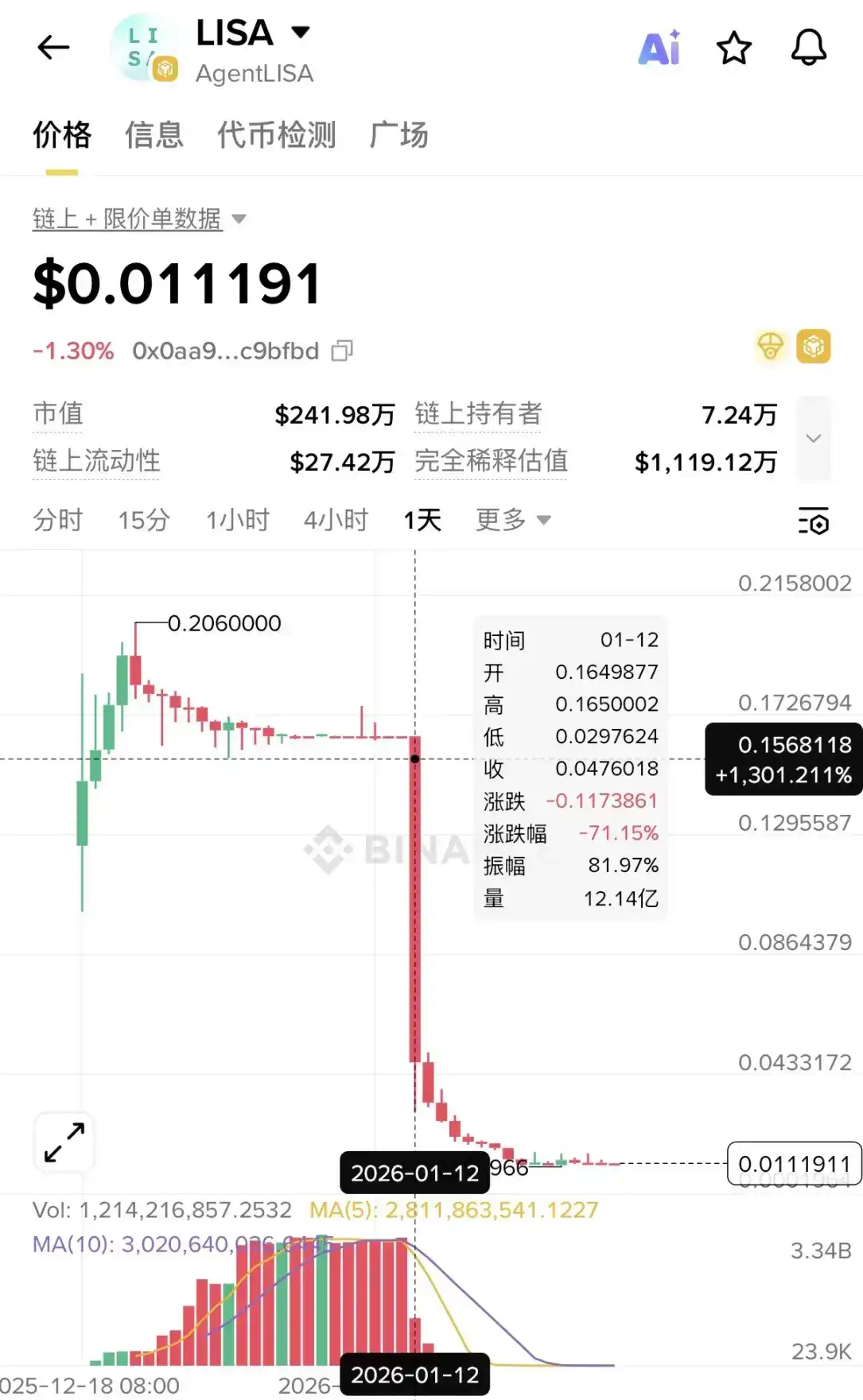
The LISA token on January 12th serves as a prime example. This token attracted significant trading volume due to its 4x Alpha reward, but experienced a concentrated sell-off within a short period, with a maximum drop of over 80% within 24 hours. This sharp price decline resulted in some users incurring transaction losses far exceeding the value of the airdrop while simultaneously gaining points.
For users who continue to participate in Alpha, the most direct question is often not "Can I still make money?", but "Is it worth continuing to participate?"
Some early participants have achieved returns far exceeding the average on individual projects. For example, 59.82 RIVER tokens acquired on September 19, 2025, would be worth approximately $3,200 at current prices if held until now; 644 MYX tokens acquired on May 6, 2025, would be worth approximately $3,870 at current prices, and would have yielded over $11,000 if sold at the historical high.
However, these "few diamonds with big returns" are not stable and replicable. In the current environment of shrinking single-period returns, higher thresholds, and increased volatility, most rounds are closer to small, dispersed, and uncertain returns. Users are more likely to focus on the overall return on investment rather than individual extreme cases of returns.
The Alpha model essentially exchanges real-world transactions for early token distribution opportunities, and its sustainability depends on the continuous emergence of projects with market performance. When the market enters a zero-sum game phase, the number of high-quality projects is limited, while the number of participants continues to expand, naturally diluting the expected returns that an individual user can receive.
Meanwhile, the core purpose of Alpha in its early stages was to drive traffic to new projects, activate on-chain interactions, and increase user engagement with the Binance wallet ecosystem. During the early, highly incentivized phase, this goal was clearly achieved, with Alpha becoming a significant source of user activity and transaction volume.
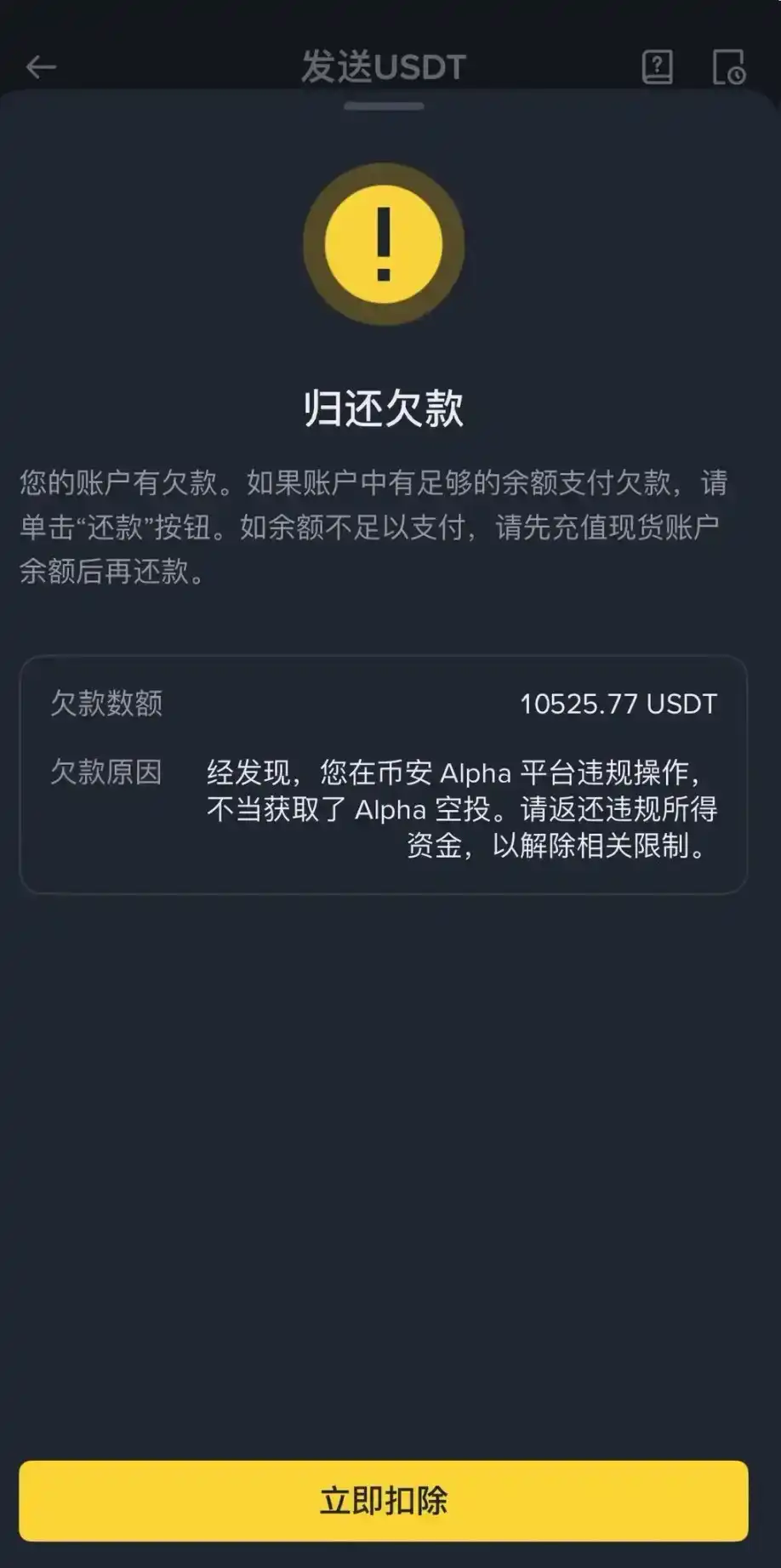
However, as wash trading, mass operations by studios, and high-frequency gambling intensified, incentives gradually became arbitrage-driven. In November 2025, Binance imposed restrictions on some studio accounts identified as engaging in mass operations and demanded the return of related profits. This move showed that the platform was trying to reduce the space for abnormal behavior, but the community generally still believed that automated tools had advantages in efficiency and cost control, and ordinary users who operated manually were gradually at a disadvantage in the points competition. Some participants reported that in the current environment of points thresholds and market volatility, continued participation not only resulted in unstable returns but also could lead to net losses due to fluctuations in token prices caused by wash trading, so they chose to reduce the frequency or even withdraw.
For ordinary users, Alpha is no longer a channel that can obtain stable returns simply by relying on frequency, but rather a strategic choice that requires careful calculation of costs and risks.