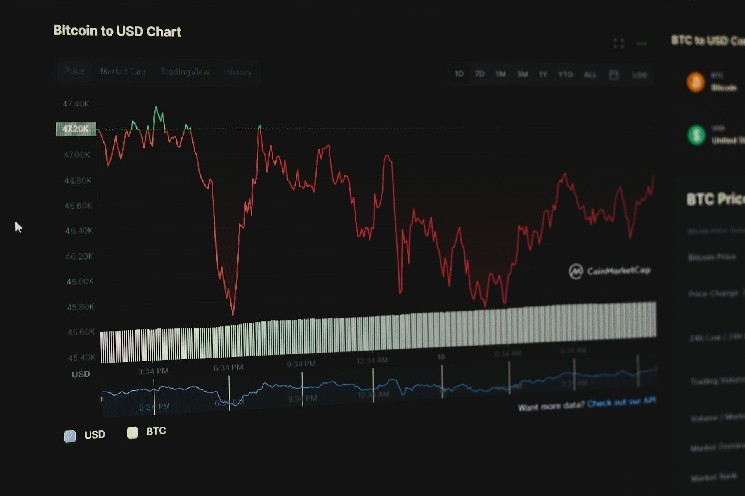
Winter is coming? This time, the Year of the Horse is bringing a crypto meltdown. Let's first review what happened during the epic crashes in the crypto in the past:
On March 12, 2020 (312), the global pandemic broke out, the US stock market triggered circuit breakers four times, and BTC was halved to $3,800 in a single day. The reasons were valid: the global economy was at a standstill, and people were dying, so how could the market be taken care of?
On May 19, 2021 (519), China imposed a complete ban on cryptocurrency mining and trading, leading to a massive migration of computing power and a sharp drop in BTC price from $43,000 to $30,000. A reasonable policy bombshell.
May 2022 witnessed the death spiral of LUNA/UST, with a $40 billion market capitalization wiping out in a week and BTC plummeting to $26,000. The reasons are compelling: algorithmic stablecoins are scams.
In November 2022, the FTX empire collapsed overnight. SBF was exposed for misappropriating customer funds, trust vanished, and BTC plummeted to $15,000. The reason is clear: the genius who ran the exchange was a fraud.
Then in February 2026, what happened? Nothing happened.
No exchanges collapsed. No stablecoins decoupled. No hackers stole billions of dollars. No government suddenly announced a ban on cryptocurrencies. There was no scapegoat to blame.
However, Bitcoin plummeted from its all-time high of $126,000 to $60,800, a drop of over 52%. A single day saw a net loss of $3.2 billion, worse than the FTX crash. The entire market experienced $2.6 billion in liquidations within 24 hours. ETFs have seen net outflows exceeding $6.18 billion for several consecutive months.
There was no black swan event this time; the crypto was scared to death by its own actions.
Murder in the Encryption Room
This is probably the most absurd crash in cryptocurrency history.
Every time a stock price crashes, Crypto Twitter quickly identifies culprits like Do Kwon, SBF, CZ, and regulatory agencies from various countries. Retail investors angrily retweet screenshots, while KOLs righteously proclaim, "I warned about this long ago!" Then, in a wave of indignation, everyone reaches a consensus: it's all that scumbag's fault. (Why are they all men?)
But this time? You open Twitter and see nothing but confusion.
"Is it a problem with ETFs?" "Is it a problem with the Bank of Japan?" "Is it a problem with the silver market?" "Is it a problem with Trump?" "Is it a problem with a certain hedge fund in Hong Kong?"
The answer is both yes and no.
This wasn't a murder with a killer; it was manslaughter. Ironically, the very institutionalized products that were supposed to stabilize the market became the weapons that killed it.
"Institutionalization" is a true double-edged sword.
It's become stronger, but it's also gone bald. Remember when the entire crypto community was jubilant in 2024 when the Bitcoin ETF was approved? "Institutions are coming to buy!" "Compliant funds are entering the market!" "Bitcoin is finally being accepted by the mainstream!"
Now let's take a look at what these "mainstream institutions" are actually doing.
Basis trading involves hedge funds buying IBIT while simultaneously short CME Bitcoin futures to earn an annualized risk-free spread of 7%–17%. They never buy ETFs because they are "bullish on Bitcoin," but rather as a fixed-income tool. When the basis narrows from 17% to less than 5%, they collectively withdraw, selling everything.
ETF Mechanical Selling: Bitcoin spot ETFs currently hold approximately 6% of the total global Bitcoin supply . When investors redeem their shares, authorized participants must sell an equivalent amount of BTC on the market. This is not a "panic sell-off"; it's the code executing a contract.
Leverage Spiral: Whale on DeFi lending protocols (yes, those smart people who use Aave's cyclical leverage) are forced to average down or liquidate when the price of the coin falls. Each liquidation generates new selling pressure, which in turn triggers more liquidations. This is why even Trend Research, owned by Yi Lihua, poured almost all of its 630,000 ETH into Binance.
Wall Street's "smart money" spent two years packaging Bitcoin as an institutional-grade financial product, then smashed it to pieces in an institutional manner. This wasn't a black swan event; it was the inevitable result of financial programming.
There isn't even a decent bad guy.
Let the numbers reveal the truth behind this inexplicable crash, reminding all the veteran OGs that the times have changed:
- It has recorded a net loss of $3.2 billion: the highest in history, surpassing FTX (approximately $2 billion), LUNA (approximately $1.5 billion), 519 (approximately $2.5 billion), and 312 (approximately $1.8 billion).
- ETFs experienced a continuous net outflow of $6.18 billion: from November 2025 to January 2026, marking the longest sustained outflow since their inception. Approximately 62% of ETF funds are currently underwater, with an average holding cost of around $85,000.
- IBIT's single-day trading volume reached $10.7 billion: BlackRock's largest Bitcoin ETF set a new record for the highest trading volume since its listing, with options premiums reaching $900 million. This is not a "buy signal," but rather someone being forced to liquidate at bankruptcy prices.
- Market depth has fallen by more than 30% from its peak: the order book has thinned, meaning the same selling volume can cause a greater price impact, and the floor has softened.
Markets don't need black swans to self-destruct. Leverage, structured products, and panic are enough to do all the dirty work.
Okay, that's all for the rant.
The above is unpleasant news, but if you're still reading this article, haven't deleted your exchange app, and haven't declared on X, "Please don't sell, I still have to support my family," then congratulations, you may be facing a historic opportunity.
Because all those bad factors that cause the market to crash are also "good signs" that the market is about to bottom out.
Deleveraging completed = Market clearing finished
The most terrifying thing about the market isn't the decline, but the uncertainty of how much leverage will be triggered. But what about now?
Funding rates for perpetual contracts have returned to neutral, and speculative leverage in the market has been thoroughly eliminated. Players who went All In in with 50x or 100x leverage have been eliminated, leaving only the true holders.
93% of the liquidation came from long positions. When long positions were almost completely liquidated, the market lost its fuel for further decline. Without long positions to be liquidated, short positions had no profit to be made.
94% of ETF holdings remained unchanged, and although 62% of the funds were showing paper losses, the vast majority of ETF investors chose to "hold on" rather than panic sell. What does this indicate? Long-term funds have not left.
Historically, every time the world seemed to end due to cryptocurrencies—after March 12th, May 19th, and FTX—in retrospect was the best entry point. But this time, there wasn't even any decent bad news.
The institution is changing its approach
Don't be fooled by short-term outflow data from ETFs. It's arbitrage funds exiting, not faith-based funds. Below are some things that believers hope will happen.
Basis trading liquidation is not a sign of bearish sentiment towards Bitcoin: hedge funds selling ETFs are not doing so because they believe Bitcoin is going to go to zero, but because the 5% annualized interest rate spread is not worth the capital tied up. This is a matter of capital efficiency, not confidence.
True institutionalization is just beginning: In January 2026, Morgan Stanley applied to the SEC to launch a Bitcoin and Solana ETF, officially entering the fray as a Wall Street giant managing $8 trillion in assets. Wells Fargo, Bank of America, and even Vanguard, a long-time resistant group to cryptocurrencies, have already opened up Bitcoin ETFs to their clients.
ETF inflows are still projected to reach $200-700 billion for the year. Despite significant short-term volatility, analysts predict that Bitcoin ETF assets could balloon to $180-220 billion by 2026, a substantial increase from current levels. This is not a figure representing an "escape from crypto."
Bitwise predicts that institutions and nations will hold 4.269 million BTC, and that global government and large institution Bitcoin holdings are expected to exceed $400 billion by the end of 2026. Institutional capital inflows are projected to reach $300 billion for the year.
The four-year cycle is over? That might be a good thing.
Grayscale made a bold prediction in its 2026 outlook report: Bitcoin's four-year cycle is coming to an end.
In the past, Bitcoin's price movements have been highly dependent on the four-year bull and bear cycle driven by halving events. However, with the continuous entry of institutional funds and the absorption of volatility by passive ETF buying, market dynamics are shifting from "retail investor frenzy" to "asset allocation demand".
What does this mean? The frequency of sharp rises and falls may decrease, but the overall trend will be more stable and upward. It will no longer be a crazy roller coaster of "tenfold increase in one year, ninefold decrease in the next year", but more like gold, slowly but continuously being repriced by global capital.
Grayscale predicts Bitcoin will reach a new all-time high in the first half of 2026. JPMorgan Chase has a target price of $170,000. Standard Chartered Bank is aiming for $150,000. Fundstrat's Tom Lee is even more aggressive, giving a year-end forecast of $150,000 to $250,000.
Of course, predictions are just predictions, and anyone can be wrong. Predictions made this year might only come true next year, and no one could have foreseen last year that Bitcoin would rise this much. But at least almost no mainstream institutions believe that Bitcoin's long-term trend is downward.
The market doesn't remember panic, but it rewards patience.
This crash wasn't a black swan event, but it taught us something more important than any black swan: Bitcoin's biggest enemy has never been external threats, but rather the market's own greed and leverage.
FTX collapsed, but Bitcoin still exists. LUNA went to zero, but Bitcoin still exists. China banned it repeatedly, but Bitcoin still exists. This time, nothing happened, and Bitcoin still exists, and the world's largest asset management companies, banks, and sovereign wealth funds are incorporating it into their asset allocation at an unprecedented pace.
So, the next time someone asks you why Bitcoin crashed, you can tell them:
Because too many people borrowed too much money, made too big bets, and then at the same time discovered that leverage wasn't free.
But Bitcoin itself? Not a single line of its code has changed. Its supply remains 21 million. Its network still produces a block every 10 minutes. The world's smartest money is still flowing into it or trying to accept it.
The panic will pass, but the math won't.