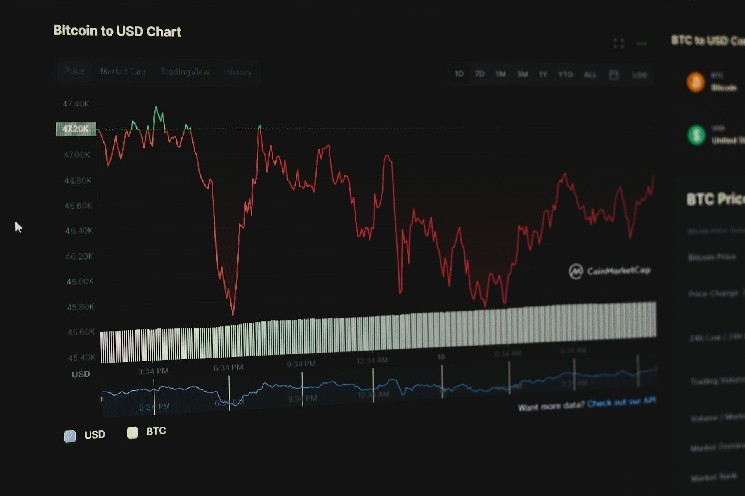
XRP experienced significant volatility as funding turned negative and heavy Short positions pushed the price down to the $2.00 demand zone, before buying absorbed the supply, paving the way for a rebound.
This development reflects a combination of hedging in the Derivative market, on- chain "whale" activity, and structural catalysts such as Crypto ETFs and the level of XRP Ledger usage.
- Negative funding and a negative OI-Weighted Funding Rate indicate increased Short -hedging demand, pulling XRP back to the $2.00 region.
- When Short become crowded, the downward momentum slows down and the price stabilizes, creating conditions for a pullback to the $2.80–$3.00 range.
- on-chain data and utility (transactions, stablecoins, RWAs), along with the momentum of Crypto ETFs, reinforce the recovery narrative.
Deep negative funding triggered a defensive move, pushing XRP back towards the $2.00 demand zone.
Funding fell below -0.05% and the weighted open interest (OI) turned negative, indicating increased Short positions for hedging purposes, causing the price to slide from the $3.00 area to the $2.00 demand zone.
When funding falls below -0.05%, Short sellers have to pay a premium to maintain their position. This typically reflects a stronger need to hedge against downside risk rather than passive selling. In a context of thin liquidation , pressure from Derivative positions can amplify the decline, especially when prices break through structural support zones.
Liquidation risk increases as positions become skewed in one direction. However, prolonged negative funding also means a growing accumulation of Short positions. When the imbalance reaches a threshold, downward momentum tends to slow down as buyers begin to absorb supply around the $2.00 mark and some Short positions are forced to reduce risk.
When Short unwinding occurs, the market may experience a "reflexive upside" rebound. As originally described, recovery efforts were directed towards the $2.80–$3.00 range, with the rebound partly driven by Short closing rather than solely by new buying.
The surge in "whale" trading is Peg support for the rebound.
With the price stabilizing, on-chain data showed strategic accumulation: 1,389 transactions over $100,000 and 78,727 active addresses in 8 hours, coinciding with XRP's rebound.
XRP has bounced back over 25% from its Dip below $1.15 to reclaim the $1.50 area. Prior to that, sentiment was dominated by panic selling and speculation about a potential break below $1.00, but the trading flow suggests the market is “repositioning” rather than exiting positions out of control.
Whale activity was noted through data from Santiment : 1,389 transactions valued at over $100,000, the highest level in four months. At the same time, network activity increased with 78,727 active addresses in an 8-hour period, reaching a six-month peak.
The synergy between the absorption force of large holder and the level of user participation helps to tighten liquidation on the selling side. When the supply of those ready to sell decreases, the price becomes more sensitive to buying pressure, creating a recovery structure instead of just a short-term technical bounce.
Crypto ETF momentum and the usefulness of the XRP Ledger reinforce the recovery narrative.
Besides technical and Derivative, adoption-related catalysts helped improve expectations: the Messari report, the growth in AUM of the XRP ETF, the expansion of the RLUSD and RWA stablecoins, and the Medium number of transactions per day.
Messari 's Q4/2025 report places the XRP Ledger in an expansion phase, supported by increased institutional accessibility and usability. This is a crucial foundation as it distinguishes network usage needs from purely speculative "buzzes."
Regarding crypto ETFs, the XRP ETFs launched in November were described as a major milestone, with total assets under management (AUM) reaching $1 billion in less than four weeks, the fastest pace since Ethereum-linked products. If the ETF Capital continue, it could improve market depth and reduce reliance on short-term leverage.
The RLUSD stablecoin also supports liquidation: its market Capital increased 164% quarter-on-quarter to $235 million. The asset Tokenize (RWA) segment increased 37% quarter-on-quarter to $281 million, reinforcing XRPL's Vai in the real asset infrastructure.
Network throughput confirms usage: the Medium number of transactions per day increased 3.1% quarter-on-quarter to 1.83 million. This indicator leans toward "active demand" and, if sustained, it generally makes the recovery story more plausible than leveraged gains.
XRP could enter a structural reversal if the leading spot and leverage aren't too high.
The next outlook depends on the balance between spot demand, floor inventory volatility, whale accumulation, and Open Interest (OI) surges: strong spot demand and declining floor inventory could support a reversal, while rapidly increasing OI coupled with overheated funding could increase the risk of a reversal.
If exchange reserves continue to decline while whale balances increase, the rebound could develop into a structural trend reversal. Sustained network activity and continued Crypto ETF Capital would be crucial supporting factors for this scenario.
Conversely, if Open Interest increases faster than spot demand, and funding is pushed too high, the market may be chasing leveraged momentum rather than sustainable accumulation. In that case, resistance near previous supply areas could limit upward momentum and bring volatility back down.
Currently, XRP 's recovery momentum lies at the intersection of whale absorption, institutional positioning, and Derivative behavior. The next direction will depend on whether spot demand continues to exceed leverage exposure.
Frequently Asked Questions
What does negative funding say about XRP market sentiment?
Deep negative funding indicates that market participants are willing to pay fees to hold Short positions, often reflecting a sharp increase in demand for hedging against downside risk. When negative funding persists, Short can become crowded, creating conditions for a rebound as Short are forced to close.
Why has XRP been able to stabilize around $2.00 after a sharp drop?
Prices may stabilize when they encounter demand zones, where buyers absorb supply, and downward momentum weakens due to the concentration of Short sellers and the risk of an upward reversal. Short unwinding could also contribute to a "reflexive" rebound.
What on-chain data is supporting XRP's rebound?
The data cited in the original document includes 1,389 transactions over $100,000 (four-month peak) and 78,727 active addresses in 8 hours (six-month peak). The combination of whale activity and increased participation levels could reduce liquidation on the sell side.
What factors are bolstering the long-term momentum for the XRP Ledger?
Key points include Crypto ETF momentum, RLUSD stablecoin growth, RWA expansion, and an increase in Medium daily transactions to 1.83 million. These factors tend to reflect institutional adoption and accessibility, rather than just speculative volatility.