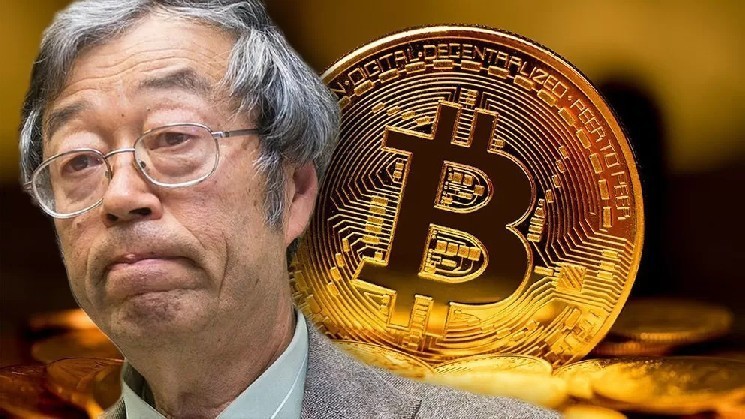
Bitcoin has once again staged a dramatic "death" scene, shocking the market. Bitcoin, which had seemingly been hovering around the $120,000 mark, recently plummeted to a low of around $62,000.
A 50% drop in just a few months goes beyond a simple correction, even in the volatile cryptocurrency market. For an early asset like Bitcoin, this is nothing short of a "mental test." More importantly, this decline feels like another decisive "moment of truth," forcing people to confront what Bitcoin truly is and what it is not.
Familiar Pattern vs. This Time Is Different
For seasoned Bitcoin investors, the current pattern is all too familiar. A surge of euphoria, a deluge of headlines, and then, without warning, gravity kicks in, and the price collapses. Influencers fall silent, and the public realizes that "price increases" aren't a law of physics. But Bitcoin continues to break new highs.
For over a decade, Bitcoin extremists have touted that "volatility is not a vulnerability, but a characteristic." Pain is a purifying process, a necessary step to weed out the weak. Michael Thaler even describes volatility as "Satoshi's gift" that distinguishes true believers from spectators. Their dogma is: if you can't withstand a 50% drop, you don't deserve the gains.
However, skeptics take a different perspective on this crash. Peter Schiff, a longtime Bitcoin nemesis, insists that this drop was not a simple daily correction. He believes that after years of so-called "mass adoption," the bubble has finally burst.
Admittedly, over the past two years, Bitcoin has moved from the fringes to the mainstream. From spot ETFs and retirement funds to mainstream banks, payment platforms, corporate finance, and even political campaigns—cryptocurrency has pushed open the doors of the US financial system and begun to rearrange the furniture. This is precisely the context for the "this time is different" rhetoric.
How much of it is left as rocket fuel?
Under the influence of former US President Donald Trump (who calls himself the "Cryptocurrency President"), cryptocurrencies have enjoyed an unprecedentedly favorable environment. Regulators have softened their stance, and Wall Street has opened the floodgates for institutional funds through ETFs. Holding Bitcoin no longer requires a rebellious spirit.
The core of the bearish argument lies here: "If popularization is rocket fuel, how much fuel is left in the tank?"
If in the US, almost everyone who wants Bitcoin can easily acquire it, then where will the next wave of buyers come from? If demand has peaked, then the recent crash may not just be noise, but rather the market quietly acknowledging that the growth story has hit its ceiling. In this scenario, the decline could be structural, gold investors would prove correct, and venture capital might turn to chasing new hot topics like AI.
Bullish on the market: "Still in the early stages globally"
However, bulls haven't packed their bags. Tom Lee maintains that Bitcoin is still in the early stages of global monetization. Investors like Larry Leppard maintain their price targets of $200,000 to $250,000, believing that currency devaluation, debt crises, and distrust of central banks will eventually drive massive amounts of capital into scarce digital assets. From this perspective, this decline is merely another pothole on a long highway.
Nevertheless, even optimists are beginning to acknowledge a disturbing reality: within the United States, the untapped space for mainstream adoption appears to be dwindling. The regulatory environment is more favorable than ever, and the financial infrastructure is in place. In this context, if Bitcoin fails to thrive, it's difficult to say that an even better environment is on the horizon. The very fact that a 50% drop occurred against a favorable political backdrop raises questions.
The moment of truth reappearance
Bitcoin is once again at a crossroads. Will it head towards a severe collapse with no real recovery, thus becoming a niche asset? Or will it enter a long and tedious period of sideways trading (the Crypto Winter)? Or will confidence and liquidity return, staging a familiar miracle of breaking through previous highs?
History shows that Bitcoin excels at humbly humbly accommodating both critics and enthusiasts. Right now, optimists are being humiliated, but a year from now, it may be the skeptics who are being mocked.
What is certain is that this is another decisive "moment of truth" for Bitcoin. The volatility that extremists call a gift remains valid. However, it is unclear whether anyone truly wants this gift shrouded in fear and red candlesticks.