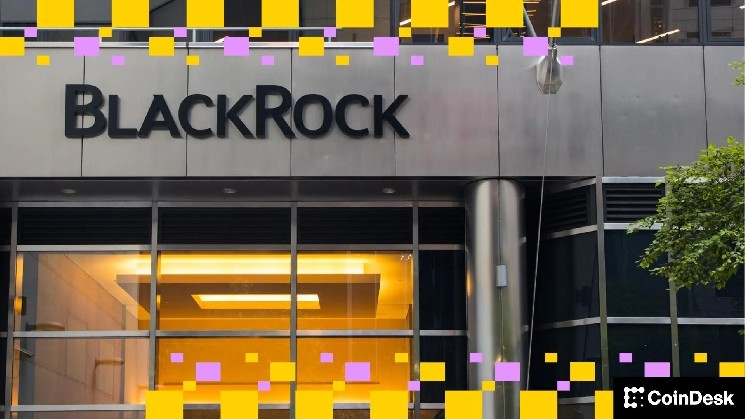
BlackRock Lists $2.1 Billion 'BUIDL' Tokenized Money Market Fund on Uniswap, First Official Entry into DeFi Asset management company BlackRock has officially entered the decentralized finance market by listing its tokenized U.S. Treasury fund 'BUIDL' on the DeFi protocol Uniswap (UNI). With Wall Street's largest asset management firm bringing tokenized real-world assets into DeFi, some see this as a turning point for institutional investor adoption of DeFi. BlackRock announced on Wednesday that it will list its 'USD Institutional Digital Liquidity Fund (BUIDL)' on the Uniswap decentralized exchange. This will allow qualified institutional investors to buy and sell BUIDL, a tokenized security, through Uniswap. As part of this transaction, BlackRock has also agreed to purchase a significant amount of Uniswap's governance token, Uniswap (UNI), but the specific purchase amount and quantity were not disclosed. This collaboration was achieved through the intermediary design of the structure by tokenization specialist Securitize. Securitize previously partnered with BlackRock to provide on-chain issuance and investor management infrastructure during the BUIDL launch. According to Fortune, BUIDL trading on Uniswap will initially be available to a limited number of qualified institutional investors and market makers, with the target investor base gradually expanding based on regulations and demand. Carlos Domingo, CEO of Securitize, emphasized, "This listing allows institutions and whitelisted investors to trade tokenized real assets like BUIDL in a 'self-custody' manner, leveraging leading DeFi technology." He highlighted this as the first major example of a traditional financial institution leveraging DeFi infrastructure within a regulatory framework.
The largest tokenized money market fund, worth $2.1 billion, expands across multiple chains.
According to on-chain data platform RWA.xyz, BUIDL is currently the largest tokenized money market fund, with assets under management exceeding $2.18 billion (approximately 3.15 trillion won). The fund invests in U.S. Treasury bonds and short-term cash assets, issuing its investment shares in the form of blockchain tokens. BUIDL tokens are issued and circulated on several public blockchains, including Ethereum (ETH), Solana (SOL), BNB Chain, Aptos (APT), and Avalanche (AVAX). BlackRock has designed BUIDL to maximize interchain compatibility and liquidity, enabling it to be utilized as collateral and settlement assets in various DeFi ecosystems. Last December, BUIDL also achieved a milestone of exceeding $100 million (approximately 144.4 billion won) in cumulative distributions, based on interest generated from U.S. Treasury bonds included in its portfolio. This is an example showing that tokenized real-world assets (RWA) products are moving beyond simple experiments and are now undergoing full-scale profit distribution and asset management.Competition heats up on Wall Street with tokenized money markets and RWAs, sparking a "liquidity battle" with stablecoins.
BlackRock's move coincides with the ongoing competition for tokenized money market funds across Wall Street. Goldman Sachs and BNY Mellon (BNY) are already pursuing partnerships to expand institutional access to tokenized money market products, and other major financial institutions are also launching pilot projects one after another. Analysts suggest that this trend is driven by concerns about restraining the rapid growth of stablecoins. In a report, JPMorgan strategists identified tokenized money market funds as a "counterweight" to the growth of stablecoins. While both assets utilize blockchain infrastructure, stablecoins are likely to rapidly expand their market share, fueled by expectations of the passage of the "GENIUS Act" (tentative name). This suggests a potential shift in liquidity from existing money market funds to stablecoins. Teresa Ho, a strategist at JPMorgan, believes tokenization could partially offset this capital shift. He emphasized that “by utilizing tokenized money market funds, investors can use their fund shares as collateral on-chain without giving up interest income,” and emphasized that liquidity and yield can be pursued simultaneously. In other words, from an institutional perspective, by using tokenized fund shares as collateral instead of stablecoins, they can pursue both regulatory friendliness and profitability. The GENIUS Act is also considered a variable in terms of the growth of tokenized real assets (RWAs). Solomon Tesfaye, Chief Business Officer (CBO) of Aptos Labs, the developer of Aptos (APT), previously predicted in an interview with Cointelegraph that “as stablecoin regulations become clearer, trust in the overall on-chain infrastructure will increase, and demand for tokenized real assets will also grow.” He explained that the institutionalization of stablecoins could ultimately lead to the expansion of various RWAs, such as tokenized government bonds, tokenized corporate bonds, and tokenized funds.Tokenization of real assets blurs the lines between DeFi and traditional finance… BUIDL is being put to the test.
BlackRock's BUIDL Uniswap listing is considered a symbolic event blurring the lines between DeFi and traditional finance. With regulated money market funds now traded on DeFi protocols, DeFi is no longer simply a "high-risk speculative market," but is now being re-evaluated as an infrastructure for institutional capital flows. However, some caution that, as the initial launch will involve limited institutional trading based on a whitelist, a rapid explosion of on-chain liquidity is unlikely. How quickly the market adopts BUIDL as a means of collateral, settlement, and leverage, and what standards regulators establish, will be key factors determining its future expansion. Nevertheless, the listing of a tokenized money market fund worth $2.1 billion (approximately 3.04 trillion won) on Uniswap, a core DeFi infrastructure, is significant. This can be interpreted as a signal that BlackRock, a leading player in traditional finance, views tokenized real assets and DeFi as long-term growth drivers. If this BUIDL project is successfully implemented, other global asset management companies and banks are expected to follow suit, with tokenized government bonds, corporate bonds, and fund products likely to transition to DeFi. The market will be watching closely to see whether the combination of tokenized real assets and DeFi will be a one-time event or a structural trend driving the "on-chain shift" of institutional funds.DeFi, now even Wall Street is jumping in… Can I follow suit without studying?
BlackRock's BUIDL Uniswap listing signals that "DeFi is now an infrastructure where real institutional money flows in."
While profit opportunities are now expanding, individual investors, unaware of the structure and risks, can become mere liquidity providers in a "professional playground."
At this critical juncture, TokenPost Academy offers a seven-step masterclass to help individual investors understand the structure and interpret the market in the same language as institutions.
From stablecoins to tokenized money market funds and RWAs (tokenized government bonds, corporate bonds, and funds), the goal is to empower people to make their own judgments, not just consume news.
Phase 1: The Foundation (Basics and Entry) – Understand the fundamentals of assets like Bitcoin, stablecoins, and RWA, and build the fundamentals for safely storing, depositing, and withdrawing on-chain assets. Even when exposed to tokenized funds and RWA products like BUIDL, you'll be able to explain what you're buying.
Phase 2: The Analyst (Tokenomics and On-Chain Analysis) – Learn to analyze tokenized funds, RWAs, and stablecoins beyond simple yields, focusing on market capitalization, inflation, lockup structures, and on-chain liquidity . This section equips you with the ability to compare and evaluate BUIDLs and stablecoins, such as "regulatory-friendly collateralized assets vs. high-yield tokens."
Phase 3: The Strategist (Portfolio Strategy) – We determine the appropriate allocations for cash, stablecoins, Bitcoin, RWAs, and tokenized funds, and design a structure that ensures long-term survival in an inflationary environment. We also help you manage your asset allocation based on your own criteria, even amid macroeconomic changes like the GENIUS Act and competition in tokenized money markets.
Phase 4: The Trader (Charts and Real-World Trading) – When trading spot assets on Uniswap, centralized exchanges, and other platforms, you'll learn how to avoid short-term price fluctuations and develop sound entry and exit strategies by leveraging support and resistance, trends, and trading volume. You'll also learn how to capitalize on the volatility of DeFi and RWA tokens.
Phase 5: The DeFi User (DeFi in Practice) – Systematically study the structure of DEXs like Uniswap, liquidity pools, impermanent loss, and lending and borrowing (LTV, liquidation mechanisms). Learn how to numerically determine where opportunity and excessive risk begin when tokenized money market funds or RWA tokens are actually used as collateral, settlement, and leverage .
Phase 6: The Professional (Futures/Options) – This course covers leveraging stable assets like BUIDLs as collateral, as well as hedging strategies (options/futures) to protect your portfolio during market downturns. However, the course focuses on learning risk management principles first, avoiding mistakes like "liquidating and exiting in one go."
Phase 7: The Macro Master (Understanding Macro and Cycles) – This section examines how the Bitcoin halving, global liquidity, and regulations (e.g., stablecoin legislation and RWA regulations) impact DeFi, RWA, and tokenized funds from a cyclical perspective. This step develops an eye for interpreting the BUIDL-Uniswap case within the context of long-term structural trends, rather than short-term themes.
By 2026, DeFi is no longer a "private speculation arena." The moment Wall Street steps in, the rules of the game will be designed to favor those in the know.
If you want to move from being an investor who consumes news to one who understands and selects structures, studying is no longer optional but essential.
Curriculum : 7-step masterclass from the basics to DeFi, futures options, RWA, and on-chain analysis.
Special offer : Get your first month free!
Go to : https://www.tokenpost.kr/membership
🔎 Market Interpretation
BlackRock's listing of its $2.1 billion tokenized US Treasury bond fund (BUIDL) on Uniswap marks the beginning of direct connections between traditional capital markets funds and decentralized trading infrastructure. While initially limited to whitelisted institutions and market makers, gradual expansion is planned, making it highly likely that "institutional DeFi liquidity pools" will become the new standard.
On Wall Street, major players like Goldman Sachs and Bank of New York are already experimenting with tokenized money market funds, and BlackRock's BUIDL, with its largest offering, will serve as a de facto benchmark. This strengthens the structure for capital inflows into regulatory-friendly on-chain assets (such as government bonds and money markets), suggesting a potential for a "division of roles" rather than competition between traditional finance and crypto-native liquidity.
💡 Strategy Points
1) Focus on the RWA and tokenization sectors: There may be increased mid- to long-term demand for projects and chains that directly support or utilize real-world asset tokenization, such as BUIDL, Securitize, Avalanche, and Aptos.
2) Re-evaluation of DeFi blue chips: Uniswap will be at the forefront of regulatory-friendly institutional liquidity inflows, and the institutional influence of UNI governance may increase. However, a conservative approach is needed, scrutinizing both the revenue model and regulatory risks.
3) Observe money market/stablecoin flows: As stablecoin regulations, such as the GENIUS Act, advance, some funds are likely to be distributed into clearly regulated stablecoins, while others will be distributed into tokenized money market funds. It's crucial to monitor which assets become standard on-chain for "yield + collateral" purposes.
4) Institutional Infrastructure Opportunities: An environment is being created that allows for the structural growth of "institution-friendly DeFi infrastructure," including KYC/whitelisting, regulatory-compliant wallets, and on-chain collateral management solutions.
📘 Glossary
• Tokenization: This is a technology that converts the ownership of existing real assets or financial products, such as government bonds, stocks, and real estate, into digital tokens on a blockchain, making them circulable and tradable.
• Tokenized Money Market Fund: A product that issues a money market fund that invests in short-term government bonds and ultra-short-term bonds as a blockchain token, enabling 24-hour on-chain trading and collateral use while utilizing the regulatory framework of traditional finance.
• BUIDL: BlackRock's "USD Institutional Digital Liquidity Fund" is a tokenized money market fund that invests in U.S. Treasury bonds and other assets. It is issued on multiple blockchains (Ethereum, Solana, BNB Chain, Aptos, Avalanche) and has over $2.1 billion in assets under management, making it the largest tokenized fund.
• Uniswap: A decentralized exchange (DEX) that provides automated token exchanges via smart contracts, without a central operating entity. Anyone can act as a market maker by depositing assets into the liquidity pool, and governance is achieved through the UNI token.
• UNI Token: The Uniswap protocol's governance token, granting access to key decision-making, including changes to fee structures, incentive policies, and the introduction of new features. BlackRock's purchase of UNI could signal a strategic commitment to participate in these governance mechanisms and stakeholder engagements.
• GENIUS Act: A bill that aims to clarify the regulations, issuance, and operation standards for stablecoins in the United States. If passed, it is expected to increase regulatory certainty and simultaneously accelerate the institutional adoption of stablecoins and tokenized assets.
💡 Frequently Asked Questions (FAQ)
Q.
Why is this BlackRock-BUIDL Uniswap listing attracting so much attention in the market?
It's significant that BlackRock, the world's largest asset management company, has officially listed its first tokenized government bond fund on a decentralized exchange (Uniswap). This signals that traditional financial institutions' assets are no longer simply "recorded on-chain," but are actually being traded and liquidated through DeFi infrastructure. This establishes a precedent for institutional investors to buy and sell RWA (real-world asset tokens) on-chain with KYC verification, and serves as a reference case for other large asset management companies and banks to adopt similar structures in the future.
Q.
Can individual investors buy BUIDL directly on Uniswap?
Based on the article, initial trading is limited to whitelisted participants, including "qualified institutional investors and certain market makers." Therefore, it's difficult for individual investors to immediately freely trade BUIDL on Uniswap. However, as regulations and product structures become more refined, it's possible that BUIDL will be gradually opened to some individuals, depending on regulatory jurisdiction (country) and investor eligibility requirements. For now, it can be understood as a "DeFi product for institutional investors."
Q.
What are the differences between tokenized money market funds and stablecoins, and what impact will they have going forward?
While both assets can be transferred and traded 24/7 on the blockchain, their structures and purposes differ. Stablecoins are closer to "digital cash" for payments and remittances, designed to be pegged to the value of the dollar as closely as possible, while tokenized money market funds are "investment products" that pay interest by investing in short-term government bonds and other assets.
If regulations like the GENIUS Act accelerate the institutionalization of stablecoins, some funds may shift to clearly regulated stablecoins. At the same time, investors and institutions may increasingly utilize interest-bearing tokenized money market funds as collateral or a means of managing their funds, avoiding giving up yield. JPMorgan believes this structure can act as a "buffer" to reduce the pressure on traditional money market funds to outflow, and this BlackRock case is considered a significant step toward implementing this trend on-chain.
TP AI Precautions
This article was summarized using a TokenPost.ai-based language model. Key points in the text may be omitted or inaccurate.
Get real-time news... Go to TokenPost Telegram
Are you hesitating about when to buy or sell and missing the timing?
Determine your investment direction with real-time positive and negative signals analyzed by TokenPost AI.
Copyright © TokenPost. Unauthorized reproduction and redistribution prohibited.