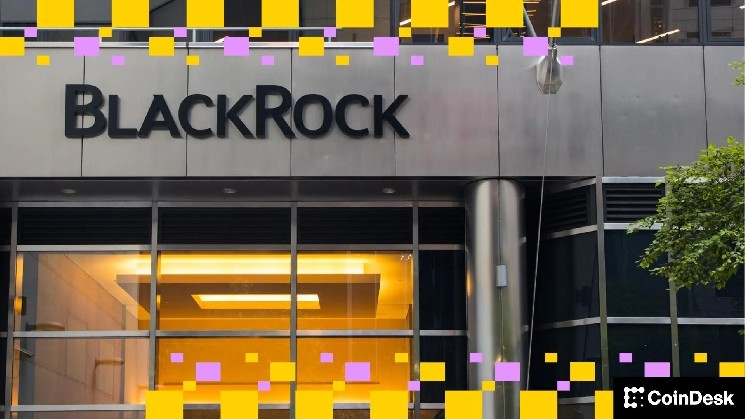
Denmark's largest bank, Danske, allows Bitcoin and Ethereum ETP purchases, shifting its stance on EU regulatory overhaul.
European and UK financial sectors are rapidly developing cryptocurrency and tokenized asset infrastructure. Danske Bank, Denmark's largest commercial bank, has opened Bitcoin (BTC) and Ethereum (ETH) exchange-traded products (ETPs) to some clients, and the market for tokenized commodities, centered around tokenized gold, has surpassed $6 billion (approximately KRW 8.7072 trillion). The Bank of England has officially launched a pilot project for pound-based tokenized asset settlements, accelerating the transition of physical and traditional finance to on-chain. Danske Bank to sell BlackRock and WisdomTree Bitcoin and Ethereum ETPs Danske Bank, one of the largest retail banks in Northern Europe with over 5 million customers, has decided to offer cryptocurrency-related products through its digital channels for the first time, a move that has been largely conservative. Danske Bank announced on Wednesday (local time) that it will allow customers to purchase Bitcoin and Ethereum ETPs managed by BlackRock and WisdomTree on its e-banking and mobile banking platforms. However, these products are only available to "self-directed" investors, who make their own investment decisions without bank advice. The bank cited "increased customer demand" and the improved regulatory environment following the implementation of the European Union's "Market in Cryptocurrency Assets Regulation (MiCA)" as the reason for this decision. MiCA is the EU's first comprehensive regulation covering the issuance, circulation, and custody of cryptocurrencies, and aims to protect investors and enhance market transparency. Danske Bank explained that it will initially offer three "selected ETPs": two tracking Bitcoin and one tracking Ethereum. These products are subject to the European Union's MiFID II directive, which regulates investor protection and cost transparency. The bank emphasized that "there are advantages in terms of transaction convenience and custody security compared to directly holding coins." Kerstin Lysholm, head of investment products and offerings at Danske Bank, said in a press release, "As cryptocurrencies become increasingly popular as an asset class, we have seen a significant increase in inquiries about allocating a portion of their portfolio to cryptocurrencies." He continued, "Regulatory reform has increased overall trust in cryptocurrencies, and we believe now is the 'right time' to offer these products to our clients. However, we drew the line, saying that these products carry 'very high risks' and are only available to investors who can accept them." Tokenized commodities market exceeds $6 billion in less than 6 weeks... Most gold tokens are among the 'real asset tokenization (RWA)' sector, which issues real assets in the form of tokens on blockchains, and the market for tokenized commodities is showing the fastest growth. In particular, tokenized products backed by gold are virtually dominating the market. According to Token Terminal, a cryptocurrency data analysis firm, the tokenized commodity market size has surged 53% from approximately $4 billion (approximately 5.8048 trillion won) at the beginning of the year to over $6.1 billion (approximately 8.8523 trillion won) recently. This means that approximately $2.1 billion (approximately 3.0501 trillion won) has been newly inflowed this year alone. Specifically, the growth was led by Tether's gold-backed token, 'Tether Gold (XAUt).' The market capitalization of XAUt increased 51.6% in the past month to reach $3.6 billion (approximately 5.2243 trillion won). 'PAX Gold,' listed on Paxos, also increased 33.2% over the same period to record $2.3 billion (approximately 3.3377 trillion won). The total market capitalization of tokenized commodities has surged 360% year-over-year. This compares to a 42% growth rate for the tokenized stock market and a mere 3.6% growth rate for the tokenized fund market during the same period. This demonstrates that tokenized commodities, particularly gold, are emerging as a leading sector in the on-chain transition of real assets. With gold prices trading near record highs, the industry believes demand for "on-chain gold" has grown to enable 24-hour trading, fractionalization, and global accessibility. With regulated issuers and on-chain infrastructure integrating, some demand from the traditional gold ETF and physical gold storage markets is shifting to the tokenized market. The Bank of England has launched the "Synchronization Lab" project to test the infrastructure for settling tokenized assets in British pounds. The Bank of England (BOE) is revamping its Real-Time Gross Settlement (RTGS) system to a next-generation architecture, with the aim of preemptively testing its integration with distributed ledger technology (DLT). According to the Bank of England's announcement, this initiative will link the central bank's next-generation RTGS core ledger, RT2, with an external distributed ledger platform to experiment with synchronized "won payment-to-securities delivery (DvP)" and "currency-to-peer (PvP)" transactions. Testing will be conducted in a non-real-money, non-real-money, environment for six months. The project, slated to launch in the spring of 2026, will allow the BOE to validate the design of the synchronized settlement system, examine the interoperability between central bank currencies and tokenized assets, and refine the direction for the future introduction of real-world RTGS synchronization functionality. First announced in October, the program will involve 18 participating companies, including traditional financial infrastructure providers, commercial banks, fintechs, and decentralized technology companies. They will test various use cases, such as tokenized securities settlement, collateral optimization, foreign exchange settlement, and digital money issuance, in a non-real-time environment. European financial sector accelerates 'on-chain experiments' as regulations become clearer. Danske Bank's opening of cryptocurrency ETP, the rapid expansion of the gold-centered tokenized raw materials market, and the Bank of England's experiment with pound-based tokenized settlement all demonstrate that the European and UK financial sectors are rapidly advancing the on-chain transition 'within the regulatory framework.' With the establishment of existing and new regulations, such as the EU's MiCA and MiFID II, it is assessed that an environment is being created in which large banks and central banks can directly review and introduce cryptocurrency and tokenized asset infrastructure. However, as each institution commonly emphasizes 'high investment risk,' volatility and market structure risks remain areas that investors must bear on their own, regardless of regulatory clarification.
💡 "European banks are also moving on-chain… Investors are now divided into those who know how to read and those who simply follow."
Danske Bank's launch of a BTC/ETH ETP, the tokenized commodities market, centered around gold tokens, surpassing $6 billion in value, and the Bank of England's experiment with pound-based tokenized payments.
All of these issues have one thing in common: traditional finance is beginning to build on top of blockchain infrastructure within a regulatory framework.
But very few people can connect this flow to real profits and risk management.
Is it just a news story that says, "The bank has opened"?
It is entirely up to your ability to understand "what assets should be included, in what structure, and at what point in time."
TokenPost Academy is a 7-step masterclass created just for this purpose.
This is not a general introduction to coins, but rather an introduction to on-chain, tokenization, and regulatory changes as seen in the article.
This is a practical curriculum that connects to actual investment strategies and portfolio design .
Phase 2: The Analyst (Valuation and Analysis) – Core assets like BTC and ETH, as well as tokenized gold and raw materials selected by Danske Bank, ultimately revolve around tokenomics and on-chain data .
Develop the ability to independently determine "how high the price has risen and whether now is the entry point" through market capitalization, inflation, lockup releases, and on-chain indicators (MVRV, NUPL, SOPR, etc.).
Phase 3: The Strategist (Investment Strategy and Portfolio) – How should I balance Bitcoin, Ethereum, tokenized gold, stablecoins, and cash to safeguard my account amidst regulatory changes in Europe and the UK?
We cover understanding the risk-return structure and portfolio design methods that take into account inflation, interest rate, and liquidity cycles.
Phase 5: The DeFi User (Decentralized Finance) – As gold, commodities, and tokenized securities are brought on-chain, these assets will ultimately be utilized on DeFi and on-chain infrastructure .
Understanding the structure of "out-of-bank finance"—DEX, liquidity pools, staking/lending, LTV management, and impermanent loss—is crucial to seizing the true opportunities of tokenized assets.
Phase 7: The Macro Master (Macroeconomics and Market Cycles) – Regulatory and infrastructure news such as MiCA, MiFID II, and the central bank RTGS reform are not short-term positives , but signals indicating the direction of the cycle .
We'll examine global liquidity, Bitcoin halvings, and regulatory timing, and learn how to "read the news through 'cycle analysis,' not 'issue trading.'"
As the European and British financial sectors accelerate their 'on-chain experiments,'
It's a matter of choice whether you read the news and let it be, or whether you connect it to your financial strategy.
At TokenPost Academy
Establish a standard for the top 1% to interpret and respond to regulatory, tokenization, and on-chain infrastructure changes.
Curriculum : 7-step masterclass covering everything from basics to on-chain analysis, DeFi, futures, options, and macros.
Special offer : Get your first month free!
Go to : https://www.tokenpost.kr/membership
🔎 Market Interpretation
· Danske Bank, Denmark's largest bank, has allowed limited Bitcoin and Ethereum ETPs, demonstrating the accelerating trend of crypto integration in traditional finance following the EU MiCA regulations.
· Among on-chain real assets (RWAs), the tokenized product market led by gold tokens has grown 53% in just six weeks, surpassing a market cap of $6.1 billion, demonstrating that "tokenized gold" is serving as a representative safe-haven asset.
· The Bank of England's Synchronisation Lab is a move to connect central bank real-time settlement systems (RTGS) with distributed ledgers (DLT), laying the foundation for a future pound-based on-chain payment infrastructure.
💡 Strategy Points
· As regulatory overhaul within the EU (utilizing MiCA and MiFID II) and major banks enter the ETP market, it is necessary to prioritize investment accessibility for listed products (ETPs and ETFs) under the regulatory umbrella, rather than simple coin spot.
· Tokenized gold (XAUt, PAXG, etc.) is emerging as an alternative hedging tool that can act as a volatility buffer alongside stablecoins and BTC, as on-chain demand is expanding alongside the boom in the traditional gold market.
· Infrastructure, fintech, and DLT companies participating in the Bank of England's synchronization experiment have the potential to become key partners in the long-term development of "on-chain payment and securities infrastructure for institutions." Therefore, it is worth closely examining the technological maturity and regulatory responsiveness of these companies and protocols.
· If atomic settlement between central bank RTGS and DLT is successfully verified, it is expected to reduce settlement risk and improve capital efficiency in future tokenized securities, collateral management, and FX settlements.
📘 Glossary
· ETP (Exchange-Traded Product): A general term for financial products listed on an exchange and traded like stocks, including ETFs and ETNs. Here, it refers to listed products that track the price of Bitcoin and Ethereum.
· MiCA: A cryptocurrency market regulatory framework introduced by the EU. It strengthens investor protection and market transparency by stipulating licensing and compliance obligations for issuers and service providers.
· MiFID II: The EU Markets in Financial Instruments Directive, a rigorous regulatory framework applicable to traditional financial products, covering investor protection, product design, fees, and risk disclosure.
· Tokenization: The process of issuing and trading tokens on the blockchain to represent ownership of physical and traditional assets such as gold, bonds, and stocks.
· Atomic Settlement: A mechanism in which payment and delivery are processed simultaneously in an "all-or-nothing" manner, reducing the risk of payment default.
· RTGS (Real-Time Gross Settlement): A real-time gross settlement system provided by the central bank, which refers to the infrastructure for real-time settlement of large payments between banks on an individual basis.
💡 Frequently Asked Questions (FAQ)
Q.
Just because Danske Bank is launching a Bitcoin/Ethereum ETP, does that mean I can buy the coins right away?
The newly approved options are Bitcoin and Ethereum "Exchange Traded Products (ETPs)." Rather than receiving actual coins through a bank, this method allows users to purchase financial products traded like stocks. This allows users to buy and sell directly from their bank account, eliminating the need to create a personal wallet or transfer coins to an exchange. However, this service is only available to "self-directed investors" who trade at their own risk. Individual investors in other countries, including Korea, cannot access this service unless they are customers of the relevant bank.
Q.
How is investing in tokenized gold (like XAUt or PAXG) different from investing in physical gold?
Tokenized gold is essentially a product that backs physical gold on a 1:1 basis (or an equivalent structure), with ownership divided into blockchain tokens for trading. While its price closely follows the price of gold, tokenized gold can be bought and sold on-chain in small amounts 24 hours a day. However, risks exist depending on the issuer's creditworthiness, storage structure, and regulatory status, and not all products offer the same "immediate physical withdrawal." Therefore, it's crucial to confirm the specific reserve structure and regulations.
Q.
What will happen to ordinary investors once the Bank of England's DLT payments experiment concludes?
In the short term, central banks are not actually moving money, but rather testing it in an "experimental environment," so there won't be significant direct changes for individual investors. However, in the long term, as pound-based tokenized securities, government bonds, collateral management, and foreign exchange settlements are connected to blockchain infrastructure, there's a high possibility of products and services with shorter settlement times and lower risk. Consequently, indirect benefits such as lower fees and spreads and the opening of a nearly 24-hour trading environment are expected.
TP AI Precautions
This article was summarized using a TokenPost.ai-based language model. Key points in the text may be omitted or inaccurate.
Get real-time news... Go to TokenPost Telegram
Are you hesitating about when to buy or sell and missing the timing?
Determine your investment direction with real-time positive and negative signals analyzed by TokenPost AI.
Copyright © TokenPost. Unauthorized reproduction and redistribution prohibited.