Discussions about the potential restructuring of the global monetary order are resurfacing amidst analyses suggesting that China has unofficially accumulated gold—at least 5,000 to 7,000 tons, with some estimates suggesting it could reach 7,294 tons. This suggests a long-term strategy is underway, leveraging China's $3.4 trillion in foreign exchange reserves to reduce dependence on the dollar and bolster the credibility of the yuan with gold.
The People's Bank of China, China's central bank, has been steadily purchasing gold in recent years. While official holdings have gradually increased, the market does not rule out the possibility that actual holdings are higher than announced. If China significantly increases its gold reserves in the future, this would not be a simple statistical revision but could signal the direction of its monetary strategy.
The key is the yuan's "physical collateralization story." Expanding gold holdings is the most traditional way to bolster confidence in a currency. While the dollar is structurally based on US Treasury bonds, economic power, and military might, China seeks to strengthen the yuan's defensive capabilities through the tangible asset of gold. This is particularly aligned with its plan to build solidarity with the BRICS countries, which seek to reduce their reliance on the dollar payment network.
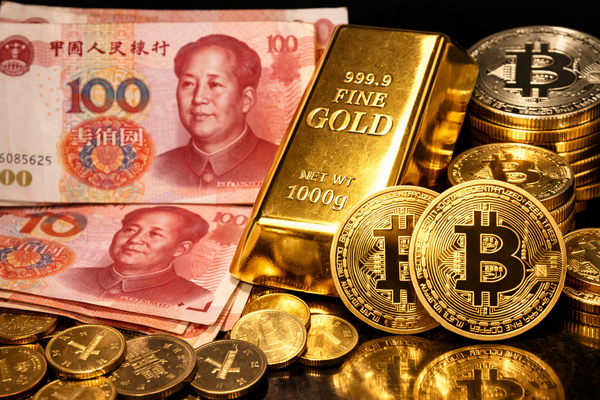
Another variable here is Bitcoin. While China strictly restricts cryptocurrency trading within the country, it's undeniable that Bitcoin has established itself as "digital gold" in the global market. While gold is a traditional store of value, Bitcoin functions as a decentralized digital store of value. Some market observers believe that a "triangular hedge" structure centered around gold, Bitcoin, and the yuan could emerge as an alternative framework to the dollar-centric financial order.
In this framework, gold serves as a physical safety net, Bitcoin as a digital safety net linked to global liquidity, and the yuan as a settlement currency. If China were to disclose its actual gold reserves at a strategic point, it would likely send a powerful message to the internationalization of the yuan.
However, many structural challenges remain before the yuan can truly replace the dollar as a reserve currency. The level of capital market openness, transparency of the financial system, and legal credibility are among the most sensitive factors for international investors. This is why some argue that simply increasing gold reserves will be unlikely to disrupt the dollar system in the short term.
Nevertheless, with gold prices at record highs and Bitcoin being incorporated into global asset allocation strategies, China's gold accumulation strategy is being interpreted as a geopolitical message that goes beyond simple asset management. Especially as the US-China hegemony competition prolongs, currency strategy is becoming as crucial a front as military and trade strategies.
Depending on how and when China discloses its actual gold holdings, a chain reaction could occur across global foreign exchange, commodity, and even digital asset markets. "Hidden gold" is not simply a number; it's a strategic question posed to the dollar-centric order.