By: AURA MEDIA
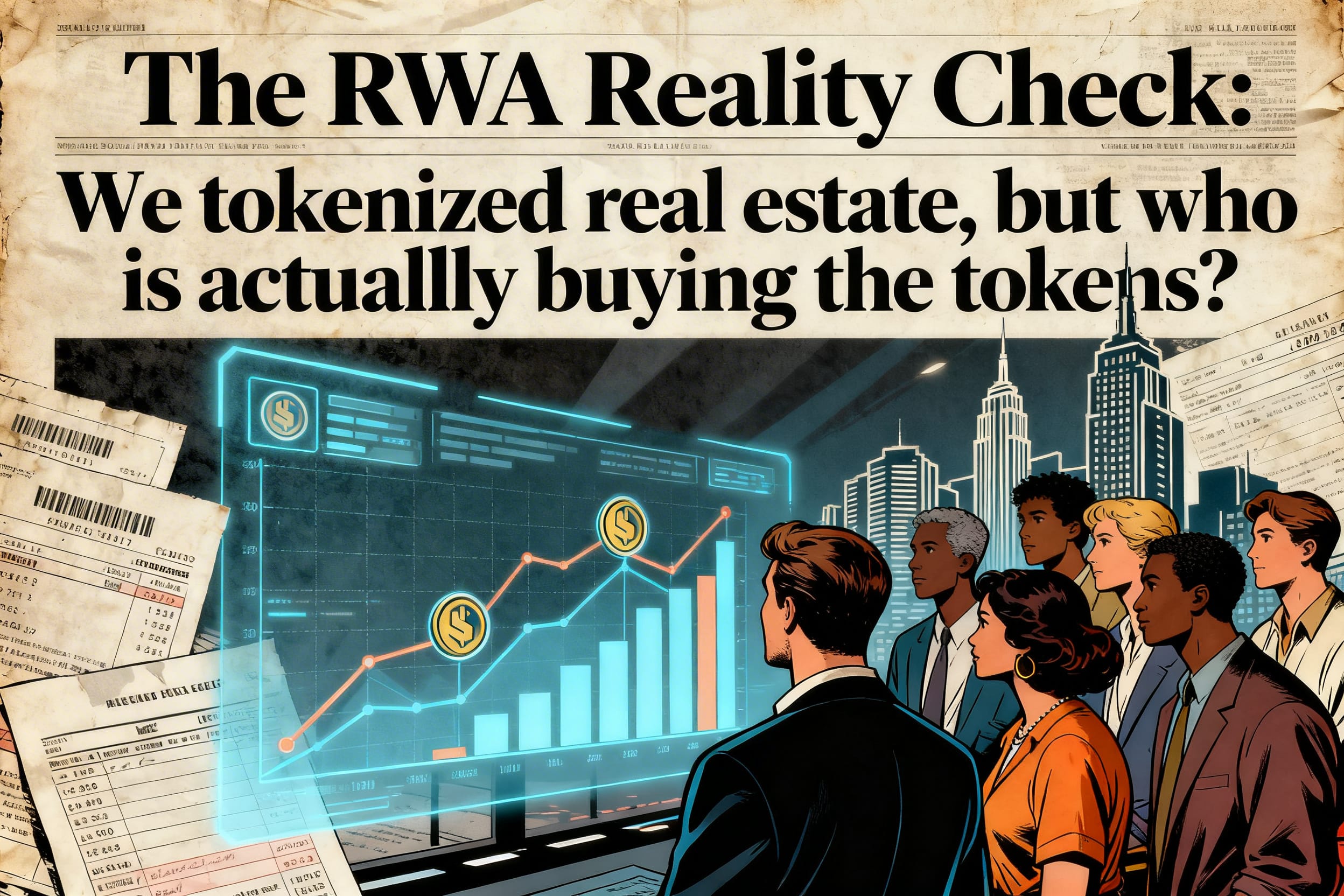
For years, the value proposition of blockchain-based real estate has been preached as gospel: fractionalization, liquidity, and global access. By chopping up a skyscraper into digital tokens, we could turn a $10 million asset into a market where anyone with a hundred bucks can be a landlord. The technology has arrived. Platforms have launched. Assets have been tokenized.
But as the market matures in 2026, we are faced with a critical reality check. The narrative of the "democratization" of real estate for the everyday retail investor is only half the story. If we look at the on-chain data and institutional deal flow, a different picture emerges.
So, if we have successfully tokenized the buildings, who is actually buying the tokens?
The short answer is a mix of crypto-native whales, institutional giants, and a new breed of compliant, cross-border investors—with the "average Joe" largely still watching from the sidelines.
The Market in Numbers: Small but SpecializedFirst, let's establish the scale. According to data from RWA.xyz, tokenized real estate is nearing $360 million in total on-chain value as of February 2026 . This encompasses direct ownership, funds, and debt. While this is a fraction of the $1.48 trillion global private real estate market , the architecture being built today suggests massive growth is expected—Boston Consulting Group estimates the tokenized illiquid asset market could hit $16 trillion by 2030 .
But the composition of holders is revealing. There are now over 10,000 unique holders across 57 projects in 10 countries . Interestingly, the growth in wallet counts is outpacing the growth in asset value. This suggests that while more people are entering the space, they are doing so with smaller, exploratory checks .
The Buyers: A Tale of Two Markets1. The Institutional Whale (The "Hines" Buyer)The most significant capital flowing into tokenized real estate isn't coming from crypto degens; it's coming from traditional finance giants using blockchain as a distribution lever. A prime example is the partnership between DigiFT and Hines, one of the world's largest real estate investment managers .
In early 2026, they announced the tokenization of a portion of Hines’ $60 billion global property portfolio. However, the access is strictly controlled.
"This product is offered exclusively to qualified investors, including Accredited Investors, Professional Investors, and Institutional Investors."These are high-net-worth individuals and institutions buying tokens because the underlying asset is managed by a trusted traditional player, and the tokenization simply makes the capital flow and settlement more efficient. They aren't buying "crypto"; they are buying Hines-managed exposure via a regulated digital wrapper.
2. The Crypto Whale and Yield FarmersWe cannot ignore the crypto-native capital. With the stagnation of simple DeFi yields, sophisticated crypto investors are rotating into Real World Assets (RWAs) for stable, uncorrelated returns. Data from late 2025 showed $2.1 billion rotated into residential RWA funds by whales seeking yield.
These buyers are attracted to the numbers: top-tier tokenized buildings are reportedly paying 11.7% APY with 99.3% occupancy, outperforming 98% of traditional REITs . For them, a tokenized Miami apartment building is simply a better yield-bearing asset than a volatile DeFi protocol—especially when that yield is paid out automatically in USDC via smart contracts.
3. The Regulatory Arbitrageur (The UAE & Asia Connection)Geography matters. The United Arab Emirates leads the world in the number of tokenized real estate assets, while the U.S. leads in value. This split tells us who is buying.
In Dubai, projects like the tokenization of Palm Jumeirah villas are attracting global liquid capital that wants hard assets in a crypto-friendly jurisdiction . In Singapore, the regulatory clarity is so advanced that tokenized property can now be used as Tier-1 collateral, with banks offering loans against these tokens.
The buyers here are often Asian and Middle Eastern family offices looking to diversify into Western (or local) real estate without the friction of traditional cross-border wire transfers and paperwork.
4. The Niche Retail Investor (The Spanish Model) Retail participation does exist, but it often looks different from the American "democratization" model. In Spain, platforms like Reental have found product-market fit by tokenizing vacation rentals. Interestingly, a significant portion of their buyers are Latin American investors using crypto to bypass currency controls and invest in stable European property . In this case, the token isn't just an investment; it's a financial escape valve from local inflation and capital controls. With minimum buys as low as €1,000, this is the closest the market has come to true retail inclusion .
The Barrier: Why "Your Uncle" Isn't Buying YetSo, if the infrastructure exists and the assets are there, why isn't there a flood of retail money? The answer lies in operational discipline and user experience.Sonia Shaw, CEO of OneAsset, articulates the problem succinctly: "Previous projects treated tokenisation as a tech demo rather than a financial product. They lacked the infrastructure to handle cross-border participation or complex lifecycle events."
Buying a tokenized building today often requires:1. Passing KYC/AML (a hurdle many crypto natives dislike).2. Proving Accredited Investor status (locking out the masses).3. Navigating fragmented platforms and wallets.
Furthermore, there is a psychological barrier. The "token" often feels like an IOU rather than a deed. Projects that succeed are those that anchor the token in a specific legal structure where economic rights are binding and enforceable, not just a "digital wrapper".
The Future: Controlled Interoperability
So, who will be buying in the next 12 months? The industry is shifting toward "Controlled Interoperability" . This means tokens will be able to move into DeFi protocols and be used as collateral, but only under strict compliance rules.
The next wave of buyers won't just be buying rental yield; they will be sophisticated users constructing global real estate portfolios on-chain and using property tokens as composable building blocks within broader compliant strategies .
The Bottom Line
The reality check is this: We have tokenized real estate, but the buyer profile is bifurcated. Institutions are buying for efficiency and distribution. Crypto whales are buying for yield. International investors are buying for access and stability.
The "regular guy" from Des Moines isn't buying a tokenized condo in Dubai yet because the regulatory friction and operational maturity aren't quite there for a frictionless $100 entry. But with MiCA 2.0 forcing legal clarity in Europe and asset managers like BlackRock and Franklin Templeton building the rails, the gap is closing .
The millionaires being made in RWA right now aren't just the property owners; they are the infrastructure providers who figured out that in real estate, compliance is the product.