Bitcoin entered the final week of February with fragile sentiment, as macroeconomic factors (US economic events) continued to dominate the short-term direction.
Following a series of mixed signals last week, such as softening PCE inflation, jobless claims remaining at 206,000, and cautious FOMC meeting minutes, the market remains hesitant about the pace of interest rate cuts ahead of the Fed meeting on March 17-18, 2024.
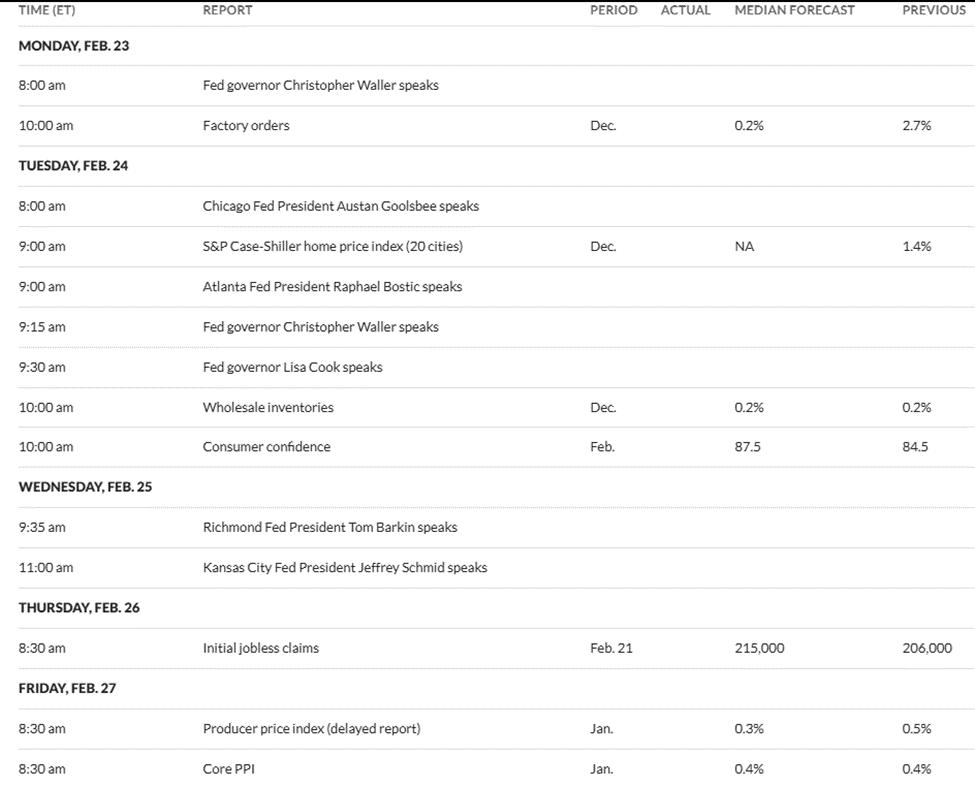
4 US economic events that traders are watching closely.
Interest rate expectations are currently very balanced, so this week's economic data could create further volatility in the crypto market.
Fed officials gave speeches.
A series Statements from Fed officials will take place continuously from Monday through Wednesday, including Governors Christopher Waller and Lisa Cook, Chicago Fed President Austan Goolsbee, Atlanta Fed President Raphael Bostic, and many others.
The market currently expects two to three interest rate cuts in 2026, so if Fed officials change their tone, interest rate expectations will adjust quickly.
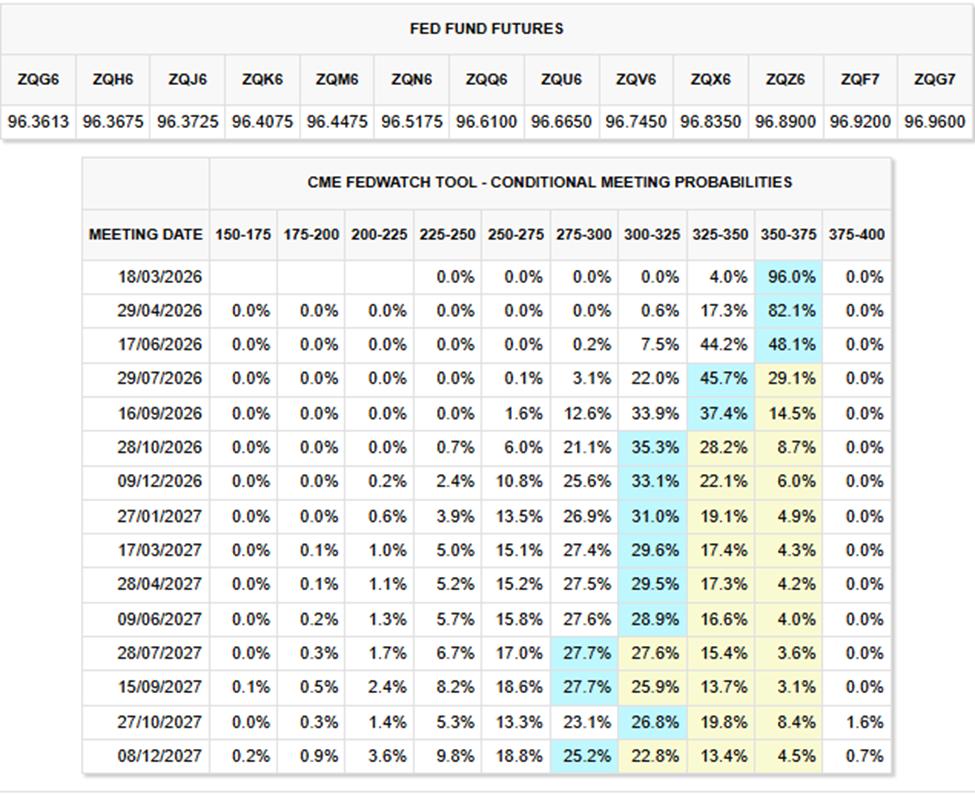 Probability of interest rate changes in 2026. Source: CME FedWatch Tool
History shows that Waller and Bostic often leaned towards a hawkish stance, emphasizing vigilance against inflation and reliance on data.
If these officials continue to express concerns about the final stretch of the fight against inflation or show signs of delaying interest rate cuts, Treasury bond yields will fall. The US dollar could also strengthen, putting pressure on Bitcoin and causing its price to fall further.
Conversely, if the dovish stance emphasizes slowing economic growth or signs of a weakening labor market, the USD could weaken, paving the way for gains in riskier assets like cryptocurrencies.
The close proximity of multiple officials can also cause significant market volatility throughout the day, especially if the messages are inconsistent. For Bitcoin traders, this week, the "tone" of Fed officials could create significant volatility, rather than necessarily specific policy changes. 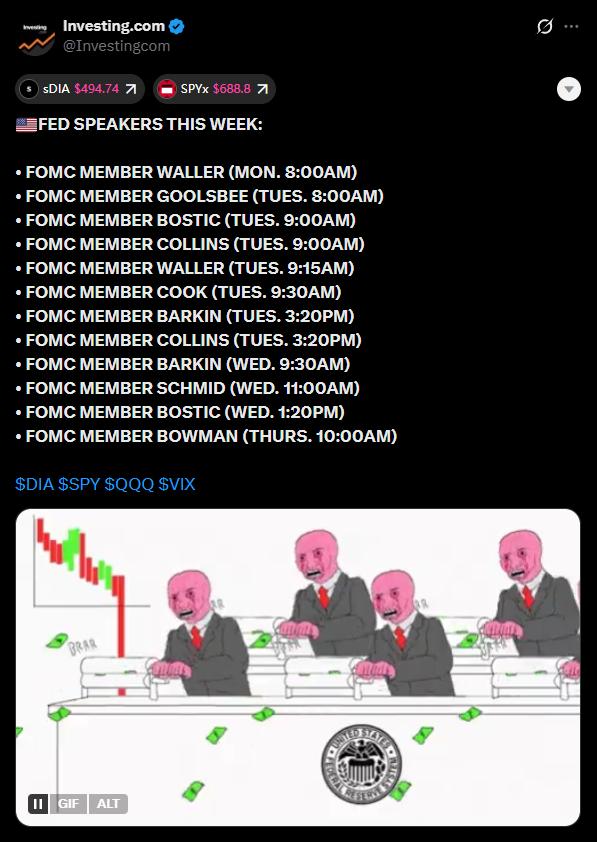
Consumer confidence
The Conference Board's February consumer confidence index will follow the weak 84.5 level from January, falling short of expectations and in line with... signs of decline in history.
The forecast for February is a slight increase to 87.5, but consumer sentiment remains subdued due to high living costs and inflation that has yet to subside.
Last week's PCE data showed inflation rising 2.7% year-on-year, and core inflation at 3.0%, indicating Dai price pressures. 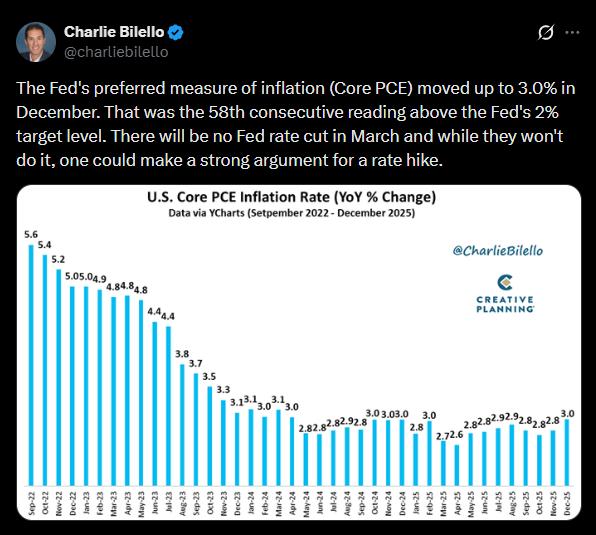
If the consumer confidence index exceeds expectations, especially above 90, this would reinforce the view that US consumer spending remains strong and strengthen the argument that the "economy has not landed."
That scenario could reduce the likelihood of an early interest rate cut, push the USD higher, and negatively impact Bitcoin in the short term.
Conversely, if the index falls below 85, it would indicate a weak economy. This situation could increase the likelihood of interest rate cuts, which the market is expecting in March, providing support for Bitcoin.
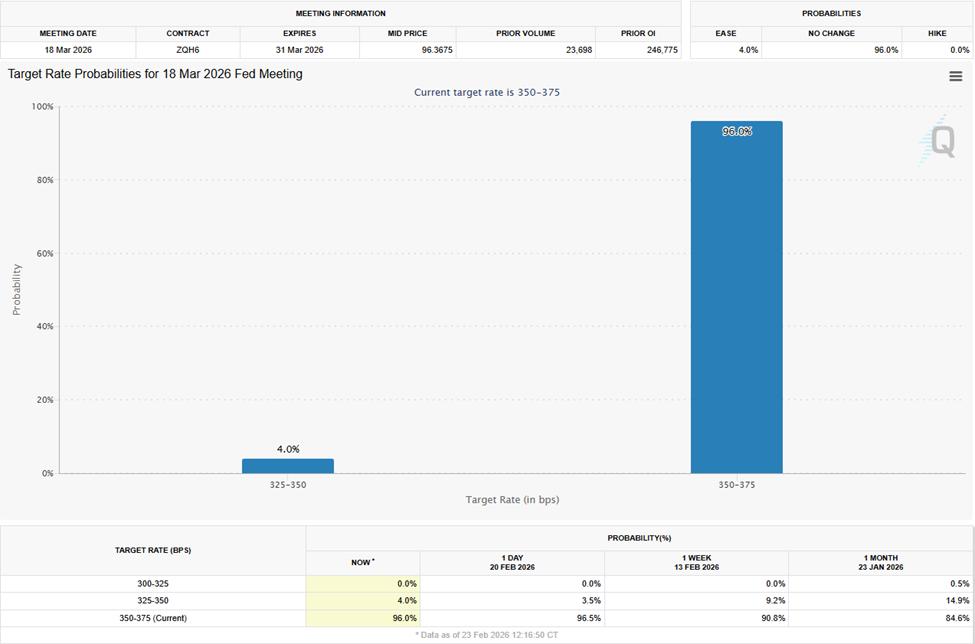 The probability of an interest rate cut in March. Source: CME FedWatch Tool
Previously, when consumer confidence indices produced surprises, the price of Bitcoin could fluctuate by 1–2%, especially when in sync with general macroeconomic trends.
Number of initial unemployment benefit applications
Meanwhile, the number of initial unemployment benefit claims remains at one. The fastest indicator of the health of the labor market . Last week's figures fell to 206,000 – lower than expected, further showing that the US workforce remains very strong, making the Fed hesitant to ease easing anytime soon. This week's forecast is 215,000. 
If the figure is below 210,000, it means the labor market is still strong. and could give more voice to those who want to keep interest rates high. in the Fed.
This scenario would lead to higher yields and slight downward pressure on Bitcoin. Typically, a strong labor market would cause the Fed to postpone interest rate cuts, meaning liquidation for risky assets like crypto would decrease.
Conversely, a surge above 225,000 would dampen concerns about the labor market, especially if combined with less-than-positive business surveys.
This scenario could raise recession fears and increase the likelihood of a Fed interest rate cut – a supportive signal for Bitcoin as investors await more favorable monetary policy.
Although weekly jobless claims reports typically cause BTC to fluctuate by 0.5–1.5%, the market reaction could be stronger if the released data differs significantly from what the Fed has previously stated.
PPI (Producer Price Index) – Producer Price Index
The PPI (Producer Price Index) for January will be the final index this week, with forecasts for both the overall and core indices around 3.0% year-on-year.
Following the release of last week's PCE index, the PPI provides an early glimpse into inflationary pressures from the producer side – before they impact consumers.
If the core index is higher than expected (above 3.2%), concerns about inflation could flare up again and confidence in interest rate cuts would decrease. This could repeat the situation of a stronger USD, higher real yields, and downward pressure on Bitcoin, similar to what happened after the recent PCE release.
Conversely, if the PPI falls below 2.8%, the market will reinforce the view that inflation is under control. Investors would then expect the Fed to aggressively cut interest rates, the USD to weaken, and Bitcoin to potentially head towards $70,000. 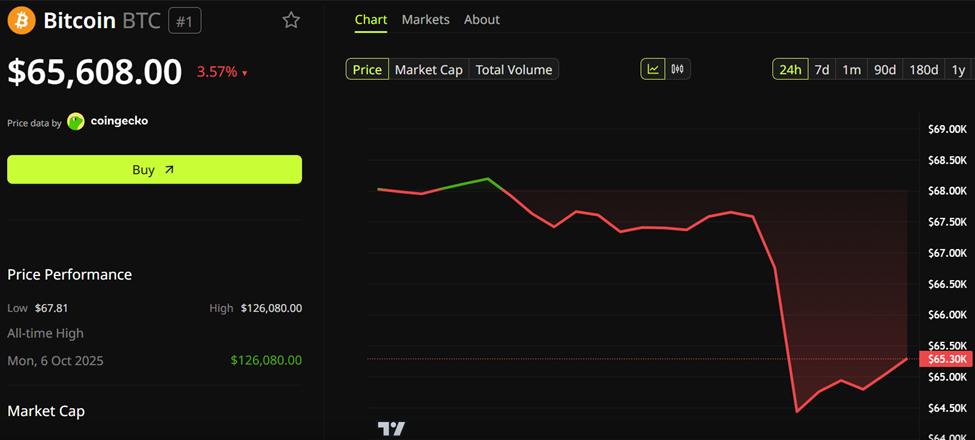 Bitcoin (BTC) Price Performance
As a report typically released at the end of the month, the PPI usually has a trend-consolidating effect during the week. If the results are unexpected, along with the unemployment report, Bitcoin could fluctuate within a 2–3% range.
Present, With the correlation between Bitcoin, Nasdaq, and the USD at multi-month highs, macroeconomic factors continue to be the most important story.
If this week's reports lean towards "easing," BTC could rise 3–5%. Conversely, if all signals point towards "tightening," Bitcoin could experience a similarly sharp decline. Expectations regarding liquidation remain the deciding factor, rather than the fundamentals of the crypto market.