Despite Bitcoin's weak price performance over the past year, its adoption curve tells a completely different story.
Written by: River
Compiled by: Chopper, Foresight News
Despite a 50% drop in Bitcoin's price from its all-time high, its adoption continues to grow, though this isn't reflected in the price. Here are 8 adoption trends that might surprise you.
Institutions are buying Bitcoin at a record pace.
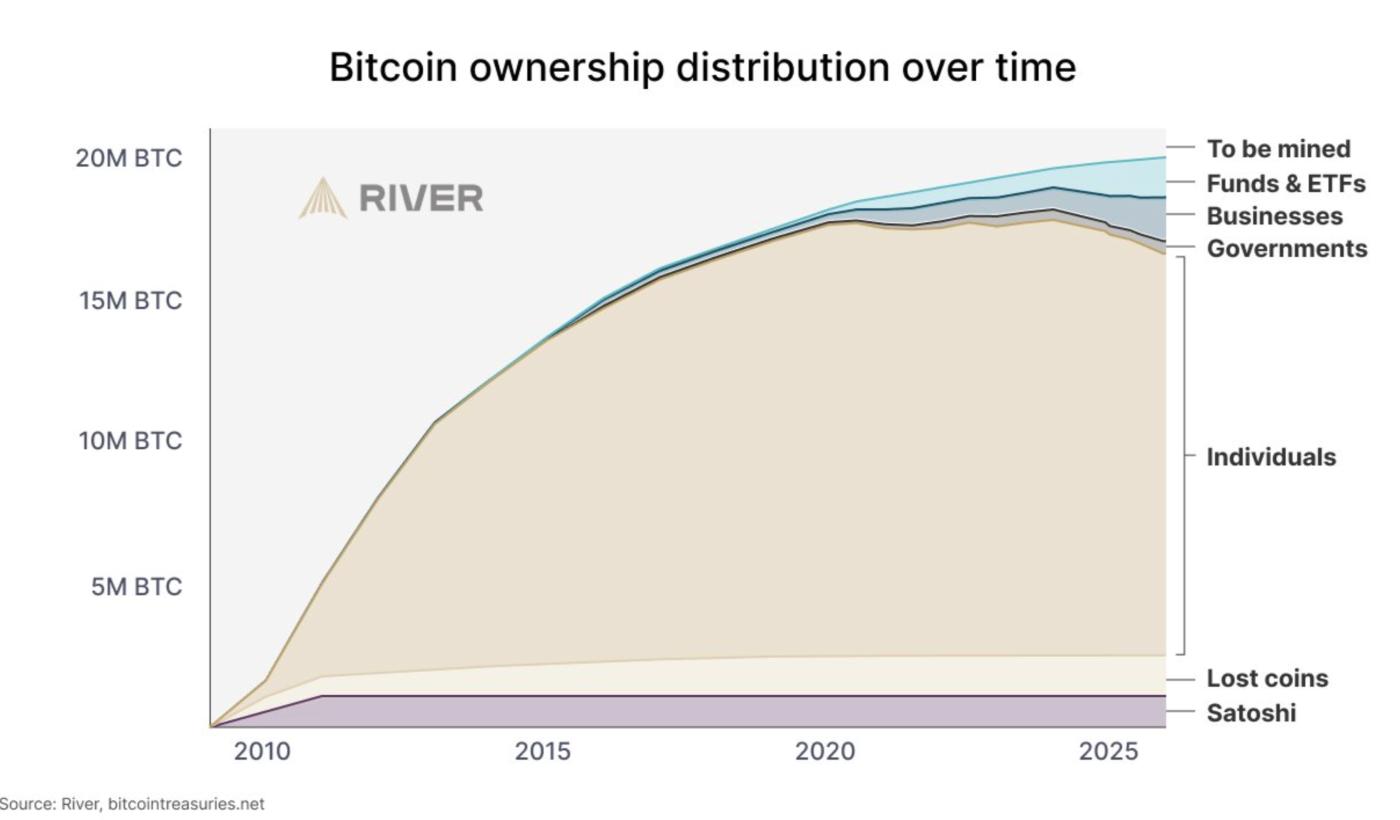
In 2025, various institutions accumulated 829,000 Bitcoins, including enterprises, governments, funds, and ETFs.
Importantly, these institutions represent millions of ordinary investors who first encountered Bitcoin through brokerage accounts, pension funds, sovereign wealth funds, and corporate balance sheets.
Who sold them Bitcoin?
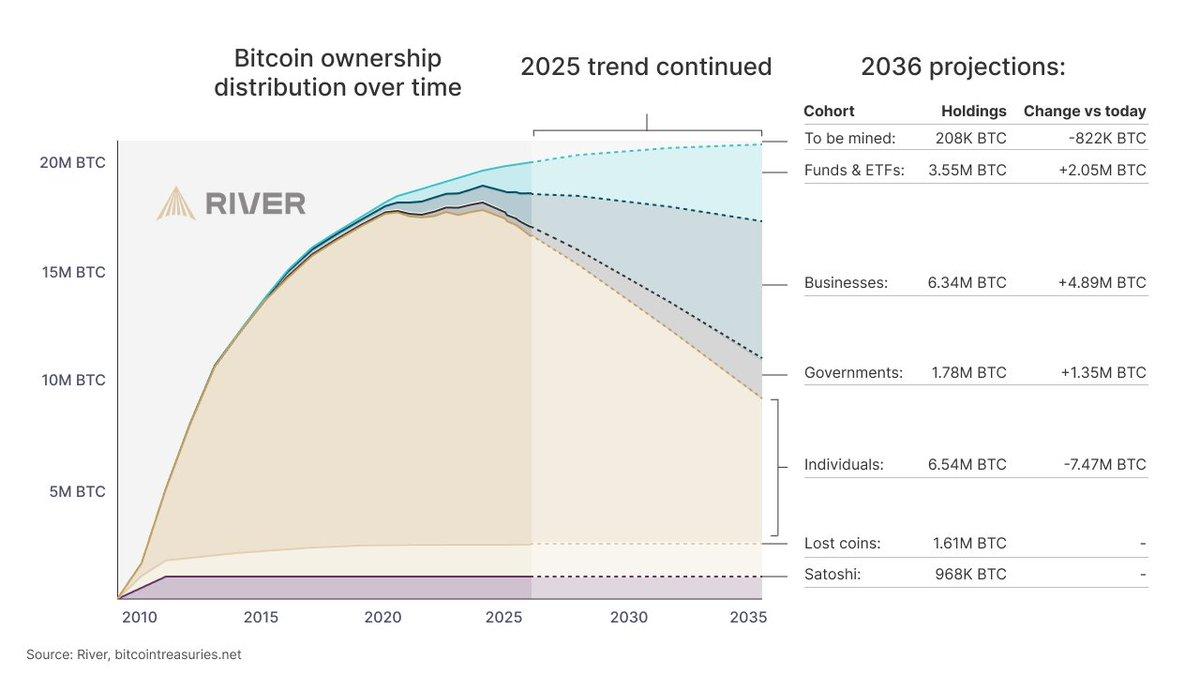
The selling pressure in 2025 will primarily come from long-term holders and whale. These early participants completed their positions years ago and are now gradually selling in deeper, more liquid markets. If this trend continues, institutions may hold the majority of Bitcoin's circulating supply within a decade, but currently individuals still control about two-thirds of the supply.
Ultimately, they determine the marginal price at which institutions can establish positions. Institutional entry will not replace individual holdings, but rather expand access to the entire market. Many of today's ETF holders will become future self-custodians.
Investment advisors have been net buyers for eight consecutive quarters.
Registered investment advisors (RIAs) constitute the world's largest group of investors, managing approximately $146 trillion in client assets. They have only just begun allocating assets since the launch of the Bitcoin ETF in 2024. Even in these early stages, their activity has been remarkably active:
Over the past two years, RIA has invested approximately $1.5 billion in Bitcoin ETFs each quarter, with no net selling quarters.
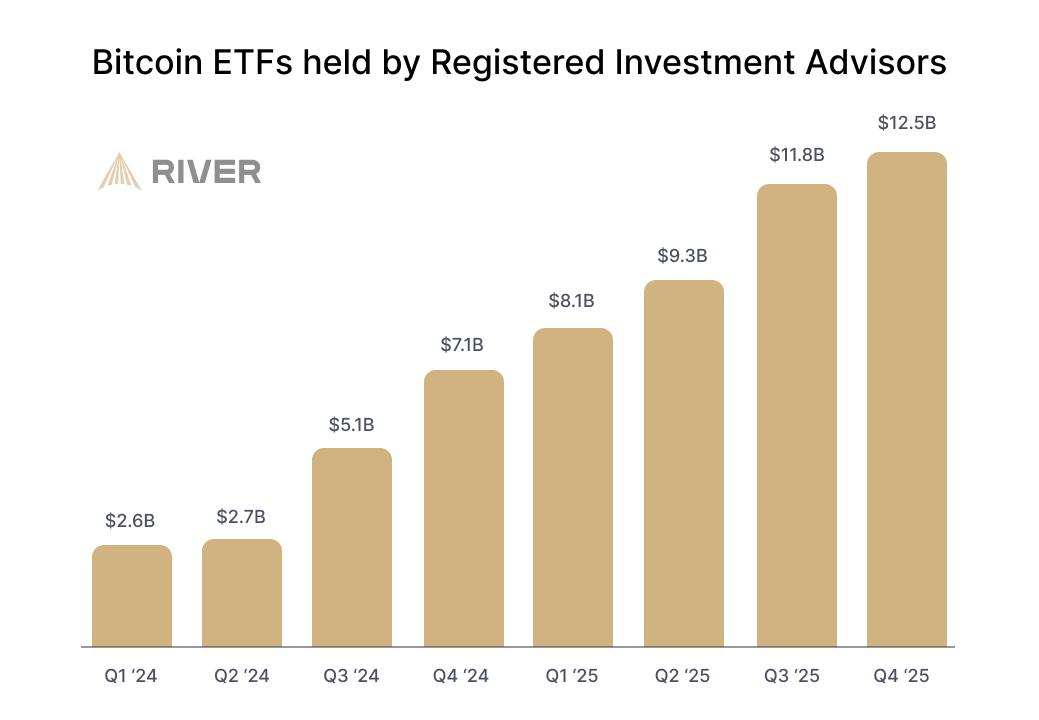
Bitcoin adoption is widespread among RIAs: 29 of the top 30 RIAs in the US have allocated Bitcoin, but the average position is extremely low, at only 0.008%.
60% of top US banks are building Bitcoin products.
With the regulatory environment in the United States improving, banks can now hold Bitcoin in custody and offer Bitcoin products to their customers.
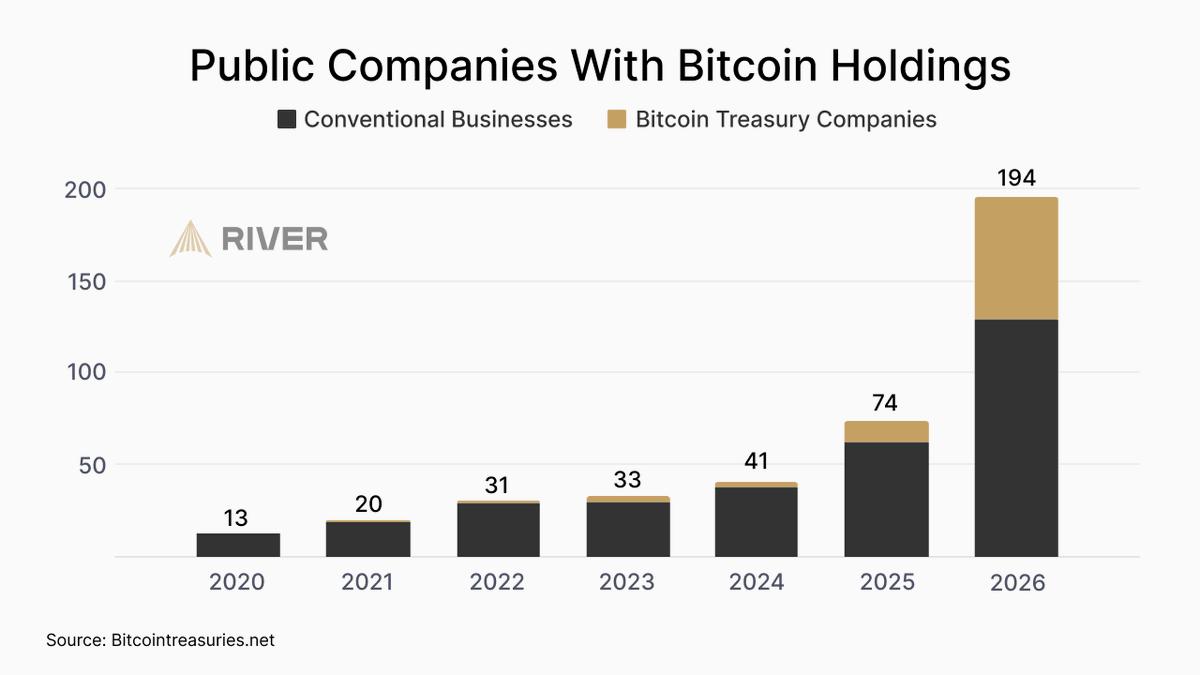
The adoption rate by listed companies is expected to increase 2.5 times by 2025.
In 2025, corporations became the largest buyers of Bitcoin, with the main force coming from crypto asset treasury companies.
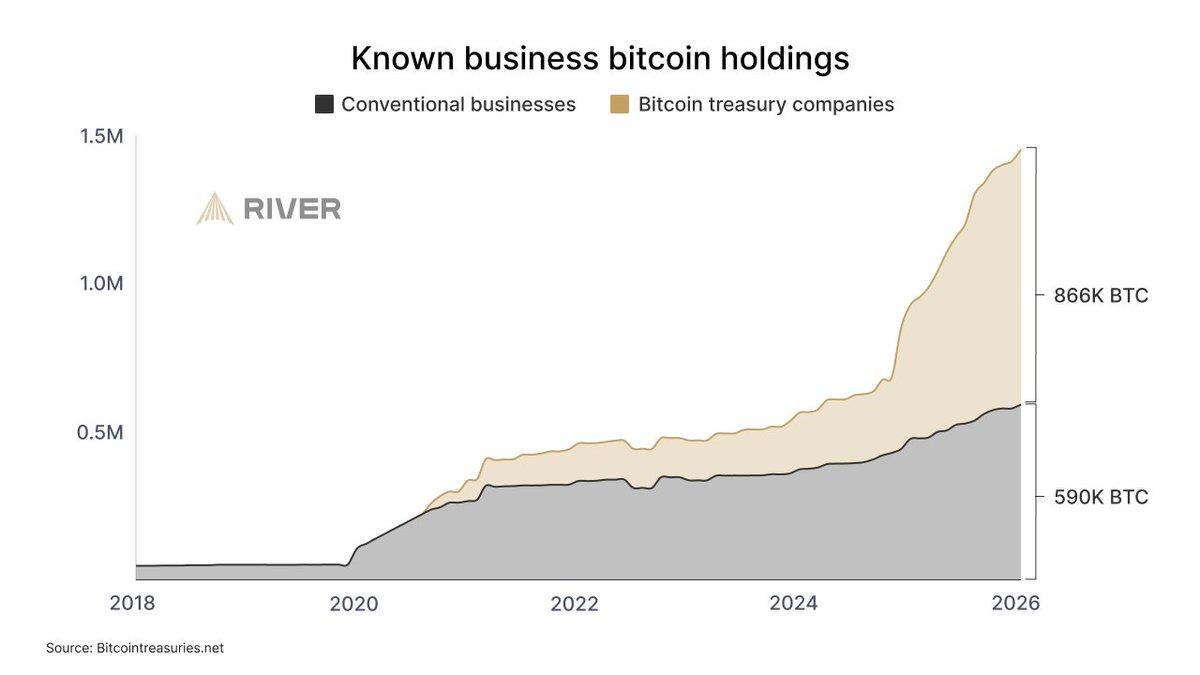
Besides specialized crypto treasury companies, many large enterprises are also quietly and gradually increasing their Bitcoin holdings.
This type of business model is expected to become widespread among S&P 500 constituent stocks in the coming years.
Merchant adoption rate is projected to grow by 74% by 2025.
The number of businesses in the US accepting Bitcoin payments has tripled, and global usage has increased by 74%. Companies including SteaknShake have demonstrated that Bitcoin payments can reduce transaction costs and increase profits.
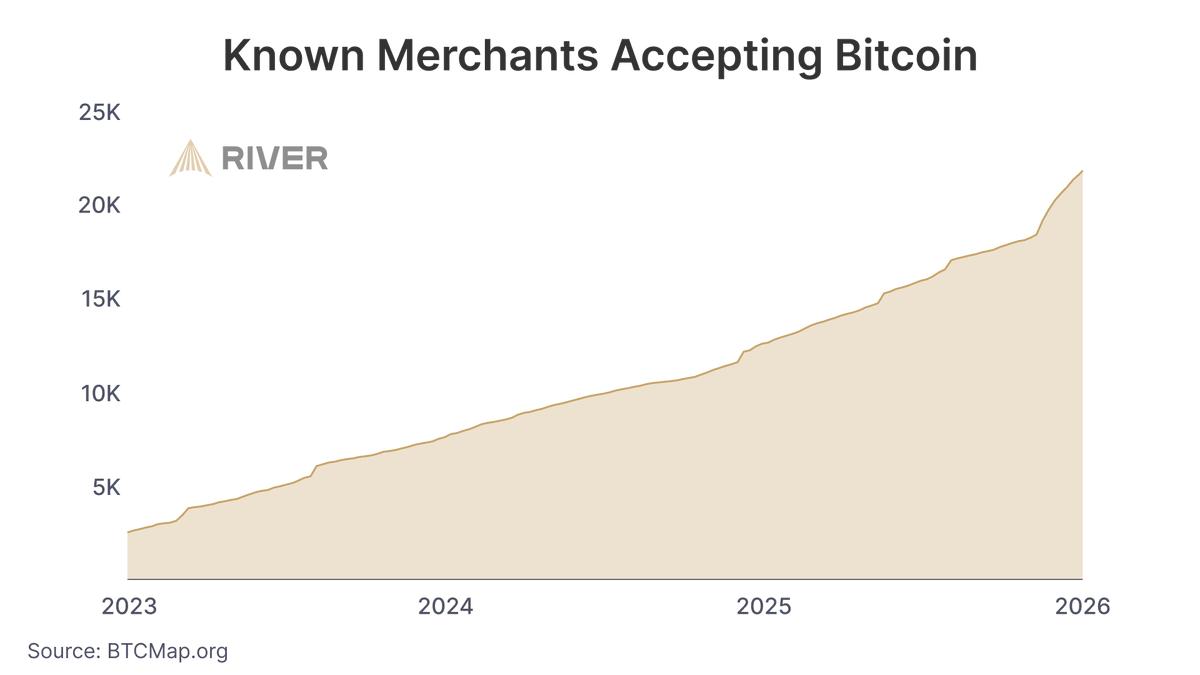
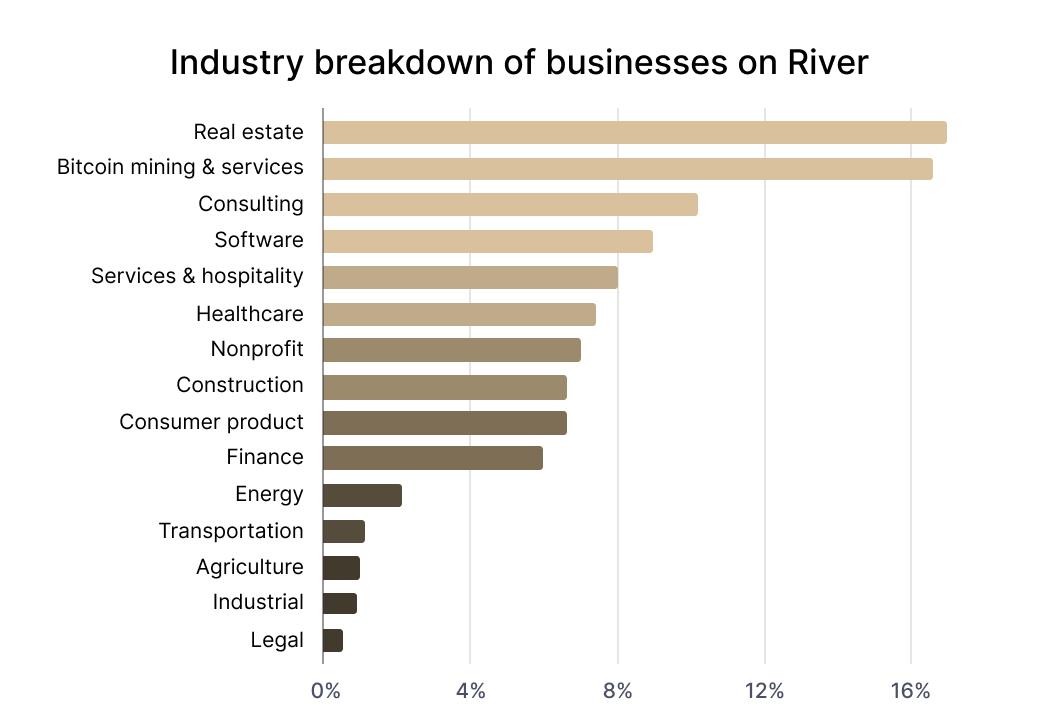
These companies are mostly small and medium-sized enterprises (SMEs) that do not publicly disclose their Bitcoin strategies. River serves over 3,000 companies across various industries and has witnessed the most rapid adoption growth among small, privately owned companies.
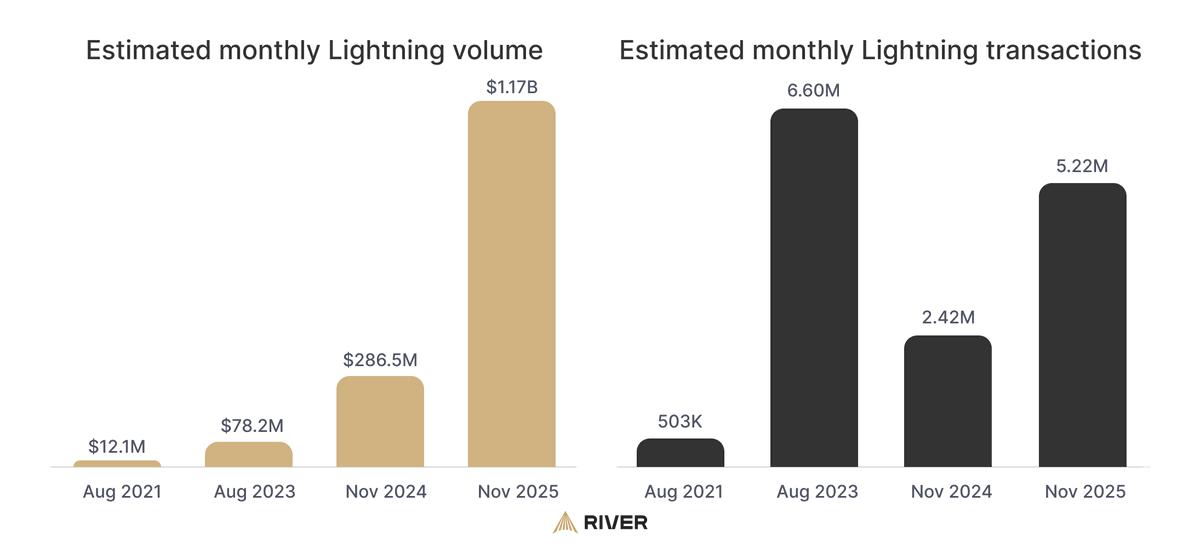
Lightning Network is projected to grow by 300% by 2025.
It is estimated that the Lightning Network currently processes over $1.1 billion in transactions per month. This growth is primarily driven by organic adoption from exchanges and merchants.
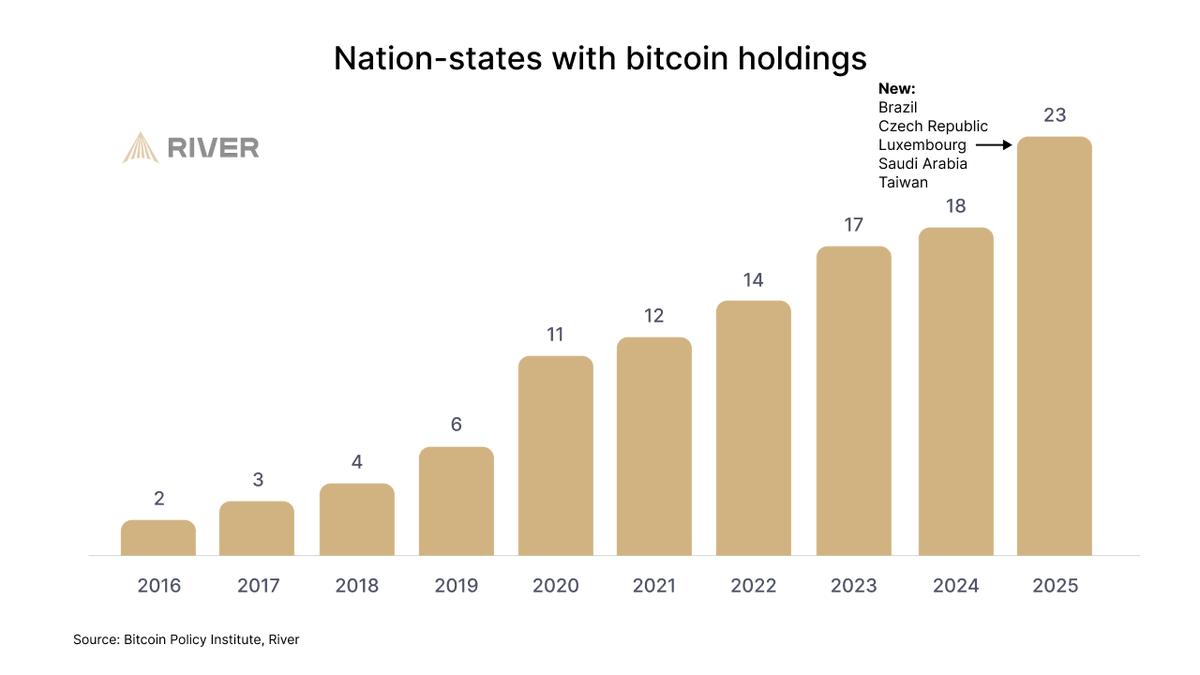
Five more sovereign nations have added Bitcoin holdings.
In 2025, five more countries became Bitcoin holders, including two sovereign wealth funds (Luxembourg and Saudi Arabia) and one central bank (Czech Central Bank).
These countries acquire Bitcoin through official mining, direct purchases by central banks/funds, ETFs, donations, confiscation, and hacker recovery.
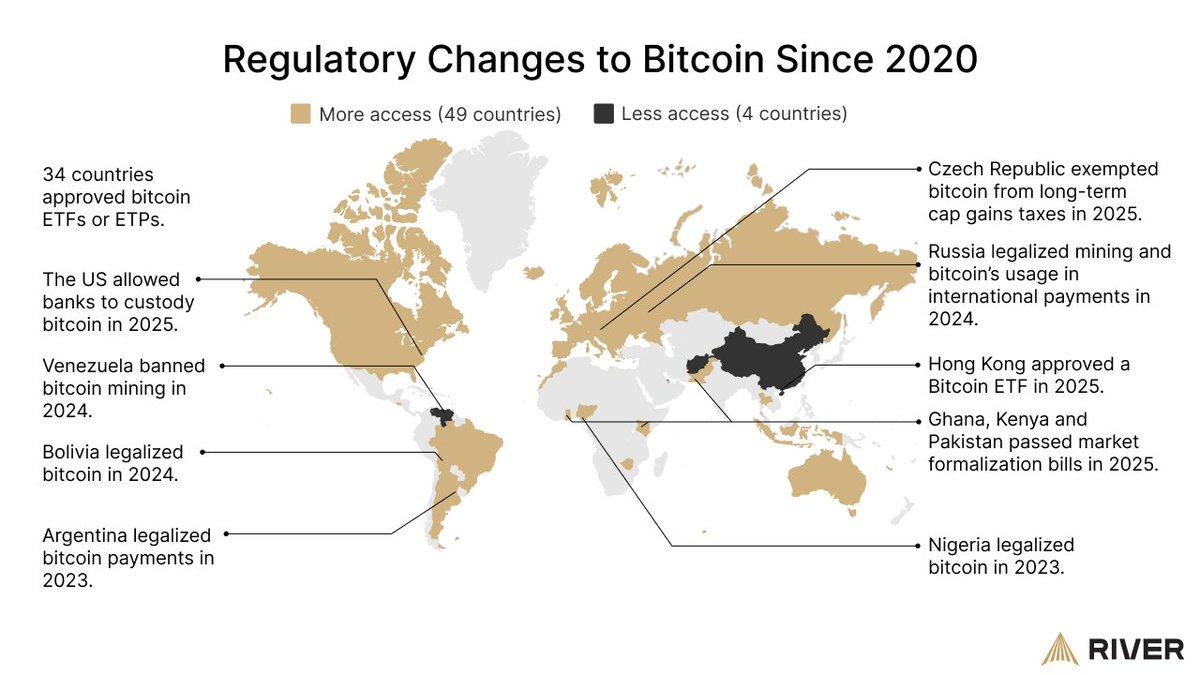
Furthermore, since Afghanistan in 2022, no country has banned Bitcoin for four years. Clearly, embracing Bitcoin is in the best interest of all nations.
Bitcoin is no longer "too volatile".
Bitcoin has continued its decade-long trend of declining volatility and is approaching the levels of gold and the S&P 500.
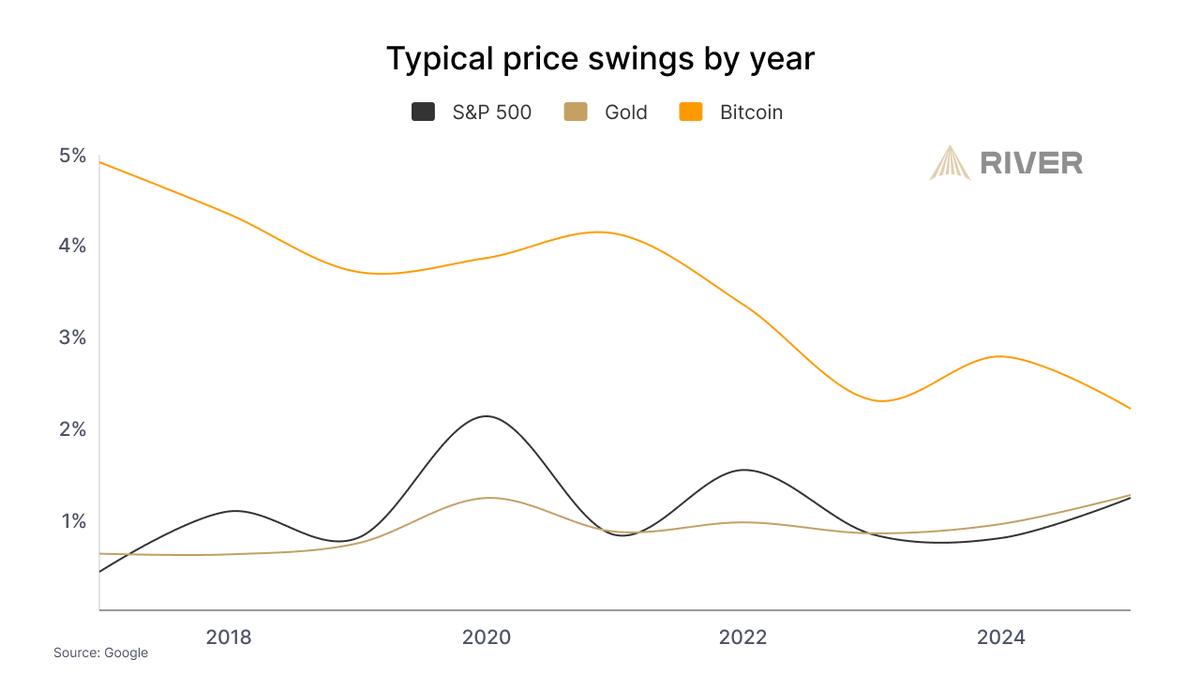
Why is this important? It signifies that Bitcoin is being viewed as a mature asset class. Lower volatility means a lower barrier to entry for risk-averse capital.
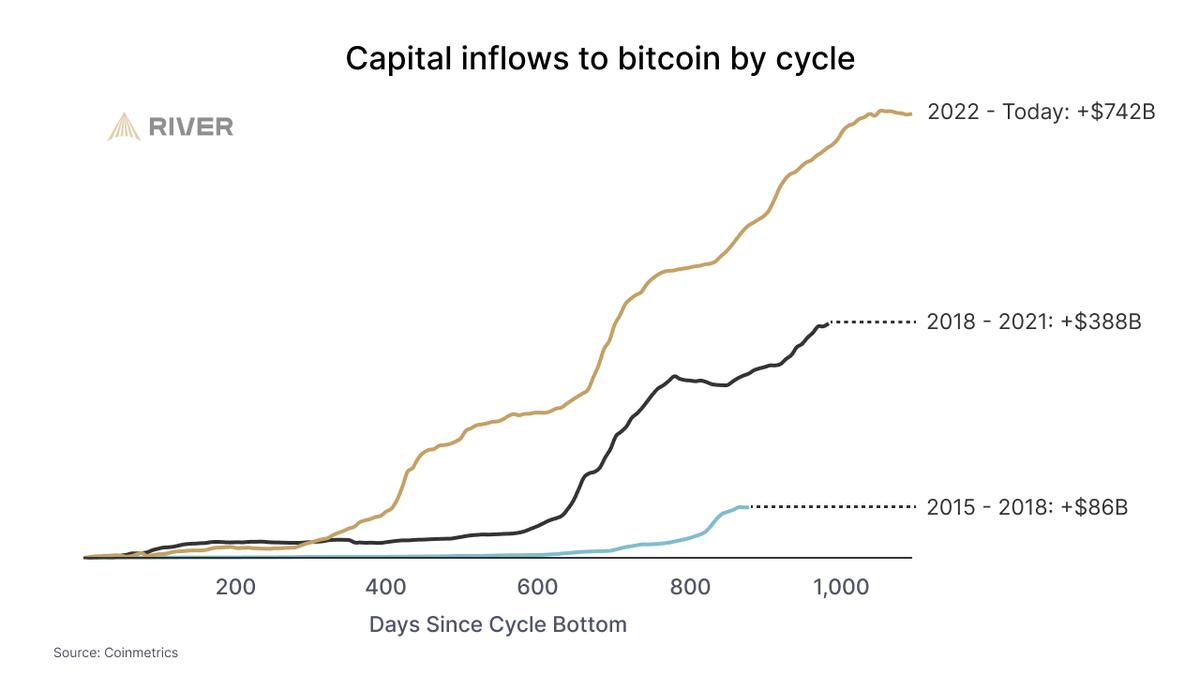
In the long run, this will open up a much larger pool of funds. The last bull market proved that Bitcoin attracted more funds in three years than all previous bull markets combined.
Looking to the future
Despite Bitcoin's lackluster price performance over the past year, the adoption curve tells a completely different story. Current adoption won't cause prices to skyrocket tenfold overnight, but it's more significant on many levels.
Every year, the trust in Bitcoin among individuals, businesses, institutions, and sovereign nations deepens as it continues to prove itself as the world's only scarce and immutable digital currency. We expect Bitcoin adoption to not only continue this trend in the coming years but to accelerate significantly.