After OpenClaw was banned by Google, Perplexity dropped a bombshell by launching Perplexity Computer, allowing 19 of the world's top AI engineers to work for them without any manual intervention. Meanwhile, Anthropic's announcement of a major acquisition significantly transformed Claude's execution capabilities.
Article author and source: Synced
The best affordable alternative to OpenClaw is here!

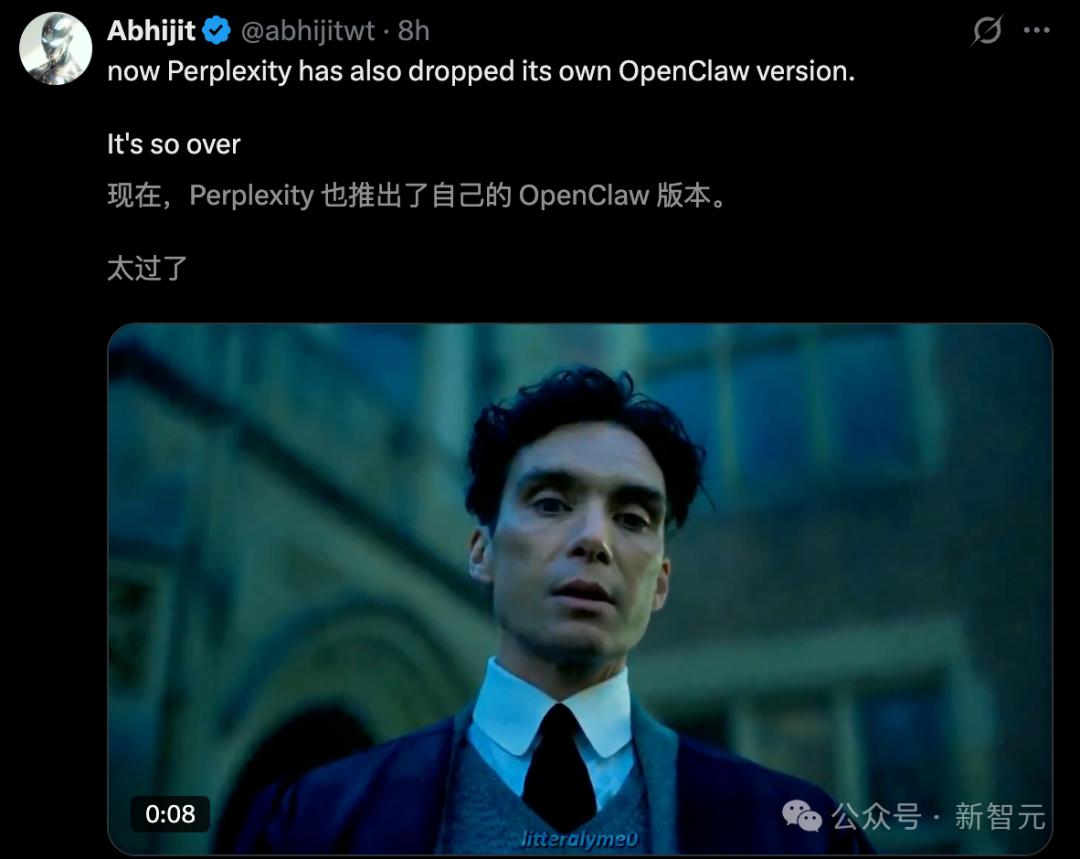
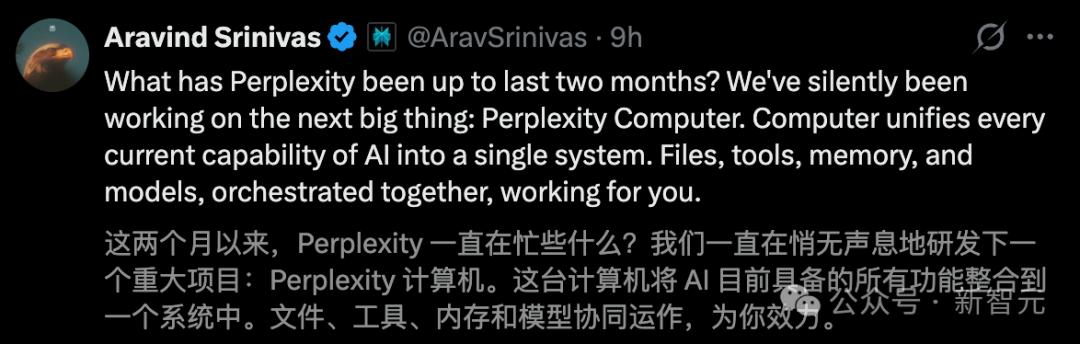
Today, Perplexity unveiled the "Perplexity Computer," a system that allows users to install the world's most powerful AI into a single system with a single click.
It can complete the entire process "end-to-end", including research, design, coding, deployment, and management of any project.
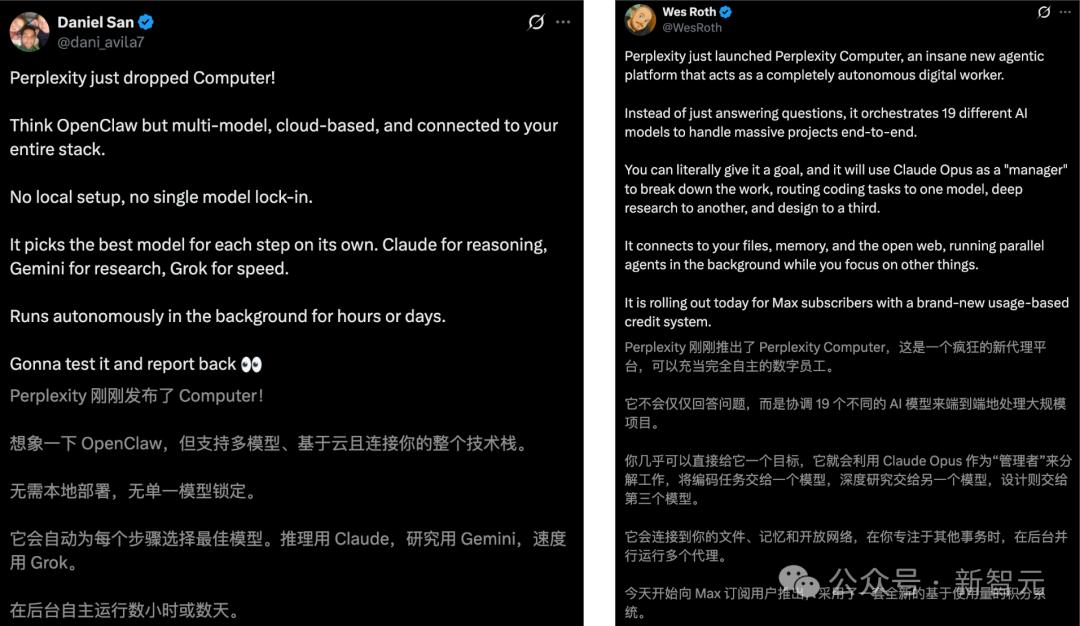
More specifically, the Perplexity Computer is an extremely powerful multimodal system that allows multiple AI agents to work in parallel through precise orchestration.
The underlying logic is to allow Claude Opus to assign different subtasks to the most suitable models, up to 19 models.
It automatically selects the best model for each step: Claude for inference, Gemini for research, and Grok for speed, and can run autonomously in the background for hours or even days.
While Perplexity was betting on agents controlling computers, Anthropic was not to be outdone.
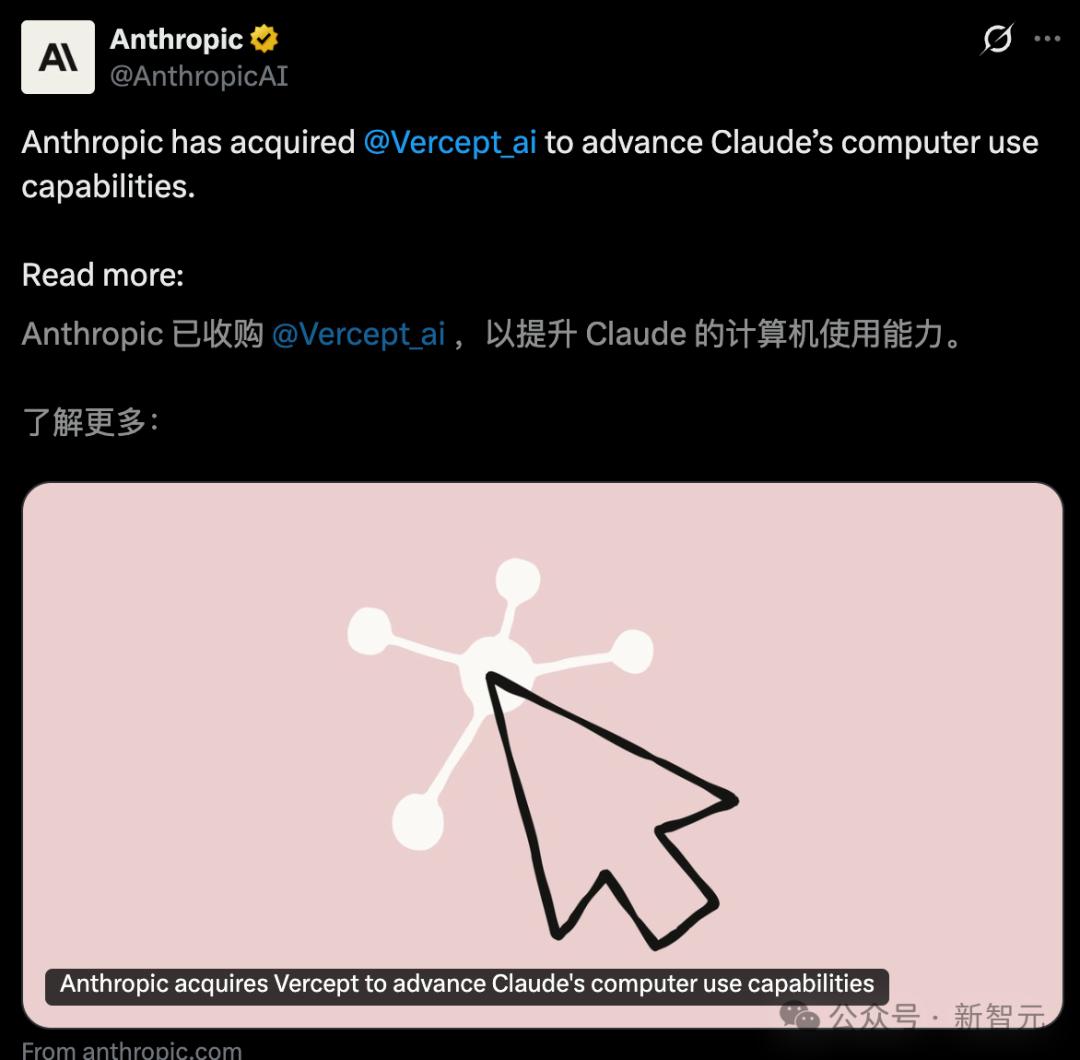
Also today, Anthropic made a lightning acquisition of startup Vercept, whose core capabilities will be integrated into Claude in the coming weeks.
Perplexity Computer raided Silicon Valley, with 19 large models working together.
Perplexity Computer defines what a personal computer should look like in 2026.

It is tailored to individuals, not only remembering the user's past work, but also being secure and reliable by default.
The system also has hundreds of built-in connectors, persistent memory, and direct access to files and the internet.
Whether you're clearing your to-do list, moving forward with an ongoing project, or starting a new side project, Perplexity Computer can handle it all.
Today, no longer limited to any single task, people can advance hundreds of projects simultaneously, much like conducting an orchestra.
Perplexity scientists say this is OpenClaw designed for ordinary people, and also the smartest "colleague" they've ever worked with.

The birth of the Perplexity Computer marked the beginning of the "all-powerful agent" era for personal computing.
Suppose we want to know "Is Nvidia's valuation low?", we can have Computer compile the order information of multiple companies such as AMD, AVGO, INTC, QCOM, and TSMC, and then visualize it on the web.
Perplexity Computer also has a clip from Dario Amodei's latest podcast where he discusses "model differentiation".
AI was able to edit this video, converting the footage to a vertical format suitable for TikTok, and adding subtitles.
For example, you might want to buy a Walter White house and then convert it into a short-term rental.
If you want to calculate the return on investment for renting this property on Airbnb, Computer can help you build a financial model.
It's worth mentioning that behind Perplexity Computer's formidable capabilities stands a remarkably unassuming technical genius.
He is Alex Graveley, the former chief architect of GitHub Copilot.
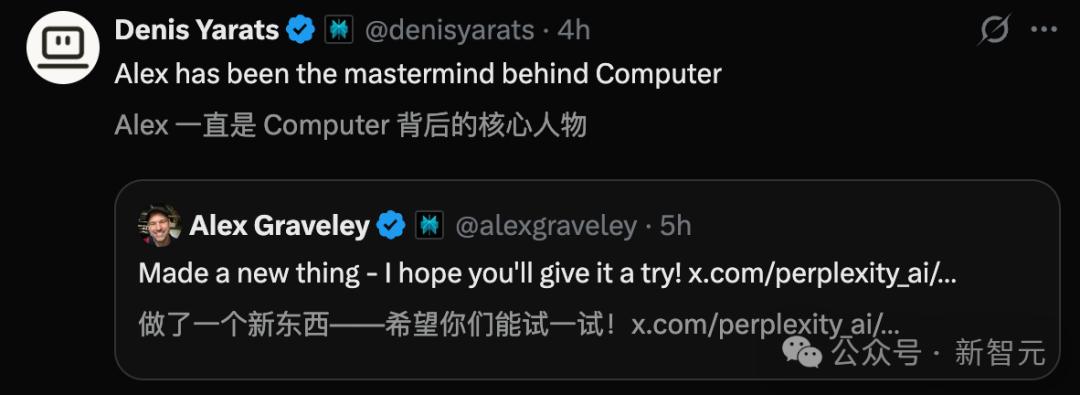
During his two years at Perplexity, he also developed the AI-native browser Comet.
Currently, Perplexity Computer is available on the web to Max subscribers, offering 10,000 credits per month.
The core model adopts a "pay-as-you-go" approach, allowing users to select specific models for different sub-agents and set a token cap.
To celebrate the launch, both existing and new registered users will receive a limited-time reward of 20,000 points, valid for 30 days.
Founder's In-Depth Article: AI is Computers
Following the release of the Perplexity Computer, founder Aravind Srinivas published an in-depth article that redefined the concept of "computer" in the AI era.
He bluntly pointed out that the lack of "cross-family collaboration" in single models has become a bottleneck to productivity.
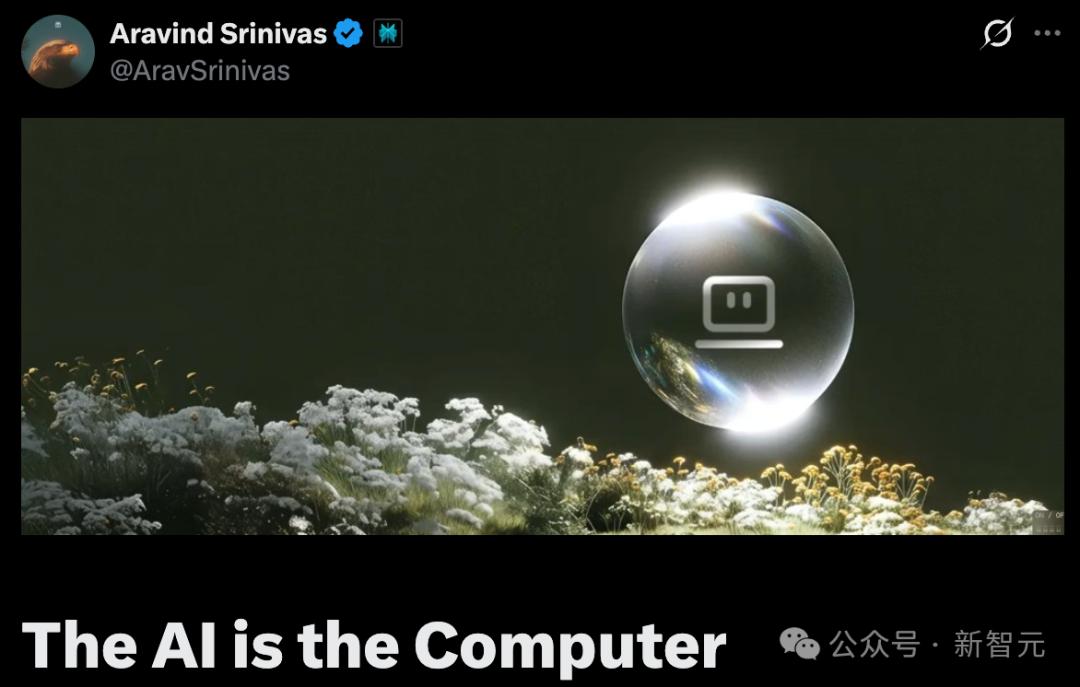
In the article, he revealed for the first time the secret experiment codenamed "ASI".
Initially, it was just a Slack plugin, but it has shown a terrifying ability to evolve—
It acts like a digital employee, capable of autonomously breaking down tasks, creating sub-agents, calling hundreds of tools, and even writing code in a cloud sandbox.
AI is no longer a simple dialog box, but a complete "computer" with file system, browser, and shell permissions.
Furthermore, Srinivas analyzed the evolution of computing history: from Google Chromebook's misjudgment of the difficulty of "reading" in 2011 to AI's complete solution to information retrieval and synthesis today.
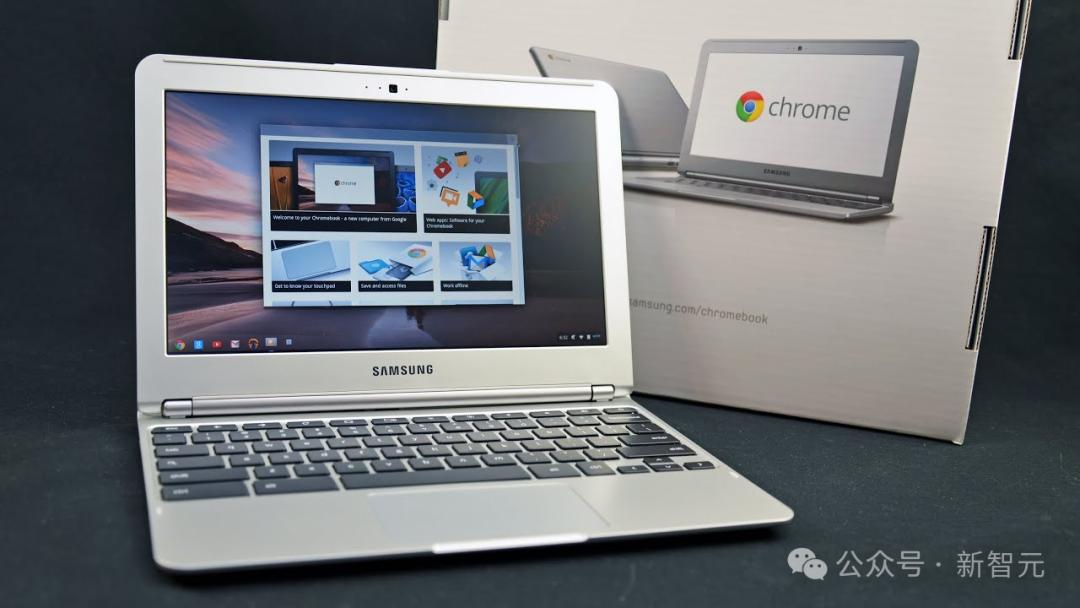
He believes that future computers will no longer be cumbersome GUIs, but should be "symphony orchestras" composed of 19 or even more AIs.
Claude's biggest weakness is that it can only work with Claude.
True "super intelligence" should allow models that excel at coding to write code, and models that excel at reasoning to handle logic.
Srinivas stated that by 2025, a new model will be released on average every 17 days, and the moat of computation will shift from the underlying code to the ability to schedule heterogeneous models.
This "symphonic" collaborative paradigm foreshadows the collapse of the traditional OS's moat, and the arrival of an era where "AI is the computer."
Create a financial app with one click, outperforming tools costing $30,000.
Compared to Perplexity's self-promotion, real-world testing across the internet is more convincing.
You can choose from three models based on your preference: Claude, Gemini, and GPT.
And here it is, disrupting traditional high-end financial instruments...
Through multi-model collaboration, Perplexity Computer has built a "real-time financial terminal" comparable to Bloomberg's in one go.
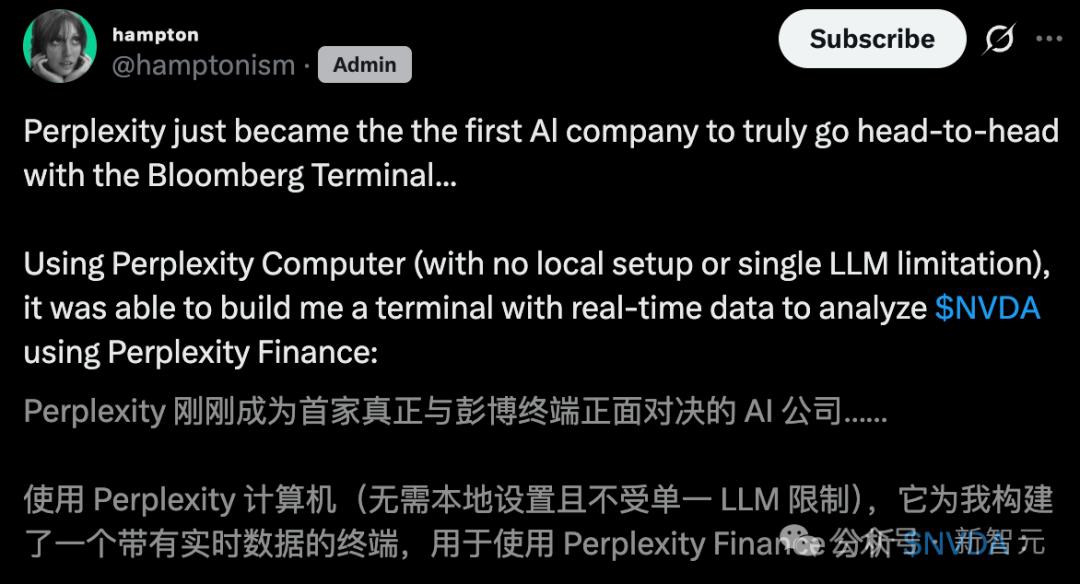
In the demonstration below, it can perform in-depth analysis of Nvidia stock, including stock price charts, company information, financial summaries, and market insights.
It's worth noting that the Bloomberg terminal costs as much as $30,000 a year, and its main value lies in real-time data, network access, and expert access.
Netizens bluntly stated that Bloomberg's monopoly on the interface is likely to come to an end.
Even more impressively, with just one sentence, Perplexity Computer created a web application that can display the real-time locations of satellites around the world.
It retrieved two-line element (TLE) orbital data for approximately 1,500 satellites across 10 satellite constellations from CelesTrak.
Then, the satellite.js library is used to perform SGP4 orbit extrapolation calculations, which are updated every second to convert the Kepler orbital elements of each satellite into geographical locations in real time.
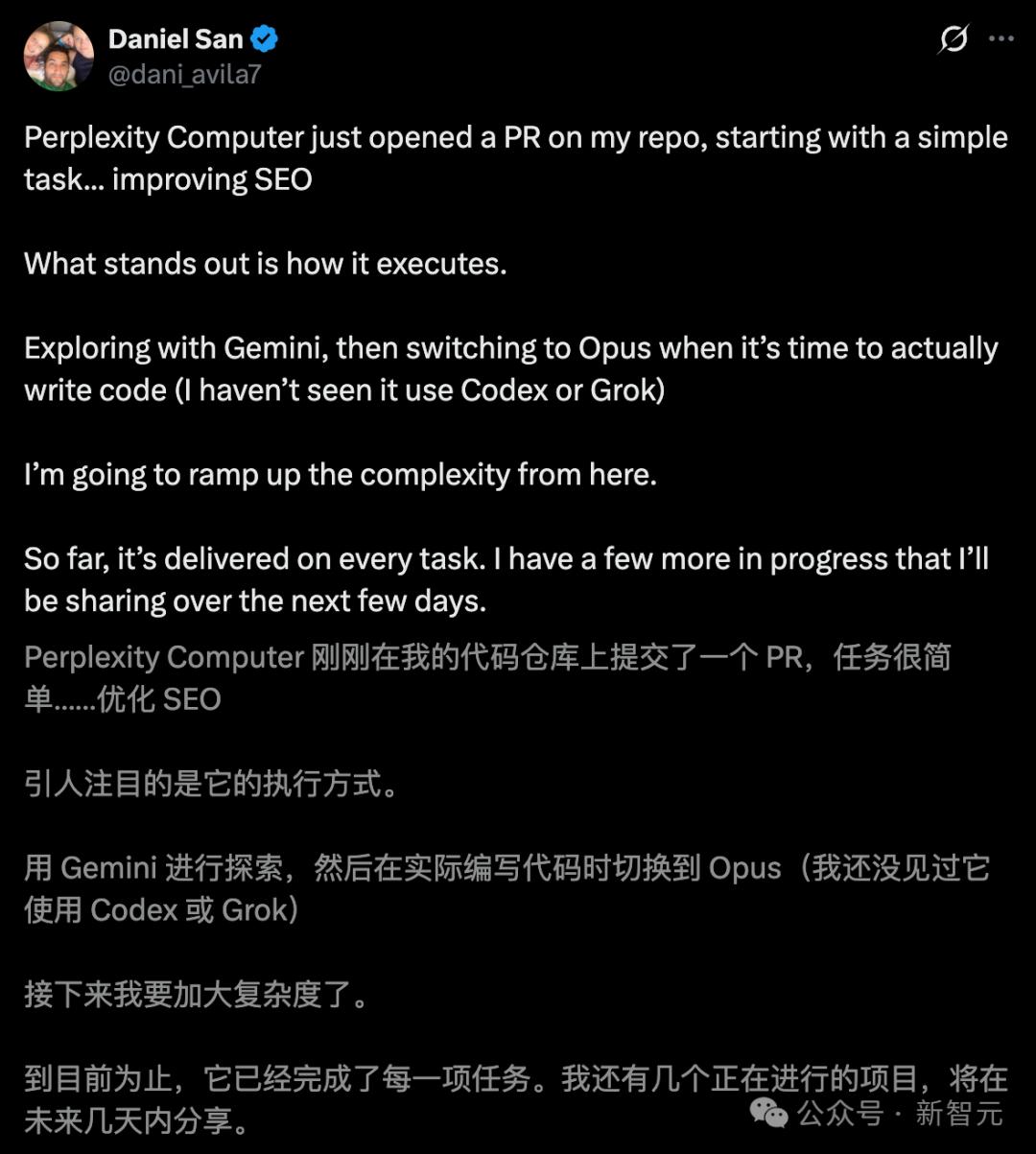
In performing specific tasks, the Computer can autonomously assign tasks to different models.
The developers had Gemini submit a pull request on GitHub, while Opus did the exploration and writing the code.
It can also build detailed Nvidia valuation analyses with zero samples.
Anthropic strikes again; Claude controls the computer like a human.
OpenClaw has become the latest trend, and even Anthropic is constantly enhancing Claude's "hands-on skills".
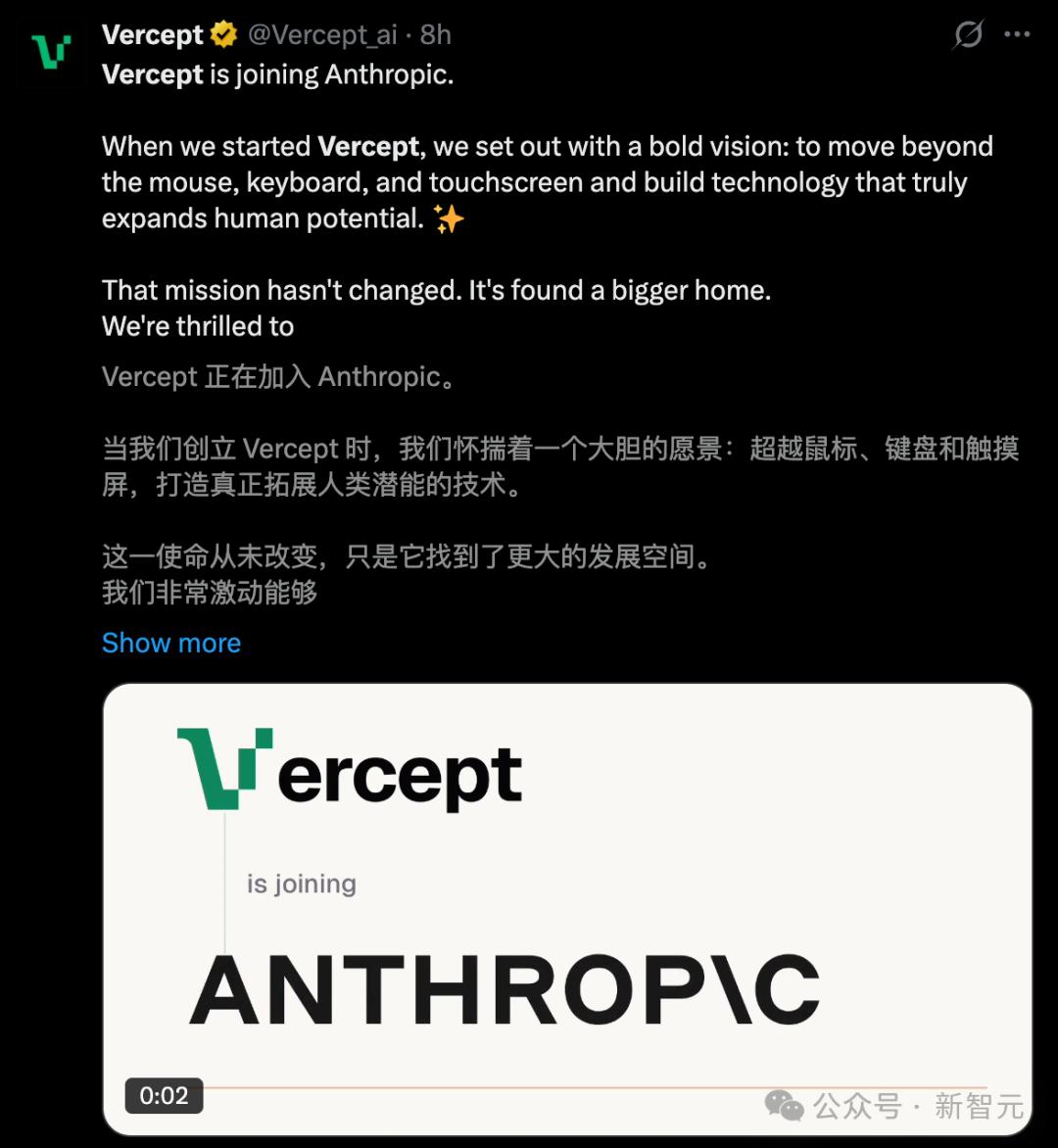
Today, Anthropic officially announced its acquisition of AI startup Vercept.
This action has a very clear goal—to enable Claude's "computer use" ability to go beyond simply operating the computer to thinking like a human.
For a long time, the bottleneck for agents in handling complex tasks has been their inability to perceive and interact with software like humans do.
Vercept is the expert in solving this problem.
It was founded in 2024 by former Meta and Ai2 industry leaders Ross Girshick, Luca Weihs, and Kiana Ehsani.
Since its inception, Vercept has been deeply involved in exploring how AI systems can "observe" and "act" in everyday software, much like humans do.
This expertise aligns perfectly with the top-level challenges that Anthropic is currently working hard to overcome.
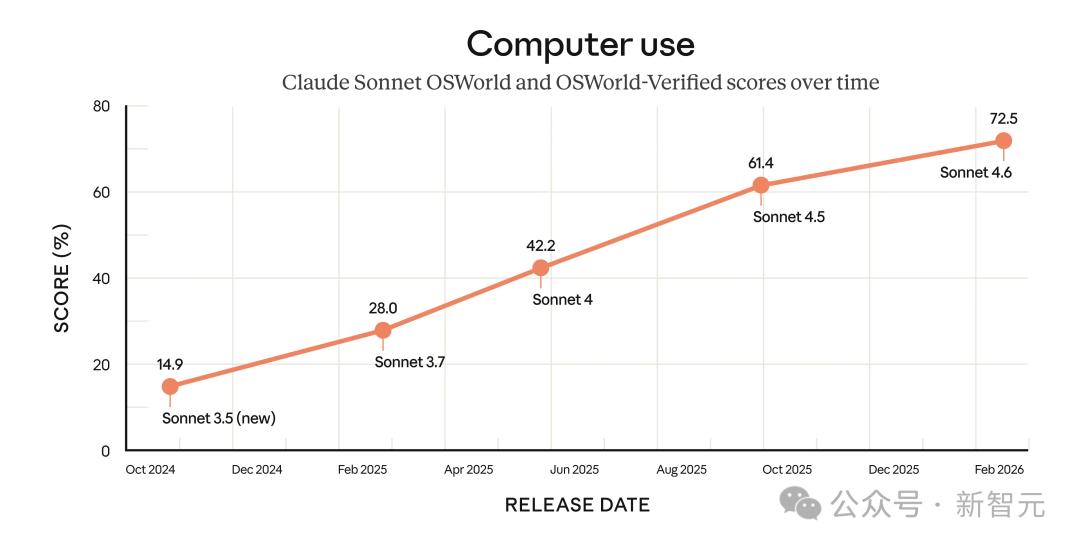
Last week, Claude Sonnet 4.6 achieved amazing performance in "Computer Usage"—
In the OSWorld benchmark test, it has skyrocketed from less than 15% at the end of 2024 to 72.5% today, approaching human-level performance.
In the coming weeks, Vercept's capabilities will be fully integrated into Claude.
Following its acquisition of Bun, Anthropic has once again demonstrated its superior capabilities, declaring to the world that the future competition in AI will depend on who has the better "hands."
References:
https://x.com/natjjin/status/2026741364038488322?s=20
https://www.perplexity.ai/products/computer