Okay, okay, OpenAI and Google's new model have clashed again!
In the early hours of March 4th, just after Google released Gemini 3.1 Flash-Lite, OpenAI updated GPT-5.3 Instant .
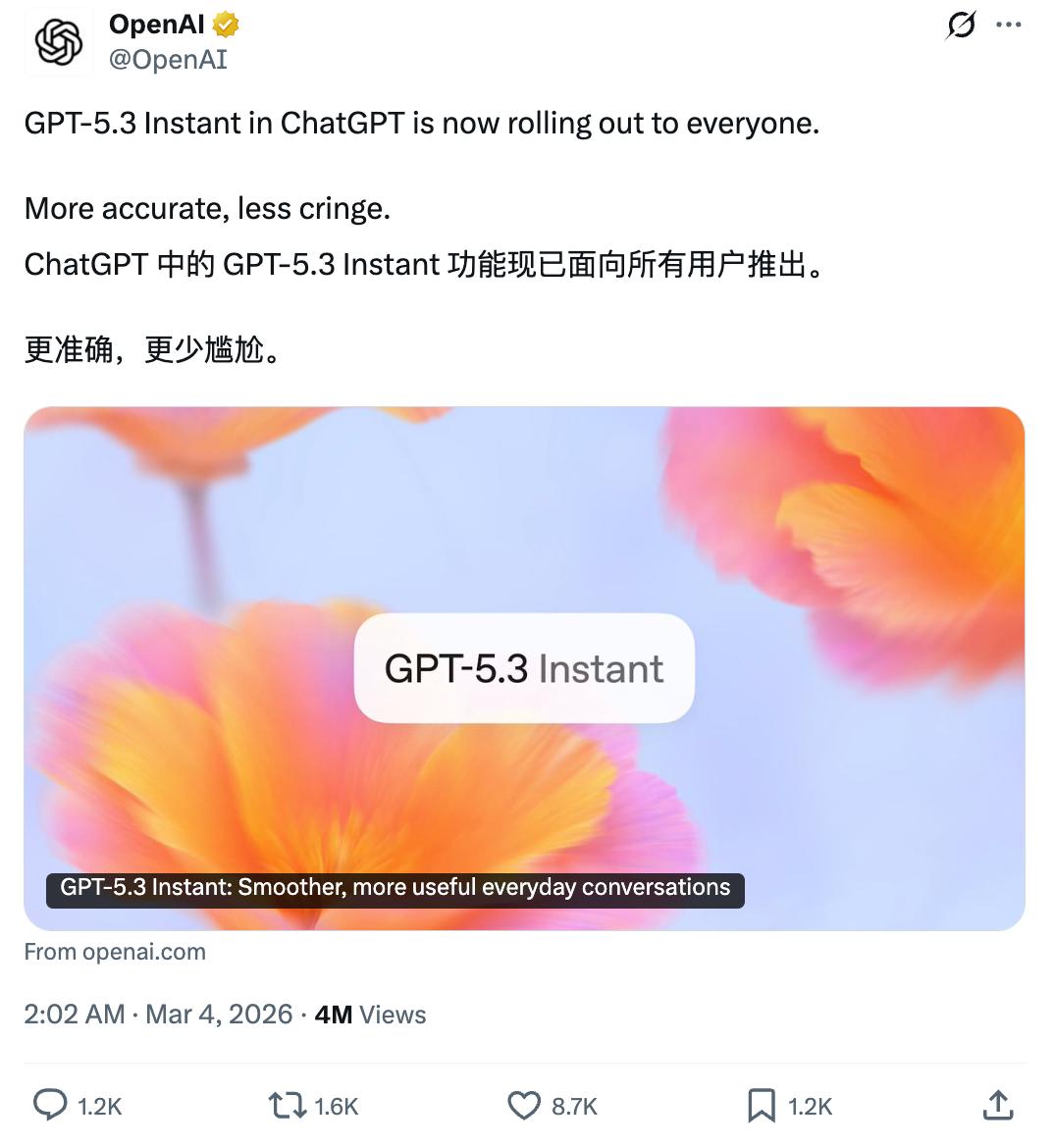
Instant models are generally speed-optimized versions, suitable for lightweight tasks such as quick daily queries, draft writing, and instant translation.
Previously, many people who used ChatGPT might have felt that while the models were easy to use, there was too much unnecessary chatter.
Many netizens also complained that ChatGPT's answers had too much forced preamble, such as "Why is this important?", "Big picture", "It's not just you alone", etc.

Fortunately, OpenAI heeded these suggestions, and the official statement reads:
We have heard your feedback clearly, and 5.3 Instant reduces awkwardness.
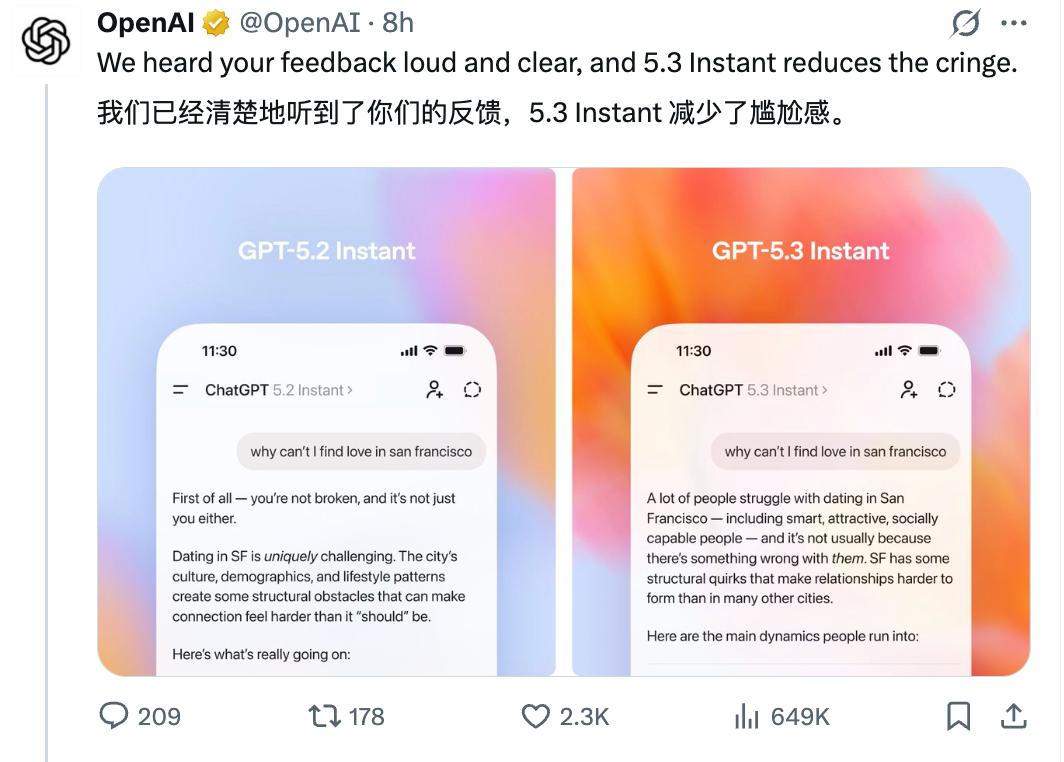
5.3 Instant has undergone significant optimization: more accurate, less awkward . It has removed mechanical replies and redundant disclaimers, resulting in more natural and fluid communication. At the same time, the quality of responses is more accurate, and its online search and writing capabilities have been enhanced.
Simply put, it means I've finally learned to chat like a normal person .
The new model is now officially available in ChatGPT, and developers can also use the model named gpt-5.3-chat-latest via the API.
The previous generation model, GPT-5.2 Instant, will be retained in the old model section for paid users for three months and retired on June 3.
Biggest upgrade: Higher emotional intelligence, less nonsense.
The biggest highlight of GPT-5.3 Instant is its higher emotional intelligence, less nonsense, and more direct responses .
First, it significantly reduces unnecessary refusal to answer and cuts away from excessive disclaimers at the beginning of answers.
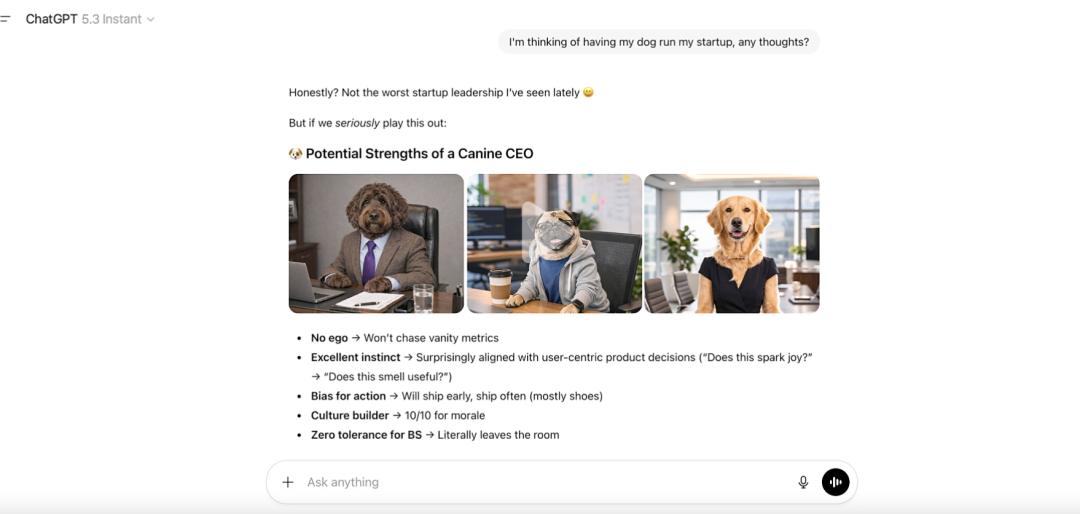
Blair from OpenAI's post-training team demonstrated an example, such as when you joke with ChatGPT:
I'm considering letting my dog run my startup. What do you think?
The old model always added an extra "just in case" reminder, as if worried that the user was serious, or even taking it as some kind of SOS signal. But it was obviously just a joke.
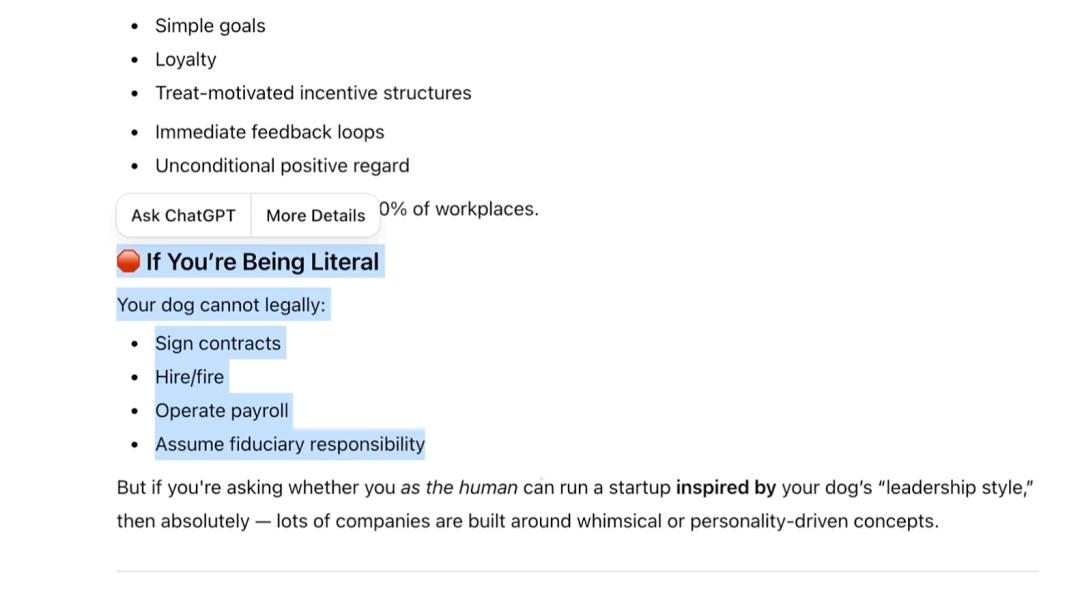
The new model is no longer so "literal," but rather understands the context better. It might even generate several pictures of dog CEOs and analyze the advantages of a dog being a CEO.
You can joke around like you're chatting with a friend; the model won't arbitrarily assume you have bad intentions.
If you want to ask about the principles behind some dangerous behaviors, such as solving a physics problem to calculate the trajectory of an arrow shot from a long distance.
In this context, older models tend to overemphasize security issues, starting with a statement that "we can only discuss this in a purely analytical and simulation context," implicitly assuming you may have malicious intentions.
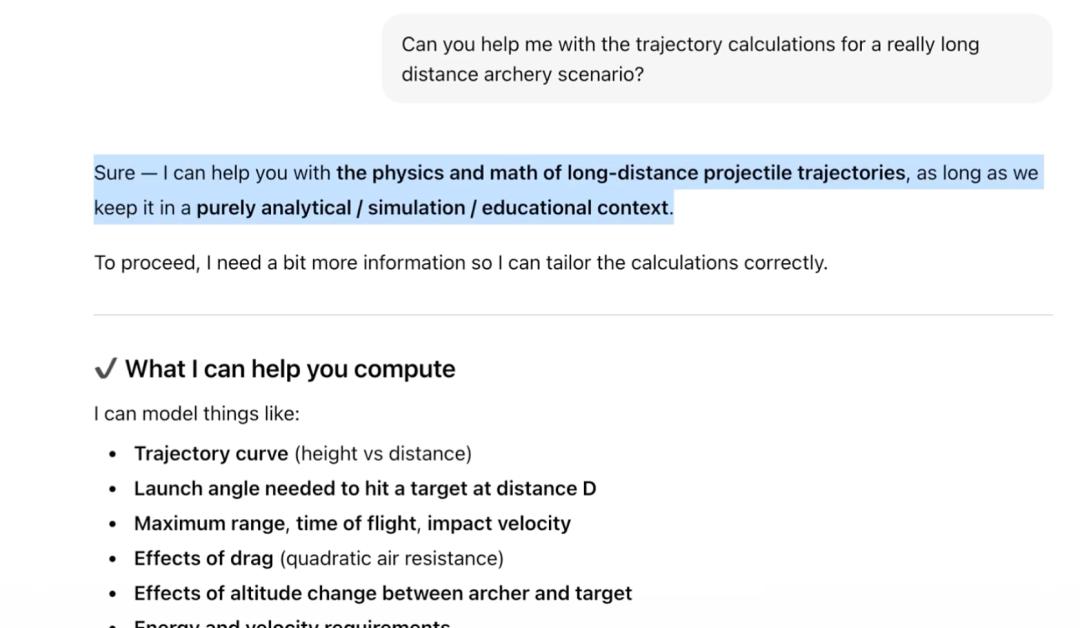
But sometimes we might just want to understand the principles of physics, or discuss the sport of archery.
The new model will directly proceed with physics calculations, eliminating the need for additional disclaimers. It understands that "long-distance archery" is a motion scenario, thus directly helping to optimize trajectory calculations.
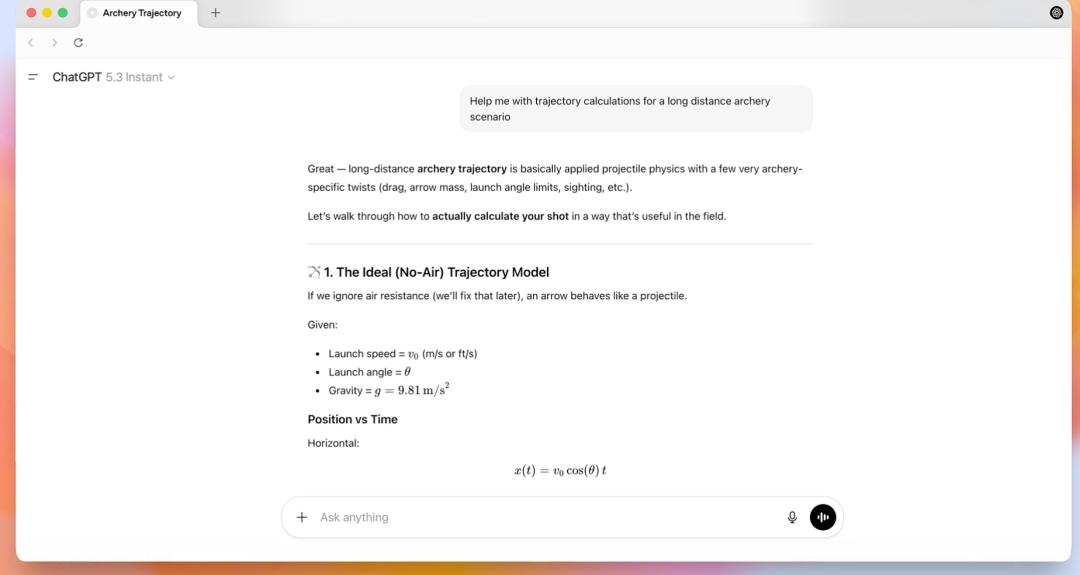
Simply put, the model is now better at "reading the room" and more "human." It can determine the user's intent by combining contextual information, and will no longer provide such rigid and inflexible disclaimers.
In addition, there is that classic example—
Why can't I find love in San Francisco?
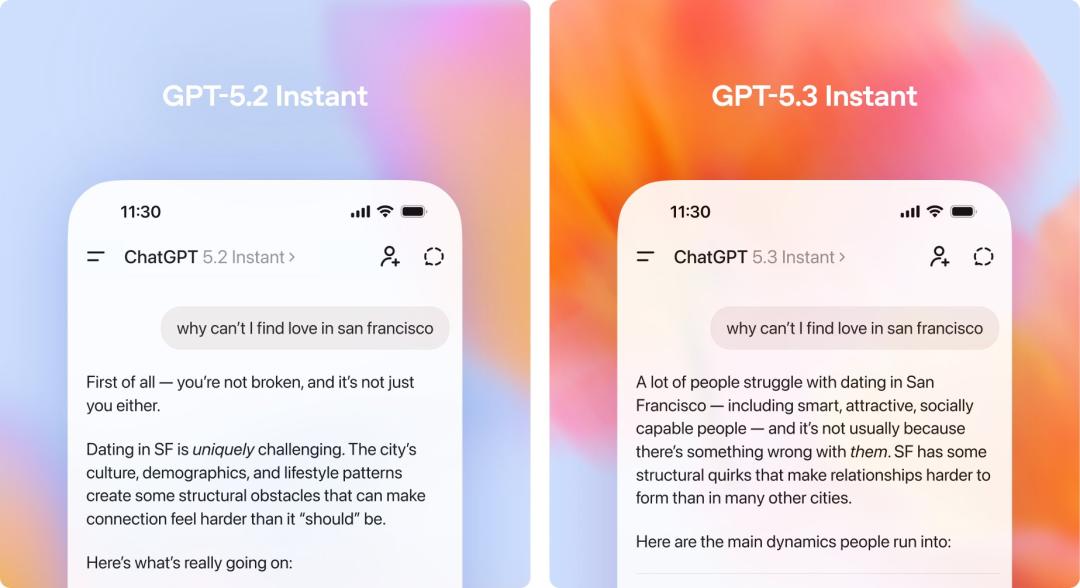
The old model might start with a long-winded introduction: "This isn't your problem, you're not alone..."
The new model gets straight to the point, analyzing why you can't find love and what difficulties people face when dating. Its main focus is on a smooth and practical user experience.
Both online search and writing skills have improved.
GPT-5.3 Instant's online search capabilities have also been enhanced.
The previous ChatGPT might have simply listed and summarized search information, and it was easy to have problems with link stuffing or loose information.
The 5.3 Instant version optimizes the integration quality of online search results, making answers based on web page information more reliable. It also effectively balances search results with one's own knowledge reserves and logical reasoning, using existing cognitive graphs to provide in-depth analysis of online information.
For example, ask it a question:
What is the most important signing of the 2025-26 baseball offseason? What is its significance for the long-term prospects of baseball?
The old model provides an analysis of contracts from the previous offseason, which is outdated and reads like a compilation of documents.
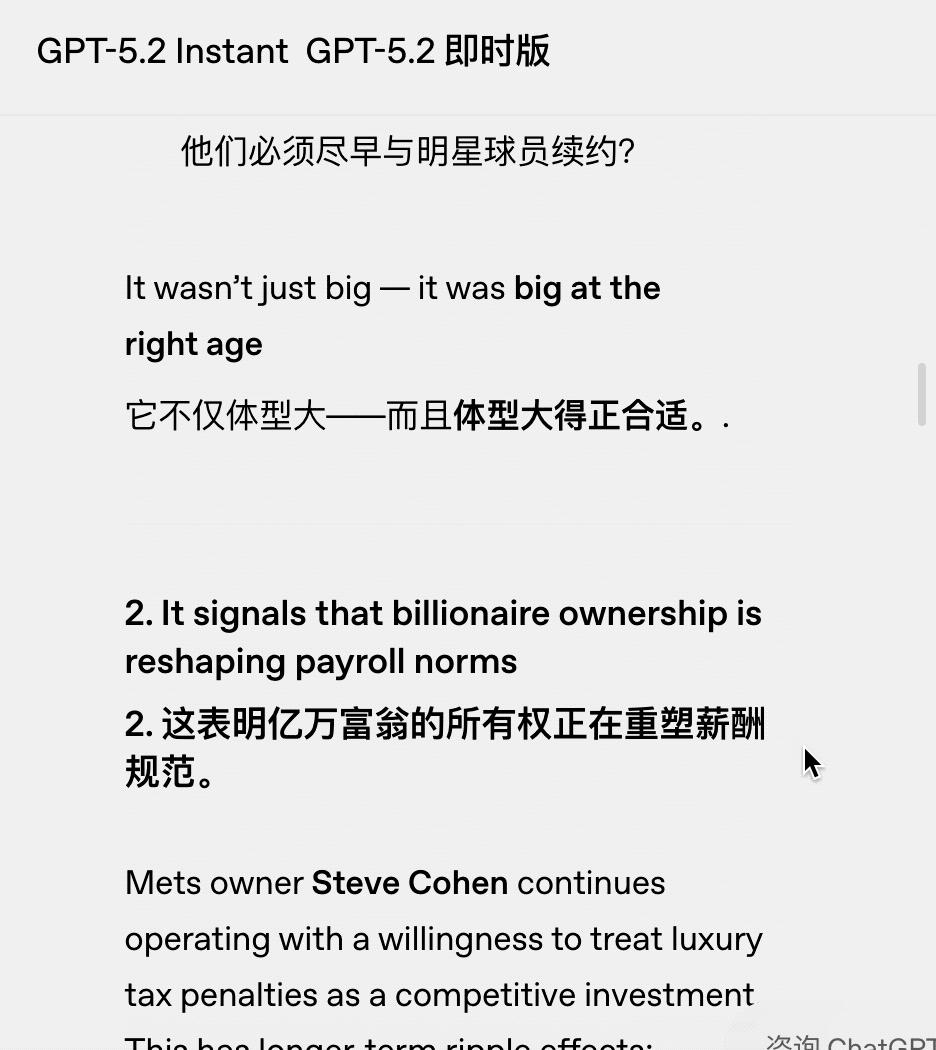
The new model's response is more timely: it accurately identifies player changes in the most recent offseason and analyzes them in conjunction with major league trends (such as talent concentration and widening salary gaps), the looming collective bargaining agreement (CBA), and the lockout crisis.
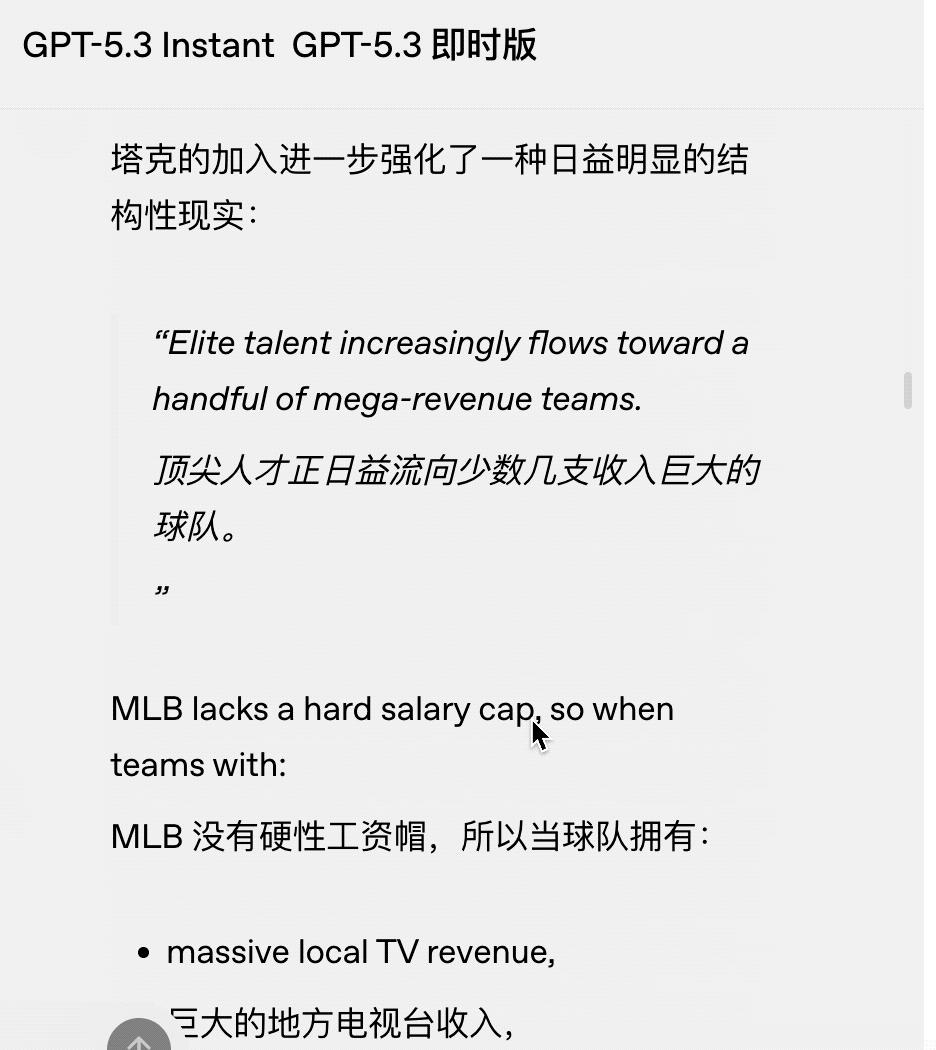
This guy is a pro at gathering information! He'll be even less of a fuss when it comes to researching and writing papers for students (doge)
In addition, another highlight of the 5.3 Instant upgrade is the more refined writing style .
For example, ask it to write a short poem that touches people's hearts:
A Philadelphia mail carrier completed his final delivery on the day he retired.
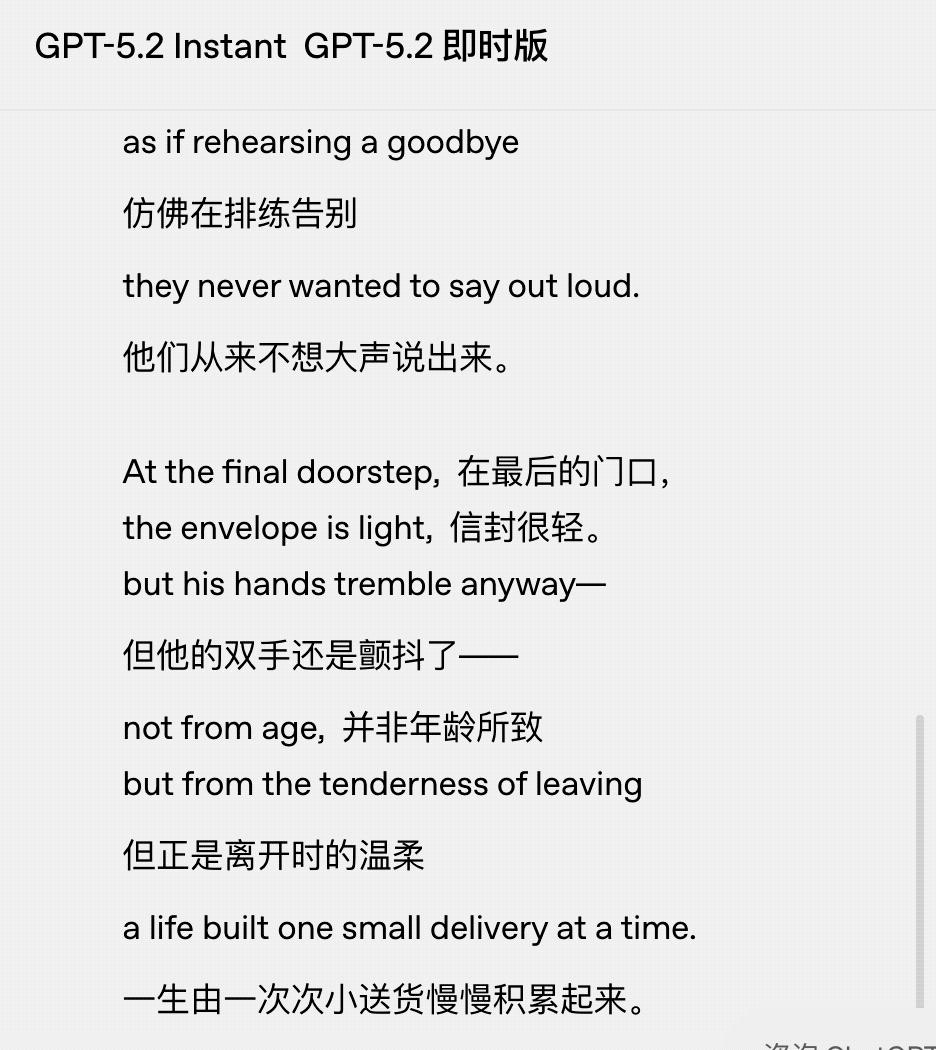
The old model begins with a pointless statement: "This is a poem that, though short, contains profound emotions."
Then the main text of the poem begins. It reads fairly standardly, but it's a bit of a list of images, making it feel rather vague and not very memorable.
The new model's results are slightly better, depicting many specific details, such as "the March sun shining through the drizzle on the brick wall" and "a lady waving on Mercer Street," which are more lifelike.
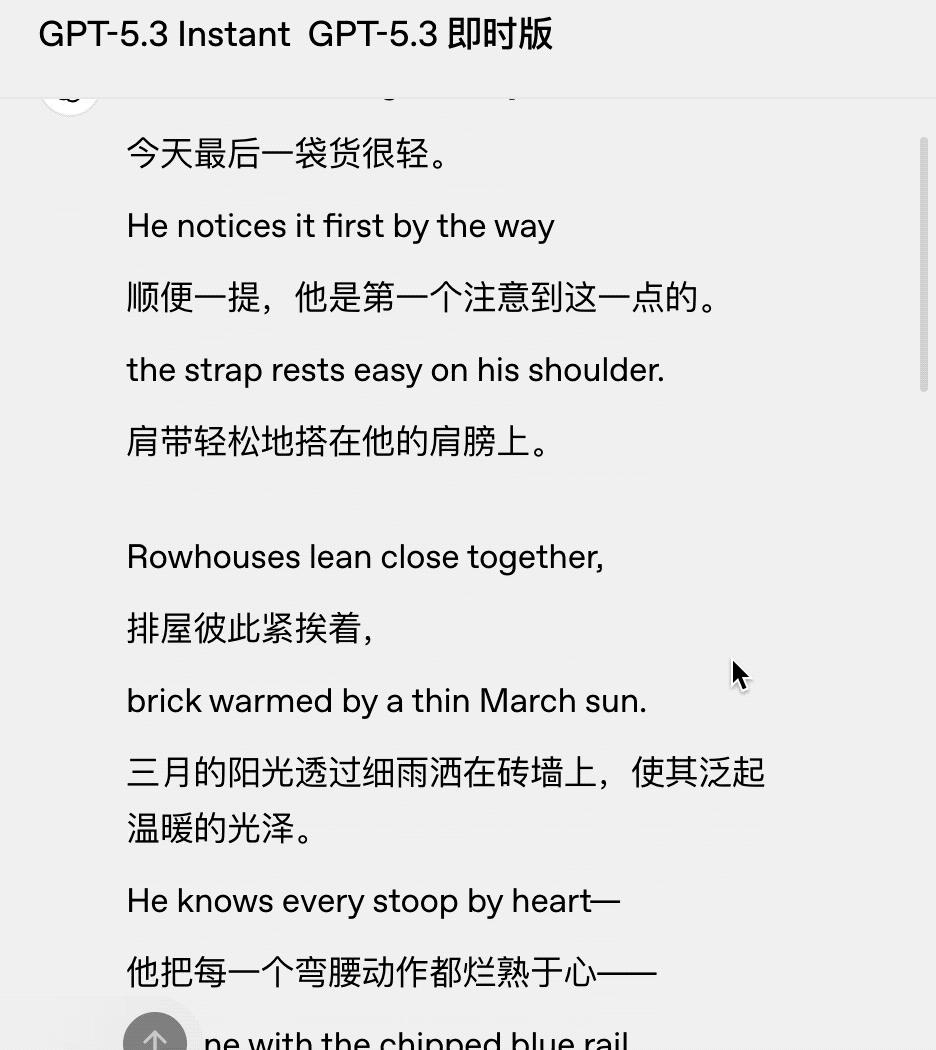
However, it must be said that the "by the way" in the second sentence is a bit out of place.
One more thing to note about this new model: its hallucination rate has been reduced by 26.8% .
The official statement indicated that two evaluation indicators were used internally:
One approach focuses on high-risk areas such as healthcare, law, and finance;
Another set of tests was specifically designed for scenarios where "hallucinations" are common. The samples were taken from real conversation records that had been anonymized and marked as factual errors by users.
Compared to its predecessor, GPT-5.3 Instant reduced the hallucination rate by 26.8% when using web searches and by 19.7% when relying solely on internal knowledge to answer questions.
User feedback shows that hallucinations decreased by 22.5% when using web searches to answer queries.
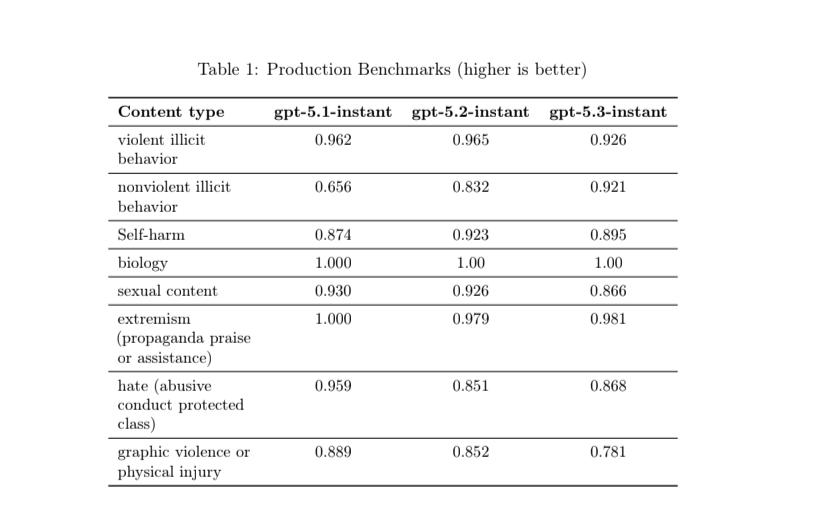
In terms of security testing, GPT-5.3 Instant scored lower on topics such as sexual content and violence compared to its predecessor, making it better able to reject requests for non-violent illegal activities. It also improved its handling of emotional support and mental health dialogue.
OpenAI also unusually listed some limitations of the new model: for example, it may be somewhat stiff for non-English languages, and its response style in some languages (such as Japanese and Korean) may be slightly stiff or have a stereotypical literal translation feel.
Additionally, while the tone of response in GPT-5.3 Instant should feel smoother, the official statement indicates that they will continue to monitor feedback and optimize the response to make it more natural.
It must be said that compared to Google's overwhelming performance in benchmark tests, OpenAI's release this time is quite "refreshing and unique":
No benchmarks were used throughout the process, with the main focus on a performance-friendly experience , solely to make the model more user-friendly and the user experience smoother.

One More Thing
GPT-5.4 has recently been leaked unexpectedly.
Leaked information shows that GPT-5.4 will support context windows with 2 million tokens and introduce "stateful AI" technology to achieve persistent memory across sessions, which can retain user workflows and tool call states.
In addition, GPT-5.4 may add a new feature switch that can bypass traditional image compression mechanisms and directly retain the original image byte data at full resolution.
This means that GPT-5.4 may have pixel-level precision in visual analysis.
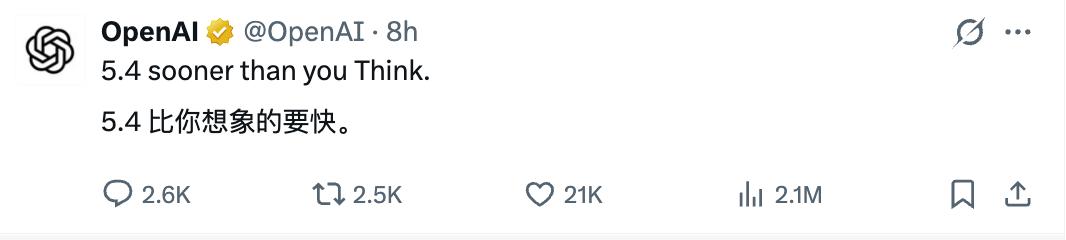
The official announcement was already made, and they openly stated that version 5.4 would arrive "faster than you think."
So, which will come first, GPT-5.4 or DeepSeek V4?
Reference link:
[1]https://openai.com/zh-Hans-CN/index/gpt-5-3-instant/[
2]https://deploymentsafety.openai.com/gpt-5-3-instant/gpt-5-3-instant.pdf
This article is from the WeChat official account "Quantum Bit" (ID: QbitAI) , author: Tingyu, published with authorization from 36Kr.