Author: Derek Walkush | Translation: Diamond | Proofreading: Roy | Typesetting: walton
Abstract: According to the value driving factors of NFT, this paper divides NFT into three categories: income, identity and utility; the author also briefly analyzes and introduces the value sources of the three types of NFT. The article attempts to provide a general framework for thinking through which various NFTs can be conceptualized.
In just a few short months in 2021, NFT has become a household name. The volume of transactions in the NFT market surged in the third quarter, surpassing $10.7 billion . Visa bought a CryptoPunk for $150,000. Quentin Tarantino has announced that an unrevealed scene from "Pulp Fiction" will be auctioned off as an NFT. Taco Bell, Burger King, McDonald's, and Pizza Hut have all minted their own NFTs.
Clearly, NFTs are here to stay for a long time. The classification and valuation of fungible tokens has been explored by many, but little consideration has been given to framing value drivers for this emerging asset class.
Andrew Steinwold is a recognized thought leader in the NFT space and founder and general partner of Sfermion . Writing on Zima Red , he divides NFT assets into collectibles, game assets, virtual land, encrypted art, and many other categories based on value drivers. In my opinion, he provides a very valuable taxonomy for exploring asset classes. I hope to go a step further and simplify his taxonomy by exploring the overlap in NFT value drivers. I think based on the source of value, there are three main types of NFTs: revenue, identity, and utility.

The first is the income NFT , which, as the name suggests, has the unique property of generating income, similar to financial assets. And their "value" is also very similar, that is: the present value of assets that are expected to generate future cash flows. The category includes a range of NFTs from in-game assets to virtual land. In-game assets can generate income by playing in "earn-as-you-play"-type games, such as Axies -- a nascent but booming area of the cryptocurrency ecosystem. While many remain divided on the long-term viability of the model, Yield Guild Games (a gaming guild DAO) generated a total of $1.12 million in in- game rewards from June to September by pooling in-game NFT assets. Obviously, the revenue brought by these NFTs is very considerable.

Virtual land is also an income asset. The virtual world algorithmically pushes out a collection of lands that can be built and customized, or, in some instances, rented out. Other worlds randomly generate scarce natural resources on the land, which can be obtained through farming or mining. Decentraland excels in the field of selling land-based NFTs. Essentially, the income-generating properties of virtual land mimic real estate.
Finally, developers are designing new experimental financial products using ERC-721 tokens. Projects like Charged Particles allow players to embed interest-bearing aTOKENs on Aave in NFTs, essentially turning these NFTs into unique, customizable fixed-income products.
Can JPEG bring you money? It's really cool.
The second category is the identity NFT , which aims to highlight social class through expensive items, which are the digital equivalent of high-end brands of physical goods (especially clothing). This category covers everything from: digital art, collectibles, apparel accessories, cast tracks, PFPs, and more. A key criterion defining identity NFTs is that they can be displayed publicly online, especially via social media. Its value comes from the "hype" or "influence" of the collection or the artist. This category is obviously more abstract than income NFTs, so that many people are questioning their value. After all, I can copy and paste JPEG images from Opensea, right? There is an example that best illustrates the value of identity-based NFTs: some popular brands, such as Supreme , charge a high premium for their products, which is so high that anyone with a discerning eye can see it-the price minus the cost of production, transportation and sales. I can buy a cheap white T-shirt at a very low price and print a logo on it, but if someone finds out, it will be regarded as a "fake" or "counterfeit". People buy not just the actual garment, but the brand and, more importantly, the social status it represents. Additionally, because transactions are public on-chain, only a wallet address is required to verify ownership. Many identity NFTs are scarce and will continue to be supplied, and high-end brands can produce them at will when releasing and promoting new products.
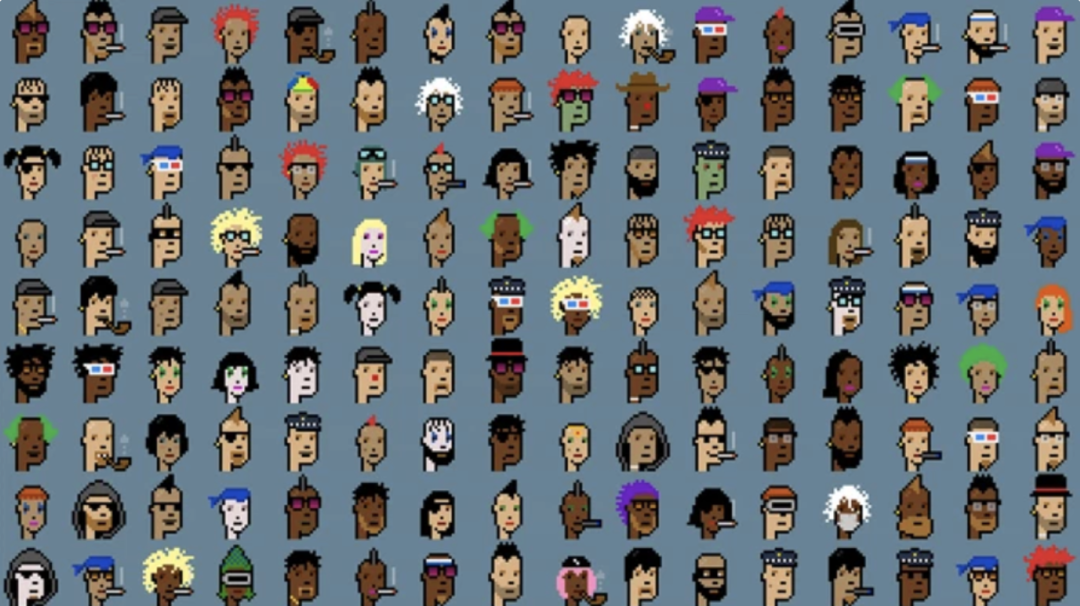
Generally, these NFTs fall into two broad categories: community-based and independent. First of all, in a community that is considered exclusive, the community NFT means membership, and owning the NFT is equivalent to having an "admission ticket"; the most famous of these are CryptoPunks and BAYC . The second type, the value of independent NFT comes from the reputation of the artist (or simply the caster). For example, the Beeple NFT doesn't offer a BAYC-style community, but it does confer social status on the holder (he's even selling physical art for a similar price now). These NFTs reflect the high value of physical art.
Finally, utility NFTs are an emerging category with truly revolutionary potential. In simple terms, the value (or net benefit) of this type of NFT is the utility of the asset to the user minus its cost. More common examples are domain names, non-revenue assets in games, and so on. While some in-game assets can be classified as utility NFTs, the key difference is: apart from price appreciation, no one expects utility NFTs to generate income, and the reason why they are in demand is only because of their usability. Some experiments with interactive NFTs integrate AI into NFTs to create a unique digital character that users can interact with; in other words, digital personalities can be completely decentralized and not owned by any one company (think: no Apple-controlled, standalone Siri publicly owned by individuals).

The first iNFT, Alice (based on Alice in Wonderland), sold for $478k.
Alethea , a pioneer in the space, recently released “Revenants” — Intelligent NFTs (iNFTs) — on OpenSea, breaking into the top 10 in less than a week. The collection contains 10,000 historical figures, from Cleopatra to Frankenstein to Freud, trained using publicly available data about their lives and experiences. Artificial intelligence is embedded in the ERC-721 token, making the character interactive and alive. Crazy? There are also examples of more light-hearted interactive NFTs, such as projects like Cryptoys - imagine living on Ethereum teaching children things, digital stuffed animals that can interact with them...
NFTs are undoubtedly one of the most exciting and experimental asset classes. The purpose of this article is to provide a general framework for thinking about how to conceptualize any NFT in terms of revenue, identity, and utility (or combinations).
Of course, their story has just begun, and new sources of value will emerge from the increasingly charming Web3 community. What new NFTs will appear next?
Original link: