Iran's declaration to close the Strait of Hormuz is creating significant risks for the global energy market. This shipping lane carries approximately 13 million barrels of oil per day, equivalent to 31% of the world's seaborne crude oil trade. At the same time, nearly 20% of the world's liquefied natural gas (LNG) exports – primarily from Qatar – also pass through it.
If the lockdown continues, oil prices could exceed $100 per barrel. Brent crude has already risen nearly 10% since the conflict escalated.
South Asia: A double shock
The region at greatest risk is South Asia. Pakistan and Bangladesh are almost entirely dependent on LNG from Qatar and the UAE, while India imports more than half of its LNG and around 60% of its oil from the Middle East.
For India, this is a double shock: rising oil prices drive up import costs, while LNG contracts pegged to Brent prices are also pushed higher. This puts direct pressure on inflation and the current account balance.
Pakistan and Bangladesh are even more vulnerable due to low reserves and limited financial capacity. In a worst-case scenario, they may have to cut electricity demand rather than compete for spot LNG at high prices.
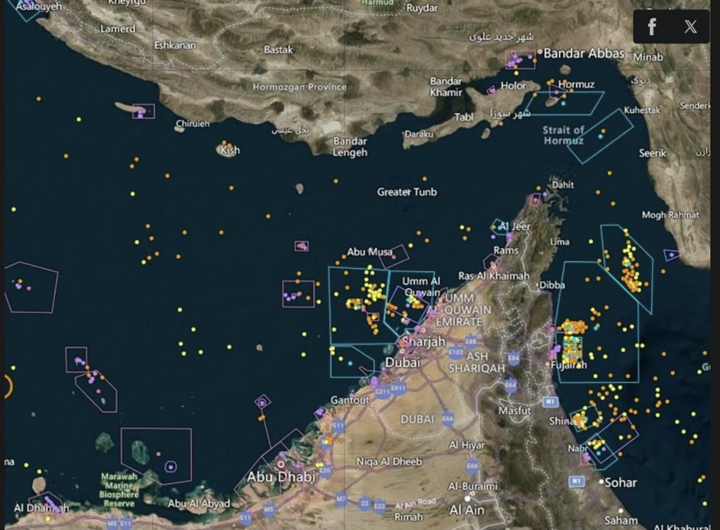
Many ships are stranded in the Strait of Hormuz.
China: Challenges, but with a buffer zone.
China imports over 40% of its oil through the Strait of Hormuz and approximately 30% of its LNG from Qatar and the UAE. However, Beijing has an advantage due to its large reserves and alternative supply sources from Russia and Central Asia.
Current LNG inventories are sufficient to meet short-term demand. However, if disruptions are prolonged, China will have to compete for supplies from the Atlantic, causing LNG prices across Asia to rise sharply.
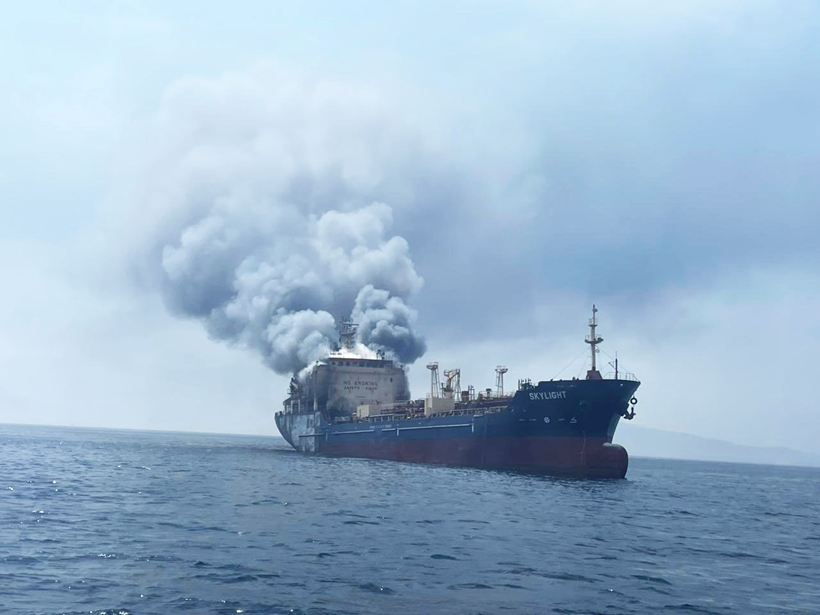
Oil tanker attacked in the Strait of Hormuz. Photo: cartoonistrrs
Japan, South Korea: Higher price risk than shortage risk.
The Middle East supplies approximately 70–75% of Japan and South Korea's imported oil. Although less dependent on Gulf LNG than South Asia, these two economies remain vulnerable to price fluctuations.
Japan and South Korea's LNG reserves are only sufficient to meet 2–4 weeks of steady demand. Even without shortages, price shocks could increase inflationary pressure and weaken the current account balance.
Southeast Asia: Inflation is the main concern.
In Southeast Asia, the immediate impact is a rise in energy prices rather than an immediate shortage. Oil-dependent countries like Thailand are particularly sensitive: net oil imports account for nearly 5% of GDP. Every 10% increase in oil prices can worsen the current account deficit by about 0.5 percentage points of GDP.
Conversely, Malaysia – an energy exporter – could benefit relatively from higher oil and LNG prices.
The overall picture
The closure of the Strait of Hormuz is not just a geopolitical risk, but a major test of Asia's energy security. South Asia faces the risk of supply disruptions, Northeast Asia is under price pressure, and Southeast Asia must grapple with inflation.
In a prolonged lockdown scenario, the global energy market would enter a phase of more intense supply competition, with ripple effects on growth and monetary policy in many economies.