introduction
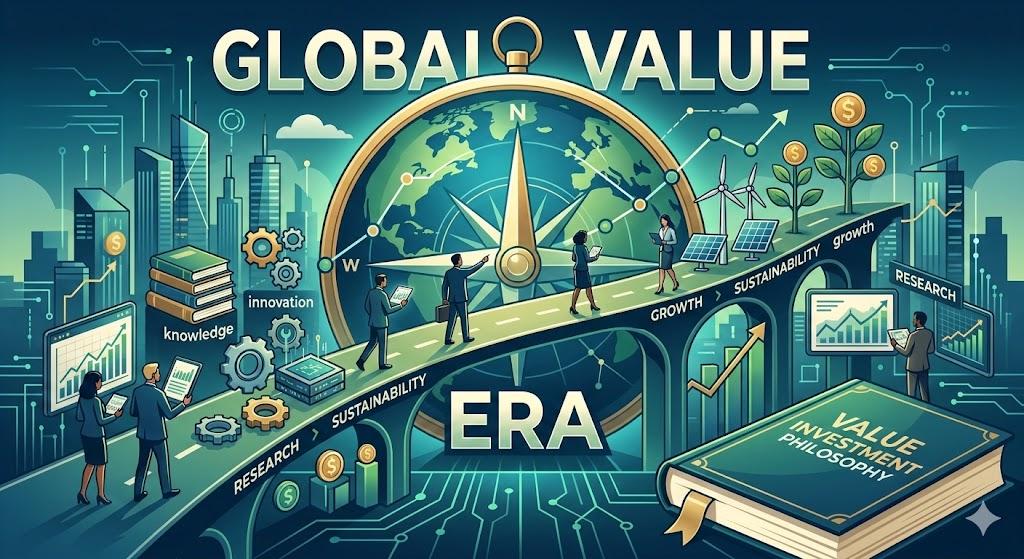
At the 10th anniversary salon of the "Value Investing" course at Peking University's Guanghua School of Management, Mr. Li Lu, founder of Himalaya Capital, a long-term partner of Charlie Munger, and a family asset manager, delivered a speech entitled "Global Value Investing and the Times." This speech was not only a review of the practice of value investing in China over the past decade, but also a profound analysis of the dilemmas of our times and a systematic reflection on future investment paths against the backdrop of current global macroeconomic uncertainties. With his unique perspective spanning East and West and over thirty years of investment experience, Mr. Li Lu provided us with a grand framework for understanding the present and envisioning the future.
This speech revolves around four main themes: What are the dilemmas of our time?; in-depth reflections on these dilemmas; how China can overcome the middle-income trap and address international relations challenges; and how global value investors should respond to the challenges of our time. The speech is insightful and comprehensive, progressing from the grand narrative of human civilization's evolution to historical comparisons of national modernization, and finally to the fundamental philosophical reflections on value investing. It is logically rigorous and full of profound insights.
This article aims to provide a comprehensive, systematic, and in-depth analysis and interpretation of Mr. Li Lu's speech. It strives to extract the core ideas while remaining faithful to the original text, and to expand upon this analysis with relevant background knowledge. Strictly adhering to the logical structure of the speech, it is divided into four main parts: "The Dilemmas of Our Time," "Reflections on These Dilemmas," "Overcoming the Middle-Income Trap," and "Global Value Investing Strategies." An analysis of the highlights from the Q&A session is also included. It is hoped that this article will help readers gain a more thorough understanding of the essence of Mr. Li Lu's thought and provide valuable insights for their own investment practices and life reflections.
Part One: The Dilemmas of Our Time
At the outset of his speech, Mr. Li Lu astutely pointed out that our current era, both domestically and internationally, is filled with profound confusion and challenges. These confusions are not isolated, short-term phenomena, but rather manifestations of structural and systemic problems, triggering widespread anxiety about the future.
1.1 Domestic Dilemmas: Economic Consolidation Under Multiple Pressures
Mr. Li Lu first analyzed the multiple predicaments facing China, which are intertwined and form a complex situation.
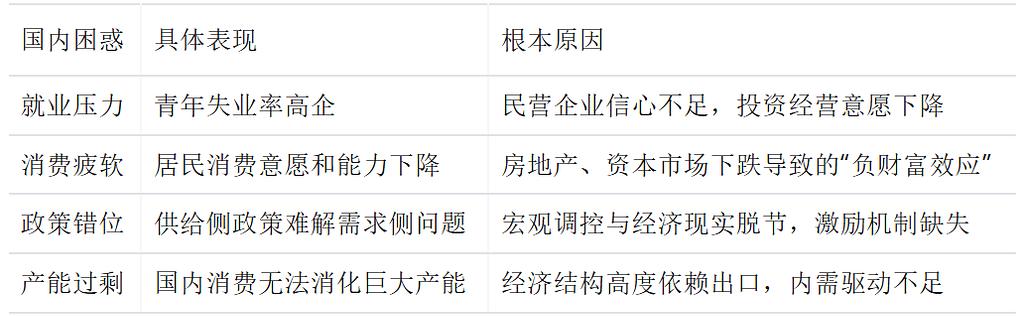
"Domestically, everyone has firsthand experience, especially young students who have a deeper understanding of the pressure of finding employment. Data from the National Bureau of Statistics shows that the unemployment rate for young people aged 16 to 24 has reached about 20%. The employment problem reflects the confidence problem of private enterprises." [1]
Employment pressure and the lack of confidence among private enterprises are the most pressing issues. A youth unemployment rate as high as 20% is a stark social signal, directly pointing to the insufficient vitality of the private sector. Mr. Li Lu astutely points out that private enterprises provide 80%-90% of jobs in China; therefore, the essence of the employment problem is a problem of the private economy. In recent years, concerns among private entrepreneurs regarding property and even personal safety have severely dampened their confidence in investment and business operations, leading to a decline in business expansion and hiring intentions, ultimately impacting the job market.
Secondly, consumer confidence is weak. This is closely related to the wealth effect among residents. In the past, real estate was the main carrier of Chinese household wealth, accounting for as much as 70%. However, the deep adjustments in the real estate and capital markets in recent years have led to a significant reduction in residents' wealth, creating a significant "negative wealth effect." The depreciation of assets directly inhibits consumption capacity and willingness, and people's expectations for the future tend to be pessimistic. They are more inclined to increase savings to cope with uncertainty, thus leading to insufficient domestic demand.
Secondly, there is a misalignment between macroeconomic policies and economic reality. Mr. Li Lu observed that economic policies in the past few years have mainly focused on the supply side, while the current core problem lies on the demand side. This misalignment has led to deflation. He used a vivid word—"rolling up"—to describe the extreme competition under deflationary conditions. In normal economic growth, competition is a virtuous cycle that spirals upwards; however, in a deflationary environment, the zero-sum game intensifies, corporate profits are squeezed, and the incentive for innovation weakens, creating a vicious cycle of competition. At the same time, in an increasingly stringent environment, the bureaucratic system, lacking effective positive incentive mechanisms, has exhibited a "lying flat" phenomenon, affecting the effective transmission and implementation efficiency of policies.
Finally, there is structural overcapacity. As the "world's factory," China accounts for over 30% of global manufacturing value added, but its own consumption capacity can only absorb about half of that. This means that the Chinese economy is highly dependent on exports, with half of its finished products needing to be sold to international markets, especially developed countries. This economic structure makes China particularly vulnerable to global economic fluctuations and geopolitical risks.
1.2 International Dilemmas: The Reconstruction and Challenges of the Global Order
Beyond domestic challenges, China also faces an unprecedentedly complex international situation, the core of which lies in the profound changes in its relations with developed countries and the restructuring of the global order.
"In the past five or six years, the biggest variable in the international community has been the United States' fundamental questioning of its role in the international community. Since World War II, the United States has played the role of 'anchor' in global affairs... But now the American public widely believes that the United States has gained more than it gained in this process, and that China's rise has taken advantage of the American order, and that after its rise, it has posed a fundamental and even hostile challenge to the American order." [1]
Mr. Li Lu points out that the biggest variable stems from the United States' re-evaluation of its global role. After World War II, the United States spearheaded the establishment of an international system based on its own principles (the "American Order") and bore the main costs of maintaining this system, including providing global security, upholding freedom of navigation, and acting as a provider of public goods such as final consumer markets and reserve currencies. However, in recent years, a widespread sense of being "taken advantage of" has emerged in the United States, from elites to the general public, who believe that the US has shouldered too much international responsibility, while countries like China have "free-rided" on its rise and, in turn, challenged the existing order. This shift in perception, regardless of its objectivity or fairness, has fundamentally shaken the foundations of the "American Order" and directly led to a profound deterioration in Sino-US relations.
The direct consequence of this change is uncertainty regarding the future international order. If the United States reduces its investment in global public goods, who will maintain the future international order? Peaceful and stable international trade, free navigation, and other conditions that were once taken for granted may become scarce resources in the future. This poses a severe challenge to the Chinese economy, which is highly dependent on global trade. The security of industrial and supply chains is becoming increasingly prominent, and the geopolitical risks faced by enterprises going global are also significantly increasing.
In summary, Mr. Li Lu depicted a "dilemma of our times" beset by internal and external difficulties. Domestically, the old drivers of economic growth are weakening, new drivers have yet to emerge, and structural contradictions are becoming more prominent. Externally, the globalized environment upon which success was built has reversed, and geopolitical conflicts have intensified. This dual predicament has left entrepreneurs, investors, and ordinary citizens alike feeling lost and uneasy about the future. This widespread pessimism, in turn, exacerbates downward pressure on the economy, creating a negative cycle. How to break this cycle is the core question that Mr. Li Lu attempted to answer in his subsequent speeches.
Part Two: Reflections on the Confusion: The Evolution of Civilization and the Refreshing of Ideas
Faced with the perplexities of our time, Mr. Li Lu did not remain on the surface of the problems, but delved into the long river of history, exploring the essential reasons behind these perplexities from the grand perspective of the evolution of human civilization. He believes that many of the problems we face today stem from our mindset, which remains stuck in the past stage of civilization and has failed to keep up with the dramatic changes in the economic base.
2.1 “Stage 2.5”: The Intermediate Consolidation Period of Modernization
Mr. Li Lu proposed a highly insightful analytical framework, namely the "three-stage theory" and the concept of "2.5 stages" of civilization evolution.
“In ‘Civilization, Modernization, Value Investing and China’, I divide the evolution of civilization into three stages: 1.0 hunting civilization, 2.0 agricultural civilization, and 3.0 modern technological civilization. I call the consolidation period in between stage 2.5. China is currently in stage 2.5.” [1]
He pointed out that human civilization has gone through three major paradigms: from hunting and gathering to agriculture, and then to modern technology. The essence of modern technological civilization 3.0 is the combination of market economy and modern technology, which brings about automatic, compounding, and sustainable economic growth. However, when a country experiences three or four decades of industrialization and steps from agricultural civilization 2.0 to modern technological civilization 3.0, it will not be smooth sailing, but will enter a challenging "intermediate consolidation period," or "stage 2.5."
The fundamental contradiction at this stage lies in the fact that while the economic base has experienced explosive, compound-like growth, the superstructure—including social governance, political systems, legal systems, and even people's psychology and ideologies—has changed very slowly, or even stagnated. This huge gap inevitably triggers various social, economic, and political problems. Mr. Li Lu emphasizes that this is not a phenomenon unique to China, but a common challenge faced by all late-developing and catching-up countries in their modernization process. Whether it was Germany, Japan, and the United States in the 19th century, or South American and Southeast Asian countries in the 20th century, all have experienced similar stages. Some countries have successfully crossed over and entered a mature 3.0 civilization; while others have been trapped in the "middle-income trap" for a long time, struggling in the 2.5 stage.
2.2 The constraints of three outdated concepts
To illustrate this “conceptual gap” more concretely, Mr. Li Lu listed three outdated concepts that still profoundly influence our decision-making today and originate from the 2.0 agricultural civilization era.
The first issue concerns the concept of "land." In agricultural civilizations spanning tens of thousands of years, land and population were the core elements determining the size of an economy and the strength of a nation. Therefore, the pursuit and possession of land is deeply rooted in humanity's collective unconscious, becoming a readily ignited trigger for national sentiment. However, in the 3.0 era of technological civilization, the core driving force of economic growth has shifted to the size of the market and the extent of the flow of production factors (technology, human resources, and capital). Mr. Li Lu uses World War I and World War II as examples, pointing out that the obsession with "living space" (i.e., land) is one of the most important reasons for these human tragedies. Germany and Japan, as defeated nations, only achieved their wartime economic prosperity after being forced to abandon their pursuit of land and integrate into the US-led global trade system. This example eloquently demonstrates that in modern society, borderless markets are far more important than tangible territory. The obsession with land is the most dangerous conceptual trap in the 2.5 stage.
The second point concerns the distinction between the "real economy" and the "virtual economy." Mr. Li Lu argues that in today's highly integrated economic system, the concept of "shifting from virtual to real" has become a "pseudo-concept." He uses a series of vivid examples to demonstrate this point:
• Gaming: While seemingly the most virtual economy, in modern warfare, the best drone operators are precisely game players, with virtual skills directly translating into real combat power.
• Software: Seemingly intangible virtual products, yet they are the central nervous system controlling the operation of today's global real economy.
• Nvidia: As a giant in the semiconductor industry, it is seen as a representative of the real economy. However, it does not produce a single wafer; it is essentially a software design company, and its market capitalization even exceeds the combined market capitalization of all listed companies in Germany. Its rise is precisely to serve the so-called "virtual" needs of gaming, cloud computing, and AI.
These examples illustrate that in the 3.0 economy, the boundaries between the virtual and the physical have become extremely blurred, even inseparable. Clinging to this outdated binary opposition will seriously mislead industrial policies and investment decisions, causing us to miss opportunities for new economic development.
The third point concerns the "functions of government." In the era of agricultural civilization and planned economy (2.0), the government played a commanding and guiding role. However, the essence of a market economy requires countless stakeholders to make independent and decentralized decisions in a fully competitive environment. China is now a massive economy of $18 trillion, with hundreds of millions of enterprises and hundreds of millions of economic decisions made daily. Its complexity far exceeds the capacity of any single centralized brain to plan and guide. More importantly, China is deeply integrated into the global economy, and its every move affects more than 120 trading partners and the livelihoods of billions of people worldwide. Therefore, the government's functions must shift from the past commanding and guiding role to a more republican, consultative, supportive, and service-oriented role adapted to the 3.0 market economy. This transformation is not only necessary for domestic development but also an inevitable requirement for China, as a global power, to coexist harmoniously with the world.
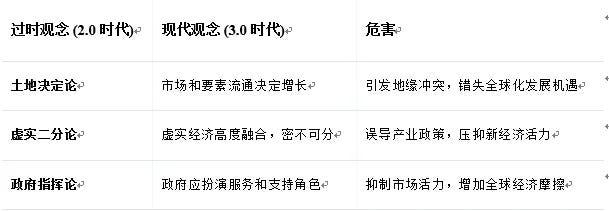
Through his analysis of these three concepts, Mr. Li Lu reveals the ideological roots of the "confusion of our times." He believes that the key to successfully bridging the 2.5 stage lies in a profound "ideological revolution," namely, replacing outdated traditional concepts derived from the past with modern concepts that have been tested in practice and conform to the laws of civilization 3.0. This lays a solid theoretical foundation for his subsequent exploration of how to overcome the middle-income trap.
Part Three: Overcoming the Middle-Income Trap: Commonalities of Modernization and China's Path
After analyzing the contemporary dilemmas and their ideological roots, Mr. Li Lu shifted his focus to solutions: how China can successfully overcome the "middle-income trap" and achieve genuine modernization. He did not offer a simple prescription, but rather, through profound insights into the nature of modernization and insightful summaries of historical experience, pointed out the path China could explore.
3.1 The essence of modernization: the full flow of all factors of production
Mr. Li Lu first clarified the fundamental reason why the 3.0 modern economy can sustain growth.
"The reason why the 3.0 economy can grow continuously and spontaneously is mainly because all economic factors within it can be fully exchanged and circulated. Every process of free trade and free exchange will bring about a 1+1>2 effect, and the exchange of knowledge can even produce a 1+1>4 effect." [1]
He emphasized that the key to an economy's ability to achieve endogenous and sustainable growth lies in the unimpeded and full exchange and circulation of all factors of production within it, including goods, services, capital, human resources, technology, and ideas. Any "bottlenecks" hindering this free flow will reduce economic efficiency and suppress growth potential. Based on this core criterion, he pointed out two key "bottlenecks" currently existing in the Chinese economy.
The first bottleneck is the severe imbalance between consumption and savings. China's personal consumption accounts for only 40% of GDP, far lower than India's 60% and the US's over 70%. In contrast, the savings rate is nearly 50%. This means that enormous purchasing power is idle and has failed to translate into effective market demand. Most of these huge savings are tied up in the banking system, dominated by state-owned banks. Due to the inherent risk aversion of banks, these funds are difficult to allocate efficiently to the most innovative and high-growth potential sectors. This constitutes the most fatal obstruction in the economic cycle.
3.2 Modern Capital Markets: Historical Lessons from Venice to England
How can we facilitate the transformation of savings into investment and consumption? Mr. Li Lu's answer is: establish a modern, efficient capital market with credit creation capabilities. To this end, he led the audience on a fascinating historical journey, reviewing the evolution of the modern financial system from Venice and the Netherlands to Britain.
Venice: As a medieval trading empire, it invented double-entry bookkeeping, the joint-stock system, insurance, and the prototype of modern banking, laying the foundation for the financial system.
• The Netherlands: Rising to global trading dominance in the 17th century, its key innovations included the invention of the publicly participated limited liability company system (represented by the Dutch East India Company) and the establishment of the world's first central bank and stock exchange. This enabled the large-scale accumulation of idle capital to support high-risk, high-return commercial activities such as ocean trade.
• Britain: Through the Glorious Revolution of 1688, Britain not only established a constitutional monarchy but also completed a systemic "merger"—transplanting the advanced Dutch financial system entirely to Britain. The final product of this transplant was a complete credit system.
Mr. Li Lu astutely points out that the ultimate product offered by modern capital markets is not merely capital, but also credit. Through a complex set of institutional arrangements (including legal, accounting, regulatory, and intermediary institutions), it safely and efficiently pools the small sums of money from countless ordinary depositors, who possess no business acumen, through a chain of credit, directing them to the most deserving entrepreneurs. This creates effective supply and demand, forming a positive, self-reinforcing cycle. The establishment of this credit system was a key prerequisite for Britain's ability to be the first to complete the Industrial Revolution and become the first modern 3.0 nation.
3.3 Hong Kong: A "Historic Gift" of China's Modernization
What is the significance of this historical lesson for contemporary China? Mr. Li Lu put forward a bold and visionary view: Hong Kong is a "gift" left to China by history, a ready-made "embryo" of a modern capital market, similar to what the Netherlands did for Britain in the past.
"Britain left China a gift—Hong Kong. Hong Kong has all the elements of a modern capital market: a complete system, laws, historical traditions, dispute resolution mechanisms, credit intermediaries, and the traditional trust of international investors and the international community... If Hong Kong's advantages can be truly utilized, it can serve as an important embryo for the re-operation of China's capital market." [1]
He believes that Hong Kong possesses a complete set of modern capital market software that the mainland lacks—a predictable legal system based on common law, professional intermediaries such as accountants and lawyers, a mature regulatory framework, and long-accumulated international credibility. If the independence of Hong Kong's financial system can be fully utilized and resolutely protected, allowing it to form a healthy competition and interaction with the mainland market under "two systems running in parallel," it could potentially activate China's vast savings reserves and inject new, sustainable growth momentum into the economy. He warned that we often fail to cherish this valuable asset acquired through "acquisition" rather than "merger," and some practices in recent years have even threatened the foundation of Hong Kong as an independent financial market. If this is not corrected in time, the consequences will be unimaginable.
3.4 Practice is the sole criterion for testing truth.
After pointing to the capital market as a breakthrough point, Mr. Li Lu returned to the methodological level. He reiterated Deng Xiaoping's famous saying—"Practice is the sole criterion for testing truth" and "Crossing the river by feeling the stones." He believes that in stage 2.5, facing an extremely complex situation, any grand "top-level design" may become detached from reality. The only reliable method is to boldly practice and experiment while adhering to the basic consensus of marketization and the rule of law, and to continuously revise based on the results of practice.
So, what is the ultimate standard (KPI) for judging the success of a practice? Mr. Li Lu provides a clear answer: whether it can bring about spontaneous, endogenous, and sustainable economic growth. The core indicator for measuring this is whether the share of personal consumption in GDP can continue to increase. If this proportion can gradually increase from the current 40% to 60% or even higher, it means that the Chinese economy has truly entered a healthy and sustainable growth track driven by domestic demand.
Finally, he used a vivid metaphor to encourage action: the entire economy is an interconnected chain, with entrepreneurs, consumers, officials, foreign investment, Sino-US relations, capital markets… all nodes are linked and mutually causal. “Each node is both the chicken and the egg.” The current problem is that the entire chain is stagnant. Therefore, there's no need to be fixated on where to start; as long as the overall environment is relatively favorable, and as long as we persevere in our efforts, we will eventually ignite a node, triggering a positive chain reaction throughout the entire chain, just like the household responsibility system in Xiaogang Village, Anhui, and the establishment of the Shenzhen Special Economic Zone. A seemingly small spark can ignite a magnificent wave of reform.
Part Four: Global Value Investors' Responses: The True Meaning of Protecting Wealth Amidst Changing Times
After a systematic and insightful analysis of the macrocosm, the final part of the speech returned to the essence of investing. Faced with such a grand and uncertain era of change, how should a value investor position themselves? How can they secure their capital and achieve wealth preservation and appreciation? Mr. Li Lu's answers are both philosophically profound and highly practically instructive.
4.1 Redefining Wealth: The Proportion of Purchasing Power
Before discussing how to invest, Mr. Li Lu first guided us to think about a fundamental question: In the 3.0 era of modern technological civilization, what is true wealth?
He overturned our traditional understanding through two vivid examples:
• British aristocratic castles: In the agricultural era, magnificent castles and vast lands were the ultimate symbols of wealth. However, in modern society, due to the dramatic increase in maintenance costs (especially labor costs), these static assets have become a huge burden. Many descendants of nobles have had to rely on opening their castles to the public and charging admission fees to make a living. The land and castles themselves are no longer wealth; it is the services that generate cash flow that are.
• China's "10,000-yuan household": In the early days of reform and opening up, owning 10,000 yuan was a sign of wealth. However, if that 10,000 yuan had been deposited in a bank and remained there until now, its purchasing power would have been diluted to nothing by economic growth that has increased hundreds of times over.
These two examples profoundly illustrate that in the 3.0 era of sustained compound economic growth, no static asset measured in nominal value (whether land, real estate, or cash) can become lasting wealth. Because the economic "pie" is constantly growing, if your wealth is static, your share of the pie will inevitably continue to shrink.
Therefore, Mr. Li Lu gave a modern definition of wealth:
“True wealth should be measured by the proportion of purchasing power you possess in the entire economy. And your effective wealth is the proportion of purchasing power you have in the economy in which you are willing to consume… The fundamental purpose of investment is to preserve and increase your purchasing power.” [1]
This definition is revolutionary. It tells us that the essence of wealth is not an absolute number, but a relative proportion. The goal of investment should not be to pursue an increase in nominal principal, but to ensure that one's share of purchasing power in the overall economy is maintained or even increased. Only in this way can your wealth grow in sync with the times and truly achieve preservation and appreciation.
4.2 The Six Core Principles of Value Investing: Historical Inheritance and Development
Having clarified the ultimate goal of investment, Mr. Li Lu systematically reviewed the evolution of the core concepts of value investing from its inception to the present day, and summarized them into six principles, forming a complete and powerful ideological system.
1. Stocks are a form of ownership in a company (Ben Graham): This is the cornerstone of value investing. Stocks are not casino chips, but rather represent a claim to all of a company's future cash flows. Only by adopting an owner's perspective can one truly understand the essence of investing and thus withstand short-term market fluctuations.
2. “Mr. Market” provides services, not guidance (Ben Graham): The market is an emotional, manic-depressive adversary. Its quotes are sometimes extremely optimistic and sometimes extremely pessimistic, and almost never equal to the intrinsic value of a business. The wise investor should not be swayed by Mr. Market’s emotions, but rather take advantage of its irrational quotes to buy when prices are far below value and sell when prices are far above value.
3. Investments must have a sufficient margin of safety (Ben Graham): The future is unpredictable, and even the most in-depth research can be flawed. A margin of safety, which means buying at a price significantly lower than the intrinsic value, is the only buffer against errors and unknown risks. "Cheap is the bottom line," providing the necessary tolerance for error and psychological resilience for investment.
4. Investors must clearly define their circle of competence (Warren Buffett, Charlie Munger): This is a significant development of Graham's ideas. Buffett and Munger recognized that simply investing in cheap companies is insufficient; investing in excellent companies is more important. Judging whether a company is excellent requires profound industry knowledge and business acumen. Therefore, investors don't need to be omniscient, but they must clearly know what they understand and what they don't, and stick to investing within their area of understanding. Only within their circle of competence can they make judgments more accurate than the market.
5. Go where the fish are (Charlie Munger): This is the culmination of Mr. Munger's wisdom. It emphasizes the importance of "choice." Investment opportunities in the world are endless, but not evenly distributed. Investors need to be like clever fishermen, finding "lakes" where there are plenty of fish and little competition. This means looking for areas that are not fully appreciated by the market, have pricing errors, and where you possess a unique cognitive advantage. Fishing in the right pond is far more important than improving your fishing skills.
6. Wealth is the proportion of purchasing power in an economy (Li Lu): This is Mr. Li Lu's ultimate definition of the goal of value investing, based on his profound understanding of the paradigm shift in civilization. It combines investment practice with the grand historical context, pointing out that the highest level of value investing is to achieve the common growth of personal wealth and human civilization by holding shares in the most creative and competitive companies in the world's most dynamic economies. This endows value investing with a deeper historical significance and philosophical depth.
These six core principles, progressing step by step, form a complete system from "technique" to "principle." The first three are the "defensive" foundation laid by Graham, emphasizing how to avoid losses; the fourth and fifth are the "offensive" strategies developed by Buffett and Munger, emphasizing how to achieve outstanding returns; and the sixth is Mr. Li Lu's elevated "worldview," clarifying the ultimate meaning of investment. Mr. Li Lu emphasizes that these principles are not empty talk, but rather the culmination of decades of arduous practice by him and all value investing masters in challenging and volatile macroeconomic environments. Whether it was the Great Depression and World War II that Graham experienced, or the Asian financial crisis that Li Lu personally witnessed, history has repeatedly proven that the more confusing and volatile the macroeconomic environment, the more the fundamental principles of value investing demonstrate their powerful vitality.
4.3 Sparks of Wisdom from the Q&A Session
During the Q&A session following the speech, Mr. Li Lu provided brilliant answers to a series of specific questions, further enriching and deepening his ideas.
Regarding selling: He pointed out several situations for selling (making a mistake, finding a better target, extreme bubble, forced redemption), but emphasized more that for truly great companies (the "holy grail"), one should not easily sell due to short-term overvaluation. This is because a common human cognitive flaw is "exaggerating the short term and ignoring the long term," and the long-term value creation capabilities of great companies often far exceed our boldest imaginations.
Regarding long-term holding: He cited Berkshire Hathaway and BYD as examples, pointing out that even the best companies have experienced stock prices halved by more than 50% multiple times. The ability to hold firmly amidst drastic fluctuations is the ultimate test of an investor's circle of competence. Long-term holding is predicated on genuine understanding, not blind faith.
Regarding outstanding entrepreneurs: He believes the most important common traits of outstanding entrepreneurs are "always maintaining optimism" and "choosing to believe in the power of opportunity." In a world full of uncertainty, they always choose to see the "half-full" side of things. Furthermore, continuous learning and integrity are also crucial. And only an inclusive social environment can allow diverse talents to emerge.
• Regarding the social significance of investment: He vehemently refuted the view that "investors are parasites." He believes that true value investors are the most important implementers of the capital market's price discovery function, a crucial link connecting social savings with excellent companies, and indispensable partners of outstanding enterprises. By promoting the effective allocation of capital, they have made indelible contributions to wealth creation for the entire society.
Conclusion: Breathe with the times and grow together.
Mr. Li Lu's speech was a feast for the mind. With a rare and grand vision, he examined value investing within the context of the evolution of human civilization and global changes, revealing to us the deeper logic and significance behind investment.
He told us that we are in a challenging "2.5 stage," where old ideas are becoming obsolete and a new order has yet to be established. But this is not the end of the world; it is simply the "growing pains" that all successful nations have experienced. The key to overcoming this stage lies in a profound intellectual liberation and in establishing a modern market economy system that allows for the full flow of all factors of production, especially an efficient, credit-based capital market.
For investors, the most important thing is not to predict the unpredictable macroeconomic future, but to return to the essence of investing: protecting and increasing their share of purchasing power in the economy. The only reliable way to achieve this goal is to practice the six principles of value investing, find those "lakes with fish" within one's circle of competence, and buy and hold those excellent companies that can continuously create value amidst changing times at reasonable prices.
“Value investing allows us to breathe and grow with the times. I believe that those who are committed to value investing can achieve something, no matter where they are or what environment they face.” [1]
This may be the ultimate message Mr. Li Lu wanted to convey to us. Investing is not just a skill for making money, but also a way of understanding the world, a practice of evolving together with the great era we live in. In the midst of confusion, adhering to common sense, remaining optimistic, engaging in lifelong learning, and choosing to walk alongside the best entrepreneurs—this may be the best way for us, as individuals, to navigate through cycles and find our place in the world.