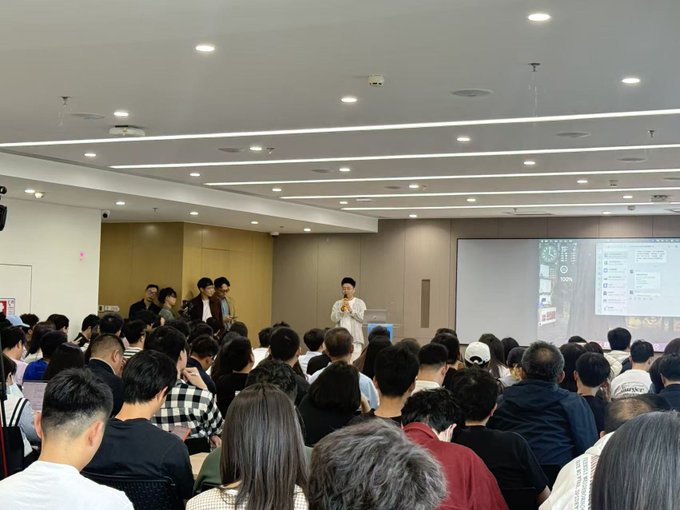
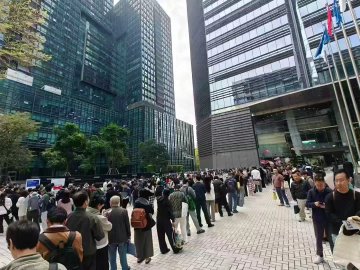
AI and Crypto: It's not a question of "to add" or "to not add," but "when is it needed?" This weekend I attended the very popular OpenClaw Demo event, serving as a judge to review the projects. Another judge was a well-known investor in the Web2 space, who has made impressive investments in star companies like MiniMax during this AI wave. However, he had a very clear view: he's not optimistic about crypto. His logic is actually quite simple—if a project is inherently a great AI product, but forces blockchain into it just to issue a token, it essentially narrows its own path. Because once labeled as crypto, it immediately enters a more complex environment in terms of fundraising, regulation, and user perception. Frankly, I partially agree with this view. In the past few years, many Web3 projects have indeed made a mistake: Thinking about issuing a token first, then finding a product. The blockchain portion of many projects is actually completely redundant. If a product's core value doesn't rely on on-chain mechanisms, and it's just adding a layer of blockchain for Tokenomics, then the market has basically proven it's unworkable. Therefore, it's not surprising that some Web2 investors instinctively dislike "AI + Token" projects. However, the problem lies in this: Many people have drawn an overly simplistic conclusion—AI doesn't need crypto. I believe this conclusion is also incorrect. The relationship between AI and blockchain has never been a question of "whether it's needed," but rather a question of at what stage it will inevitably be needed. Moreover, as AI enters the Agent era, this need will become increasingly apparent. ⸻ I. AI Collaboration Requires "Verifiability" The future of AI is not a model, but an entire network of Agents. Completing a complex task may require dozens or even hundreds of AI Agents to collaborate: • Some are responsible for data acquisition • Some are responsible for reasoning • Some are responsible for execution • Some are responsible for verification In this system, a core question arises: Who did what? How to prove it? If all computation and data reside on a centralized server, ultimately, it relies solely on platform credibility. But when AI Agents begin large-scale collaboration, trusted records and verifiable execution become crucial. The value of blockchain lies here: • Verifiable records • Immutable logs • Programmable settlement In other words, AI needs a trusted collaborative underlying layer. This is why infrastructure like 0G proposes the concept of DeAIOS (Decentralized AI Operating System): Making AI data, computation, and behavior verifiable, rather than a black box. ⸻ II. AI Developers Need a New Incentive System Within the OpenClaw ecosystem, a significant problem has emerged. Many developers are developing Skills. These Skills are essentially capability modules for AI Agents. But the problem is: Developers find it difficult to gain long-term benefits from them. Today's model is roughly: • Developers contribute capabilities • The platform gains traffic • The platform controls revenue This model is common in Web2, but it's not suitable for the future AI Agent economy. If a Skill: • Can be repeatedly invoked • Can be combined into different Agents • Can be reused in different application scenarios Then it is essentially a digital asset. And the confirmation of asset ownership, trading, and revenue distribution are precisely the problems that blockchain excels at solving. The future likely to see: • Skill Marketplace • Agent Asset • Automated revenue distribution AI capabilities themselves will become tradable assets. ⸻ III. AI Data Sovereignty Issues Will Increasingly Serious The development of AI is rapidly approaching a new problem: Data Shortage. High-quality training data is becoming increasingly scarce. Meanwhile, large model companies are already using a large amount of internet content for training: • Articles • Images • Videos • Code Who are the creators of this content? Humans. But in the existing system, humans receive almost no reward. If this model continues, two things are likely to happen: 1️⃣ Data quality will continue to decline 2️⃣ Creators' motivation will disappear A more reasonable system in the future should be: • Data has a source • Data has ownership • Data can be licensed for use • Data contributions can generate revenue This is essentially data assetization. Blockchain can provide: • Data ownership confirmation • Data authorization • Data usage records • Automatic profit sharing Simply put: AI not only needs computing power, but also a new data economy system. ⸻ IV. Web3 practitioners shouldn't be ashamed to express themselves Recently, I've noticed an interesting phenomenon at many AI events. Many Web3 professionals deliberately downplay their background when introducing themselves. They're even a little embarrassed to say they come from Crypto. I think this is completely unnecessary. Web3 has indeed experienced bubbles, excessive narratives, and many failed projects. But this doesn't mean the technology itself has no value. Many technological approaches are actually ahead of their time. The current pace of AI development is reopening many possibilities: • AI Agents • Decentralized computing power • Data assets • AI collaboration networks These issues essentially require: A trustworthy digital economic infrastructure. And blockchain is precisely designed for such a system. V. The Real Question Isn't "Does AI Need Crypto?" The real question is: When is it needed? If an AI product: • Doesn't need decentralization • Doesn't need assetization • Doesn't need a collaborative network Then there's indeed no need for blockchain. But if AI enters: • Agent economy • AI collaborative network • Data asset market Then blockchain will almost inevitably become the underlying infrastructure. Therefore, I can quite understand the Web2 investor's point of view. However, from a longer-term perspective: AI and Crypto are likely not in competition, but rather complementary. AI is responsible for intelligence. Blockchain is responsible for trust and the economic system. When these two truly combine, we may see a completely different digital world. And right now, it's only just beginning.
This article is machine translated
Show original


From Twitter
Disclaimer: The content above is only the author's opinion which does not represent any position of Followin, and is not intended as, and shall not be understood or construed as, investment advice from Followin.
Like
Add to Favorites
Comments
Share
Relevant content