Ethereum co-founder Vitalik Buterin announced a new staking method called "DVT-lite," designed to lower the barrier to entry for institutional investors.
Vitalik Buterin stated on X (formerly Twitter) on the 10th that the Ethereum Foundation had used the "DVT-lite" technology to stake 72,000 ETH in February of this year. He explained, "The goal of this project is to allow institutions to perform distributed staking as easily and with a single click as possible."
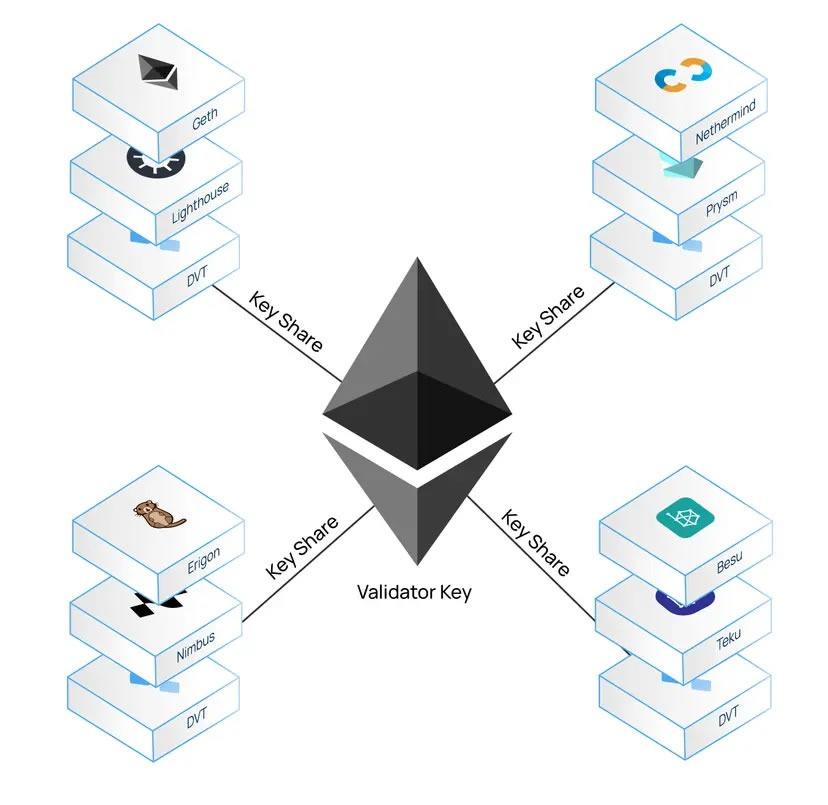
According to Butrin, DVT-lite is a simplified form of Distributed Validator Technology (DVT). Users can choose the computer running the node, create a configuration file using the same key, and then the system will automatically complete the configuration.
Traditional standalone staking involves all operations running on a single computer. In this scenario, a system crash, hacking attack, or network outage can trigger a penalty known as "slashing."
A complete DVT architecture operates by distributing the private key across multiple computers. This method offers higher security, but the configuration process is complex.
DVT-lite is designed to use the same validator key across multiple computers. Therefore, even if one computer stops working, the others can immediately take over its role, resulting in virtually no downtime and a low risk of slashing.
The Ethereum Foundation launched a staking project using this technology at the end of February, and the relevant assets have now entered the validator registration queue. The actual staking will take place on March 19.
Butrin pointed out that the view that operating staking infrastructure is a complex task that only experts can handle is detrimental to decentralization. He stated, "The idea of requiring every participant to be a professional infrastructure operator is not good; we must address this issue directly."
The Ethereum Foundation is using DVT-lite to stake 72,000 ETH: https://t.co/NIt4mksntj
— vitalik.eth (@VitalikButerin) March 9, 2026
My hope for this project is that in the process, we can make it maximally easy and one-click to do distributed staking for institutions. Choose which computers run your nodes, make a config…
In addition, he emphasized the need for a "one-click" runtime environment, such as one that can automatically run staked Docker containers or Nix images on each node.
Butrin stated that he himself plans to adopt the DVT-lite method in the future and hopes that more institutions holding ETH will participate in staking using this approach. He explained, "It is crucial that the authority of staking nodes is sufficiently decentralized, and the first step in achieving this goal is to lower the barrier to entry."
In January of this year, he proposed integrating "native DVT," emphasizing the need for an architecture that would allow stakers to stake without relying entirely on a single node.
On the other hand, despite the recent weakness in Ethereum prices, staking demand remains strong. Currently, there are approximately 3.2 million ETH waiting in the validator queue, with a waiting time of about 55 days.
Only about 29,000 ETH were registered in the staking exit queue, with a waiting time of about 12 hours.
The total amount staked is currently 37.5 million ETH, equivalent to approximately $765 billion at current prices. This represents about 31% of the total Ethereum supply.