With the war de-escalating, oil prices falling, and US stocks rebounding, where is Bitcoin headed this time?
Written by: ChandlerZ, Foresight News
Bitcoin touched $76,000 intraday on March 16, marking its highest level in six weeks after eight consecutive days of gains, with a 24-hour increase of nearly 4%. This price level is approaching a significant resistance zone that has existed since late January. Since the outbreak of the Iraq War on February 28, Bitcoin has risen by nearly 20%, while gold has fallen by about 3% and the S&P 500 index has fallen by about 2% during the same period. Bitcoin's relative performance has outperformed almost all major assets.
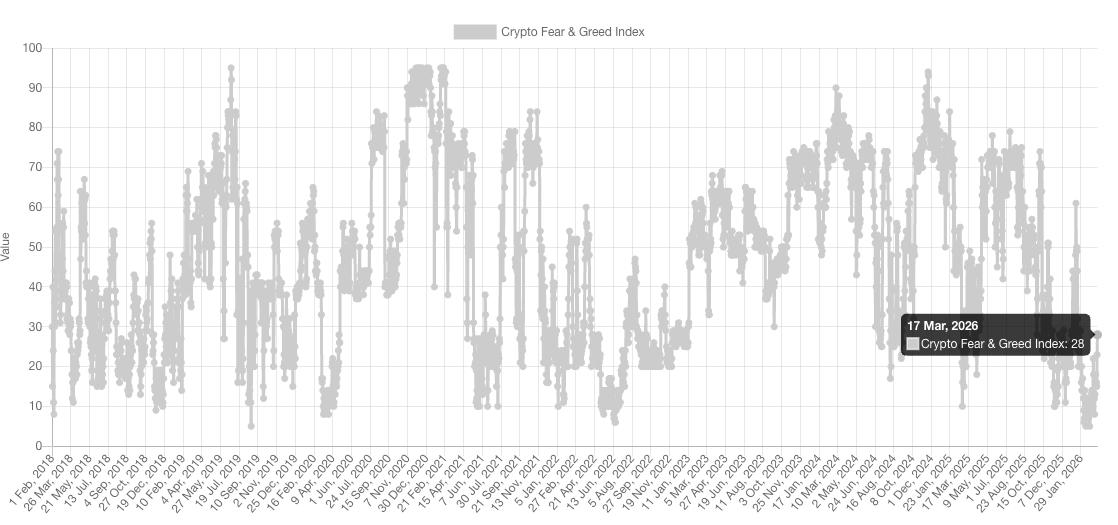
Regarding liquidation data, according to Coinglass, $610 million in open interest was liquidated across the network in the past 24 hours, with $485 million in short positions liquidated. Data from Alternative.me shows that the market has also shifted from a state of "extreme panic" to a state of "panic," with the cryptocurrency fear and greed index rising to 28 today (compared to 23 yesterday, indicating a state of "extreme panic").
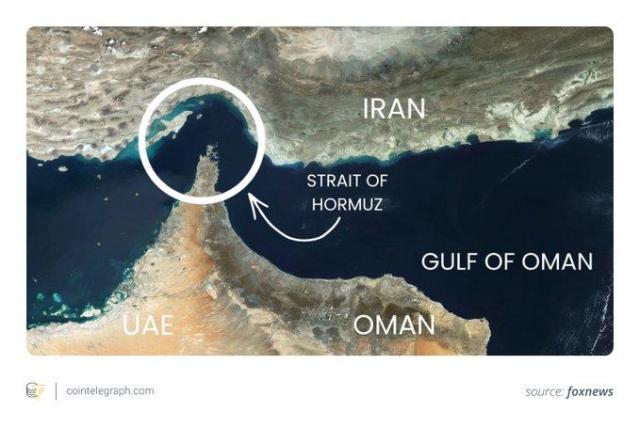
On March 16, all three major indices closed higher. The Dow Jones Industrial Average rose 387.94 points to close at 46,946, a gain of 0.83%; the S&P 500 rose 1.01% to 6,699; and the Nasdaq rose 1.22% to close at 22,374. The improved market sentiment was mainly driven by easing geopolitical risks. U.S. Treasury Secretary Scott Bessent told CNBC that the U.S. was allowing Iranian oil tankers to pass through the Strait of Hormuz, marking the first time tankers had successfully passed since the conflict began.
WTI crude oil futures traded between $92.93 and $94.17 per barrel during the day, while Brent crude opened at $105.26 per barrel. Previously, market concerns that a blockade of the Strait of Hormuz would disrupt approximately 20% of global oil shipments had sent oil prices soaring to a three-year high. However, as expectations of easing tensions grew, the upward momentum in crude oil prices was tempered.
Gold prices fell to around $5,010 per ounce, retreating from recent highs, pressured by a stronger US dollar. Silver followed suit, adjusting along with the precious metals sector. The divergence between gold and Bitcoin is noteworthy; both have been bought as safe-haven assets since the start of the war, but Bitcoin has begun to outperform gold.
Three driving factors behind Bitcoin's upward trend
First, easing geopolitical risks have boosted risk appetite. The Strait of Hormuz crisis was the biggest suppressive variable for the market over the past three weeks. High oil prices imply rising inflation expectations, which are extremely detrimental to liquidity-sensitive assets. With signals emerging that the strait passage will reopen, the market has begun to repric.
Secondly, Bitcoin is playing the role of a non-dollar safe-haven asset. During the recent US-Iran conflict, Bitcoin did not fall in tandem with the stock market; instead, it bucked the trend and strengthened. Fortune magazine reported that since the start of the war, Bitcoin has outperformed all major safe-haven assets, including gold and stocks. This contrasts with Bitcoin's decline at the beginning of the 2022 Russia-Ukraine war, indicating a shift in market perception of Bitcoin's fundamental nature.
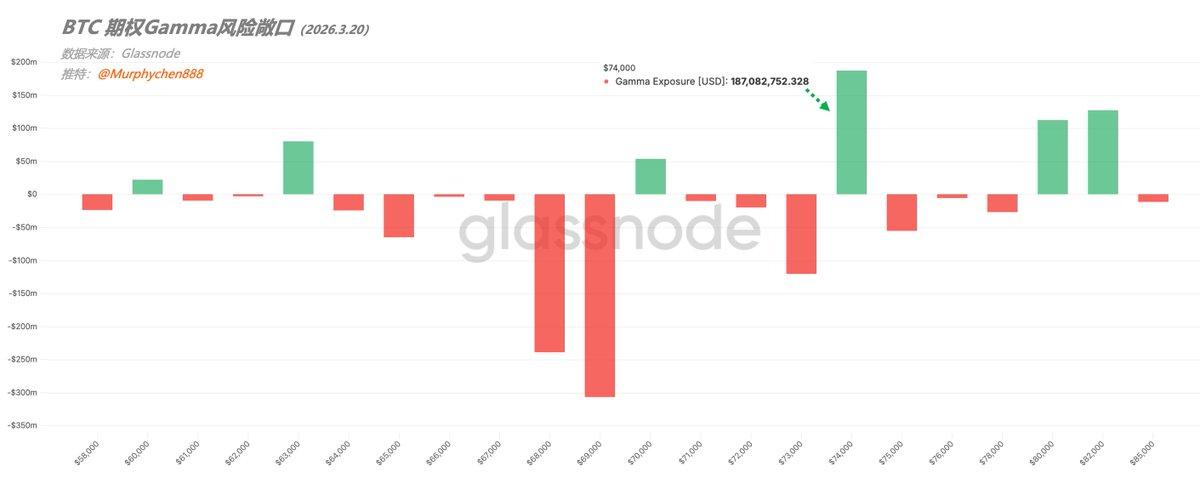
Third, the option structure is creating a magnetic effect around $75,000. Crypto analyst Murphy points out that options expiring on March 20 have approximately $180 million in long gamma exposure around $74,000. Market makers' hedging activities will suppress volatility, causing prices to tend to oscillate within this range, thus objectively creating resistance.
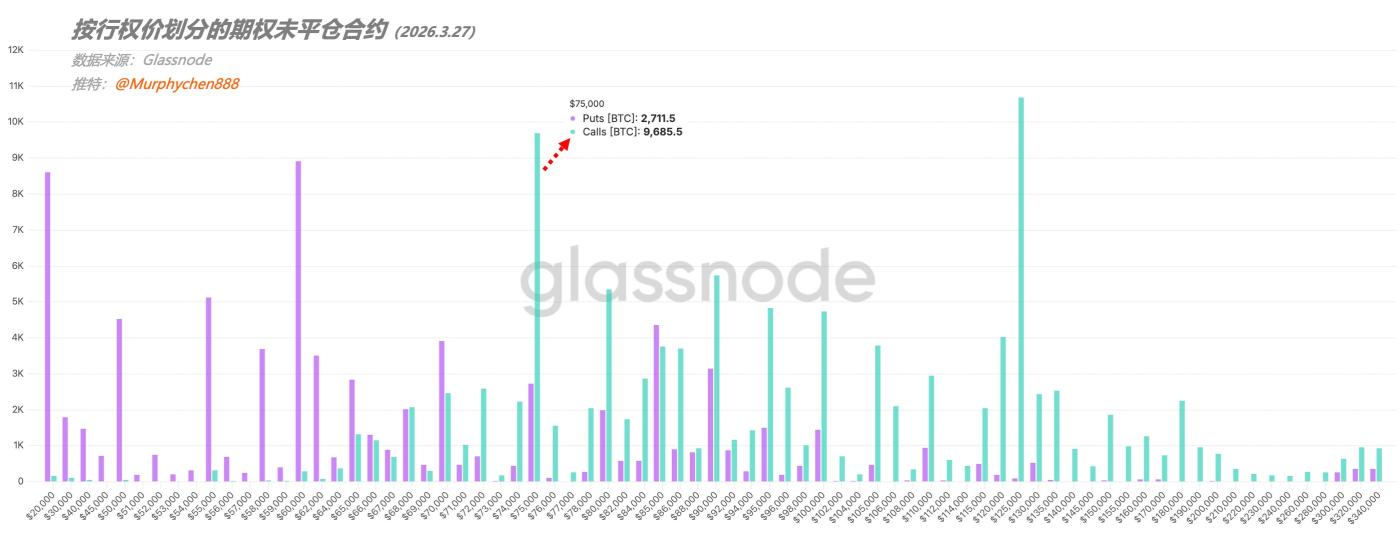
However, after March 20th, the structure on the next major exercise date, March 27th, changed significantly. The $75,000 exercise price attracted 9,685 BTC in open call options, while put options only had 2,711, giving call options a clear advantage. More importantly, between February 28th and March 14th, the net premium for call options at this exercise price surged from $5.8 million to $19.8 million, when Bitcoin was still in the $66,000 to $68,000 range, indicating that some funds were positioning themselves bullishly at lower levels.
From a Gamma risk exposure perspective, there is a Short Gamma structure of approximately -$2.56 billion around $75,000. In a Short Gamma environment, the closer the price is to the strike price, the faster the market maker's Delta changes, forcing them to continuously add to their positions to hedge in the direction of the price increase, buying more when prices rise, creating a typical "Gamma magnetic effect".
The $80,000 level corresponds to a $420 million Long Gamma exposure. At that point, market makers will shift their hedging direction, suppressing volatility and forming strong resistance. On the downside, there is a $390 million Long Gamma buffer around $65,000 to $67,000, but the OI in this area is significantly weaker than at $75,000 and $80,000, making it a buffer rather than strong support.
FOMC becomes the largest uncertainty variable
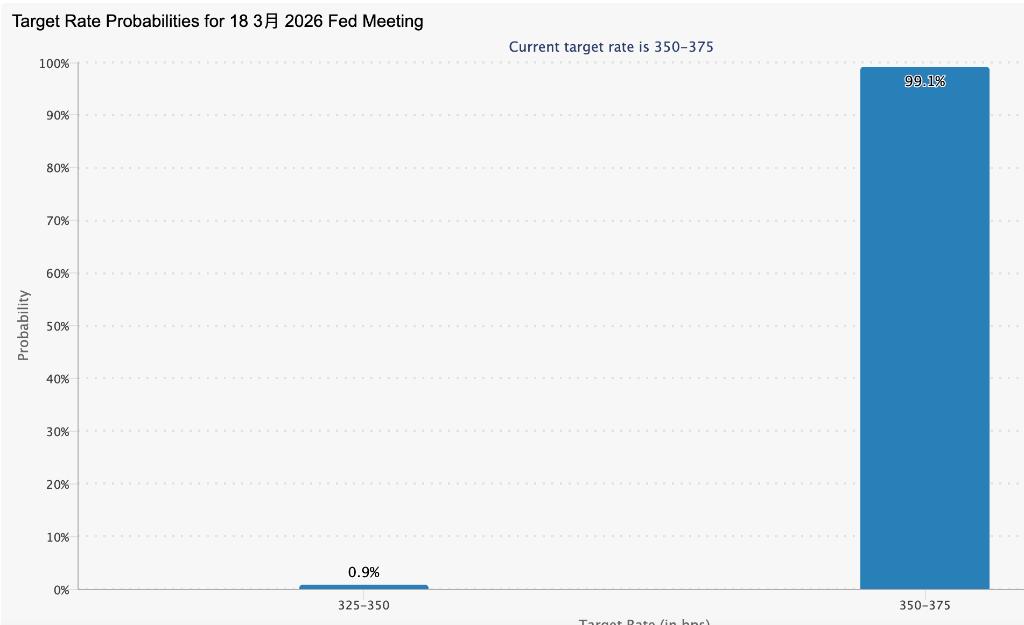
The Federal Reserve's indecisive meeting this week could be the most direct stress test Bitcoin has faced recently. CME FedWatch data shows that the market expects a greater than 99% probability that interest rates will remain unchanged (3.50%-3.75%).
Historically, Bitcoin experienced a decline in 7 out of 8 FOMC meetings in 2025, with an average drop of 14%. Only one meeting resulted in a brief upward rebound. In January 2026, the Federal Reserve maintained interest rates as expected, and Bitcoin plummeted from $90,400 before finally rebounding after breaking $60,000.
However, the policy environment this time is more complex than before. Brent crude oil broke through $100 per barrel, and inflationary pressures have returned; February's non-farm payrolls unexpectedly weak, putting pressure on the labor market outlook. The two major objectives are sending conflicting signals, sharply narrowing the space for monetary policy.
For Federal Reserve Chairman Jerome Powell, this will be the penultimate meeting before his term expires in May. The next interest rate adjustment may not occur until Kevin Warsh, Trump's nominee for Fed chairman, officially takes over. He also faces additional political pressure: a federal judge last week dismissed a subpoena issued by the Justice Department to the Fed, but prosecutors have announced an appeal. This legal process could interfere with the confirmation process for Trump's nominee, Kevin Warsh. Powell's term expires in May, but according to court documents, he has stated that he "cannot resign while the criminal investigation is pending."
For Bitcoin, the most bullish scenario would be if Powell could express confidence in the inflation trend or hint at a rate cut window this year during his press conference; however, if he reiterates a hawkish stance or uses ambiguous language under political pressure, the risk of a short-term pullback would increase significantly.