Author: Ada, TechFlow TechFlow
Original title: Two Weeks After the King of Safe Haven Failed, Bitcoin Quietly Outperformed Everything
In the early hours of February 28, the United States and Israel launched a joint military strike against Iran.
The textbook says: When war comes, buy gold .
But this time, the textbook seems to be wrong.
Gold briefly surged from $5,296 to $5,423 before falling to around $5,020, marking its second consecutive week of decline. Bitcoin rebounded from a panic low of $63,000 to $75,000, a gain of over 20%, outperforming gold, the S&P 500, and the Nasdaq.
During the same war and at the same time, gold prices fell while Bitcoin prices rose.
What exactly happened?
Gold: Its neck held by interest rates
On the day the war broke out, gold performed relatively normally. On the 28th, the price of gold surged by 2%, breaking through $5,300. Panic buying poured in, and everything seemed to be playing out exactly like history.
Then the script fell apart.
On March 3, gold prices plummeted by more than 6%, falling to $5,085. For the next two weeks, prices fluctuated between $5,050 and $5,200, with no clear direction. As of this writing, spot gold is around $5,020, having fallen nearly 10% from its all-time high of $5,416 at the end of January.
The war is still raging, the shells are still flying, but gold prices are falling even further.
The chain of events is as follows: During this war, the Strait of Hormuz was blocked. Approximately one-fifth of the world's seaborne oil passes through this waterway. Iran's blockade of the strait led to insurance companies withdrawing their coverage of ships, tanker shutdowns, and oil prices exceeding $100. The International Energy Agency urgently released 400 million barrels of strategic petroleum reserves, twice the amount released during the 2022 Russia-Ukraine war. Daniel Ghali, a commodities strategist at TD Securities, said, "Such a large leak cannot be plugged."
Soaring oil prices have fueled inflation expectations. Markets are beginning to reprice the Federal Reserve's rate-cutting path. Before the war, the market anticipated two rate cuts in 2026. But according to Bloomberg, traders now expect almost no chance of a rate cut at this week's Fed meeting.
High interest rates are the enemy of gold. Gold does not generate interest, and the higher the interest rate, the greater the opportunity cost of holding gold. Funds naturally flow to interest-bearing assets such as US Treasury bonds. Commerzbank commodity analyst Barbara Lambrecht points out: "Gold prices have continued to fail to benefit from this geopolitical crisis. Oil and natural gas prices rose sharply again this week, increasing inflation risks, which may force central banks to take countermeasures."
The traditional logic is that war triggers panic, and panic drives up gold prices. But this time the chain has changed—war has caused oil prices to soar, leading to inflation, which in turn locks in interest rates, and interest rates suppress gold. Gold isn't afraid of war itself, but rather the inflationary consequences it brings.
There is another, even more alarming signal. The governor of the Polish central bank recently stated publicly that he is considering selling some of his gold reserves to lock in profits. Over the past three years, global central bank gold purchases have been the biggest driver of gold price increases. If even central banks begin to loosen their stance, the long-term support for gold prices will begin to crack. Philip Newman, head of London-based precious metals consultancy Metals Focus, said, "Some investors are disappointed with gold's lackluster response after the outbreak of war and have begun to reduce their holdings. This reduction in holdings, in turn, has reinforced the price weakness."
Bitcoin: Going Against the Trend
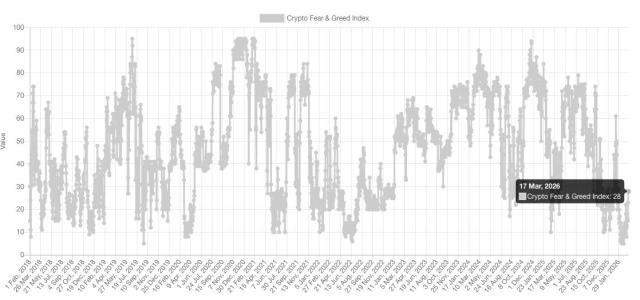
On February 28, news broke that the US and Israel were jointly striking Iran. Bitcoin was the only liquid asset still trading that day, and it plummeted 8.5% within minutes, from $66,000 to $63,000.
Gold prices rose, the US dollar rose, and Bitcoin fell. Everyone's first reaction was the same: Bitcoin is a risky asset, not a safe-haven asset.
Looking back two weeks later, things were much more complicated than that assessment suggested.
On March 5th, Bitcoin rebounded to $73,156. On March 13th, it briefly broke through $74,000. As of press time, Bitcoin is trading at $73,170, up approximately 20% from its pre-war low. During the same period, gold fell by about 3.5%, and the S&P 500 fell by about 1%.
Bitcoin has outperformed all traditional safe-haven assets. That's a fact. But why?
The most popular explanation in the market is that war leads to fiscal expansion and economic recession, forcing the Federal Reserve to eventually cut interest rates and print money, thus easing liquidity and benefiting Bitcoin. This narrative sounds appealing, but it has a glaring logical flaw—if war-induced inflation prevents the Fed from cutting rates, then the "quantitative easing" wouldn't happen. Moreover, even if the Fed did ease monetary policy, gold would still benefit. Simply relying on "expectations of quantitative easing" cannot explain the divergence between gold and Bitcoin.
A more honest answer is that several factors come together.
First, it's a technical oversold rebound. Bitcoin fell from its all-time high of $126,000 last October to $63,000, a drop of about 50%. In early February this year, a sudden wave of liquidations wiped out $2.5 billion in leveraged positions over a weekend. CoinDesk's analysis suggests that this liquidation "cleared out the weakest holders and reset market positions," leaving a leaner market. Therefore, when war breaks out, there won't be much floating Bitcoin left to be sold off in a retaliatory manner.
Second, the structural advantage of 24/7 trading. February 28th was a Saturday, and when the US and Israel launched their strikes against Iran, global stock, bond, and commodity markets were all closed. Bitcoin was the only open liquidity window. It was the first to be dumped because panicked funds needed to be liquidated immediately; but it was also the only place that could absorb the return of funds before the market opened on Monday.
Third, there's a return of funds to ETFs. The US spot Bitcoin ETF saw net inflows exceeding $1.34 billion in March, marking three consecutive weeks of net inflows—the longest streak since July of last year. BlackRock's IBIT attracted nearly $1 billion in new funds in March alone. Meanwhile, the world's largest gold ETF (SPDR Gold ETF) experienced outflows of over $4.8 billion during the same period. Funds are moving, but this appears more like institutional reallocation of positions. Whether this constitutes a long-term trend is too early to conclude.
Fourth, portability during wartime. This factor is rarely mentioned in mainstream analysis, but it is extremely important in the specific context of the Middle East war. Dubai is a core hub for global gold trading, connecting European, African, and Asian markets. After the outbreak of war, Dubai's gold logistics network was severely impacted; shipping routes were disrupted, insurance policies failed, and physical gold was stuck in warehouses, unable to be transported out. You couldn't carry a ton of gold bars across the war zone. Bitcoin, on the other hand, is the complete opposite—a person can carry nothing, remember 12 seed phrase, cross the border, and that's equivalent to taking all their assets. After the outbreak of war, the outflow of funds from Nobitex, Iran's largest crypto exchage, surged by 700%. This wasn't because investors were bullish on Bitcoin; it was because people voted with their feet during the war, choosing what was easiest to carry.
Tiger Research stated in its report: "In finance, a 'safe haven' refers to an asset whose price can remain stable during a crisis. This is a completely different concept from 'an asset that can be used during a crisis.'" Bitcoin clearly falls into the latter category in this war.
No single factor can explain everything. But together, they explain why Bitcoin has performed better than most people expected in this war.
Two unexpected events
Putting these two lines together, this war created two unexpected events.
The first surprise was gold. It fell when it should have risen most. This war directly impacted energy supply, triggering not just panic but inflation. Inflationary expectations suppressed gold prices through the interest rate chain. Gold's safe-haven function is not unconditional—when the transmission path of war is a crisis leading to inflation and interest rates failing to decline, gold will be stuck in the middle, unable to move. There is also an often overlooked physical weakness: physical gold is very difficult to move during wartime.
The second surprise was Bitcoin. It rose when it should have fallen the most. But this doesn't mean Bitcoin has "matured" as a safe-haven asset. Its performance is more like a combination of multiple technical factors and structural advantages. Nansen's chief research analyst, Aurelie Barthere, noted that Bitcoin's downside sensitivity to war news has significantly decreased, with the European Stoxx index falling even more sharply than Bitcoin during the same period. CoinDesk's analysis is more precise: "Bitcoin is not a safe haven, nor is it a purely risky asset. It has become a 24/7 liquidity pool, absorbing shocks faster than anything else when other markets close."
Every time news of a war escalates, Bitcoin still drops. It just drops less and bounces back faster each time.
Old map, new continent
Over the past five years, the market has told a simple and powerful story: gold is the anchor of chaos, and Bitcoin is digital gold.
The Middle East war in March 2026 broke this story apart.
Gold's millennia-old reputation as a safe-haven asset hasn't collapsed, but it has exposed a weakness rarely addressed in textbooks: when the transmission path of war is inflation rather than simple panic, interest rates are more powerful than geopolitics. Bitcoin has outperformed gold, but this doesn't mean it has taken over the mantle of "safe-haven asset." Its rise is the result of four factors working together: oversold rebound, structural advantages, institutional allocation, and portability in wartime; it's not a formal crowning of its status by the market.
The future trend depends on two variables: how long this war will last, and what the Federal Reserve will ultimately choose. Gold and Bitcoin are betting on different outcomes of the same war, and the outcome is still uncertain.
The term "risk aversion" may need to be redefined in the aftermath of this war. It is no longer a label for an asset class, but a question about the time dimension: are you hedging today's risks, or are you betting on tomorrow's world?
Gold and Bitcoin offer two completely different answers.
Twitter: https://twitter.com/BitpushNewsCN
BitPush Telegram Community Group: https://t.me/BitPushCommunity
Subscribe to Bitpush Telegram: https://t.me/bitpush