Bitcoin (BTC) entered the new week fluctuating around the $68,000 mark, amid a series of key economic data from the US that could reshape expectations of interest rate cuts and risk appetite in the cryptocurrency market.
The Crypto Fear and Greed Index is currently at 8, reflecting a sentiment of "extreme fear." At the same time, the packed schedule of speeches from US Federal Reserve (Fed) officials this week promises to increase market volatility.
Preliminary PMI figures lead the trend at the start of the week.
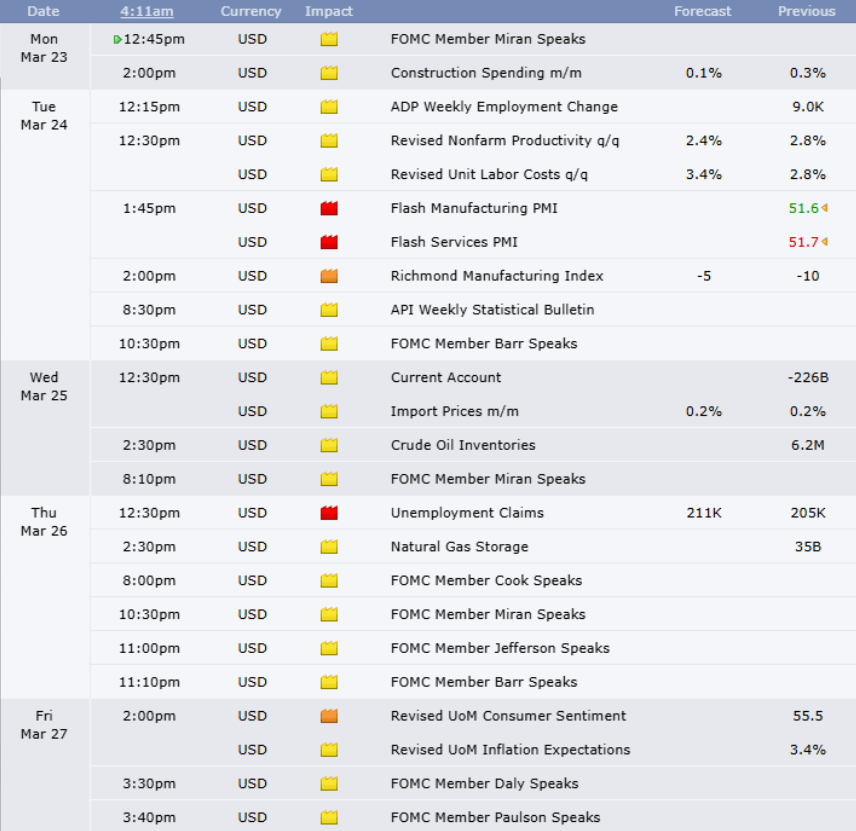
The preliminary manufacturing and services PMI figures released by S&P Global on Tuesday will provide the earliest glimpse into the health of the U.S. economy in March.
In particular, the services PMI—representing the majority of economic activity—if it exceeds expectations, could cause the Fed to delay its interest rate cut path, thereby putting pressure on riskier assets like BTC.
Conversely, a manufacturing PMI falling below 50 would signal a recession, potentially prompting a shift to defensive positions in both the stock and cryptocurrency markets.
Labor data continues to be the focus.
The initial jobless claims report released on Thursday remains the most sensitive indicator of the U.S. labor market. Earlier figures showed 205,000 claims, lower than forecasts.
Initial Claims 205K, Exp. 215K
Continuing Claims 1857K, Exp. 1852K— zerohedge (@zerohedge) March 19, 2026
This time, the market expects the number to be 211,000. If the number of applications increases, the likelihood of the Fed easing policy soon will be strengthened — a factor that is usually supportive of Bitcoin.
Conversely, if the data continues to fall unexpectedly, the scenario of maintaining high interest rates for an extended period will be reinforced, putting pressure on digital assets.
Inflationary pressures closed out the trading week.
Friday will see two key reports: the revised University of Michigan (UoM) consumer confidence index and inflation expectations. These are indicators the Fed particularly monitors when formulating monetary policy.
Expectations of rising inflation could have a significant negative impact, as it undermines the prospects for easing monetary policy.
Is Consumer Sentiment signaling the next market move?
The University of Michigan Consumer Sentiment tracks how confident people are about the economy based on income, jobs, inflation, and expectations.
In practice, it reflects fear vs Optimism.
Now the key insight:
Bitcoin… pic.twitter.com/Xdji8IKVd8
— Alphractal (@Alphractal) March 17, 2026
In addition, the US crude oil inventory data released on Wednesday is also a noteworthy variable. A sharp drop in inventories typically pushes oil prices higher, thereby increasing inflationary pressure amidst ongoing geopolitical risks.
Throughout March, BTC traded within a range of $62,000–$76,000. The next development—a breakout or correction—will depend significantly on the extent to which these macroeconomic data impacts expectations of Fed policy easing.