The SEC is shifting from a “litigation first, guidance later” approach to developing clear rules for classifying digital assets, which could reduce the tendency to classify many cryptocurrencies as securities.
This shift occurred as the SEC submitted proposals to the White House for XEM , while also coordinating with the CFTC to reduce regulatory gray areas. In the context of a short-term bull market but with lingering "extreme fear," the need for a more easily understandable regulatory framework became even more urgent.
- The SEC has submitted two proposals to the White House, including a system for classifying digital assets to increase legal clarity.
- The proposed “innovation exemption” could reduce the initial registration burden for crypto businesses in the US.
- The SEC delayed some reporting requirements for private funds, while the crypto market rose but sentiment remained very cautious.
The White House is XEM a new interpretation of crypto.
If approved, the SEC could implement a clearer classification system for digital assets, meaning many cryptocurrencies would no longer be automatically XEM as securities and reducing reliance on lawsuits.
On March 20th, the SEC quietly submitted two important proposals to the White House. One proposal focuses on increasing transparency in hedge fund and private equity operations. The other directly concerns cryptocurrencies, aiming to establish a clearer system for classifying digital assets.
According to Bloomberg , instead of relying primarily on lawsuits and enforcement measures, the SEC is shifting towards establishing specific guidelines and operating principles. If approved, this change could reduce the "divergent interpretations" of which Token are securities.
A key aspect of this new direction is the proposed "innovation exemption." This approach focuses on creating a testing environment and reducing initial barriers, so that crypto companies don't have to immediately meet complex registration requirements while their products are still in their development stages.
Michael S. Selig, Chairman of the Commodity Futures Trading Commission (CFTC), also addressed this issue in his post on X , emphasizing the goal of clarifying the line between securities and non-securities.
“Chairman Atkins and I have now developed a new interpretation that aims to provide definitive clarity on what constitutes a security and what does not.”
– Michael S. Selig, Chairman of the CFTC, article published in X/2026
Selig argues that, under former chairman Gary Gensler, many companies often had to "guess" what was allowed and what wasn't. This lack of clarity is believed to have driven innovation and talent out of the U.S., while also reducing the risk-taking willingness of developers.
The new proposals therefore aim to bring innovation back to the US by reducing gray areas, increasing predictability, and mitigating legal risks arising from post-audit interpretations. However, the sustainability of the new framework still depends on whether it is merely a temporary solution or will become a long-term foundation.
Private funds also have less pressure to comply.
The SEC is partially delaying reporting requirements for private funds and XEM previously stricter data requirements, aiming to balance market safety and compliance costs.
In the private equity sector, the SEC has postponed the deadline for some reporting requirements (Form PF) to October 1st and is XEM the stringent data requirements introduced in the previous period. This move indicates a new priority is to reduce the operational burden on businesses, rather than expanding reporting obligations in the short term.
The old debate is resurfacing: after the Archegos incident, regulators emphasized transparency to reduce systemic risk. But now, the SEC seems to be shifting its focus to feasibility and simplification, trying to avoid creating overly burdensome compliance requirements that the market would struggle to adapt to.
The crypto market is experiencing a short-term price increase, but sentiment remains "extremely fearful."
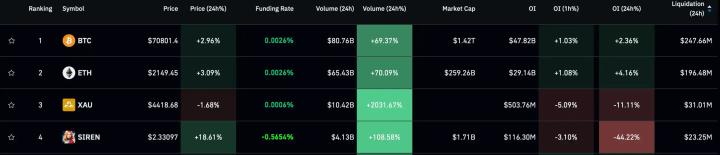
The total crypto market Capital increased by approximately 3.26% in 24 hours according to CoinMarketCap, but the Fear & Greed index remains at "Extreme Fear," indicating that investors are not yet fully confident.
Over the last 24 hours, the total market value of crypto has increased by approximately 3.26% at the time of this discussion. Despite the price recovery, the overall sentiment is not commensurate, as the Crypto Fear & Greed Index remains in the "Extreme Fear" zone, reflecting a state of hesitation and defensiveness.
In this context, the SEC is reportedly trying to bridge the gap between traditional methods and future laws such as the CLARITY Act, which aims to clarify the legal framework. Simultaneously, the SEC is working more closely with the CFTC to reduce overlapping oversight and lessen uncertainty for crypto businesses.
A recent interpretation, cited on March 17th, suggests that most digital assets should not automatically be treated as securities. This understanding, if applied consistently, could reduce the legal risks and compliance costs arising from "labeling" projects from the outset.
It remains unclear whether the new rules will be temporary, pending full congressional approval, or whether they will become a long-term framework. However, the central message under Chairman Paul Atkins is an effort to end the ambiguity surrounding cryptocurrency regulation in the United States.
Frequently Asked Questions
What changes is the SEC making to how it regulates cryptocurrencies?
The SEC is shifting from prioritizing enforcement through litigation to developing clear rules and guidelines, particularly a system for classifying digital assets, to reduce the gray area surrounding which Token are securities.
How might "innovation exemptions" impact crypto companies in the US?
This proposal aims for a more supportive environment, allowing new crypto companies to operate with fewer initial barriers and avoid having to immediately meet complex registration procedures while still in the product development phase.
Why is the market rising but sentiment remains very negative?
Although the total crypto market Capital increased by approximately 3.26% in 24 hours according to CoinMarketCap, the Crypto Fear & Greed Index remains in the “Extreme Fear” zone, reflecting investor caution due to macroeconomic and regulatory uncertainties.
In what direction are the SEC and CFTC cooperating?
The two agencies are working towards a more unified interpretation of whether digital assets are securities, aiming to reduce regulatory overlap and mitigate legal risks for crypto businesses in the US.