Article by Sleepy.md
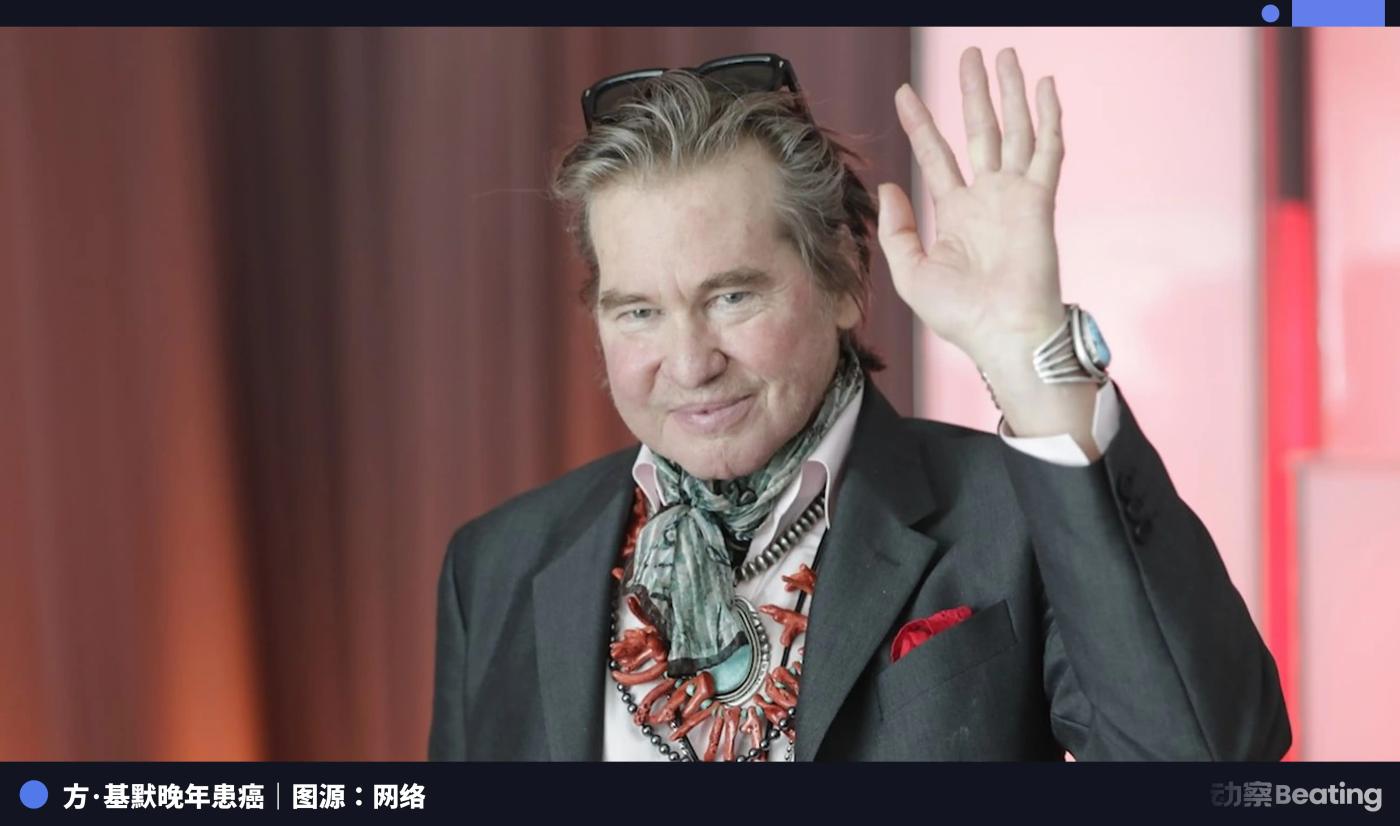
In 2025, Val Kilmer passed away at the age of 65 due to complications from throat cancer. The Iceman who was once spirited in Top Gun and the cool and charming Bruce Wayne in Batman Forever suffered greatly from cancer in his later years.
He was a devout Christian scientist who rejected modern medicine and tried to cure his illness through prayer. This ultimately cost him his voice and his life.
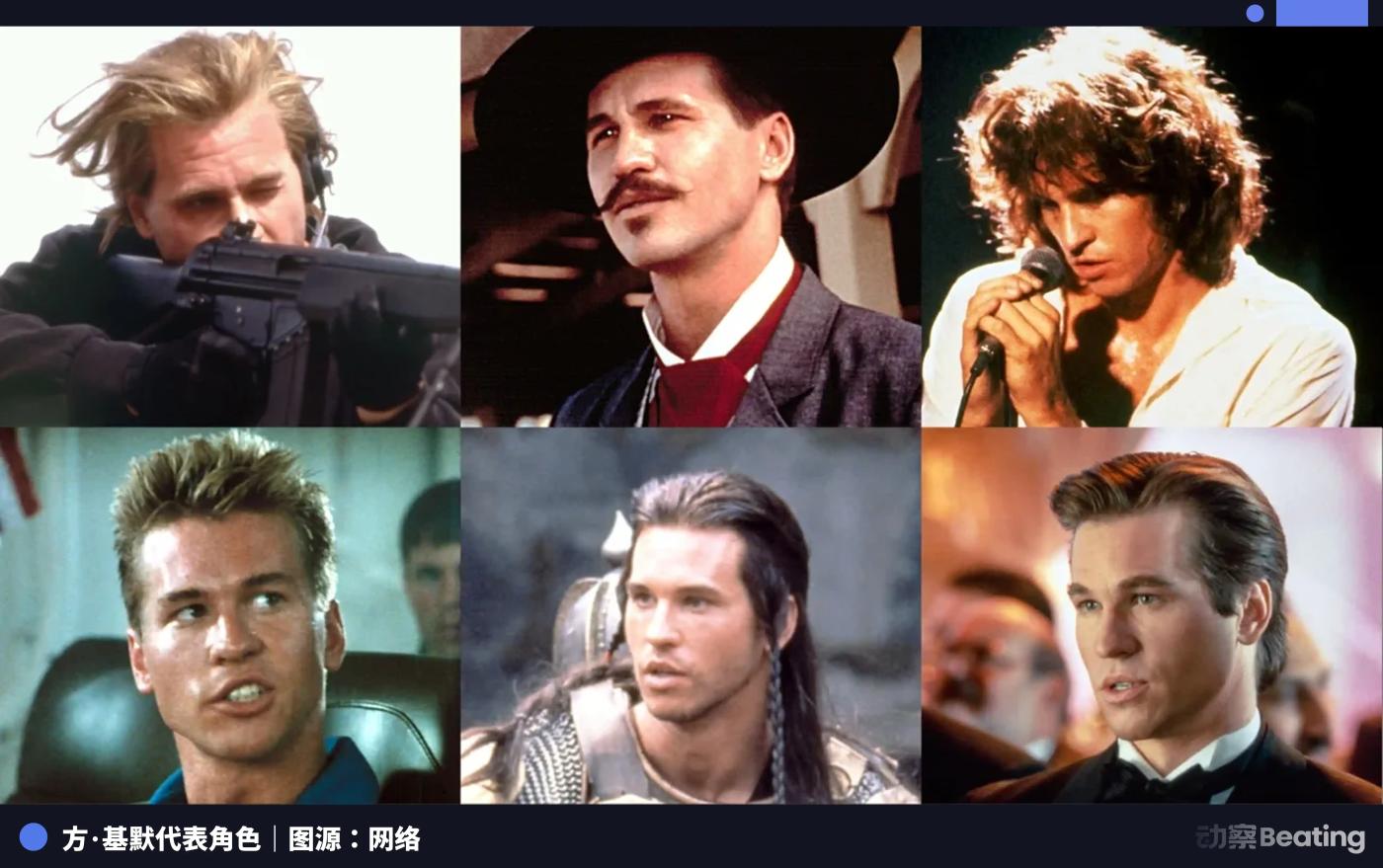
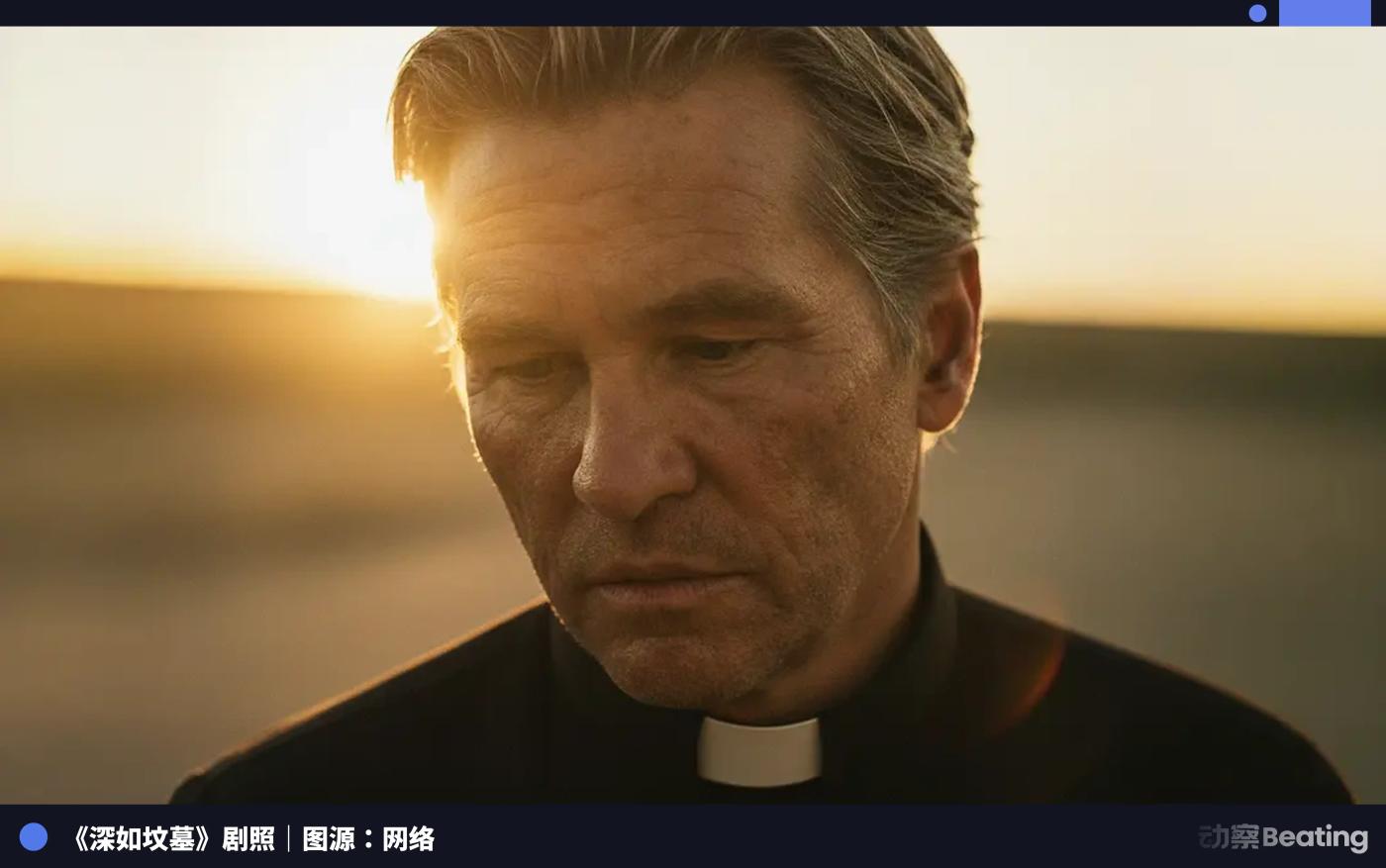
However, less than a year after his death, he was "resurrected" in a film about Native American spirituality called "Deep as a Grave," marking the first time in film history that generative AI technology was used to allow a deceased actor to give a completely new performance.
A soul who, in life, most rejected modern technology and even tried to use theology to fight against pathology, was transformed into a digital specimen by the most advanced modern technology after death.
We used to think that death was the only fair thing. But now it seems that the poor are forgotten after they die, while the rich continue to work for capitalists even after they die.
Cyber Summoning
The story of "Deep as a Tomb" takes place in DeCelli Canyon, Arizona, a sacred site belonging to the Navajo people.
Val Kilmer plays a Catholic priest and Native American spiritualist who joins two archaeologists on an excavation in a canyon, attempting to find the final resting place of ancient souls. The film's underlying tone is one of reverence, a questioning of the vanished civilizations on this red land.
But reality is particularly ironic. In Navajo traditional culture, death is an extremely dangerous taboo. They believe that after death, a malevolent aura called "Chindi" remains, which leaves the body with the last breath of the deceased, taking away all imbalances and evil thoughts.
The Navajo people hold death in deep reverence. They vehemently avoid discussing the dead, never call them by name, and are extremely averse to touching their belongings. In their belief, forcibly disturbing the peace of the dead will bring great misfortune.
The film "Deep as a Grave," which claims to "respect Indigenous history," uses the most offensive way to bring the deceased back to life through AI.
To complete the scenes he couldn't finish due to illness, engineers in Silicon Valley collected video footage and audio clips of him from his youth, even his hoarse breathing in the late stages of throat cancer, feeding these digital remnants into an algorithm. Ultimately, in the cold server room, they calculated the image of the priest in the canyon discussing the soul's destiny in the film.
Did Hollywood not know this was an offense to Navajo culture? Of course they did. But they didn't care at all; they cared more about financial reports and valuations.
How much money can a dead actor actually make for a living capitalist?
Post-death economics
To answer this question, we need to understand a new business model that has recently emerged in Hollywood.
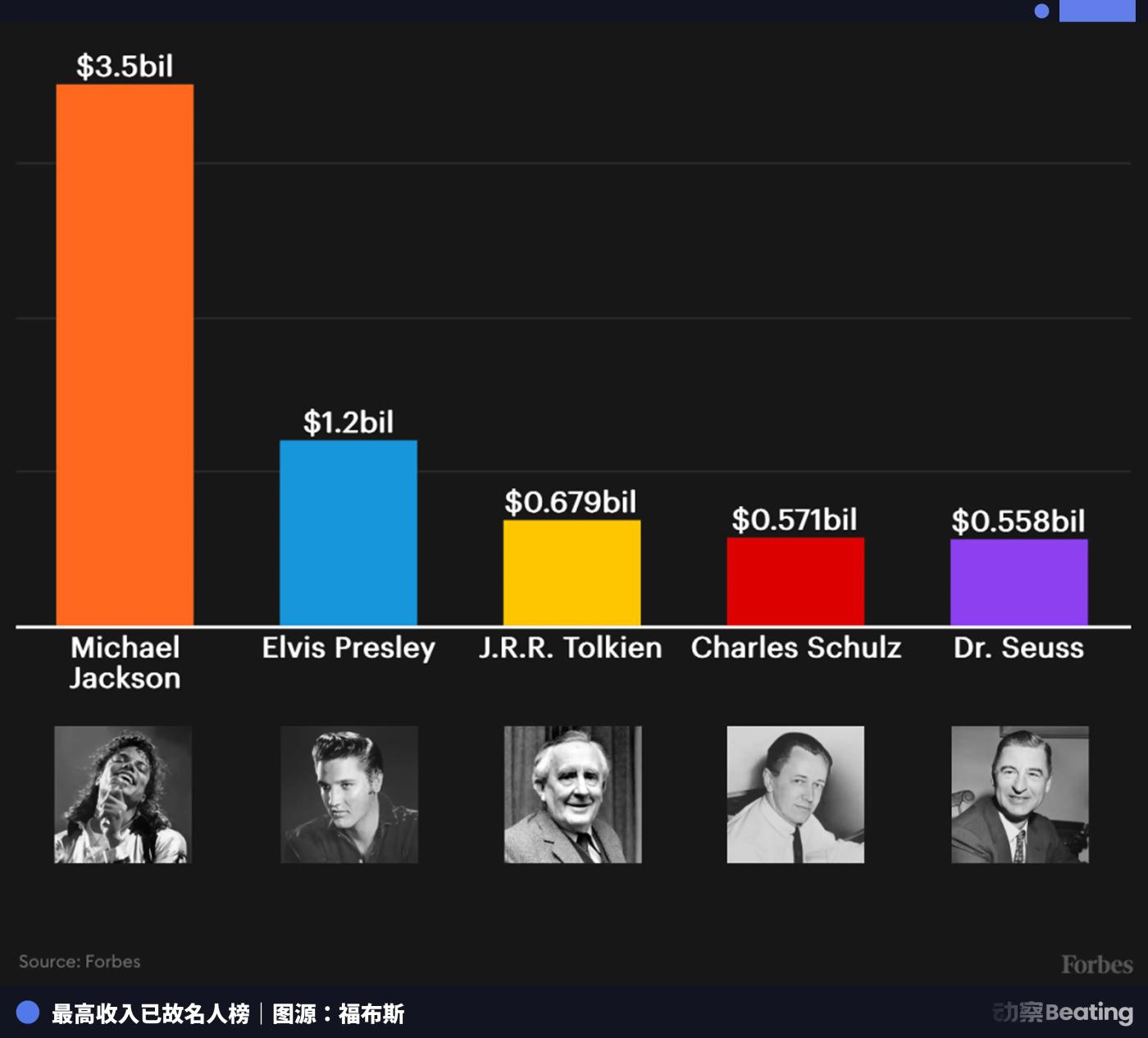
According to Forbes' "Highest-Paid Deceased Celebrities" list, superstars like Michael Jackson continue to generate hundreds of millions of dollars in revenue annually after their deaths. However, in the past, this "post-mortem economics" relied on copyright licensing, such as selling cassette tapes, merchandise, and holding tribute concerts. Estate companies simply collected rent, profiting from the assets accumulated by the stars during their lifetimes.
But the emergence of AI has completely changed this business model.
According to an in-depth analysis by Hollywood industry media outlet The Ankler, California recently expanded its posthumous image rights law, explicitly including AI-generated digital doubles. This means that estate companies are no longer selling "past works," but rather the "working time" of celebrities after their deaths.
The commercialization of post-mortem IPs marks a significant shift from copyright licensing to an era of productivity extraction.
For film studios, this is practically a perfect business loop. In traditional film production, actors are the most uncontrollable variable. They get old, they gain weight, they fight with the crew over pay, their private lives are embroiled in scandals that lead to films being pulled from theaters, and they may even unite to form unions and launch a massive strike that can last for six months.
But the actors resurrected by AI won't. The capitalists have finally found the perfect employees.
Digital Kilmer will never grow old. He doesn't need a motorhome, he doesn't need rest, he has no temper, he won't join a union, and he'll always be obedient. If you ask him to play a priest, he'll play a priest; if you ask him to recite a sad line, his algorithmically calculated digital face will squeeze out the most precise tear.
Marx predicted in "Capital" that capital would squeeze every drop of blood and sweat from the workers, but he probably never imagined that in Hollywood in 2026, even the residual value of the dead could be squeezed dry.
Who is selling Kilmer?
In this digital summoning, Val Kilmer's daughter played a key role.
In response to the controversy, she issued a public statement fully supporting the production company's use of AI to resurrect her father. Her reasoning was: "My father was a highly spiritual person; he always viewed emerging technologies with optimism, seeing them as tools to expand the possibilities of art."
Indeed, Val Kilmer, in order to give his old friend a dignified farewell in "Top Gun: Maverick," had to compromise and allow AI technology to recreate his lost voice. His daughter used this as justification, claiming her father was optimistic about technology. This effectively cloaked the studio in a legal and ethical guise.
However, the family and capitalists have misunderstood the concept. A living person who voluntarily uses a digital prosthetic to complete an artistic swan song does not necessarily agree to have their soul and body completely separated after death, becoming a puppet to be manipulated. Compromise in life is to defend dignity, while resurrection after death is a complete stripping away of it.
In 2023, the Screen Actors Guild launched a 118-day strike to protest against AI replacements. The final agreement stipulated that any AI resurrection of deceased actors must obtain explicit authorization from the estate (usually the family) and be paid accordingly.
The union thought its massive strike had built a solid fortress, but reality proved it was merely a backdoor for capital. Now, capital doesn't need to defeat the union; it only needs to overwhelm the families with money.
Val Kilmer may have been optimistic about technology during his lifetime, but that doesn't mean he was willing to entrust his face and voice to a character he never read the script for or worked on for even a second after his death. In an era without digital wills, the deceased become the most silent lambs to the slaughter.
The capitalists and their families have finished dividing the spoils, but can the audience, who are the ones paying the bill, really see the "performance" they want to see on the screen?
Electronic pre-made food in the uncanny valley
As it turns out, the audience simply didn't want to watch.
A Wired magazine in-depth report points out that today's audiences have developed a strong aversion to AI-generated entertainment content. No matter how much studios tout technological breakthroughs, all audiences see are dead fish eyes, distorted micro-expressions, and a creepy plastic feel.
This aversion stems not from moral fastidiousness, but from the uncanny valley effect, a physiological instinct in humans. When a non-human object is very similar to a human in appearance and movement, but is not entirely human, it evokes strong aversion and disgust in the viewer.
In his book *The Work of Art in the Age of Mechanical Reproduction*, German philosopher Walter Benjamin introduced a famous concept called "Aura." He believed that true works of art possess a uniqueness specific to the here and now; this unrepeatable sense of presence is "Aura."
The AI-generated Fang Kilmer has been completely drained of its spirit.
He has no physical weight, no labored breathing, no uncontrolled performance. Every expression he makes is an algorithm's average of past data. Val Kilmer's resurrection is not a technological miracle at all, but rather a pre-made electronic meal that Hollywood independent studios are forcing on audiences due to budget constraints.
If AI has drained the essence of performance, then what is a truly moving performance?
The Iceman's Tears, a Fragmented Reality
To answer this question, we only need to turn back the clock four years.
In 2022, Val Kilmer played the role of the Iceman in the film Top Gun: Maverick. At that time, he had already lost his voice completely due to a tracheotomy caused by throat cancer, and he was emaciated and extremely frail.
The director didn't use CGI to restore him to his youthful appearance, nor did he conceal his illness. In the film, Iceman also suffers from throat cancer and can only communicate with Tom Cruise by typing on a computer keyboard.
In that scene, the Iceman typed a line: "It's time to let go."
Tom Cruise looked at the screen, his eyes reddening, and he burst into tears.
Then, the Iceman struggled to let out a hoarse, extremely weak sigh.
At that moment, all the audience members were moved.
Because it was real flesh and blood enduring pain; it was two old friends, entangled for thirty years, bidding a dignified farewell with their mutilated bodies. That incomplete beauty tinged with the shadow of death, that vulnerability and dignity displayed by humanity in the face of disease, is something no top-of-the-line graphics card can render.
In the 2026 film *Deep as a Grave*, AI rejuvenated Val Kilmer's appearance, giving him a perfect voice. He was no longer in pain, no longer needed tubes, and achieved immortality in the digital world.
In the real world, there is a decaying, fleshly body, and in the digital world, there is a perpetually gleaming digital avatar. Do we love the real, suffering person, or the perfect digital reflection? When viewers shed tears over a piece of code-generated micro-expression of sadness, what are we moved by?
Ultimately, we can only empathize with real pain, not with a string of perfect data. Real imperfection is always more powerful than false perfection.
Labor contract without a closing clause
Van Kilmer suffered greatly from illness during his lifetime. He lost his voice because he refused medical treatment, and could only be fed through a tube due to a tracheotomy. In the last few years of his life, his body became a prison.
He should have found peace in death.
But in Hollywood today, death is no longer the end of labor, but the beginning of a new contract with no end in sight. His image, his voice, and his lifetime of performance data are packaged into an asset package called "Val Kilmer," which continues to generate box office revenue for others on screen.
In today's AI-driven world, when we look at resurrected celebrities, we are actually looking at our future selves. When our data, habits, voices, and images can be perfectly replicated by algorithms, and even packaged and sold before their death, the physical presence of the body becomes irrelevant.
Technology once promised to liberate humanity from arduous labor, but in reality, it has turned humanity itself into a means of production that can be infinitely replicated. In life, it robs you of your uniqueness; in death, it even confiscates your right to rest.
The Navajo were right. Let the dead rest in peace, and do not disturb their souls. For when you gaze into the abyss, you see not only the ghosts of the dead, but also the greedy eyes of capitalists.