Author: Nancy, PANews
Nowadays, it's commonplace for mining companies to abandon cryptocurrency and focus on AI.
Recently, leading listed mining company MARA has been massively selling off Bitcoin. This cash-out signal means that transitioning to AI is no longer a precautionary option, but a necessity for survival.
MARA cashes out $1.1 billion by selling cryptocurrency to expand its AI business.
On March 26, MARA disclosed that it sold a total of 15,133 bitcoins between March 4 and March 25, generating approximately $1.1 billion in revenue. This funding will be used to strengthen its balance sheet and provide greater strategic flexibility for expansion into the digital energy and AI/HPC sectors.
Earlier this month, MARA preemptively warned the market by adjusting its treasury strategy from "selling only the current year's mining output" to "selling the cumulative Bitcoin on its balance sheet." This sell-off caused MARA to slip from second to third place among listed mining companies in terms of holdings, previously second only to Strategy. Currently, MARA still holds approximately 38,700 Bitcoins, with its holdings returning to the level of December 2024.
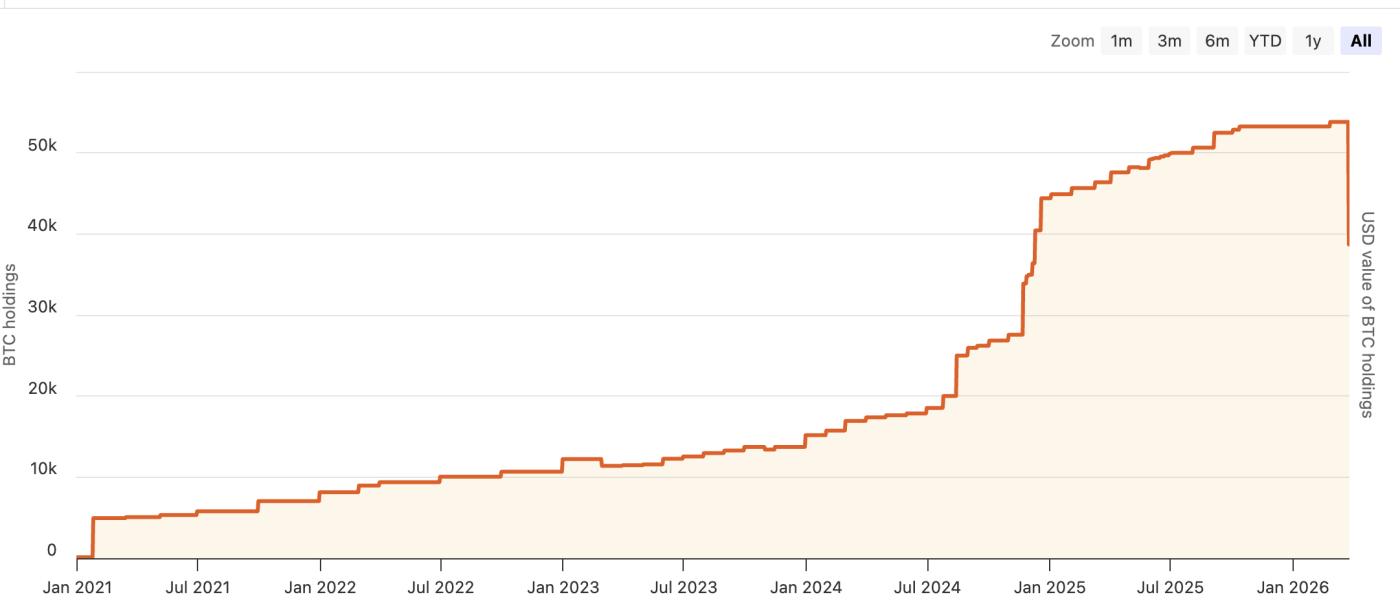
Although MARA emphasized that it does not intend to liquidate most of its Bitcoin holdings, the scale of the reduction reflects the increasing cash pressure on mining companies, which stems from the continued slump in Bitcoin mining operations.
According to a recent report by CoinShares, Bitcoin miners are facing severe profitability challenges. The hash rate is projected to fall to approximately $28-30/PH/s/day in Q1 2026, a new low since the halving. Meanwhile, the weighted average cash cost reached approximately $80,000 per BTC in Q4 2025, with about 15-20% of mining rigs globally operating at a loss. VanEck recently disclosed that the total miner balance (excluding wallets belonging to Satoshi Nakamoto) is currently approximately 684,000 BTC, a decrease of about 0.5% year-over-year. During the same period, approximately 164,000 new BTC were mined, meaning that miners have essentially sold off all newly mined supply over the past year.
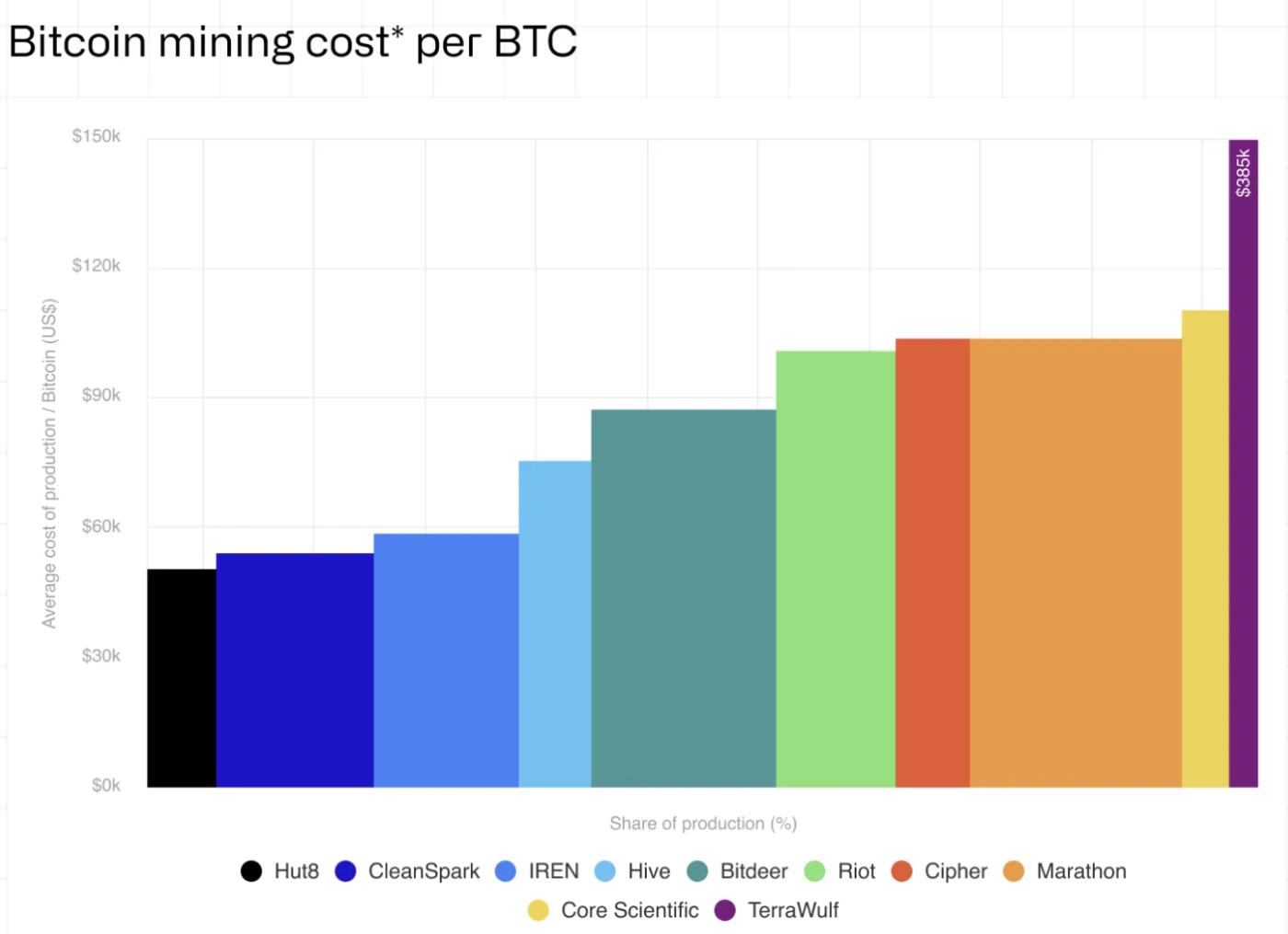
These data clearly demonstrate that the mining business is becoming increasingly sluggish. Moreover, MARA relied on the S19 series mining machines during its early expansion, and these older machines severely compressed profit margins. However, in the past two years, it has gradually upgraded to more efficient models.
AI transformation becomes a must for mining companies
Faced with the pressure of cryptocurrency mining, MARA is accelerating its AI deployment.
Just this February, MARA announced a partnership with Starwood Digital Ventures, a subsidiary of Starwood Capital Group, to transform and expand some of its U.S. sites previously used for Bitcoin mining into data centers for enterprise cloud and artificial intelligence clients. Starwood is one of the most representative real estate investment firms in the U.S., and in recent years has heavily invested in digital infrastructure, building one of the world's leading private data center portfolios.
In fact, MARA CEO Fred Thiel proposed as early as 2024 that successful Bitcoin miners will integrate AI components in the long term, using low-cost energy to serve AI data centers, and hope that 50% of their revenue will come from non-Bitcoin mining businesses within the next four years.
That year, MARA also began to transform its AI infrastructure, using the electricity resources and data center sites it had accumulated from Bitcoin mining to shift towards high-performance computing (HPC) and AI data centers.
In an interview this January, Fred Thiel stated bluntly that data centers and Bitcoin mining farms are vying for the same scarce resource: reliable electricity and its supporting infrastructure. Land, electricity, and operational control will determine who can scale. He recently warned that the industry is becoming increasingly brutal, and only mining companies that obtain low-cost, reliable energy or adopt new business models will survive. Bitcoin mining companies must control electricity resources, or they will face elimination before the next halving. By 2028, mining companies will face three paths: becoming electricity producers, being acquired by electricity producers, or partnering with them.
Today, major mining companies including MARA, Bitdeer, and Core Scientific are advancing their AI infrastructure businesses and are selling off large amounts of their Bitcoin reserves to support their transformation.
According to Coinshares, listed mining companies have cumulatively announced AI/HPC contracts worth over $70 billion, and by the end of 2026, up to 70% of their revenue could come from AI. Meanwhile, mining company valuations have also diverged significantly, with mining companies securing HPC contracts having an EV/NTM revenue multiple of 12.3x, compared to 5.9x for pure mining companies. The industry has clearly split into infrastructure companies and mining companies, with drastically different prospects for the two.
AI transformation has become a must for mining companies, but the high costs of transformation and hardware expansion make this new arms race very costly, forcing mining companies to liquidate their assets to alleviate short-term pressure.