The Japanese Financial Services Agency (FSA) has named Kucoin on its list of "unregistered" businesses and sent a warning letter for offering over-the-counter (OTC) Derivative trading via the internet.
This move comes as Japan tightens regulations on unregistered cryptocurrency exchanges, and follows a chain of legal troubles faced by Kucoin in various regions, raising concerns about user trust and funds on the platform.
- The Japanese FSA has warned Kucoin and several other entities for providing over-the-counter (OTC) Derivative -related services without proper registration.
- Kucoin continues to face legal pressure in several regions, including Hong Kong, Austria, and Dubai.
- Data shows that Bitcoin and stablecoin reserves on exchanges have dropped sharply, reflecting cautious user sentiment.
Japan's FSA warns Kucoin for unregistered operations.
The FSA added Kucoin to its list of unregistered businesses that received warning letters, related to offering OTC Derivative trading via the internet.
According to the FSA's announcement, Kucoin is among the "unregistered businesses that have received warning letters." The letter emphasizes that certain entities are providing or offering certain services without having completed the required registration procedures in Japan.
In the list of named entities, the FSA stated that Kucoin, NeonFX, TheOption, and GTCFX received notices in March for “offering over-the-counter (OTC) Derivative trading via the internet.”
The original FSA notice can be XEM in the FSA document . When assessing risk, investors need to differentiate between Spot Trading, Derivative, and OTC products, as licensing requirements and levels of supervision often vary from country to country.
Japan once asked Apple and Google to block unregistered exchanges.
The FSA escalated its measures in February 2025 when it asked Apple and Google to block access to five unregistered cryptocurrency exchanges, including Kucoin.
A notable development is that earlier, in February 2025, the agency reportedly asked Apple and Google to block access to five unregistered cryptocurrency exchanges. The names mentioned included Kucoin, Bybit, MEXC Global, LBank , and Bitget.
For users, actions like blocking access often directly impact their ability to download apps, update, or use services through popular channels. In practice, this can increase the risk of transaction disruptions and force users to consider self-custody or switching to a platform that complies with local regulations.
Kucoin faces legal pressure in multiple regions.
Not only in Japan, Kucoin has continuously faced operational restrictions in Hong Kong, is partially banned in Austria, and has received a "cease and desist" order in Dubai.
In May 2024, Kucoin was forced to downsize and withdraw from Hong Kong after failing to meet new licensing requirements, while also blocking users in the region from accessing the platform. The context at the time was described as being tied to restrictions and a crackdown on platforms linked to mainland China.
By February 2026, Kucoin was partially banned by the Austrian Financial Market Supervisory Authority (FMA). According to published information, the reason was related to the failure to fully implement anti-money laundering procedures within the framework of the EU's MiCA guidelines, despite having received an MiCA license a few months prior.
The FMA announcement is available in the FMA (Austria) document .
In March (according to the original text), Kucoin continued to face problems with the Dubai Virtual Asset Management Authority (VARA), being issued a “cease and desist” order along with three other exchanges for operating without a license. Accordingly, these entities are prohibited from advertising or operating in Dubai without a valid license.
Reserve data suggests users are cautious about Kucoin.
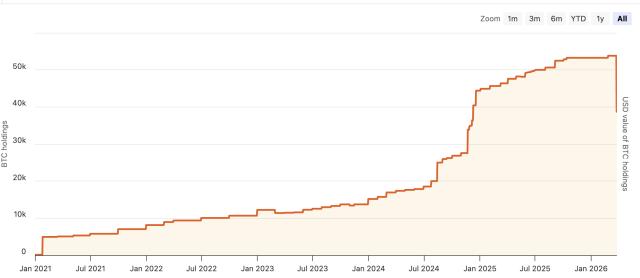
Bitcoin and stablecoin reserves on Kucoin are expected to decline sharply from 2024 to early 2026, suggesting that user confidence and funds may be affected by regulatory pressure.
Regarding Bitcoin, exchange reserves are described as decreasing from 14,000 BTC (in 2024) to 2,100 BTC by early 2026. The original text also notes that the downward trend in BTC reserves is a broader phenomenon across multiple platforms, possibly due to users switching to self-custodial wallets.
However, a closer look at liquidation , or the amount of Capital users hold as reflected in stablecoin reserves, reveals a more cautious sentiment. Stablecoin reserves fell from over $1.3 billion to $543 million in just one year.
The original text suggests that even the rally between mid-2025 and the recovery phase in early 2026 will not bring significant capital back to the exchange, implying that users remain cautious about compliance and operational risks.
Frequently Asked Questions
Why did the Japanese FSA issue a warning to Kucoin ?
The FSA stated that Kucoin belongs to a group of unregistered businesses and has received a warning letter regarding its offering of over-the-counter (OTC) Derivative trading via the internet without proper registration in Japan.
Which exchanges were mentioned in the recent request to block access in Japan?
The original text states that Kucoin, Bybit, MEXC Global, LBank , and Bitget are among the exchanges targeted when the FSA requested Apple and Google to block access to five unregistered exchanges (February 2025).
Is Kucoin facing legal issues in regions outside of Japan?
The original text mentions Kucoin withdrawing from Hong Kong (May 2024), being partially banned by the FMA in Austria (February 2026), and receiving a “cease and desist” order from VARA in Dubai in March for operating without a license.
How much have Bitcoin and stablecoin reserves on Kucoin decreased?
Bitcoin reserves are projected to decrease from 14,000 BTC (2024) to 2,100 BTC (early 2026). Stablecoin reserves have also decreased from over $1.3 billion to $543 million in a single year.