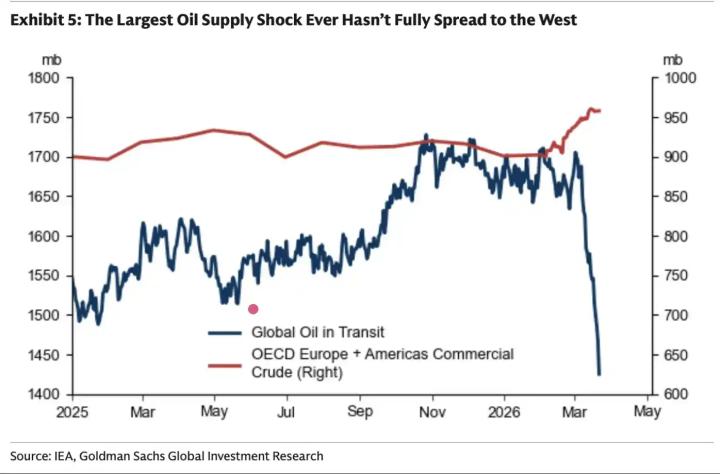
Fed Chairman Jerome Powell is a walking, talking non sequitur. In his defense, all Fed Chairmen are. Last week Powell said the Fed would not be raising rates in response to price pressures born of the warring in the Middle East. Implied in Powell's comment was that the Fed's machinations could somehow mitigate what followed the invasion of Iran by the U.S. and Israel. Back to reality, the Fed is powerless when it comes to market prices. Or put another way, the Strait of Hormuz looks at the Fed in the way that an elephant presumably looks at an ant. With good reason. No doubt the various economic religions (Keynesian, Monetarist, Austrian, Supply Side) promote competing versions of history indicating that the Fed's interventions (think the Paul Volcker myth) moderate prices, but reality sings a different tune. The Fed doesn't even control the value of the dollar. It's never been part of the central bank's policy portfolio. Still, even if the Fed did control the dollar, it would still be unequal to the Strait of Hormuz, along with every other shipping lane in the world. And that's because the only "closed economy" is the world economy. Say the latter repeatedly, and if you do, similarly say repeatedly that on the matter of market prices, the Fed doesn't matter. We're seeing this now as the partial closure of the Strait of Hormuz affects not just oil prices, but the price of everything associated with oil, which in so many ways is everything. Considering just one market good, natural gas looms large in the production of fertilizer that the whole world is reliant in when it comes to producing food, and a not insignificant amount of fertilizer consumed globally is produced in the Middle East and shipped through the Strait. With fertilizer on our minds alone, we can add a corollary to Robert Mundell's crucial quip: just as we can say the only "closed economy" is the world economy, we can add that "all wars are world wars." Precisely because the production of everything is increasingly a global endeavor, the effects of guns shot and bombs dropped anywhere are felt everywhere. In a very real way this is a good thing. While politicians and pundits who likely don't know any better talk about the U.S. "winning the AI war" over China, prospering in various industries to "beat China," or just staying ahead of "other countries" as if trade is war, they miss the point. The more that work is divided among people and machines globally, the better off we all are simply because we'll all have a lot more at prices that are much lower. Add to the latter that when we're working together, war becomes frightfully expensive. Which is hopefully one of many lessons that will be taken from the federal government's latest attempt to make the world better. Just as government can't grow the economy or create happiness where there isn't, it's also unequal to global problems. The founders sensed this, and it likely helped inform their belief in national defense over a globalized military force. What's important is that the globalization of production is national defense on a level that politicians and military forces can never provide exactly because trade among the productive regardless of street, city, state or country is easily the greatest war repellent the world has ever known. Trade gives everyone a stake in the wellbeing of everyone else. For now, and back to less lofty ideals, we can just state the obvious: as the past month's bombing reminds us, the Strait of Hormuz couldn't care less about the Federal Reserve.
The Strait Of Hormuz Couldn't Care Less About The Federal Reserve

Source
Disclaimer: The content above is only the author's opinion which does not represent any position of Followin, and is not intended as, and shall not be understood or construed as, investment advice from Followin.
Like
Add to Favorites
Comments
Share
Relevant content