Table of Contents
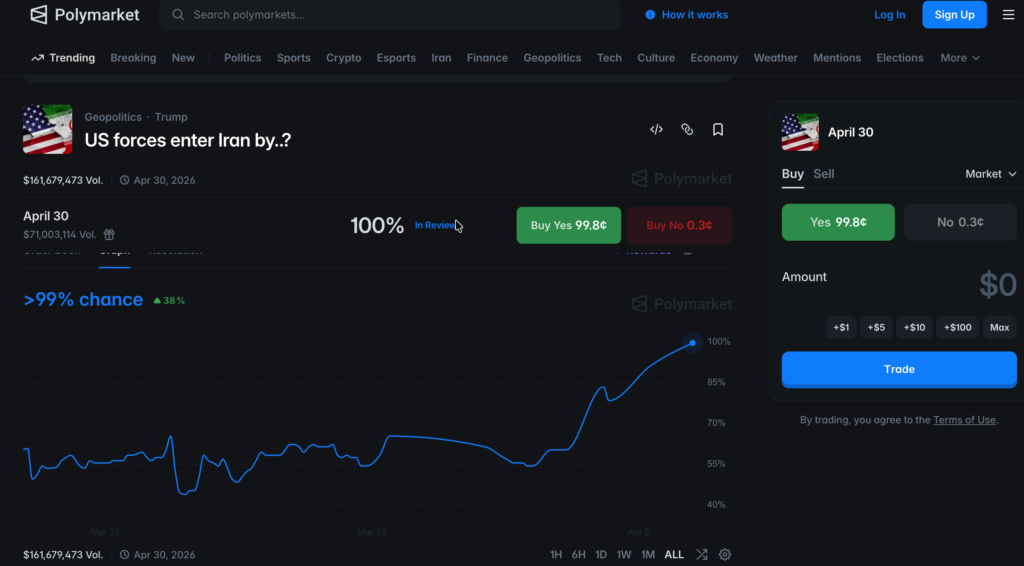
Toggle$ 200 million is betting on the same question: Will US troops enter Iran in April? The Polymarket "US Troops Entering Iran in April" contract surged from 61% to 99% intraday on April 5th, a 35% jump in a single day. Total trading volume for Iran-related contracts on Kalshi and Polymarket surpassed $200 million, setting a new record for geopolitical conflict-themed contracts. This is not just speculation—the pricing of prediction markets is reading the thermometer of war earlier than any other media outlet.
The surge in prices was triggered by a confirmed message: U.S. special forces entered Iranian territory on April 4-5 to carry out a mission to rescue the downed F-15 pilot. This was the first confirmed ground incursion by the U.S. military and the most direct context for Trump's 48-hour countdown.
Iran: Reciprocal retaliation, blockade of Holmz
Iranian Foreign Ministry spokesman Esmaeil Baghaei responded immediately and firmly: "Any aggression will invite reciprocal retaliation, including attacks on relevant US infrastructure."
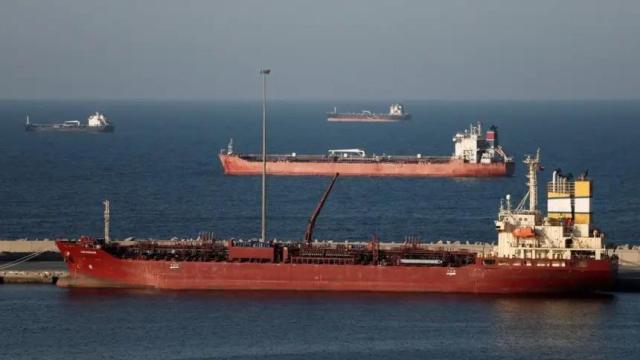
The Supreme Leader's office subsequently issued a statement reiterating the determination to close the Strait of Hormuz. The Strait of Hormuz is a vital chokepoint for global oil shipping, with approximately 21 million barrels of crude oil passing through daily, accounting for about 21% of the world's seaborne oil volume. A blockade would immediately impact international oil prices and have a ripple effect on global markets.
The Iranian delegation to the United Nations used even stronger language, directly naming Trump as "attempting to drag the entire Middle East into an endless war" and demanding an emergency meeting of the Security Council.
Then came the fact that was 96% certain: special forces had set foot on Iranian soil.
US-Israel target list: Energy facilities prioritized
Meanwhile, the US and Israel finalized a list of strategic targets. Netanyahu convened his security cabinet, and Israel actively lobbied, advocating for prioritizing strikes against Iran's energy sector and critical infrastructure—considered the most swift way to cripple Iran's war-fighting capabilities.
The U.S. military presence in the Middle East exceeds 50,000 personnel, including the 82nd Airborne Division and Marine Corps units. The 82nd Airborne Division possesses rapid deployment capabilities and is often seen as a forward signal for ground operations.
Trump: A deal is very likely
While military deployments continue to escalate, negotiation channels remain open. Trump tweeted on Truth Social, "I gave Iran 10 days, now only 48 hours left. Beyond that, hell awaits." However, he also stated, "A deal is very possible."
Mediation efforts were carried out simultaneously through three channels: Pakistan, Egypt, and Turkey, with special envoys Steve Witkoff and Jared Kushner making frequent trips. This parallel approach of diplomacy and military action has been a standard strategy in the Trump administration's past negotiations.
Crypto Markets: Hedging or Sell-Off?
Returning to Polymarket: Behind the 96% probability of "US troops entering Iran in April," two comparative figures are noteworthy—the current 63% probability of "invading Iran this year" is lower than the March 29 high of 68%; the 52% probability of "full-scale invasion before 2027" has a trading volume of $3 million. The market is betting on a "high probability of short-term action," but remains skeptical about a "full-scale war."
Bitcoin's historical performance during geopolitical conflicts is divergent: it plummeted at the start of the Russia-Ukraine conflict in 2022, but saw increased safe-haven demand during the Israel-Kazakhstan conflict in 2023. This time, if the conflict escalates after the 48-hour deadline, the direction of the crypto market will depend on whether the market views Bitcoin as digital gold or a high-risk asset.
A 96% probability is not the same as 100%. But on Polymarket, this is already the highest price for a geopolitical contract this year.