Author: Psyduck Fomo
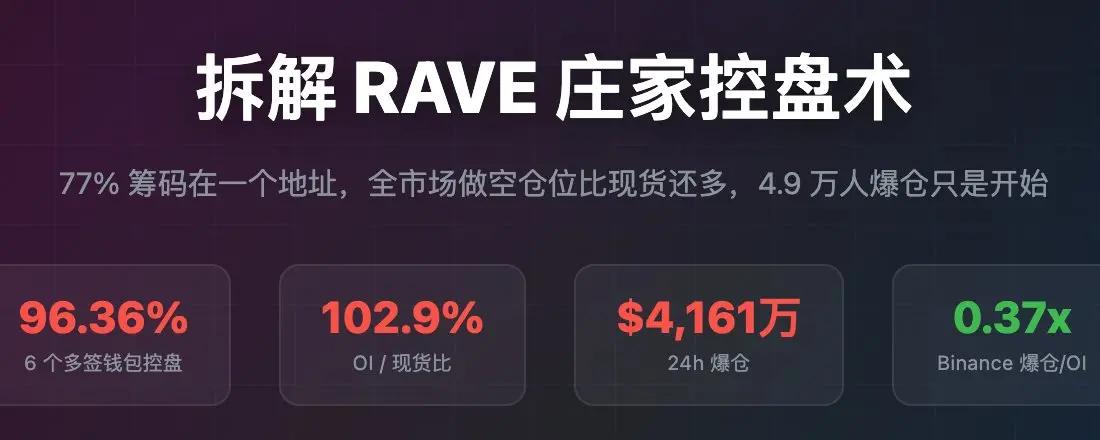
Token distribution: 96% of the tokens are locked by 6 multi-signature wallets, with one address holding 77%. Retail investors hold less than 0.1% of the tokens combined. Bitget is the main spot trading platform, with 88% of exchange spot trading occurring on Bitget.
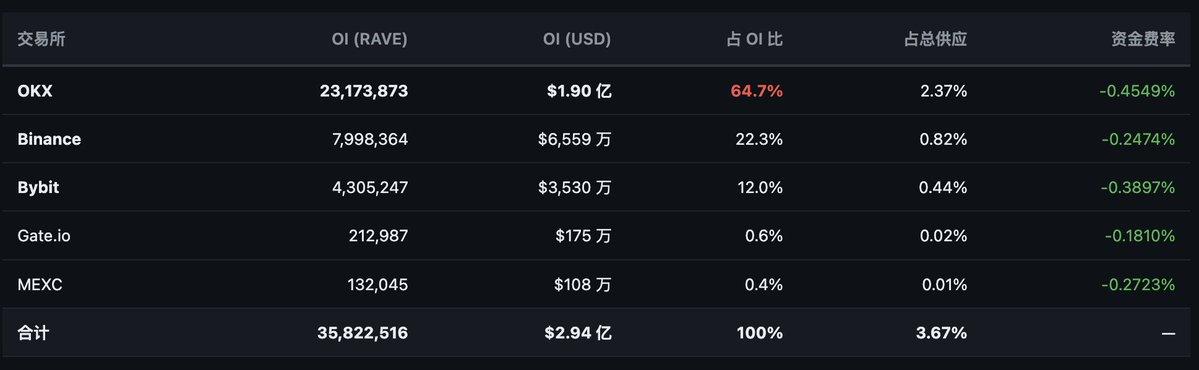
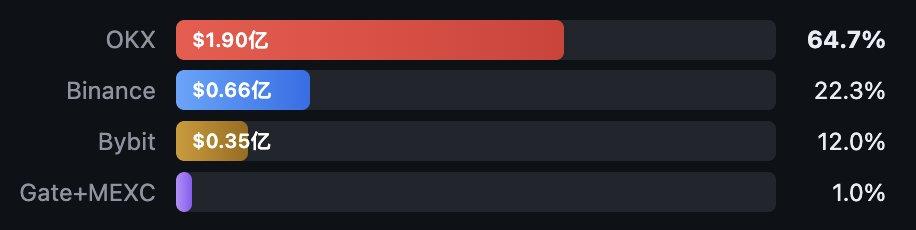
Contract Distribution: Open interest has exceeded the total available spot volume on the exchange, with an OI/spot ratio of 102.9%. Short sellers simply don't have enough contracts to cover their positions, creating a classic short squeeze deadlock. OKX alone accounts for 64.7% of the OI, making it the biggest powder keg. If OKX experiences a chain reaction of liquidations, the impact will be greater than all other exchanges combined. Funding rates are negative across the board, indicating the short squeeze is far from over.
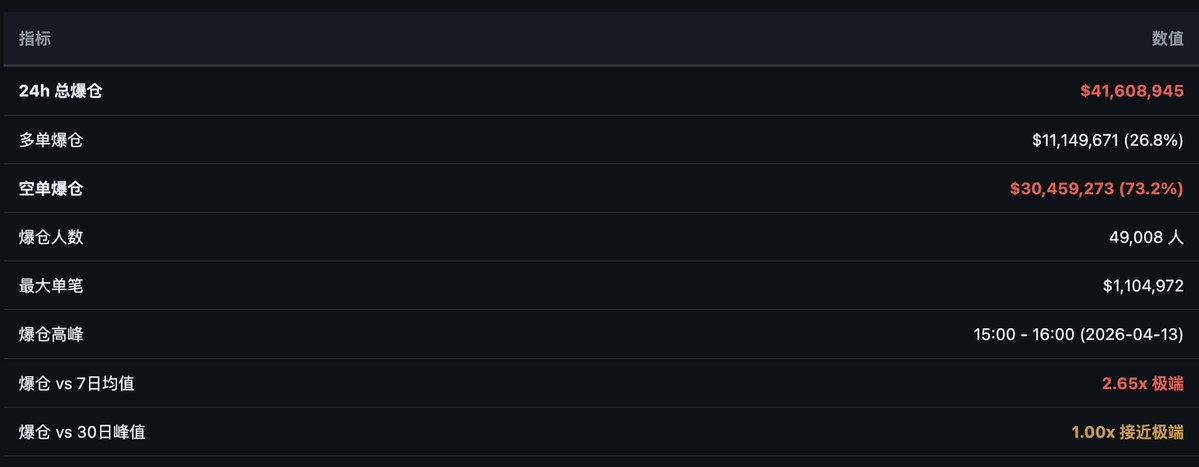
Regarding liquidations: $41.61 million was liquidated in the last 24 hours, with 73% of the liquidations occurring on short positions. Bybit and Gate.io accounted for 53% of the liquidations, making them a major area of concern for retail investors with high leverage. Gate.io's liquidation/OI ratio was as high as 35.65x. Binance had the most effective risk control—holding 22.3% of OI but contributing only 8.3% of the liquidations, with a liquidation/OI ratio of 0.37x, the lowest in the market. Tiered margin and liquidation mechanisms are indeed protecting users.
I. Distribution of Spot Market Shares
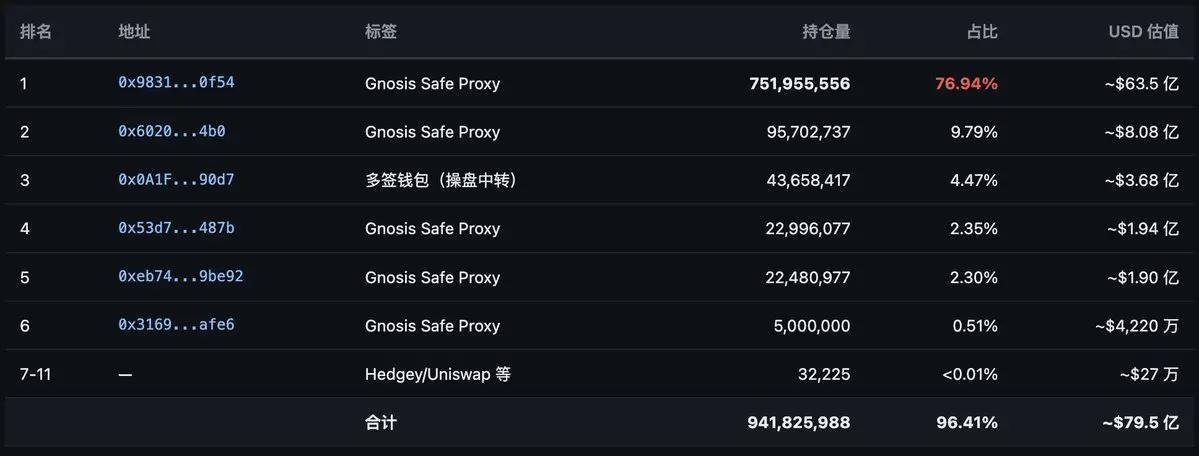
Key findings: Six Gnosis Safe multisignature wallets control 96.36% of the supply. Address #1 alone accounts for 76.94%, making it the absolute controlling address.

1.1 Team/Contract Wallet (96.41%, 11 addresses)
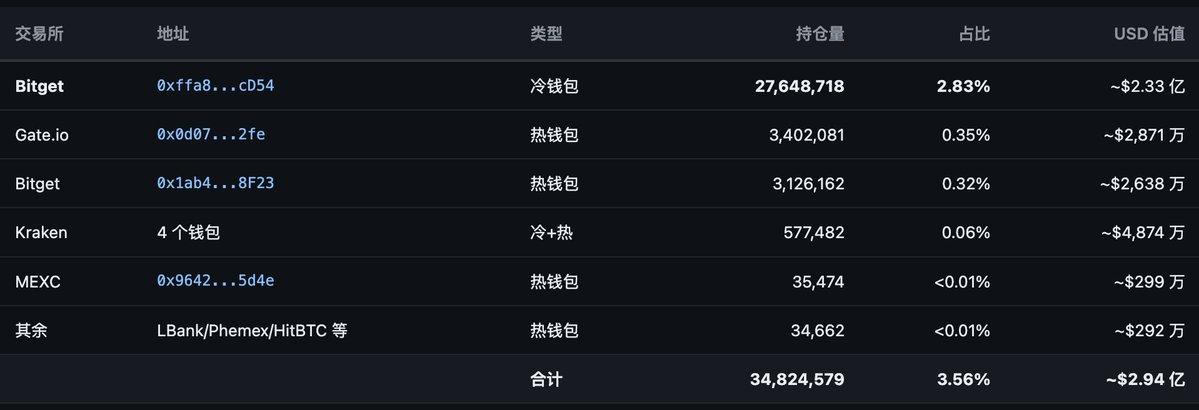
1.2 CEX Exchange (3.56%, 15 addresses in total)
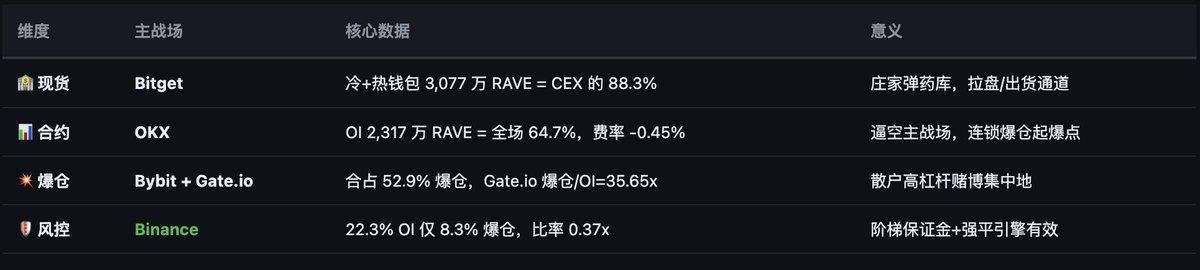
Key findings: Bitget is the absolute main battlefield for spot trading, with cold and hot wallets accounting for 3.15% (30.77 million RAVE), representing 88.3% of all spot trading on CEXs.
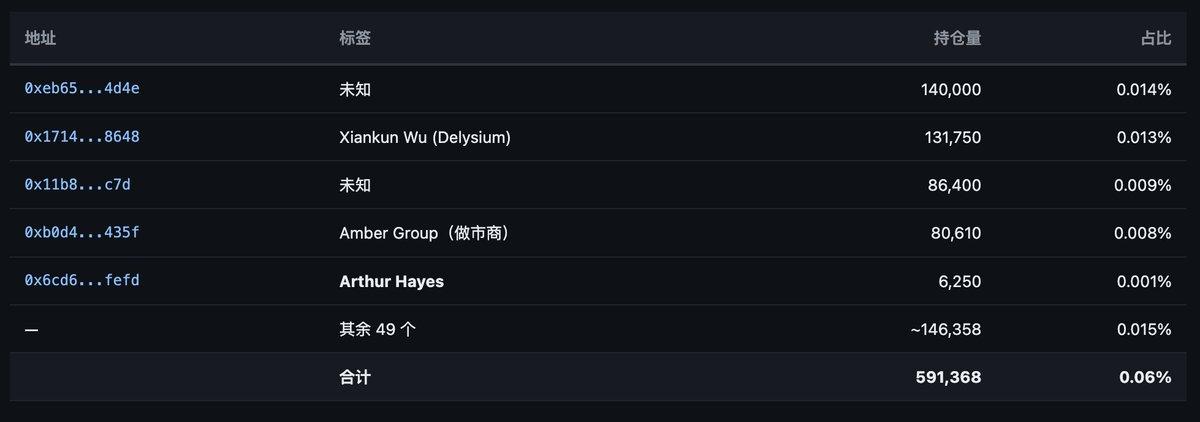
1.3 Personal wallet EOA (0.06%, 54 addresses in total)
Key findings: Retail investor holdings are negligible (totaling less than 600,000 RAVE). Arthur Hayes holds only 6,250 RAVE, and Amber Group, the market maker, holds only 80,000 RAVE.
II. Contract OI (Open Interest) Distribution
The contract OI ($294 million) has exceeded the total spot market value ($294 million) on the exchange, with an OI/spot ratio of 102.9%. Short sellers do not have enough spot market value to cover their positions—a classic short squeeze scenario. OKX alone accounts for 64.7% of the OI, making it the biggest potential point for a chain reaction of liquidations in the entire market.
2.1 Summary of OI (Online Inquiry) Across All Exchanges
III. Analysis of Margin Call Data
Total liquidations in the past 24 hours reached $41.61 million, with short positions accounting for 73.2% ($30.46 million), primarily short positions. Bybit and Gate.io together accounted for 52.9% of liquidations, making them the hardest-hit areas for high-leverage retail investors. Binance's risk control system was the most effective—holding 22.3% of OI (Online Investments) contributed only 8.3% of liquidations, resulting in the lowest liquidation/OI ratio (0.37x) across the board.
3.1 Overview of 24-Hour Liquidation
3.2 Ranking of liquidation cases across exchanges (24 hours)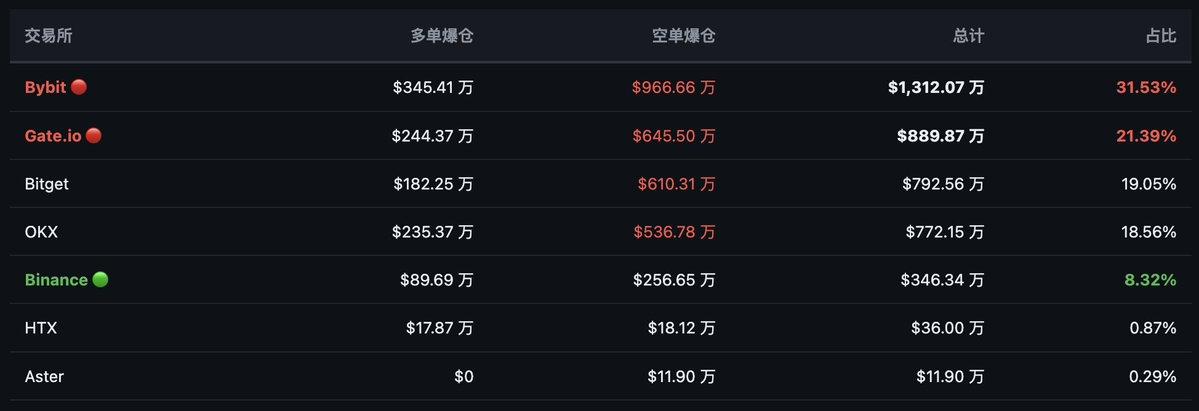
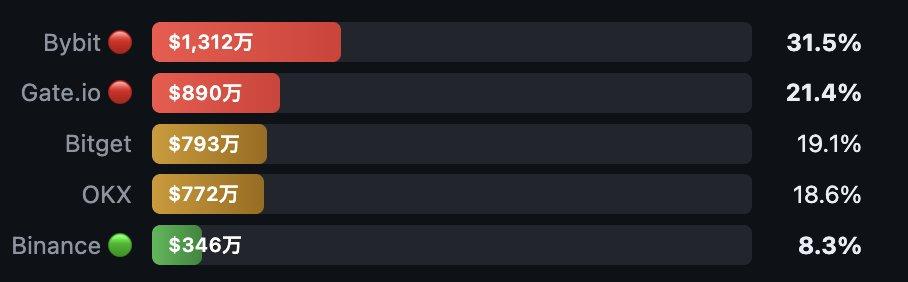
3.3 Key Finding: Binance's risk control is highly effective.
Binance holds 22.3% of Open Accounts (OI) but contributes only 8.32% of liquidations (liquidation/OI ratio: 0.37x). Tiered margin, liquidation engine, and risk reserve effectively protect users during extreme market conditions. In contrast, Gate.io's liquidation/OI ratio is as high as 35.65x, and Bybit's is 2.63x.
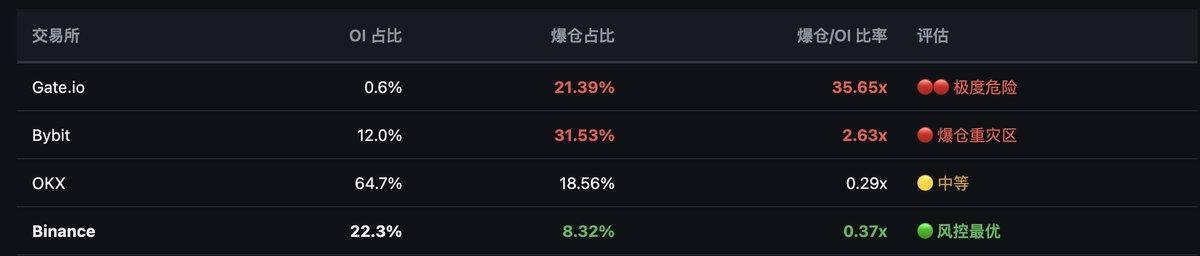
IV. Determination of the Main Battlefield
For spot trading, look at Bitget (88.3% CEX spot); for futures trading, look at OKX (64.7% OI); for margin calls, look at Bybit + Gate.io (52.9% margin calls); and for risk control, look at Binance (0.37x lowest margin call ratio).
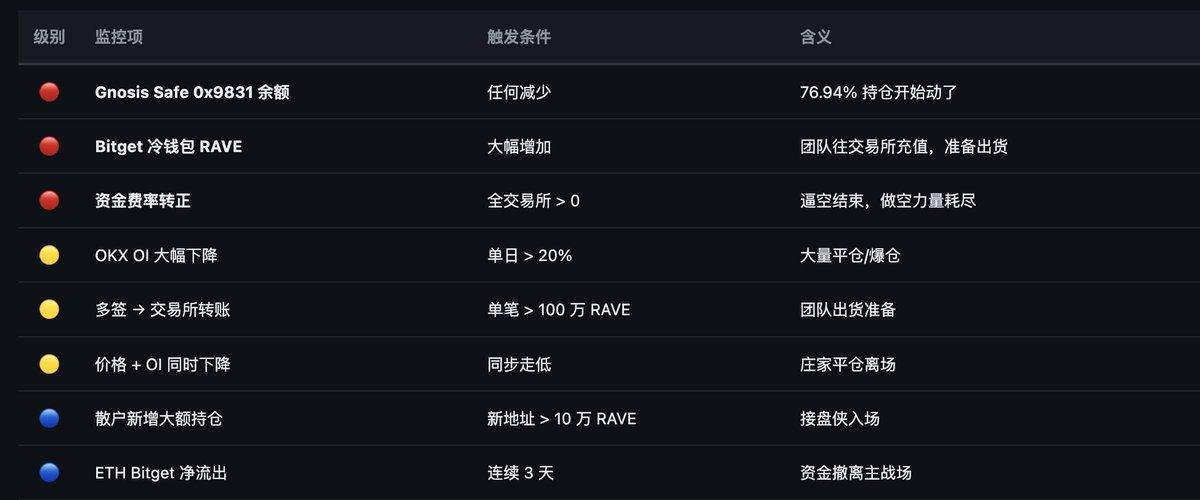
V. List of Signals Monitored During Network Closure
Current status: The major shareholders haven't sold off yet, and the short squeeze continues. However, 96% of the shares are held by six different shareholders, meaning the major shareholders can pump or dump the price at any time. The following are key closing signals that need to be monitored.